Procurify has helped many procurement teams digitize purchase requisition and approval workflows. However, as procurement volume grows, organizations often discover gaps in vendor integration coverage and workflow flexibility.
While the platform excels at routing requisitions and offers punchout catalog integrations for major suppliers, users must still order manually from long-tail suppliers. User reviews also cite ERP integration challenges and workflow limitations—friction that creates post-approval bottlenecks and slows scaling.
This guide compares five leading Procurify alternatives to help you understand each one's ideal use case, evaluate key buying considerations, and choose the right fit for your needs.
Download The Free Ebook: Choose the Right Procurement Technology With This Decision Matrix
Procurify alternatives key takeaways
- Procurify handles requisition approval workflows effectively but has vendor integration gaps, particularly for long-tail suppliers beyond major punchout catalogs.
- Teams outgrow Procurify when ERP integration challenges, workflow inflexibility, or limited vendor coverage create manual workarounds that offset approval automation benefits.
- The best alternative depends on your vendor ecosystem—whether you need broader automated vendor coverage, more customizable workflows, or deeper ERP integration.
- While purchase order automation reduces manual workloads, effective Procurify alternatives must also automate actual vendor ordering—not just PO generation.
5 Procurify alternatives procurement teams should consider in 2026
The best Procurify alternative depends on your specific challenges, budget, and stakeholder requirements. Each platform takes a different approach—from end-to-end purchasing automation to enterprise source-to-pay or workflow customization.
1. Order.co
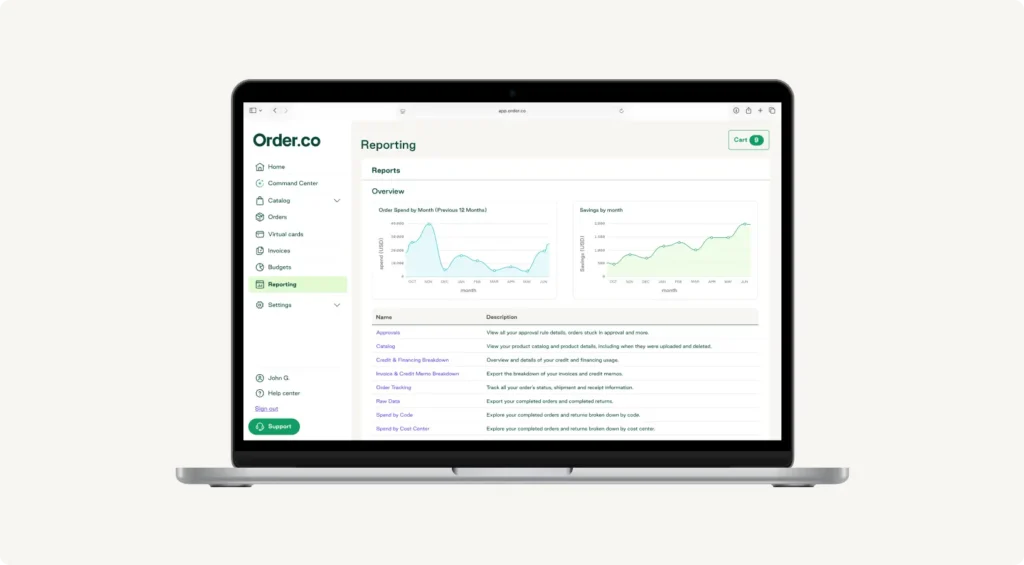
Order.co is a procurement software platform designed for multi-location businesses that need financial control while enabling operational speed. The platform automates vendor fulfillment, enables line-item accounting accuracy, and embeds approval workflows directly into the purchasing process. Teams choose Order.co when they need end-to-end purchasing and payment facilitation, not just request routing.
Key features:
- Centralized vendor management that lets you buy from virtually any supplier, even if they use different systems or manual ordering methods
- Automated vendor ordering and fulfillment tracking
- Pre-purchase approval workflows with budget controls and GL code enforcement
- Native accounting system integration with transaction-level sync
Order.co is ideal for both mid-market and enterprise businesses with distributed teams that purchase physical goods and require granular spending controls. Using the platform, EPIC4 Specialty Partners cut procurement time by 50% across 55 dental and orthodontic practices, while I Love Vacations achieved 100% spend visibility for more than 700 rental properties.
2. Precoro
Precoro offers cloud-based procurement management focused on purchase requisitions, approvals, and purchase order creation. It provides customizable approval chains, budget tracking, and vendor management capabilities suitable for teams seeking straightforward requisition-to-PO workflows with minimal implementation complexity.
Key features:
- Multi-level approval workflows with budget enforcement
- Purchase requisition and PO management
- Spend analytics and reporting
- Vendor database and catalog management
Precoro serves small to mid-sized businesses transitioning from spreadsheet-based purchasing systems to digitized approval processes.

Choose the Right Procurement Technology With This Decision Matrix
Find 15 must-ask questions to narrow down your software search and make your research process MUCH easier.
3. Coupa
Coupa is an enterprise-grade spend management platform covering the full source-to-pay lifecycle—integrating procurement, invoicing, expenses, and supplier management with extensive analytics. Organizations choose Coupa when they need comprehensive spend visibility across multiple categories and geographies.
Key features:
- Complete source-to-pay functionality, including sourcing and contracts
- Advanced spend analytics with AI-powered insights
- Large supplier network for simplified onboarding
- Global compliance and multi-currency support
Coupa suits large enterprises with complex procurement requirements, a large software budget, and a dedicated procurement team that can manage the platform's extensive feature set.
4. SAP Ariba
SAP Ariba provides procurement and supply chain collaboration tools integrated with the SAP Business Network. The platform offers guided buying and contract management through its marketplace, enabling organizations to achieve tight integration with existing SAP systems and access to a large international supplier network.
Key features:
- Integration with SAP Business Network and SAP ecosystem products
- Guided buying with policy enforcement
- Contract lifecycle management
- Supplier risk monitoring and performance tracking
SAP Ariba works well for enterprises already invested in the SAP ecosystem or that require sophisticated supplier risk management.
5. Kissflow Procurement Cloud
Kissflow Procurement Cloud combines procurement management with low-code workflow customization, allowing teams to configure approval processes and purchasing workflows without extensive IT involvement. Organizations select Kissflow when they need procurement tools that can adapt to unique or complex business processes.
Key features:
- Customizable procurement workflows through a low-code interface
- Vendor management and evaluation tools
- Purchase requisition and approval automation
- Visual process designer for workflow customization
Kissflow suits organizations with specific procurement workflow requirements that don't fit standard software templates.
Why do procurement teams consider Procurify alternatives?
Teams typically consider Procurify alternatives when coverage gaps, functionality limitations, or integration difficulties prevent them from scaling.
Still, the platform is a logical starting point for many companies. Many users report satisfaction with Procurify's approval workflow configuration and budget visibility features. The interface is intuitive, implementation is straightforward, and mobile approvals are accessible—strengths that make the platform popular among mid-market organizations.
As business needs grow, however, friction tends to arise from vendor coverage gaps and ERP connectivity issues that disrupt the procurement process. Although Procurify offers punchout catalog integrations with major suppliers, manual ordering is still necessary for long-tail vendors. Reviews also cite challenges on the back end, including NetSuite integration difficulties that cause persistent PO syncing issues and require labor-intensive workarounds.
This friction also extends to workflow inflexibility in complex purchasing scenarios. User reviews note the platform "lacks sophisticated workflow capabilities" for situations like milestone-triggered payments or grant funding compliance. These customization limitations mean businesses with unique processes may struggle to adapt Procurify to their specific needs.
According to McKinsey research, AI and automation can make procurement 25–40% more efficient. Teams ultimately move away from Procurify when the platform's manual workarounds and rigid workflows prevent them from hitting these performance benchmarks.
Key features to evaluate when comparing Procurify alternatives
When evaluating alternatives, focus on capabilities that address Procurify's gaps: automated fulfillment, native vendor integrations, and accounting accuracy that prevents downstream finance work.
Automated fulfillment and vendor management
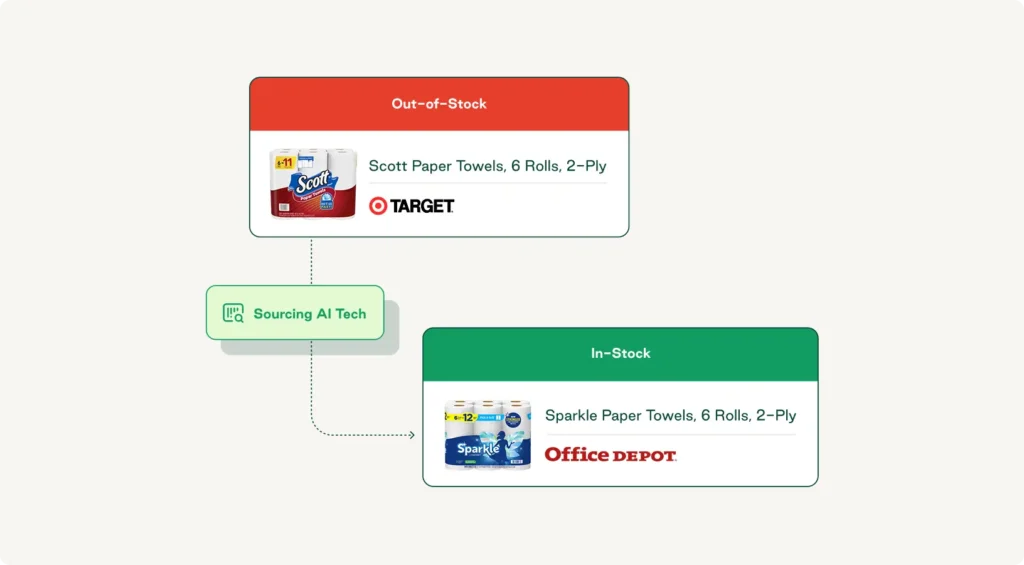
With Procurify's limited set of punchouts, your purchasing is only as broad as your approved vendor list. Platforms like Order.co take a different approach, using AI-powered fulfillment to place all online and offline orders directly, track shipments automatically, and update stakeholders instantly.
According to research by The Hackett Group, "Digital World Class" procurement organizations (those in the top 10% for efficiency and value) achieve 2.6X higher ROI and cut requisition-to-purchase order cycle times by 58% using AI and intelligent operations.
Pre-purchase approval workflows
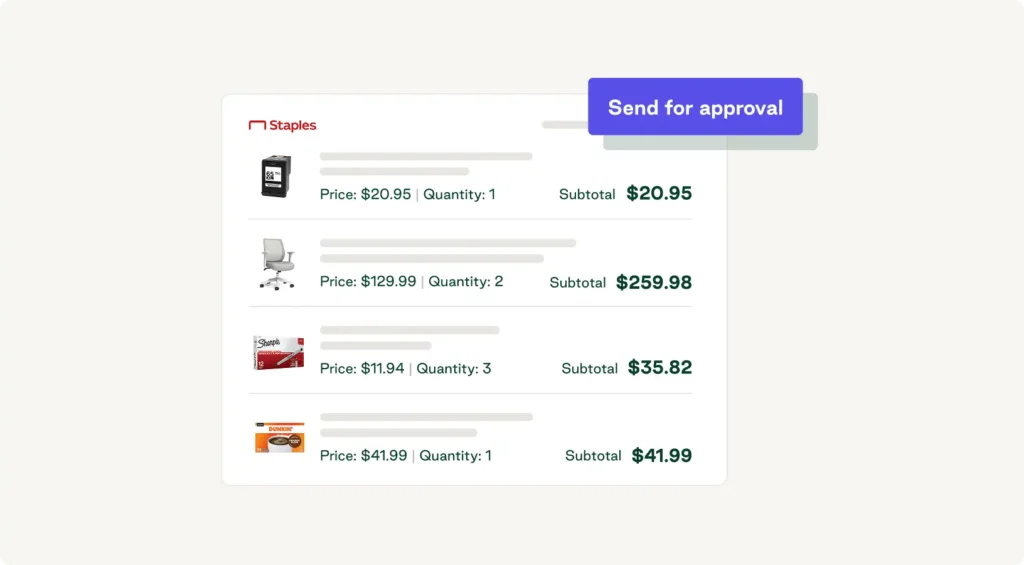
Pre-purchase approval workflows validate budgets, accounting codes, and policies at the point of request rather than during reconciliation, preventing unauthorized spending before it occurs.
Effective workflows balance control with speed by routing purchases based on custom thresholds and budget availability without unnecessary approval layers. This flexibility allows procurement and finance teams to adjust rules as needs evolve.
Accounting system integration and coding accuracy
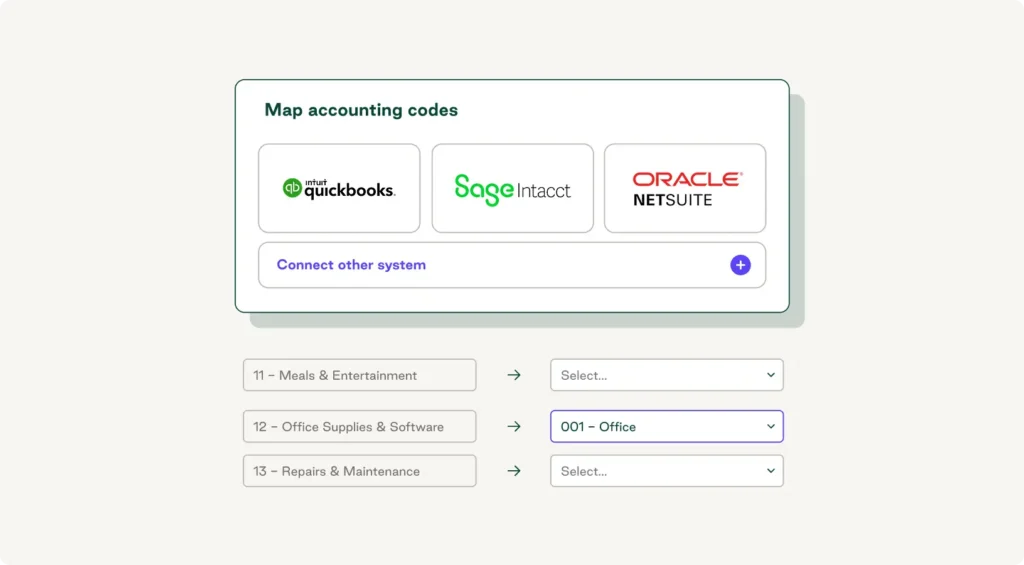
Spend management software should feed clean data into accounting systems without creating reconciliation work. With line-item level integration, you can see exactly what was purchased and how it should be coded.
Accounting code enforcement at the point of purchase prevents errors that would otherwise compound across transactions, while real-time synchronization provides current data for proactive spend management.
Multi-location and distributed team support
Multi-location operations require platforms that enable autonomy under established guardrails. Each location needs the ability to purchase within enterprise-wide controls for spending limits, approved vendors, and accounting classifications.
Because growing businesses rarely increase procurement headcount in proportion to new locations, effective platforms enable distributed purchasing without requiring additional staff. These systems maintain efficiency by centralizing vendor relationships, consolidating terms, and providing consistent catalogs across all locations.
Choose the Right Procurement Technology With This Decision Matrix
Find 15 must-ask questions to narrow down your software search and make your research process MUCH easier.
"*" indicates required fields
How to choose the best Procurify alternative for your needs
The following framework can help you evaluate whether to stick with Procurify or move to a more flexible alternative.
Assess where Procurify creates friction
Document the specific instances where Procurify requires manual workarounds by asking questions like:
- Do we order from suppliers outside Procurify's punchout catalogs often?
- Does our finance team have to spend hours manually fixing NetSuite or ERP sync errors?
- Do we have complex purchasing scenarios—like milestone payments or grant tracking—that Procurify’s standard workflows can’t handle?
Once you identify these gaps, quantify the impact. Tally the cost of hours spent on manual fulfillment and the number of POs that fail to sync with your accounting system.
Evaluate integration requirements and existing tech stack
If you’re considering leaving Procurify due to ERP sync issues, prioritize platforms with native, transaction-level integrations. Map your integration requirements to ensure potential solutions fit your current infrastructure.
Verify support for your general ledger structure, department codes, and job costing requirements. For sourcing and procurement apps that promise vendor integrations, confirm coverage of your actual suppliers, so you aren't forced to order manually.
Consider implementation complexity and team adoption
Even the best alternative platform won't be effective if your team doesn't use it. Assess your team's implementation capacity and define the timeline required to realize benefits.
Since user adoption determines long-term value, evaluate interfaces from the perspective of end users. If a system adds complexity, team members will return to the same workarounds they used in Procurify. Compliant purchasing must be easier than any rogue method.
Calculate total cost of ownership and ROI potential
When evaluating price, look beyond the initial subscription fee. Consider how the pricing model supports your growth—for example, a platform that scales with your spend or location count can be more cost-effective than one that requires a new paid license for every occasional requester.
To measure true ROI, factor in the hidden cost of manual work. If a platform eliminates the need to hire additional procurement staff as you grow, long-term savings will far outweigh the sticker price.
Choose Order.co for procurement control at the moment of purchase
Procurify serves teams whose supplier base aligns with the platform’s limited punchout catalogs and standard workflows. But if your vendor ecosystem is broader or you require deeper ERP integration, platforms built around comprehensive online and offline vendor automation deliver better outcomes.
Order.co automates ordering across thousands of suppliers, ensures accounting accuracy, and provides financial controls without the integration challenges of Procurify. Rather than focusing primarily on approval workflows, Order.co manages end-to-end purchasing automation that eliminates manual coordination—even across multi-location businesses.
Schedule a demo to see how Order.co can help you manage procurement with built-in controls, automated fulfillment, and visibility that scales with growth.
FAQs about Procurify alternatives
Get started
Schedule a demo to see how Order.co can simplify buying for your business.
"*" indicates required fields
Managing supplier relationships has never been more complex—or more critical. In today's volatile supply chain environment, a single supplier failure can cascade into operational shutdowns, compliance violations, and reputational damage.
By learning how to build an effective supplier risk assessment framework, you can identify vulnerabilities early, protect your operations, and strengthen strategic partnerships.
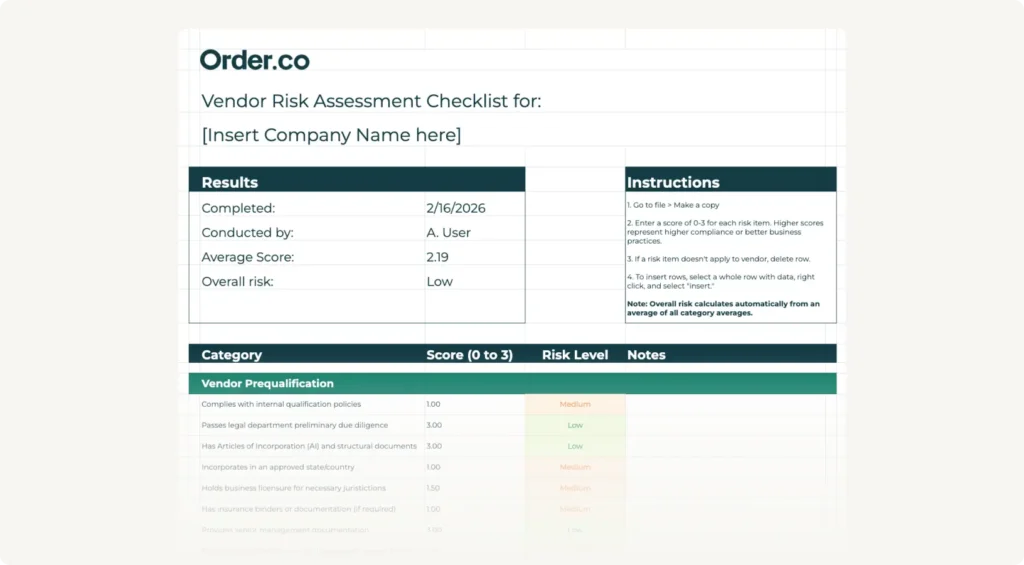
Download the free tool: Vendor Risk Management Checklist
What is a supplier risk assessment—and why does it matter?
A supplier risk assessment is a systematic process for identifying, analyzing, and managing potential risks that could disrupt your supply chain. It involves evaluating suppliers across multiple dimensions—from financial stability and cybersecurity posture to regulatory compliance and operational reliability—to determine their risk profile and alignment with your organization's risk tolerance.
The stakes are high. Verizon's 2024 Data Breach Investigations Report shows a 180% increase in exploited vulnerabilities from the previous year, and SecurityScorecard's Global Third-Party Breach Report found that more than one-third of data breaches originated from third-party vendors or suppliers. Supplier risk has become one of the most common entry points for disruption.
Without proactive risk management, companies can face:
- Operational disruptions that halt production and delay deliveries
- Financial losses from supplier failures or contractual breaches
- Compliance violations that trigger regulatory penalties
- Reputational damage from supplier misconduct or quality issues
- Data breaches through compromised vendor access points
Vendor management software like Order.co provides a unified view of supplier data, with real-time performance visibility and AI-powered sourcing to support smarter vendor selection and reduce procurement risk.
Vendor Risk Management Checklist
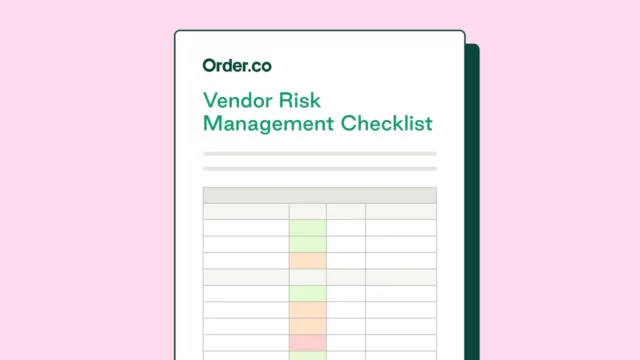
Download our free vendor risk management checklist to better manage third-party risk and establish stronger vendor lifecycle management practices.
What key risk factors should you evaluate in your suppliers?
Effective supplier risk management requires evaluating multiple risk categories simultaneously. A comprehensive vendor risk management checklist can help you organize these categories and prioritize your assessment efforts.
Financial stability and payment performance
Financial instability is one of the most damaging supplier risks. When a critical supplier struggles or goes bankrupt, your operations can grind to a halt. For multi-state operator Grasshopper Farms, centralized supplier risk management through Order.co meant faster resolutions and recouping $70k lost to a supplier bankruptcy.
To spot similar risks before they escalate, monitor these financial health indicators:
- Credit ratings from major agencies
- Payment history and days sales outstanding
- Debt-to-equity ratios and liquidity measures
- Profitability trends and revenue volatility
Global sanctions lists now include nearly 80,000 individuals and entities worldwide, up 30% from 2023. This underscores how financial and compliance risks are growing and why regular supplier evaluation is essential—especially for high-risk or critical suppliers that represent single points of failure.
Regulatory compliance and ethical standards
Regulatory requirements are becoming more complex and influential across global supply chains. According to the World Economic Forum’s Global Risks Report 2025, shifting regulations and policy fragmentation are among the systemic risks business leaders expect to affect operations and supply networks in the years ahead.
Including these factors in your supplier evaluation can help you reduce compliance risk:
- Industry-specific regulations (GDPR, HIPAA, FDA)
- ESG commitments and certifications
- Labor practices and human rights standards
- Environmental regulations
- Contractual obligations and service level agreements
Regular evaluation of these areas helps ensure your suppliers meet legal, ethical, and contractual obligations while reducing the risk of fines or reputational damage.
Operational reliability and delivery track record
Operational risk reflects a supplier's ability to consistently deliver quality products on time. Even financially sound suppliers can become high-risk if they face capacity constraints or quality issues.
To ensure consistent performance, include these factors in your supplier evaluation:
- On-time delivery rates and lead time consistency
- Quality metrics and defect rates
- Production capacity and scalability
- Geographic concentration and geopolitical exposure
- Business continuity plans
A vendor scorecard process lets you track these metrics systematically and compare supplier performance against defined benchmarks, removing subjectivity from evaluations.
Cybersecurity posture and data protection controls
Digital connections create digital vulnerabilities. Every supplier with system access represents a potential entry point for cyberattacks, making cybersecurity one of the fastest-growing risk categories.
You can assess suppliers' cybersecurity through:
- Information security certifications (ISO 27001, SOC 2, etc.)
- Data encryption and access controls
- Incident response procedures
- Third-party penetration testing results
- Employee security training programs
- Vendor management of their own sub-suppliers
A vendor management risk matrix can help you prioritize which suppliers require more rigorous cybersecurity assessments based on their access to sensitive data and systems.
How can procurement teams conduct effective supplier risk assessments?
According to McKinsey's Global Supply Chain Leader Survey, 90% of respondents encountered significant supply chain challenges in 2024, highlighting how disruption has become the norm rather than the exception.
Here are a few ways strategic risk assessments can help you identify risks before they impact operations.
Establish a supplier segmentation and prioritization model
Not all suppliers pose equal risk. Segmenting your suppliers allows you to allocate assessment resources where they'll have the greatest impact.
Common segmentation approaches include:
- By criticality: Critical (single source, no alternatives), important (difficult to replace), standard (easily substitutable)
- By spend level: Strategic (high spend, high complexity), leverage (high spend, low complexity), bottleneck (low spend, high complexity), routine (low spend, low complexity)
- By risk exposure: High-risk (multiple risk factors), medium-risk (some concerns), low-risk (well-established, stable)
Segmentation informs how often and how deeply you investigate each supplier. Critical suppliers might require quarterly reviews, while low-risk, routine suppliers could be assessed annually.
Gather data from audits, questionnaires, and third-party sources
Relying solely on supplier self-reporting can lead to incomplete or biased information.
Comprehensive risk assessment requires multiple data sources:
- Direct supplier engagement: Standardized risk questionnaires, on-site audits, financial documentation, certifications, compliance attestations
- Third-party intelligence: Credit bureaus, financial data providers, industry databases, peer reviews.
- Internal data: Historical performance metrics, quality and delivery records, contract compliance tracking, and support ticket patterns
A WTW survey found that 73% of organizations struggle with suppliers' reluctance to share proprietary data, while 77% admit they lack the information needed to fully understand supplier risks. This underscores the value of multiple data sources and automated monitoring.
Score and rank suppliers against defined criteria
Scoring suppliers consistently provides objectivity and allows for meaningful comparison. To ensure high-risk areas get the attention they deserve, most frameworks use weighted scoring across categories.
With Order.co, you can track supplier performance and spend data in one place to pinpoint where oversight is needed most.
What tools and metrics drive continuous supplier risk monitoring?
Staying ahead of supplier risks requires more than a single check-in. Continuous monitoring helps you spot problems early so you can respond quickly.
Dashboards for risk visualization and alert configurations
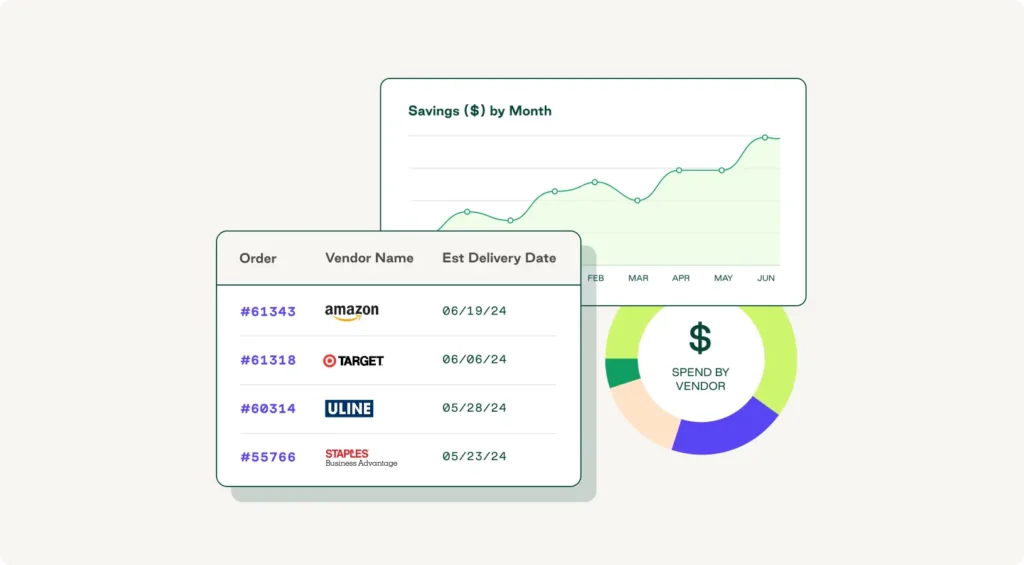
Modern risk management requires real-time visibility. Centralized dashboards consolidate supplier data from multiple sources, providing a clear view of trends and potential issues.
Effective risk-visualization dashboards typically display:
- Overall risk scores with trend indicators
- Category-specific risk breakdowns
- Suppliers approaching risk thresholds
- Recent news or events affecting suppliers
- Compliance status and certification expirations
- Performance metrics against KPIs
Many risk tools include alerts for threshold breaches like missed deliveries or compliance gaps. Order.co complements these by syncing purchasing and performance data into a centralized view that makes those alerts actionable.
KPIs and risk thresholds to track
Defining the right procurement KPIs ensures your risk monitoring program focuses on metrics that matter. Key performance indicators should align with your organization's specific risk tolerance and operational requirements.
Essential supplier risk KPIs for risk management tools include:
- Financial metrics: Days payable outstanding, credit score changes, profitability margins
- Operational metrics: On-time delivery percentage, quality rejection rates, lead time variability
- Compliance metrics: Audit findings, certification status, regulatory violations
- Strategic metrics: Innovation contributions, cost reductions, sustainability improvements
Risk thresholds should trigger escalation protocols. For example, if your risk management tool flags a drop in on-time delivery, you could use Order.co to implement a performance improvement plan or explore alternative sourcing options.
Integrations with ERP and contract management systems
Integration between supplier risk management tools, ERP platforms, and contract management systems provides a complete view of supplier relationships and performance.
Key integration benefits include:
- Automated data flow to reduce manual entry errors
- Real-time spend visibility across suppliers
- Contract term monitoring and renewal alerts
- Purchase order tracking against performance metrics
- Invoice matching and payment tracking
- Comprehensive audit trails for procurement audits
Order.co connects with most major systems, making it easier to consolidate supplier data in one place to support up-to-date risk assessments.
Vendor Risk Management Checklist
Download our free vendor risk management checklist to better manage third-party risk and establish stronger vendor lifecycle management practices.
"*" indicates required fields
How can procurement teams mitigate identified supplier risks?
Identifying risks is only half the battle. Effective risk mitigation balances cost, operational continuity, and supplier relationships.
Diversify the supplier base and create backup plans
Concentration risk—relying too heavily on a single supplier—magnifies the impact of any disruption. Diversifying spreads risk across multiple providers.
Risk mitigation strategies related to sourcing include:
- Dual sourcing: Keep two suppliers active for critical components, split orders, and monitor both to maintain continuity.
- Geographic diversification: Source from multiple regions to reduce geopolitical risk, balance cost against resilience, and consider nearshoring options.
- Capacity planning: Understand suppliers' production limits, identify alternatives before crises occur, and maintain buffer stock for critical items.
Embed contract clauses and performance SLAs
Clear service-level agreements set expectations, establish accountability, and provide recourse when problems arise.
Critical contract provisions include:
- Performance standards: Measurable KPIs, quality specifications, delivery windows
- Risk allocation: Insurance requirements, force majeure procedures, business continuity commitments
- Compliance requirements: Regulatory adherence, right-to-audit clauses, data security obligations
Regular procurement management reviews ensure contracts remain aligned with evolving risk profiles and business needs.
Use transactional controls—like vendor-locked virtual cards—to limit exposure
Financial controls add another layer of protection against vendor fraud and overspending. Virtual payment cards offer unique advantages for managing supplier risk.
Benefits of vendor-locked cards include:
- Spending controls: Set card limits per supplier, restrict usage to specific vendors, and define time-based windows.
- Enhanced visibility: Get real-time transaction monitoring, detailed spend analytics, and immediate fraud detection.
- Operational efficiency: Reduce manual check processing, accelerate payments, and capture rebates and rewards.
Order.co's vendor-locked cards enforce per-supplier spend limits automatically, helping you maintain budget control and reduce exposure without extra manual work.
Enhance your supplier risk assessment process with Order.co
By simplifying supplier onboarding and maintaining visibility throughout the vendor management lifecycle, Order.co can help you move from reactive to strategic risk management.
With Order.co, you can:
- Derisk supplier engagements through platform-managed payment protection
- Centralize vendor information for easier reporting and audit readiness
- Connect to ERP and contract management systems to keep data up to date across platforms
- Control spend with vendor-locked cards to reduce exposure
Schedule a demo today to explore how Order.co can help you centralize supplier data and make more informed vendor decisions.
FAQs
Get started
Schedule a demo to see how Order.co can simplify buying for your business.
"*" indicates required fields
Retail operations software in 2026 represents a connected ecosystem of specialized platforms, each designed to address distinct operational challenges from point-of-sale transactions to procurement automation and supply chain forecasting. The days of relying on a single monolithic system to handle every aspect of retail management are a thing of the past. Today's most successful retailers build technology stacks from best-of-breed tools, each optimized for specific operational functions.
The numbers tell the story of retail's complexity and opportunity. The NRF forecasts retail sales between $5.42 trillion and $5.48 trillion in 2025, reflecting an industry managing massive transaction volumes across thousands of locations. Multi-location retailers face particularly complex workflows spanning inventory management, procurement coordination, team communications, and financial controls.
The specialized stack model has emerged as the dominant approach, built around four critical pillars: indirect spend management for operational supplies, store communications for task coordination, POS and inventory systems for customer transactions, and supply chain planning for merchandise optimization. Retailers gain operational efficiency by selecting specialized retail software optimized for specific business functions rather than generic ERP modules that try to handle everything with mediocre results.
Explore the leading platform in each pillar — examining what makes each solution best-in-class for its specific operational function and how they work together to create a comprehensive retail technology stack.
Best for indirect spend and procurement: Order.co
Order.co centralizes procurement of store supplies, packaging, cleaning products, display items, and operational consumables in a single AI-powered marketplace that delivers 5-10% direct savings and eliminates manual invoice reconciliation. While most retail software focuses exclusively on the direct goods you sell to customers, Order.co addresses the critical category of indirect spend: everything you purchase to run your stores.
Why indirect spend matters for retailers
Indirect spend represents a massive yet often overlooked opportunity for margin improvement. BCG research shows indirect spend equals 10-20% of total costs for retail organizations, encompassing cleaning supplies, store fixtures, packaging materials, signage, and operational tools. What makes this category so significant is that 80% of indirect spend is addressable for procurement optimization, with potential bottom-line impact amounting to up to 15% of addressable indirect spend when utilizing all available optimization levers.
Traditional retail software focuses exclusively on direct goods — the merchandise you stock on shelves — leaving operational supply procurement entirely unmanaged. This creates chaos where store managers order from dozens of vendors using personal credit cards, email requests, or phone calls. The result is zero visibility into what's being spent, who's buying what, and whether you're getting competitive pricing. Order.co's retail procurement software addresses this gap.
Key capabilities of Order.co for retail operations
The platform's unified vendor catalog consolidates online and offline suppliers into one approved system. Store managers simply search for what they need in Order.co's marketplace, where every product is pre-approved and pre-priced according to negotiated terms. Order.co AI sourcing engine continuously scans to identify better prices, delivering average 5% product savings without requiring manual comparisons.
Consolidated billing represents one of Order.co's most powerful differentiators. Instead of receiving hundreds of separate invoices from dozens of vendors each month, you receive weekly or monthly pre-coded statements from Order.co that are fit uniquely for your bookkeeping. These invoices consolidate all purchases across all locations, with every line item already mapped to the correct GL codes.
Real-time spend visibility gives finance and operations leaders immediate insight into spending patterns across all locations, departments, and vendors. Custom catalogs streamline new store openings — what traditionally took days of ordering from multiple vendors now takes minutes.
Order.co's proven retail results
AKIRA's success story demonstrates $10K in purchasing cost reduction and 160+ hours monthly reclaimed on accounts payable processing through Order.co's intelligent procure-to-pay automation capabilities. Faherty Brand reduced its new store setup purchasing process from 20+ hours down to five minutes by leveraging Order.co's custom product lists, which make it easy for employees to quickly find and order pre-approved items. The platform serves 6,400+ retail locations, spanning luxury fashion, food & grocery, health & beauty, automotive, and beyond.
5 Proven Strategies to Streamline Retail Operations and Create Memorable In-Store Experiences
Creating consistent, measurable, memorable in-store customer experiences is your key to standing out from competitors. Download the guide today to get started!
Best for frontline communication and task management: Zipline
Zipline bridges the gap between headquarters and store associates through a centralized platform for targeted messaging, task tracking, and compliance verification across every location. In retail operations, the best strategies and initiatives fail when they don't reach the store floor with clarity and accountability.
Zipline's core value proposition
HQ-to-store communication disconnect creates execution failures and inconsistent customer experiences. Retailers typically rely on fragmented channels — email threads, text messages, printouts taped to back-room walls — to communicate operational directives. Critical tasks get lost in the noise. Store managers miss important updates buried in overstuffed inboxes.
Zipline solves this by providing targeted messaging that ensures operational directives reach the right teams at the right time. Task management provides complete visibility into completion rates across all locations. When HQ assigns a task like "implement new window display by Friday," Zipline tracks exactly which stores completed it, which are in progress, and which haven't started. Compliance tracking verifies SOP adherence across all locations.
Zipline's key performance metric
Retailers using Zipline achieve 90%+ task execution rates compared to the industry average of 29% without centralized task management. The platform is pressure-tested in retail, one of the most complex distributed industries, where every employee needs to see, do, and track what they need for store success.
Complementary to Order.co
Zipline manages communication and task execution while Order.co manages the procurement required to complete those tasks. Zipline handles the "what needs to happen" layer; Order.co handles the "what supplies are needed" layer. Consider a practical workflow: Zipline assigns seasonal display setup as a task with a completion deadline. When store managers are ready to execute, they use Order.co to procure the display materials from pre-approved catalogs. Once setup is complete, managers upload photos in Zipline confirming execution.
Best for POS and inventory management: Lightspeed Retail
Lightspeed Retail provides a cloud-based POS system with advanced inventory tracking, omnichannel sales capabilities, and detailed analytics for retailers managing high-SKU counts across multiple locations. This platform focuses on the direct goods category — the merchandise you sell to customers — rather than the operational supplies you purchase to run stores.
Lightspeed Retail's core functionality
Real-time inventory synchronization across physical stores and e-commerce channels ensures accurate stock counts regardless of where sales occur. Built-in purchase orders and supplier management for direct goods streamline merchandise replenishment. GMROI and sell-through rate analytics inform merchandising decisions by revealing which products generate strong margins versus which tie up working capital. Multi-location stock visibility enables efficient transfer management.
Lightspeed Retail's key differentiator
Lightspeed's unified inventory management system integrates retail and e-commerce data into a single source of truth. The cloud-based platform provides powerful analytics for staffing and merchandising optimization, with dashboards showing sales performance, inventory turnover, and margin analysis.
Lightspeed Retail's category distinction
Lightspeed manages revenue-generating inventory while Order.co manages operational supplies; both are critical but serve different procurement needs. Lightspeed handles the direct goods you purchase for resale to customers: apparel, accessories, home goods, or whatever merchandise defines your retail business. Order.co handles the indirect goods needed to run the store: cleaning supplies, packaging materials, store signage, display fixtures, maintenance items, and consumables. Both categories require management but have distinct approval workflows, vendor relationships, and financial tracking requirements.
Best for supply chain planning and demand forecasting: RELEX Solutions
RELEX Solutions delivers enterprise-grade AI-driven forecasting and supply chain optimization for large-scale retail chains managing complex replenishment, pricing, and merchandising operations. This platform operates at the strategic planning layer, helping retailers make smarter decisions about what to stock, how to price it, and how to move it efficiently through the supply chain.
RELEX Solutions' core capabilities
AI-powered demand forecasting enables accurate replenishment by analyzing historical sales data, seasonality patterns, promotional impacts, weather effects, and hundreds of other variables to predict future demand. Pricing and promotion optimization capabilities analyze the impact of price changes and promotional events on demand.
Space planning and assortment management tools help retailers determine which products to stock in which locations based on local demand patterns. Supply chain operations and production scheduling capabilities extend beyond retail to support manufacturers and distributors.
RELEX Solutions' technology foundation
RELEX's ML-based forecasting is live for more than 200 customers, demonstrating production-scale AI deployment. The unified platform architecture supports end-to-end supply chain planning from demand forecasting through execution. Over 70% of retailers have adopted or are experimenting with AI across operations, recognizing that machine learning capabilities deliver tangible competitive advantages.
RELEX Solutions' category distinction
RELEX handles the strategic layer: determining what to buy, how much to stock, where to position inventory, and when to replenish merchandise that generates revenue. Order.co handles the tactical layer: enabling store teams to quickly order the supplies required for daily operations. Both functions are essential for margin optimization but address different procurement categories with different planning horizons.
Building a cohesive retail operations technology stack
Successful retail technology strategies in 2026 balance four distinct operational layers — each contributing directly to profitability through different mechanisms. The best-in-class approach combines specialized platforms that work together to drive margin improvement, operational efficiency, and competitive advantage across your entire organization.
The profitability equation
Every component of your technology stack should answer one fundamental question: how does this directly improve our bottom line? The four platforms covered here address profitability from complementary angles:
- Order.co delivers immediate, guaranteed cost reduction on operational expenses through indirect spend optimization, saving 5-10% on product costs plus hundreds of AP hours monthly
- Zipline converts strategy into execution, ensuring revenue-generating initiatives actually reach the store floor instead of getting lost in communication gaps
- Lightspeed maximizes revenue per square foot through real-time inventory optimization, omnichannel integration, and merchandising analytics that identify high-margin opportunities
- RELEX protects margins through AI-driven demand forecasting that reduces overstock waste, minimizes stockouts, and optimizes pricing decisions across thousands of SKUs
Together, these platforms create compounding value. Better forecasting (RELEX) informs smarter inventory decisions (Lightspeed). Clear task execution (Zipline) ensures those decisions get implemented consistently. Controlled operational spending (Order.co) protects the margins you've worked hard to optimize.
Start where the ROI is fastest
Unlike revenue optimization — which depends on market conditions, customer behavior, and competitive dynamics — controlling operational supply costs delivers predictable, immediate results. The average Order.co customer sees 5% product savings plus dramatic reductions in administrative burden within weeks of implementation, not months. These aren't projected benefits that require perfect execution to realize; they're guaranteed improvements that compound month after month.
Your retail operations deserve technology that drives real profitability, not just feature lists that sound impressive in vendor presentations. Whether you're starting from scratch or optimizing an existing stack, the path forward begins with tackling the areas where improvement is both substantial and certain.
Ready to transform how your retail locations manage indirect spend? Schedule a demo to see how Order.co centralizes purchasing, delivers direct savings, and eliminates invoice chaos across all your locations.
FAQs
Get started
Schedule a demo to see how Order.co can simplify buying for your retail business.
"*" indicates required fields
A fair credit rating may limit your options when it comes to applying for a business credit card, but that doesn’t mean there aren’t plenty of good card programs available. While traditional credit cards are often the first solution that comes to mind, options like corporate cards and virtual cards can provide increased control, visibility, and flexibility without relying on your personal credit score.
This guide breaks down the best business credit card options for fair credit, explains how to choose a card that aligns with your growth strategy, and highlights the benefits of using virtual cards to centralize company spend.
Download the free ebook: Choose the Right Procurement Technology With This Decision Matrix
What counts as “fair credit” and why it matters
A fair credit rating sits below the "good" credit threshold but above a poor credit rating, typically shown on a credit report as a FICO score between 580 and 669. While a fair credit rating shows some financial reliability, it can limit your access to premium financing options and often comes with higher interest rates or stricter terms.
For businesses, a fair credit score can make it harder to secure loans, negotiate favorable vendor terms, get approved for traditional business credit cards, or lease essential equipment or real estate.
Improving your credit score helps build a foundation of financial credibility that supports sustainable growth. It allows you to use business credit strategically to improve cash flow, access better financing, and strengthen supplier relationships.
Best business credit card options for fair credit (2026 comparison)
Many business credit card issuers consider both personal credit and business factors when evaluating applications, especially for new businesses or those without an established credit profile.
While a fair credit rating limits your options, several good solutions remain:
- Order.co’s virtual cards: Best for spend control and vendor management
- Capital One Spark 1% Classic: Best unsecured option
- Capital on Tap Business Credit Card: Best for fast access and rewards
- Bank of America Business Advantage Unlimited Cash Rewards Secured: Best for cash back rewards and credit building
- FNBO Business Edition® Secured Mastercard®: Best for high deposit flexibility
- Ramp corporate cards: Best for automation and control
- BILL Divvy Card: Best for budgeting tools
Note: The information below is accurate as of October 2025.
Order.co virtual cards
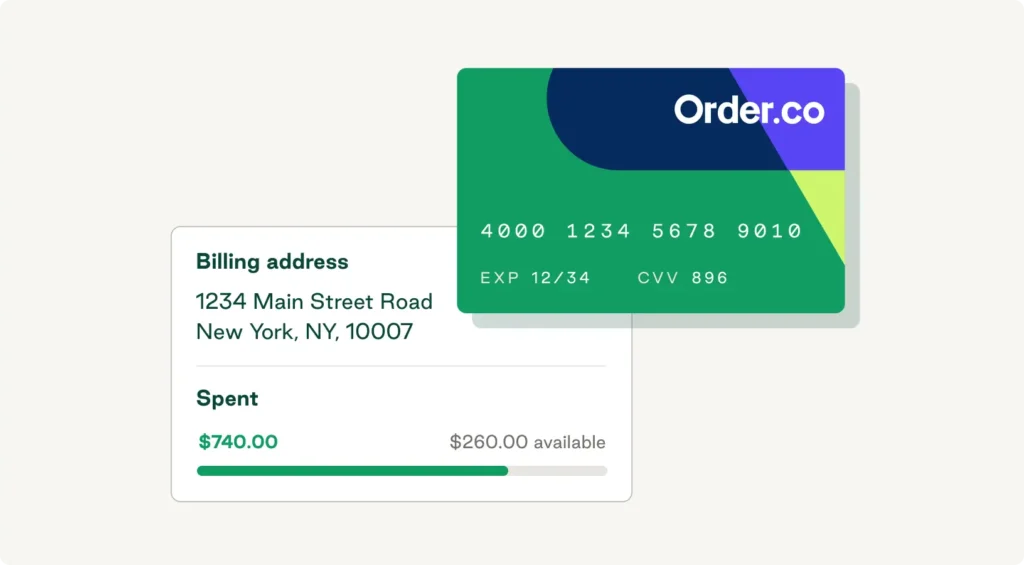
Order.co’s virtual cards are not traditional credit cards because they don't rely on personal credit for approval. Instead, eligibility is based on your business itself. As part of a comprehensive procure-to-pay platform, these cards tackle challenges that traditional credit cards often overlook, such as granular vendor spend control, real-time visibility into every transaction, automated payments, and simplified card reconciliation.
You can issue virtual cards for individual users, specific vendors, or distinct projects, each configured with customizable spending limits, expiration dates, or vendor‑lock features that prevent use outside approved parameters. Every transaction appears instantly in your dashboard, providing immediate visibility with fewer manual steps.
For businesses with fair credit, these cards don’t replace traditional credit cards—they complement them by improving spend management, increasing operational efficiency, and safeguarding working capital for growth.
Choose the Right Procurement Technology With This Decision Matrix
Find 15 must-ask questions to narrow down your software search and make your research process MUCH easier.
Unsecured business credit cards for fair credit
Unsecured business credit cards don’t require a security deposit, meaning you don't have to provide any upfront cash and don't stand to lose your deposit if you miss a payment. They typically offer lower limits and fewer perks than cards for businesses with good or excellent credit, but they still allow businesses with fair credit to access rewards programs and build credit through responsible usage.
Capital One Spark 1% Classic
Capital One’s Spark 1% Classic credit card is a reliable unsecured card for fair credit that provides solid rewards, enables access to digital expense management tools, and supports credit-building. It has no annual fee and gives 1% cash back on every purchase with no limits or category restrictions, plus unlimited 5% cash back on hotels and rental cars booked through Capital One’s travel booking site.
Capital on Tap Business Credit Card
Capital on Tap’s Business Credit Card is a flexible, unsecured rewards credit card for businesses with fair-to-good credit. It offers 1.5% cash back on all card spending, a credit limit of up to $50,000, and variable APRs starting at 17.24%. With no annual, foreign exchange, or ATM fees, it can help you reduce your purchasing costs while you build a better credit score.
Secured business credit cards for fair credit
Secured credit cards provide a practical path to building credit for businesses that don't yet qualify for an unsecured card. They require an upfront security deposit, usually equal to your credit limit, and offer easier approval and credit-building benefits. In some cases, secured cards also provide better rewards than unsecured fair-credit alternatives.
Bank of America Business Advantage Unlimited Cash Rewards Secured
Bank of America’s Business Advantage Unlimited Cash Rewards Secured credit card helps build or repair credit while earning rewards—a rare benefit for a secured card. It has no annual fee, offers 1.5% cash back on every purchase, and provides flexible redemption options. The minimum security deposit is $1,000.
FNBO Business Edition® Secured Mastercard®
The FNBO Business Edition Secured Mastercard credit card provides fair-credit businesses with a high-limit secured option that scales with available cash. It has a $39 annual fee and access to Mastercard® Easy Savings automatic rebates. Your deposit (ranging from $2,000 to $10,000) is held in an interest-bearing account and directly determines your credit limit, subject to approval.
Corporate cards with no personal credit check
Corporate credit cards evaluate your company’s financial health—namely, your cash flow and banking history—instead of relying on personal credit. Since they don't typically report to credit bureaus, they won't help build your credit score. Instead, their main benefits are operational efficiency and spend control.
Ramp Corporate Cards
Ramp cards earn cash back on all purchases with no annual, transaction, or foreign transaction fees. They don't require personal guarantees or credit checks for qualifying businesses, instead determining eligibility based on your company's financial health and bank account activity. Ramp emphasizes automation, real-time spend visibility, and improved operational controls.
BILL Divvy Card
BILL’s Divvy Card is a no-credit-check corporate card with flexible rewards, advanced budgeting tools, and no annual fee. It features a line of credit from $1,000 to $5M based on business cash flow (may require underwriting), making it a highly scalable option for businesses with a fair credit score.
Like Order.co, BILL provides virtual corporate cards with customizable budgets and automated expense tracking. However, Order.co goes beyond what most corporate cards offer to deliver vendor-level visibility, AI-powered spend analytics, and automated solutions for every stage in the procure-to-pay cycle.
What should you consider when choosing a business credit card with fair credit?
Selecting the right business credit card for fair credit isn’t just about qualifying—it’s about finding a solution that aligns with your financial goals and growth objectives.
Here are some factors you should consider when evaluating different card options:
- Secured or unsecured: Unsecured cards are better if you want to avoid paying a security deposit and gain immediate access to a credit line, while secured credit cards offer easier approval and can help you maximize credit-building impact.
- Credit reporting: Cards that report to business and personal credit bureaus help you build your business credit score. Cards with no credit check typically report to neither but are more accessible.
- Fees: Depending on your spending habits, card fees may or may not be balanced out by financial benefits. Calculate whether the bonus rewards (for example, 1% cash back on all eligible purchases or 0% intro APR) justify any annual fees, transaction fees, or foreign exchange fees.
- Credit limit: Most fair-credit cards have an initial limit of $1,000–$5,000. Ensure this meets your cash flow and business needs, and check whether it's possible to increase the limit as your company grows.
- Extra features: Operational benefits can be more valuable than rewards. Look for employee cards, expense management tools, and accounting software integrations.
To make a smart decision, choose cards that match your priorities and growth trajectory. Are you focused on rebuilding credit? Or is operational efficiency a higher priority than immediate rewards?
Choose the Right Procurement Technology With This Decision Matrix
Find 15 must-ask questions to narrow down your software search and make your research process MUCH easier.
"*" indicates required fields
How can business credit cards help you build credit strategically?
Payment history accounts for 35% of your credit score, making it the largest single factor. If you use business credit cards responsibly—making monthly payments on or before the due date—every on-time payment will strengthen your credit profile. Using a complementary tool like Order.co lets you automate payments and centralize spend tracking to ensure timely payments.
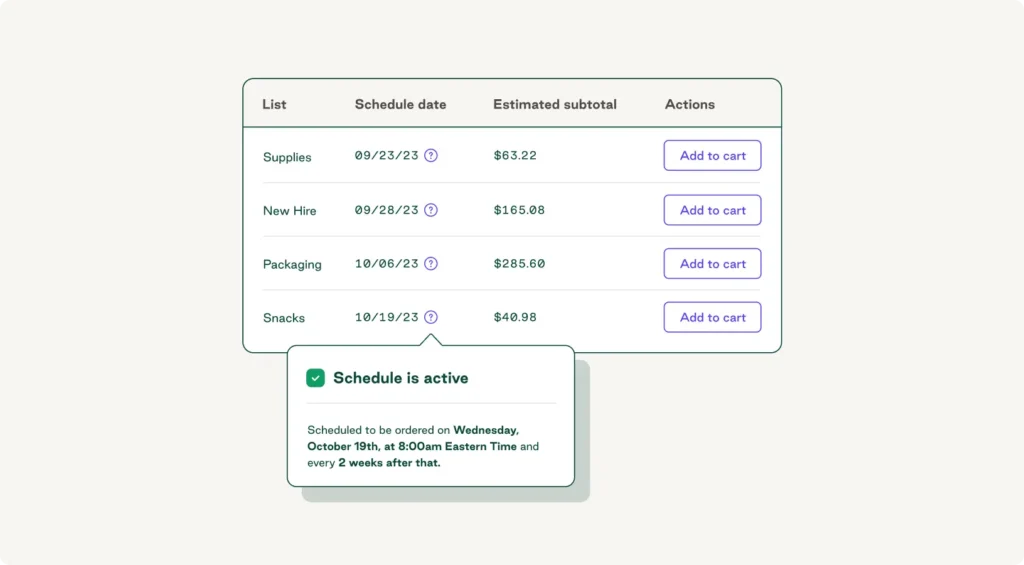
The percentage of available credit you’re using, known as “amounts owed,” is the next largest factor affecting your credit score (30%). By keeping card utilization low, you can maximize the credit-building impact.
Length of credit history also represents a significant portion of your credit score (15%). An older business credit card with a longer credit history strengthens your credit profile more than a new card, so keep accounts open even after you qualify for better options.
Align your credit strategy with Order's procurement tools
Building business credit through responsible card usage is important, but controlling company spend and managing vendor payments are equally critical. Order.co helps businesses tackle operational challenges that traditional credit cards can't address.
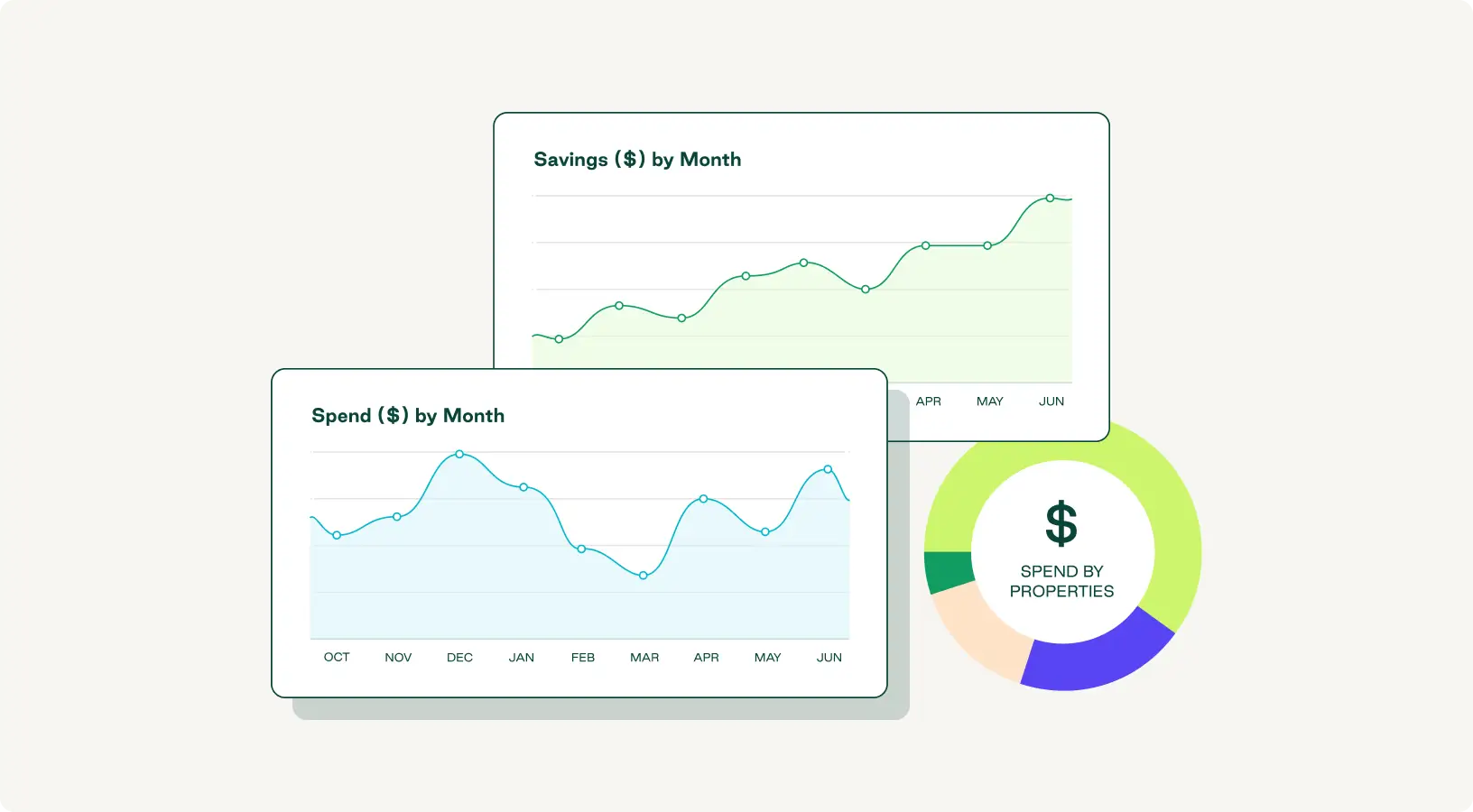
Order.co's virtual cards help prevent overspending and improve spend visibility with customizable controls, real-time spend analytics, and cardholder-level policy enforcement. You can also leverage Order.co’s procurement catalog to replace manual purchasing processes with automated approval workflows, providing total spending transparency for strategic decision-making.
Schedule a free demo to see how Order.co’s virtual cards can help your business operate with enterprise-level efficiency—even with a lean finance team.
FAQs
Get started
Schedule a demo to see how Order.co can simplify buying for your busines
"*" indicates required fields
Order.co AI has worked behind the scenes for years, empowering businesses to buy smarter, save more, and gain complete control over spend. Now, with the Order.co AI Command Center (beta), that intelligence is fully interactive, immediate, and accessible to every user, redefining what AI can do in procurement and finance.
Register now to see the Order.co AI Command Center in action →
AI behind the scenes, now at your command
Before the Command Center, Order.co’s AI worked in the background to find savings, consolidate tracking information, and recommend approvals. While users could see these insights, they couldn’t directly interact with or control the AI’s capabilities. Now, with the launch of the Command Center, everything the AI has been doing behind the scenes is now directly accessible and ready to execute tasks and achieve business goals on your behalf.
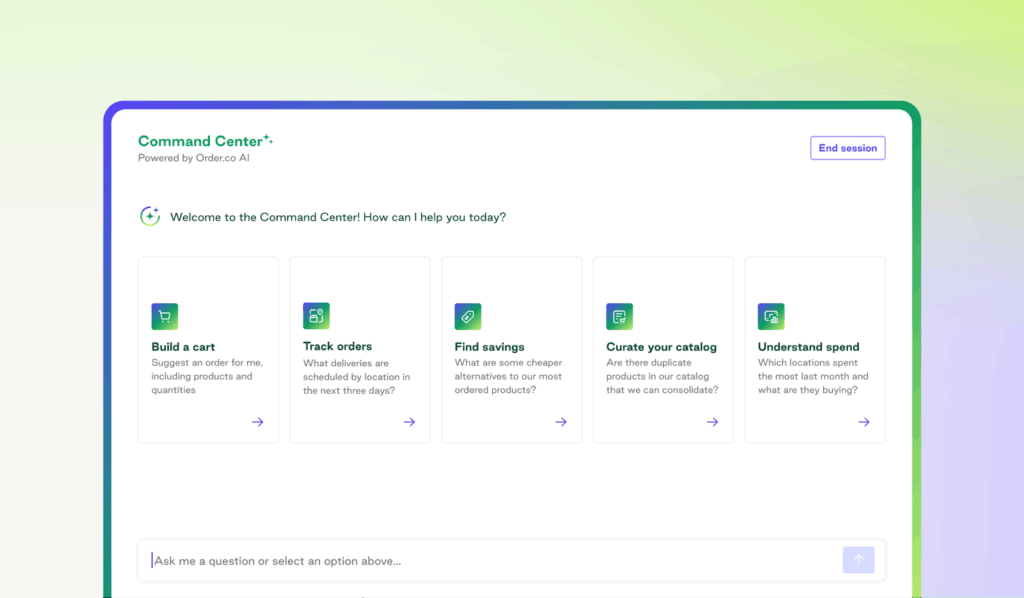
In the Command Center, users can command specialized Order.co AI agents across finance, purchasing, and procurement to take action instantly, turning intelligence into results at every level of the business. And unlike other AI tools on the market, the Command Center leverages the unique context of your business, so every recommendation and action is tailored to your specific needs.
Specialized AI agents at work
The Order.co AI Command Center is powered by specialized agents that handle finance, purchasing, and procurement tasks with precision and context for your business.
- Finance agents analyze spend trends, provide detailed reporting, and surface cost-saving opportunities.
- Purchasing agents build and optimize carts, track deliveries, and maintain clean catalogs by removing duplicates or stale items.
- Procurement agents suggest smarter sourcing options, evaluate vendor alternatives, and analyze order history to support strategic decisions.
These agents work together to give teams the ability to execute tasks instantly, make informed decisions, and optimize workflows across the organization.
How teams can leverage the Command Center
The Command Center brings AI directly into everyday workflows, enabling teams to act on insights and complete complex tasks in moments.
For example, at the procurement level, a company pursuing a sustainability initiative can ask the Command Center to find eco-friendly alternatives for products without increasing cost. Order.co AI agents analyze vendors, source options, and consider historical order data to suggest greener alternatives at the same price or cheaper, delivering a ready-to-order list that aligns with both budget and environmental goals.
At the purchasing level, if the person who handles ordering is out sick, someone else can prompt the Command Center with a phrase like, “Prepare a cart with everything the supplies we need for this week.” Order.co AI agents then analyze historical orders and automatically generate a complete, optimized cart, ensuring the location stays stocked efficiently without manual effort or risk of missing key items.
At the finance level, the Command Center empowers CFOs and finance teams to understand broader trends. A CFO can request, “Show spend trends for the past quarter and highlight opportunities to reduce costs.” The Command Center instantly generates a detailed, actionable report that gives finance leaders the intelligence needed to make smarter purchasing decisions without waiting for manual reports or digging through spreadsheets.
These examples are just a few ways the Command Center transforms complex, time-consuming tasks into simple, actionable workflows, making procurement and finance teams faster and more strategic.

Beyond ChatGPT: How Finance and Ops Leaders Can Turn AI Into Action
Learn how AI with full business context can automate decisions, cut manual work, and deliver real results for your team. Plus, see a live demo of the AI Command Center in action.
"*" indicates required fields
Experience Order.co AI Command Center for yourself
In fast-paced finance and procurement environments, even small inefficiencies can cost hours and dollars. The Order.co AI Command Center turns invisible intelligence into actionable results that save time, reduce costs, and empower teams to focus on higher-value work. Ready to see how these AI capabilities can work for your business?
Join a live webinar to discover how the Command Center is redefining what AI can do for finance and procurement.
To see how the Command Center can work for your specific business needs, schedule a personalized demo here.
This is just the beginning. The Command Center will continue evolving, unlocking new capabilities, deeper predictive insights, and even greater impact for finance and procurement teams.
Get started
Schedule a demo to see how Order.co can simplify buying for your business.
"*" indicates required fields
The role of procurement has evolved from a back-office purchasing function to a strategic driver of value and efficiency. This shift defines modern procurement transformation.
Since traditional procurement initiatives can no longer fully support the dynamic needs of today's teams, optimizing your source-to-pay workflows can create a competitive advantage. The payoff comes from greater spending efficiency, deeper cost savings, and increased operational productivity.
This guide breaks down how procurement transformation bridges the gap between spend and strategy, offers actionable tips for transforming your procurement function, and explores what to expect from the future of procurement.
Download the free ebook: Spend Analysis Toolkit
What is procurement transformation, and why does it matter?
Procurement transformation is the restructuring of a company’s procurement process, systems, and staff to elevate it from an administrative function to a strategic, cost-focused one.
Given the instability of the current state of supply chain management, you've likely already felt impacts like increased costs and delayed deliveries. Almost half of global supply chain executives expect more shocks in the coming 24 months, yet traditional supply chain and procurement practices offer little in the way of prevention or risk control.
By shifting from transactional to tactical procurement management methods, you can better align sourcing and purchasing activities with your organization’s broader objectives. Procurement transformation helps you extract more value from these activities while reducing operational costs and mitigating potential supply chain risks.
Procurement transformation ROI: Top benefits for mid-market companies and large enterprises
Over 50% of procurement teams have adopted automation technologies to improve speed, efficiency, and responsiveness. This adoption supports the primary aim of procurement transformation: reducing costs through a more productive and strategic spend management approach.
Key benefits of procurement transformation include:
- Improved cost savings: Modern procurement software solutions support significant bottom-line savings by centralizing purchasing, consolidating vendors for better prices and discounts, and eliminating process bottlenecks.
- Greater procurement process efficiency: Automated workflows and centralized data management shorten procure-to-pay cycle times and identify inefficiencies you can prioritize based on impact and value.
- Advanced compliance and risk management: More accurate spend data, coupled with smooth supplier onboarding processes, reduces exposure to common supply chain risks while ensuring adherence to company and contract policies.
- Smarter strategic initiatives: Transformation gives you a clearer picture of spending patterns, helping you curtail maverick spend and leverage historical data for smarter purchasing decisions.
While upfront costs are typically unavoidable, effective procurement transformation offers significant returns on your investment once fully implemented.
For example, global coworking company WeWork faced slow manual AP processes and limited spend visibility as it grew. To address these challenges, it transformed its procurement department to reduce the resources required for accounts payable.
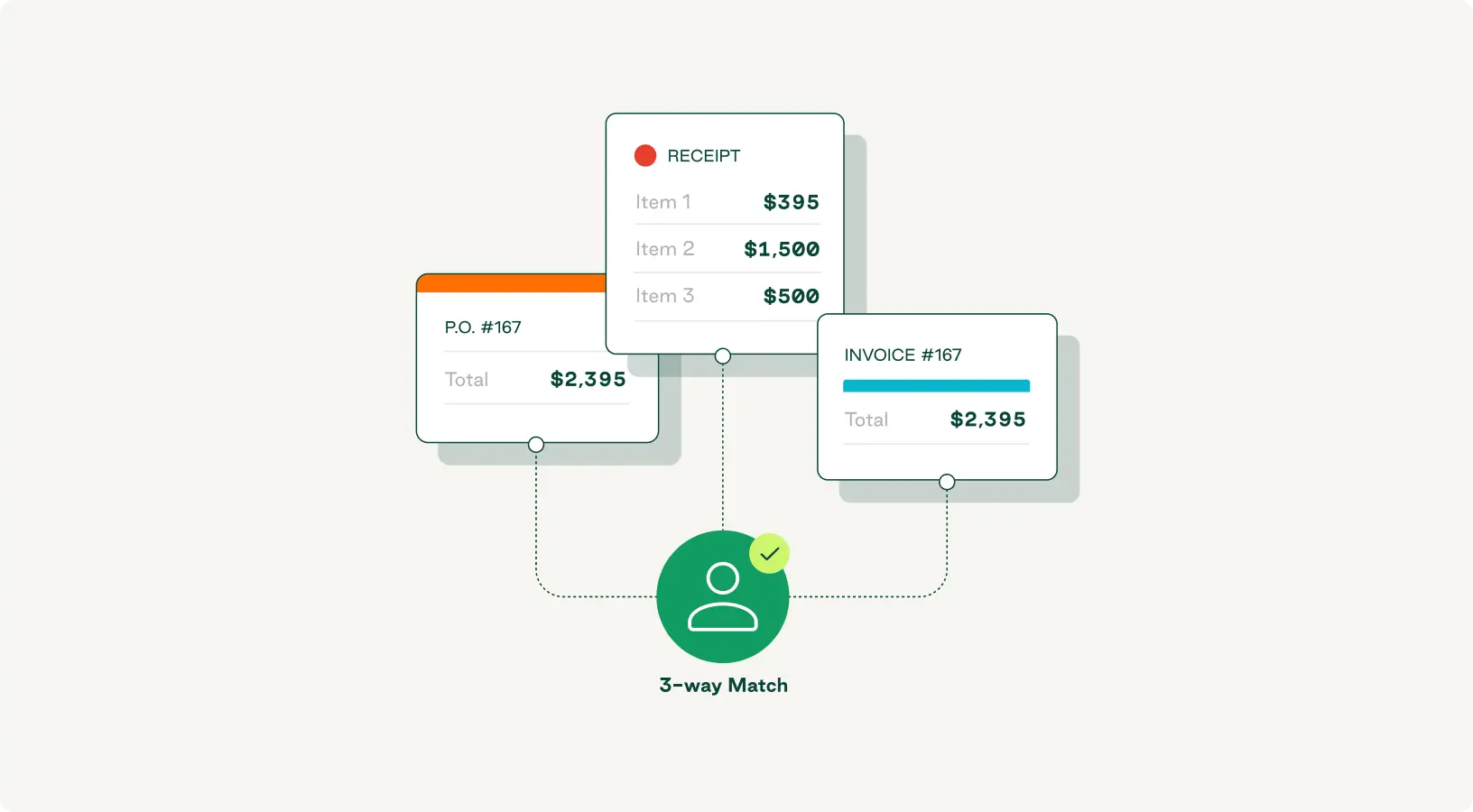
After investing in Order.co’s dynamic procure-to-pay software, WeWork automated thousands of invoices, consolidated 110 vendors, and centralized its purchasing. This resulted in significant time and cost savings, with a faster requisition process and automatic three-way matching for invoice payments.

Spend Analysis Toolkit
Unlock savings, improve supplier relationships, and make smarter procurement decisions with clearer spend insights. Download the ebook to get started.
How to build your procurement transformation vision and strategy
A well-defined procurement transformation roadmap provides the foundation for success. Rather than immediately investing in technology and processes that seem beneficial, begin by preparing your organization and creating an implementation plan based on your desired outcomes.
Set clear, SMART transformation goals
SMART (Specific, Measurable, Achievable, Relevant, Time-bound) goals help you break your vision into actionable objectives to create a strategy that’s more likely to succeed over the long term.
Use this template to develop SMART goals for your procurement transformation strategy:
| Criteria | What it means | Example |
| Specific | Make your goal clear and detailed rather than vague or broad. | We will reduce maverick spending on raw materials for manufacturing. |
| Measurable | Include criteria for tracking progress and measuring success. | We will reduce it by 30%, from $10,000 to $7,000 per month. |
| Achievable | Ensure the goal is realistic and within your team’s capabilities. | This reduction is achievable based on spend analysis insights and the projected ROI of upgrading systems. |
| Relevant | Align it with your company’s overall objectives and priorities. | This supports our primary company goal of tightening budget controls and reducing procurement costs. |
| Time-bound | Define a deadline or timeframe for completion. | We will achieve this goal within 12 months of project launch. |
Align stakeholders and governance bodies
Stakeholder buy-in is essential for smooth procurement transformation. To promote adoption across teams, secure support by assigning change champions from each department.
Establish a cross-functional governance body to act as your steering committee. Include leaders from Finance, IT, Operations, Legal, and other departments affected by the transformation. Their job will be to encourage interdepartmental collaboration, provide guidance, and approve key decisions.
This way, when it comes time to implement new procurement systems or processes, you can guide all relevant stakeholders effectively, enabling frictionless user adoption.
Operating model redesign: Centralized, decentralized, or hybrid?
The choice of procurement operation model determines how your new structure functions and is governed. There are three options for you to choose from:
- Centralized: You make a single, central procurement team responsible for all your company's strategic decision-making and procurement activities.
- Decentralized: You split responsibility between different business units, locations, or departments—each with its own procurement team operating independently.
- Hybrid: You create a central team that defines your procurement strategy and policies and manages enterprise-wide categories for your new procurement function while letting decentralized teams handle specific categories or locations.
This table highlights the pros and cons of each model:
| Model | Advantages | Disadvantages |
| Centralized | - Provides maximum control and tight restrictions - Standardizes policies for the entire company - Centralizes expertise and strategic planning | - Results in slow and bureaucratic processes that lead to bottlenecks - May lack category- or location-specific experience - Doesn’t encourage cross-functional collaboration |
| Decentralized | - Improves agility and responsiveness for localized needs - Aligns departmental goals with the wider organization - Empowers specific business units through greater ownership and responsibility | - Fragments spend allocation, resulting in decreased negotiating power - May result in duplicate processes that create inefficiencies - Limits skill development due to siloed expertise |
| Hybrid | - Balances the control of a centralized team with greater departmental autonomy - Drives overall strategy while tactically aligning business units - Maximizes efficiency and cost savings for both common and nuanced categories | - Requires a strict governance system to avoid confusion or duplication - May result in friction between the central team and departmental teams - Relies on strong leadership to ensure adherence to company policies |
Learn how to build the ideal procurement structure for your projects with Order.co’s Project Procurement Management Plan.
Digital-enablement blueprint: Technology selection criteria
Technology is the primary enabler of digital procurement transformation, and selecting the right tools is critical to the success of your restructuring.
“Everyone looks at procurement to help make sure that we're driving cost reduction so we can reinvest in the business,” says PepsiCo’s VP of Strategy and Transformation, Lauren Hymen. She goes on to point out that leveraging advanced analytics is key to unlocking opportunities and cost savings across all of the brand's procurement categories.
While there are a few essential features for procurement software, the functionality you need will largely depend on your “why” for implementing new technology. Prioritize tools that support your overall business objectives over the nice-to-haves.
Here are three high-impact features to look for when selecting digital procurement technology:
- Spend analytics: Data analytics is essential for accurate forecasting. Real-time spend analytics and reporting functionality help you make data-driven decisions, identify opportunities to reduce costs, and accurately monitor ongoing performance.
- Procure-to-pay automation: Increasing procurement process efficiency helps ensure more profitable, productive operations. Automated workflows for tasks like invoice reconciliation, purchase order generation, and approvals will bring your costs down while improving spend control and visibility.
- Software integrations: For end-to-end transparency, you need centralized data synchronization between all your accounting and purchasing systems. Technology that integrates with your existing ERP and finance tools enables data consistency and supports cross-functional collaboration.
When defining your technology selection criteria, it’s helpful to list all possible features ranked by impact and necessity. This makes it easier to compare different solutions and find the one that’s best for your unique needs.
Spend Analysis Toolkit
Unlock savings, improve supplier relationships, and make smarter procurement decisions with clearer spend insights. Download the ebook to get started.
"*" indicates required fields
Phased rollout and practical roadmap
The smart way to approach procurement transformation is to take it step by step.
Instead of overhauling workflows and technology all at once, follow a phased methodology to minimize risk and demonstrate value while building momentum.
Phase 1: Assessment and quick-wins checklist
Begin with a comprehensive spend analysis to identify low-hanging fruit and high-impact opportunities. Consider applying the Pareto principle to find the 20% of activities that account for 80% of spend.
Next, create a checklist of quick-win actions, such as:
- Secure stakeholder buy-in and establish change management leaders from cross-functional teams.
- Integrate new technologies with your existing ERP, accounting, and other business software tools.
- Automate the most time-consuming manual tasks, including PO approvals, payment processing, and invoice reconciliation.
- Consolidate spend for simple, high-volume categories like office supplies and raw materials.
- Test new processes and technology solutions on a single, nuanced spend category to measure early returns on investment.
Remember to track and document your progress with each step. Note efficiency gains, implementation bottlenecks, and cost savings to quantify the success of the transformation.
Phase 2: Full-scale launch and optimization
Once your implementation is underway, you can start making broader changes across your entire organization. Leverage learnings from the first phase to continually adjust and improve your strategy.
A 3–6-month roadmap with specific milestones can help you pace your rollout. Create timelines for activity completion and assign responsibilities and leadership roles to maintain accountability.
For example, your implementation roadmap might look like this:
- Month 1: Implement new technology for the highest-impact categories and establish company policies and governance.
- Month 3: Standardize policies and processes across every spend category and business unit.
- Month 5: Formalize staff training programs and workshops to encourage user adoption.
Phase 3: Dashboards and continuous improvement
Procurement transformation is an ongoing process, not a one-time upgrade. Develop performance dashboards that track KPIs aligned with your core objectives to support continuous improvement and maximize long-term benefits.
Here are some useful metrics for monitoring transformation effectiveness:
- Procure-to-pay cycle time
- Supplier on-time delivery rate
- New technology user adoption rate
- Spend under management
- Contract compliance rate
Review these metrics monthly to identify opportunities, bottlenecks, and pain points. Collaborate with stakeholders from each department to adjust your strategy based on ongoing performance.
What’s next? AI and the future of procurement
The switch from paper-based systems to digital ones represents the first major shift in procurement strategy. Now, artificial intelligence and machine-learning algorithms are the driving force behind transforming procurement into a strategic cost-saving function.
To capitalize on the benefits of these technologies, you need the right tools. Order.co is a robust procure-to-pay and spend management platform that uses AI to help you:
- Maximize efficiency and save money with automated procurement workflows
- Leverage advanced analytics to improve spend visibility and contract management
- Accelerate purchasing with tighter controls and automatic approval routing
- Increase user adoption with faster, more intuitive strategic sourcing and eprocurement
Schedule a free demo to see how Order.co transforms procurement with automation, decentralized workflows, and intelligent spend management.
Get started
Schedule a demo to see how Order.co can simplify buying for your business.
"*" indicates required fields