Best Procurement Software in 2026: Top Platforms Compared

Best Procurement Software in 2026: Top Platforms Compared
Procurement is one of the largest cost centers most companies have, yet it often runs on manual processes that slow buyers down and hide where money is going. Procurement software fixes that by automating requests, approvals, ordering, and reporting.
To build a list of the best procurement software, we evaluated nine platforms on pricing, core procurement features, and integrations, with a focus on how each serves growing mid-market and enterprise teams.
Quick answer:
- Procurement software replaces manual purchasing with automated requests, approvals, ordering, and reporting so teams spend less time chasing paperwork and more time making smart buying decisions.
- The right fit depends on your budget, team size, ERP and accounting integrations, and the type of spend you manage.
- Enterprise suites like Coupa and SAP Ariba offer depth but come with longer implementations and higher costs, while tools like Precoro, Procurify, and Spendwise serve leaner mid-market and small-business needs.
- For teams managing high-volume physical goods spend across many locations, Order.co is the standout. It connects buyers to a 40,000+ vendor network, automates ordering and fulfillment from request to delivery, and tags every line item to the right GL account for accurate, compliant spend.
Evaluating your options? Take a self-guided tour of Order.co
Best procurement software comparison
Here's how nine top platforms compare at a glance.
A note on methodology: We evaluated each platform using publicly listed or reported pricing, documented integrations, and the company sizes each tool is built to serve. Where a vendor only quotes custom pricing, we noted that rather than estimating.
| Tool | Best for | Starting price | Company size | Key integrations |
| Order.co | High-volume physical goods spend across multiple locations | Custom (book a demo) | Mid-market to enterprise | NetSuite, QuickBooks Online, Sage Intacct, Workday |
| Planergy | Mid-market procure-to-pay with heavy ERP needs | Custom (min. 5 users) | Mid-market | QuickBooks, Oracle, SAP, Microsoft Dynamics |
| Procurify | Fast approvals plus spend cards | ~$500/user/year (custom) | Mid-market | NetSuite, QuickBooks, Sage Intacct |
| Precoro | Out-of-the-box e-procurement | From $499/month | Small to mid-market | QuickBooks Online, Xero, NetSuite |
| Coupa | Enterprise all-in-one business spend management | Custom (reported ~$30K+/year) | Enterprise | SAP, Oracle, NetSuite |
| Airbase | Mid-market spend management plus AP | Custom | Mid-market (up to ~5,000 employees) | NetSuite, Sage Intacct, QuickBooks |
| Spendwise | Small-business budget tracking and approvals | From $9/user/month | Small business | QuickBooks |
| Tipalti | Mass payouts to contractors and vendors | From $99/month platform fee | Mid-market | NetSuite, QuickBooks, Sage Intacct |
| SAP Ariba | Enterprise source-to-pay on SAP | Custom | Enterprise | SAP ERP, S/4HANA |
The procurement software market reflects the demand for tools like these: It was valued at $7.5 billion in 2024 and is projected to reach $17.8 billion by 2034, with a 9.2% compound annual growth rate.
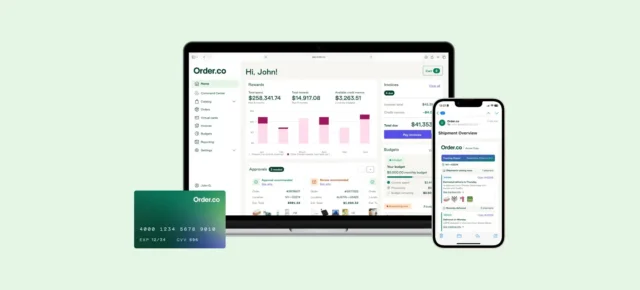
See where Order.co fits on your shortlist
Tour the product yourself now — no demo request, no waiting.
The 9 best procurement software solutions
With this many options on the market, the best choice gives you the right mix of features without adding complexity to how your team already buys.
1. Order.co
Rated 4.4/5 based on 145 user reviews
- Best for: High-volume physical goods spend across multiple departments and locations
- Starting price: Custom (book a demo)
- Key integrations: NetSuite, QuickBooks Online, Sage Intacct, Workday
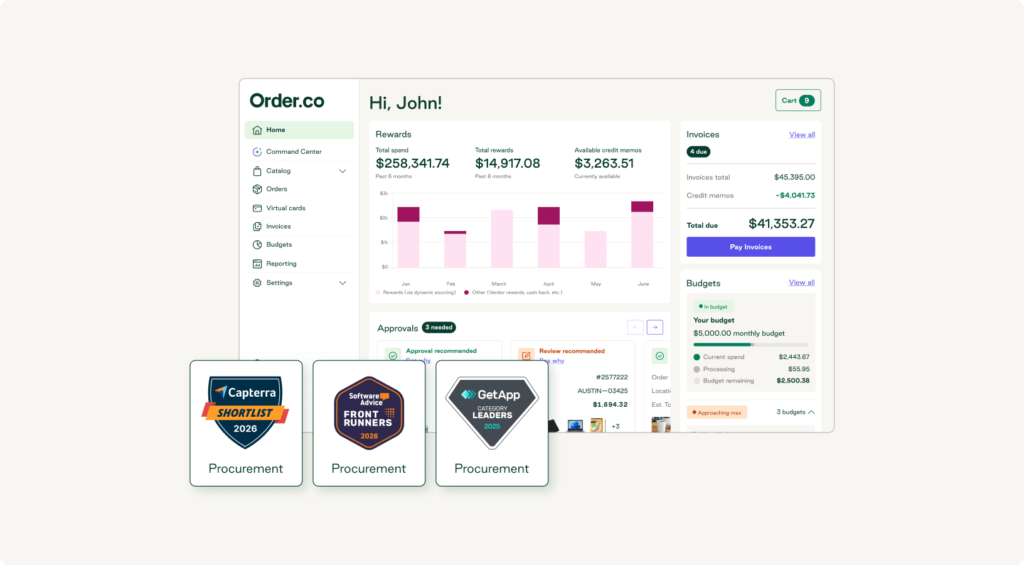
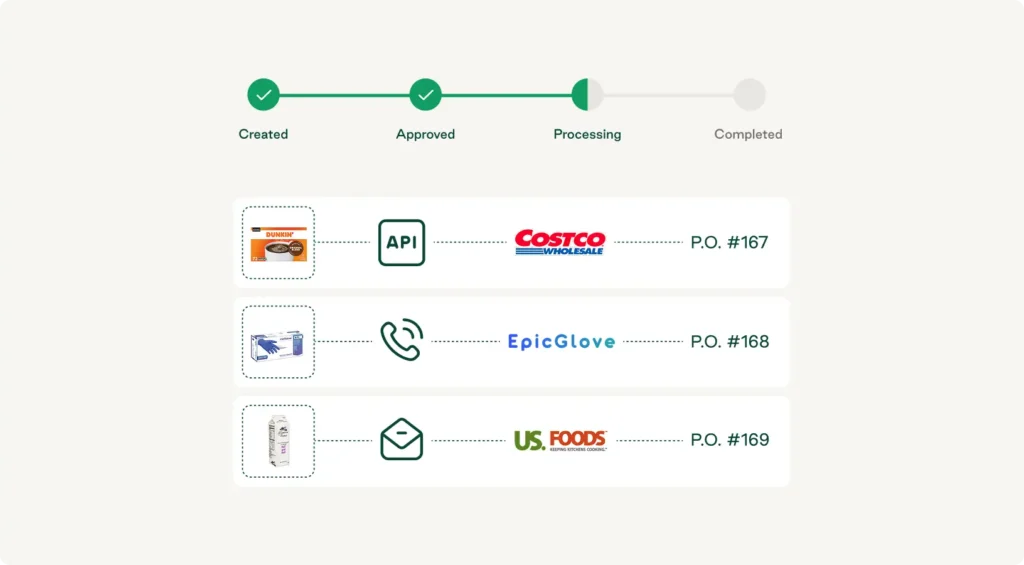
Order.co is an AI-powered procurement software and finance automation platform built for organizations buying physical goods at volume across many departments and locations. Buyers order what they need from a curated catalog of pre-approved products and vendors, and Order.co generates the POs, sends them to vendors, and places the orders. That end-to-end automation of ordering and fulfillment is its biggest point of difference from platforms that stop at approval routing.
Order.co is vendor-agnostic, with a network of 40,000+ vendors and a dedicated onboarding team to bring your existing vendors onto the platform. Its sourcing algorithm finds the best available price or alternatives for out-of-stock goods, and businesses see an average 5% hard-dollar savings as a result.
Pros
Reviewers consistently call out ease of use: If you can shop on a website, you can use Order.co. Buyers like having approved vendors in one curated marketplace, and finance teams like that every line item is tagged to the correct GL account, cost center, and entity so coding stays accurate down to the individual item (not just the transaction).
Customer support also earns steady praise for handling custom product requests and shipping issues quickly.
Considerations
Order.co is built for indirect procurement, like operating supplies, packaging, and services, rather than direct sourcing of production materials, meaning manufacturers running formal RFQ processes for raw inputs may want a dedicated strategic sourcing tool alongside it. Pricing is custom and tied to spend volume and locations, so teams that prefer published self-serve tiers should expect an upfront conversation.
Proof point
WeWork uses Order.co to handle roughly 2,400 orders and 3,000 invoices a month across 800+ locations, consolidating 110 vendors onto a single platform.
“Even before signing-on with Order.co, I had been so impressed with how much they simplify the purchasing and payment process. I call Order.co ‘My Baby.’ The ability Order.co has to mold to what your company needs is ideal,” says Kyle Ingerman, Senior Manager of Finance Transformations.
2. Planergy
Rated 4.9/5 based on 34 user reviews
- Best for: Mid-market procure-to-pay with heavy ERP integration needs
- Starting price: Custom (minimum 5 users)
- Key integrations: QuickBooks, Oracle, SAP, Microsoft Dynamics
Planergy is a SaaS-based procurement and spend management system that gives businesses more control over financial operations across the procure-to-pay cycle. Reviewers point to its integration options as a standout, with connections to top accounting and ERP systems, including QuickBooks, Oracle, SAP, and Microsoft Dynamics. It also scores well for vendor information and supplier management.
Pros
Reviewers say Planergy is straightforward to set up and use, and multiple users note how responsive the support staff is.
Considerations
Some users find the search features inflexible, where a typo or syntax change can return zero results, and others report losing search parameters when paging back from a completed search.
3. Procurify
Rated 4.6/5 based on 396 user reviews
- Best for: Teams that want fast approvals plus built-in spend cards
- Starting price: ~$500 per user/year (custom quote)
- Key integrations: NetSuite, QuickBooks, Sage Intacct
Procurify speeds up purchasing workflows and helps teams clear approval bottlenecks. Buyers submit purchase requests through a dynamic interface, and real-time, customizable budgets keep spending on track. Procurify also offers a virtual and physical spending card system that issues cards to employees and maintains visibility into spend by user, returning between 1% and 3% cashback on card purchases.
Pros
Users point to ease of use and fast, flexible approval workflows as the purchasing software's major selling points. It's a strong fit for mid-market organizations outgrowing lighter vendor management tools.
Considerations
Some users feel the accounting and budgeting features could be stronger, and catalog functionality is limited to simple ordering without order duplication or trend and usage reporting.
4. Precoro
Rated 4.7/5 based on 215 user reviews
- Best for: Mid-market teams that want out-of-the-box e-procurement
- Starting price: From $499/month
- Key integrations: QuickBooks Online, Xero, NetSuite
Precoro is e-procurement software that simplifies purchasing and the user experience. Where other systems lean heavily on integrations, Precoro promises out-of-the-box functionality, short implementation times, and a deep feature set, which makes it a flexible mid-market option.
Pros
Precoro frees companies from paper-based and manual processes to save time and money. Users like its accessibility and financial insights, giving it high marks for visibility, spend management, and procurement automation.
Considerations
Some reviewers note limited flexibility when building purchase orders, and a few have run into issues setting up integrations successfully.
5. Coupa
Rated 4.2/5 based on 569 user reviews
- Best for: Enterprises wanting an all-in-one business spend management suite
- Starting price: Custom (reported around $30K+/year)
- Key integrations: SAP, Oracle, NetSuite
The Coupa procurement module is one part of the Coupa Business Spend Management suite. This enterprise tool serves healthcare, retail, and education, with use cases spanning goods and services procurement and contingent worker spend. It offers guided buying alongside spend visibility and sourcing features, and suits organizations that want an enterprise-class, modular solution.
Pros
Coupa earns high marks for fast processing and easy PO and purchase requisition generation, plus enterprise features like risk management, supply chain management, and travel and expense management.
Considerations
Some users describe a steep learning curve, and others mention reliability issues and rigid reporting that requires workarounds.
6. Airbase
- Best for: Mid-market teams that want spend management plus AP in one tool
- Starting price: Custom
- Key integrations: NetSuite, Sage Intacct, QuickBooks
Airbase is a mid-market spend management system with budgeting, expense tracking, spend analysis, and visibility tools. It also offers workflow automation and guided procurement that lets administrators control office supply procurement and equipment purchasing.
Pros
Airbase includes AI assistance and supports multi-location, multi-department ordering for organizations of up to 5,000 employees. It also supports procurement cards for on-the-go buying of non-physical items like software licenses.
Considerations
Some features are reportedly clunky, with users citing approval workflows for POs and contract payments as difficult to use. It also doesn't allow bulk uploads of expense documentation, which can require manual fixes.
7. Spendwise
Rated 4.7/5 based on 69 customer reviews
- Best for: Small businesses that need simple budgets and approvals
- Starting price: From $9 per user/month
- Key integrations: QuickBooks
Spendwise is an easy-to-use spend management tool for small businesses that lets finance teams route, approve, and report on spending. Its role-based architecture makes purchase order creation and approval simple, and receiving features help accounting teams track orders for faster reconciliation.
Pros
Spendwise's interface makes it easy to produce new POs and research prior orders. It offers solid basic integrations, including QuickBooks, and 25 ready-to-use reports that cover common business needs.
Considerations
Some processes may need improvement as a company scales. PO features can overlap, creating the chance of duplicate PO numbers when two people access the same one, and reporting customization is limited.
8. Tipalti
Rated 4.5/5 based on 419 customer reviews
- Best for: Companies making mass payouts to contractors and vendors
- Starting price: From $99/month platform fee
- Key integrations: NetSuite, QuickBooks, Sage Intacct
Tipalti is a well-featured tool for mid-market companies that simplifies the procurement and expense process for real-time spend visibility. Its mass payment features suit companies that rely heavily on contractors and freelancers, and its procurement tools help finance teams reduce rogue spend and maintain compliance across vendors.
Pros
The platform offers a clean, easy-to-understand interface that simplifies routine tasks like adding payees, approving invoices, and recording payments. It also has strong integration options to keep data consistent across systems.
Considerations
Many users report issues with payment features, such as the lack of a quick settlement option, and payment effectiveness can vary by currency and country. Expense reporting can require some manual entry without an upload tool.
9. SAP Ariba
Rated 4.1/5 based on 792 customer reviews
- Best for: Enterprises running source-to-pay on SAP
- Starting price: Custom
- Key integrations: SAP ERP, S/4HANA
SAP Ariba is the procurement component of the SAP ERP suite. It offers robust features for enterprises that need a unified way to control budgets and increase visibility, with a guided procurement model for requesting and tracking supply orders.
Pros
The platform is highly customizable for large organizations that need specialized workflows and have SAP-aware teams to administer them. It integrates with other top tools to unify data, making it a strong enterprise option.
Considerations
The interface is less intuitive than other options here, and because it's built for SAP-aware teams, support isn't always available to answer user questions.
What is procurement software?
If you're still defining the category, Order.co's guide to what procurement software is covers the basics in depth. In short, procurement software automates the purchasing process from initial request to final invoice, helping companies manage purchase orders, contracts, and spend analytics with greater visibility and less manual work.
How to choose procurement software
The best tool is the one that fits how your team actually buys, connects to the systems you already use, and earns its keep within the first quarter.
Use these five factors to narrow the field:
Budget and pricing model. Starting prices for the tools above range from $9 per user/month to enterprise contracts in the six-figure range. Decide whether you want transparent per-user pricing or a custom quote, and account for implementation and support fees, not just the sticker price.
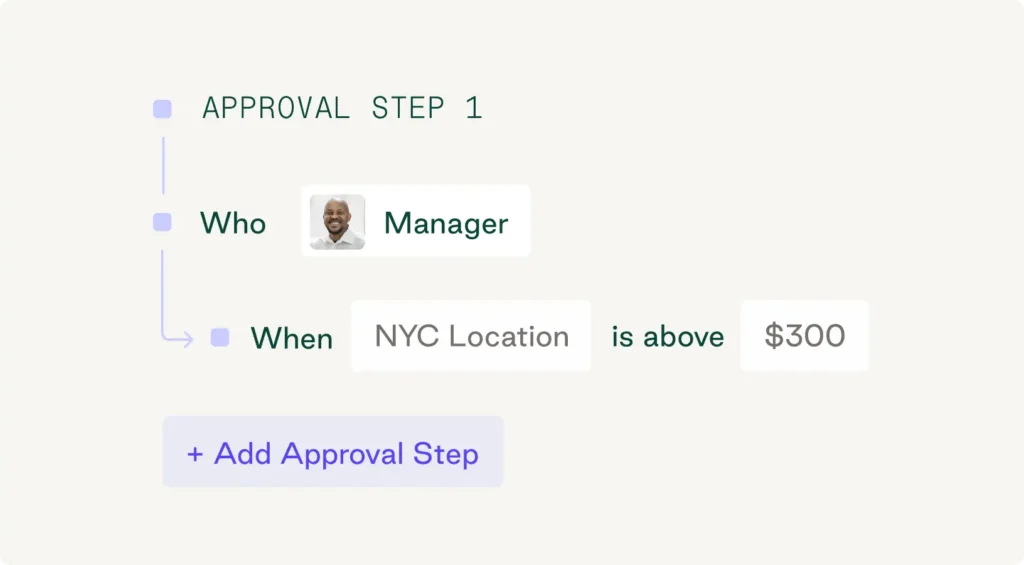
Team size and approval workflows. Match the tool to your headcount and how purchases get approved. Small teams may only need simple routing, while multi-location organizations need workflows that handle many departments and buyers without slowing anyone down. Mapping your procurement process first makes this easier.
ERP and accounting integrations. Confirm the platform connects to your accounting and ERP systems, such as NetSuite, QuickBooks, or Sage Intacct, so purchase and payment data flows where it needs to go.
Vendor management needs. Consider how the tool handles vendor sourcing, onboarding, and catalog control. If you buy physical goods at scale, look for a broad vendor network and catalog curation that shows only pre-approved products and vendors to buyers, so compliant purchasing is the default. (For context on related concepts, see how a punchout catalog works.)
Reporting and compliance requirements. Look for real-time spend visibility, accurate GL coding, and reporting that gives finance the detail it needs to forecast and stay compliant.
See where Order.co fits on your shortlist
Tour the product yourself now — no demo request, no waiting.
Find the right procurement software for your team
Choosing the right procurement software comes down to trade-offs across pricing, integrations, team size, and spend controls. Enterprises with SAP or deep modular needs may lean toward Coupa or SAP Ariba, small businesses watching budgets may prefer Spendwise or Precoro, and finance teams making heavy contractor payouts may look at Tipalti.
For mid-market and enterprise teams managing high-volume physical goods spend, Order.co brings the strongest combination of a 40,000+ vendor network, automated ordering and fulfillment, line-item GL tagging, and catalog-level control. It also pairs procurement with AP automation and procure-to-pay so the full buying cycle lives in one platform. This automation reflects a broader shift toward connected, AI-assisted buying across the industry. In Deloitte's 2025 Global Chief Procurement Officer Survey, top-quartile procurement organizations now allocate up to 24% of their budgets to technology, nearly double their 2023 investment.
Want to see what ordering high-volume goods across every location looks like when the ordering and fulfillment run themselves? Schedule a demo of Order.co.
FAQs about procurement software
Small businesses usually want low cost, fast setup, and simple approvals rather than a heavy enterprise suite. Spendwise and Precoro are strong starting points because they offer transparent pricing, easy purchase order creation, and core budgeting and reporting. The best choice depends on your accounting system and how many users need access, so look for a tool that connects to software you already use and scales as your team grows.
Pricing varies widely. Entry-level tools start around $9 per user per month, mid-market platforms often run several hundred dollars per user per month, and enterprise suites are quoted on a custom contract basis that can reach six figures per year. Many vendors don't publish prices and ask you to request a quote based on your size and needs. Always factor in implementation and support costs, not just the base subscription, when comparing options.
Procurement management software handles the early stages of the buying process, including requests, approvals, ordering, and vendor management, so the right things get purchased the right way. AP automation handles the back end, including invoice processing, coding, and vendor payments after goods are received. They solve different problems but work best together, and some platforms combine both so a purchase flows from approval to payment without manual handoffs between systems.
Get started
Schedule a demo to see how Order can simplify buying for your business.
"*" indicates required fields