Procure-to-Pay Best Practices: How to Improve Procurement Workflows

Procure-to-Pay Best Practices: How to Improve Procurement Workflows
Procurement teams know the reality: inboxes flooded with approval requests, supplier relationships scattered across emails, and manual processes that create friction long before finance sees an invoice. By the time a purchase reaches AP, the decision is already made, the vendor is already chosen, and finance is reconstructing the story from receipts.
Effective procure-to-pay (P2P) best practices close that gap by reshaping how buying actually happens. They make the right buying behavior the easiest one, give finance line-item visibility from the moment of purchase, and turn spend data into something procurement teams can actually act on.
Key takeaways: Procure-to-pay best practices
- Most P2P problems stem from processes that don't reflect how people actually buy, pushing employees toward workarounds like personal cards and unapproved vendors.
- Standardizing intake and approval workflows removes the friction that causes buyers to bypass the process entirely.
- Centralizing supplier management gives procurement teams the visibility and leverage needed to negotiate better terms.
- Integrating compliance upstream prevents noncompliant purchases before they happen.
- Order.co supports each of these practices in one platform: curated, vendor-agnostic catalogs guide buyers, approvals route automatically, POs and invoice matching execute without manual handoffs, and AI surfaces spend patterns at the line-item level.
Download the free ebook: The Procurement Strategy Playbook for Modern Businesses
Understanding the procure-to-pay process
The procure-to-pay process is the end-to-end cycle organizations use to acquire goods and services. It covers every step from identifying a need to closing out a transaction, including:
- The purchase requisition: When an employee submits a purchase request
- Approval: When the request is reviewed and approved based on policies and budgets
- Sourcing: When a supplier is selected and a purchase order (PO) is issued
- Receiving: When goods and services are delivered and receive verification
- Invoice processing: When invoices are matched against POs and receipts
- Payment process: When finance processes payment according to the agreed-upon terms
Each stage is both a control point and a potential point of failure. When they're disconnected, inefficiencies compound. A slow approval pushes employees to bypass it. Fragmented vendors mean paying different prices for the same items across locations. Manual data entry introduces errors that take hours to unwind at month-end close.
The P2P cycle becomes a series of isolated tasks rather than a coordinated system, and that's where most procurement managers lose visibility into what's actually happening across their teams.
Why procure-to-pay best practices matter
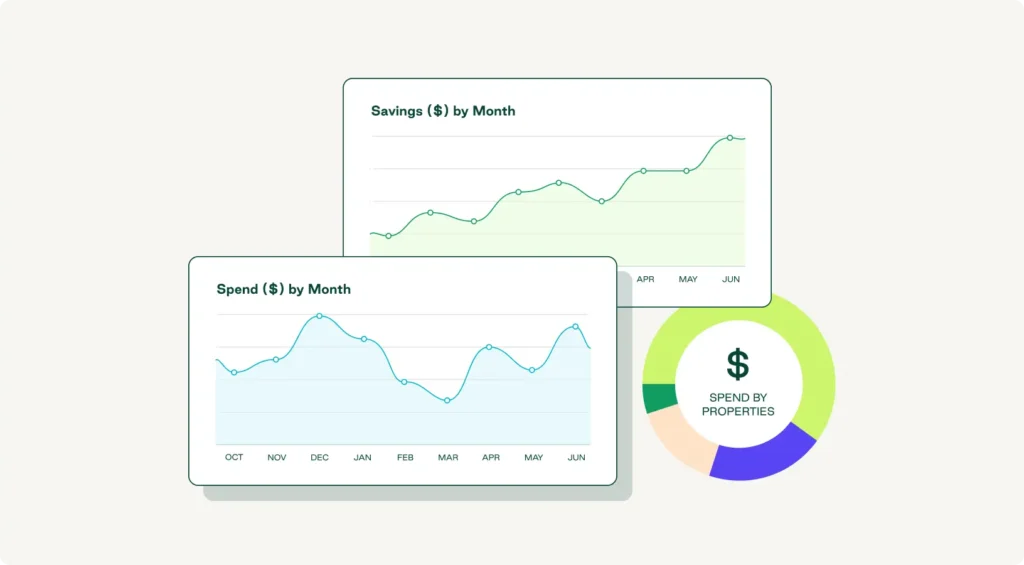
Most P2P problems start with processes that don't match how people actually work. When purchasing is too slow or complicated, employees find workarounds. They use personal cards, skip requisitions, or order from unapproved vendors because it's faster than waiting for approval.
By the time those purchases reach accounts payable, the spend has already happened, and finance is left chasing receipts, piecing together what was bought, and scrambling for invoice approval.
This creates three problems that compound over time:
- Rogue spend becomes the norm. When the approved path takes too long, employees default to whatever gets the job done, such as expensing purchases after the fact or working with vendors that finance has never seen.
- Oversight becomes reactive. Most procurement teams rely on post-purchase reviews like monthly reports, expense audits, and invoice reconciliation. But by then, the money is already gone.
- Multi-location visibility disappears. When each location handles purchasing independently, you can’t see patterns, manage spend, or negotiate better terms.
According to CAPPO survey data, technology integration is one of the top procurement challenges, with nearly half of professionals struggling to fully realize the benefits of the tech they've adopted. Effective P2P best practices break this cycle by closing the gap between how people buy and overall visibility into spend.
The Procurement Strategy Playbook for Modern Businesses
Want to know more about strategic buying? Read our Procurement Strategy Playbook for even more valuable insights.
5 essential procure-to-pay best practices for efficiency, visibility, and smarter purchasing
Strong P2P processes don't rely on a single fix. Every stage is designed to support the next. When done well, your procurement workflow becomes a connected system where requests flow predictably, approvals happen automatically, and spend data is captured in real time.
The goal isn’t to add more steps, but to ensure every step of the procurement process works as intended so nothing falls through the cracks. Here are five practices that make that shift possible.
1. Standardize intake and approval workflows
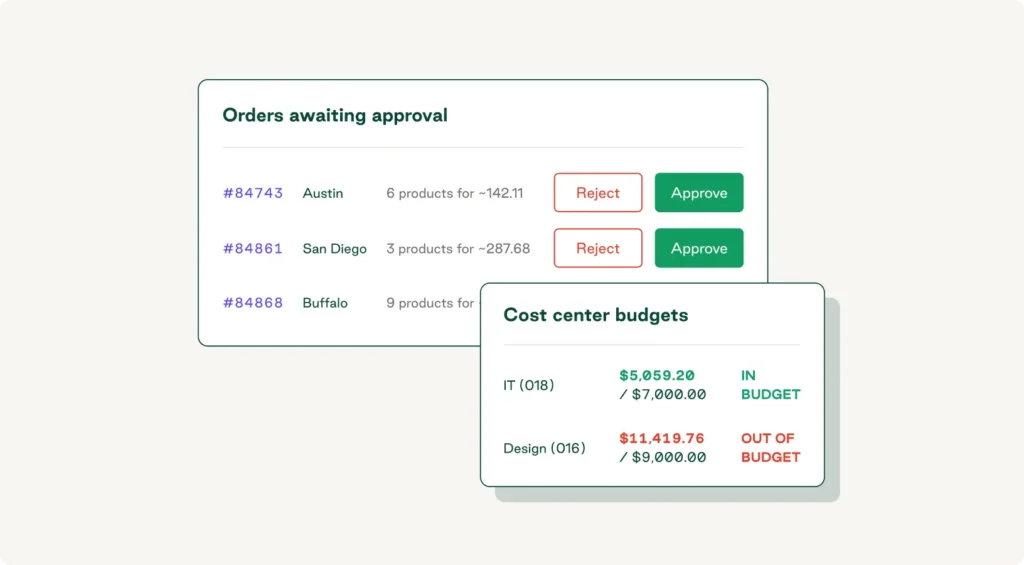
Without a consistent intake process, every purchase request becomes a one-off negotiation. Employees ping managers over Slack, approvals happen in untraceable email threads, and when finance sees the invoice, there's no record of who approved what or why.
A standardized approval process means every purchase request follows the same path regardless of department, location, or requester.
- Requests are routed to the appropriate approvers based on spend thresholds, category, or budget owner.
- Approvers see the context they need without having to chase down details.
- Information finance needs—such as project codes and cost centers—is captured at the moment of request.
When done well, this removes the friction of figuring out how to get something approved, leading to fewer surprises for finance teams and a clear audit trail in your procurement software.
2. Centralize supplier management and consolidate spend
Fragmented vendor relationships create compounding problems. Different locations use different suppliers for the same items, no one knows who's getting the best pricing, and new vendor onboarding means starting from scratch every time.
Centralizing supplier performance and management means establishing a single source of truth for approved vendors, negotiated terms, and payment information across your supply chain. When employees make a purchase in your procure-to-pay software, they should be guided toward pre-approved suppliers as the default, baking compliance into the process.
When this happens, procurement teams can see total spend by vendor across locations. This creates grounds for better pricing and terms, ultimately leading to cost savings.
3. Automate key process steps
Manual processes take time, introduce errors, and create gaps where spend can slip through untracked. When you have to manually enter PO details, engage in three-way matching, or chase down approvals, tasks either get delayed or done inconsistently.
Procurement automation removes the repetitive work that bogs down both procurement and AP teams.
- Purchase orders are generated automatically once a request is approved.
- Invoice data is captured and matched to POs without manual entry.
- Approvals are routed based on predefined rules.
AI takes automation a step further, surfacing context for approvers, recommending vendors based on past purchasing patterns, and flagging anomalies before they become problems. The strongest platforms don't just automate the steps; they make the whole workflow smarter as it learns.
The difference shows up in the procure-to-pay cycle time. When approval routing is automatic, requisitions move from submission to PO in hours rather than days. When invoice data is captured digitally and matched against existing orders using P2P technology, AP teams spend less time tracking down receipts and more time closing the books.
The payoff is substantial, as 93% of CFOs reported a significant reduction in invoice tracking delays after implementing AP automation.
4. Make the compliant path the easiest one
Most procurement systems are forced to catch noncompliant spend after it occurs. Embedding compliance into the approval workflow means the system prevents noncompliant purchases before they're submitted.
- Budget checks happen at the requisition stage.
- Employees can only select from approved vendors.
- Requests that don't meet policy requirements don't make it into the queue.
For some teams, this means requiring budget owner approval above a certain threshold. For others, it means flagging requests that don't include the right cost center codes.
The result is a shift from enforcement to enablement. Employees don’t need to think about compliance because it’s already built into how they buy.
5. Turn spend data into purchasing intelligence
Spend data is only useful if you can act on it. When purchasing happens across disconnected systems, you don't have a clear view of what you're buying, from whom, or at what cost.
Capturing spend data at the point of purchase gives you real-time visibility. You can see which vendors are used most frequently, where spend is concentrated, and which categories are trending over budget. This enables better decision-making — like consolidating spend with fewer vendors to unlock volume discounts, renegotiating terms based on actual usage, or identifying duplicate purchases across locations to avoid overpayment.
AI accelerates this work by automatically surfacing patterns, flagging vendors whose pricing has drifted, identifying where consolidation could unlock savings, and recommending alternatives based on what similar teams are buying. The work shifts from finding the patterns to acting on them.
A solid spend management strategy treats data capture as a byproduct of a process people actually want to use, not an added administrative burden.
The Procurement Strategy Playbook for Modern Businesses
Learn the key pillars of a strong strategy, valuable procurement metrics to track, and initiatives you can start implementing today.
"*" indicates required fields
How Order.co turns P2P best practices into results
Many procurement teams already understand these practices in principle. The challenge is finding a platform that lets them execute consistently, without requiring the team to change how they buy. Order.co was built to close that gap, and the following customer story shows what's possible when best practices stop being aspirational and start being operational.
Real-world example
AKIRA, a multi-location fashion retailer, was struggling with fragmented purchasing, zero visibility into spend, and an accounting team buried in reconciliation work.
After implementing Order.co, the company's entire process shifted upstream. Their team standardized approvals, centralized suppliers, and captured real-time data at the moment of purchase.
Order.co's NetSuite integration gave AKIRA's accounting team the visibility it needed to identify spending patterns, build accurate budgets, and forecast cash flow. Automated GL coding embedded at the point of purchase enabled finance to see exactly which items were purchased from which store and department without manual data entry. Intelligent line-level reconciliation turned month-end close from a multi-day scramble into an efficient workflow.
The results:
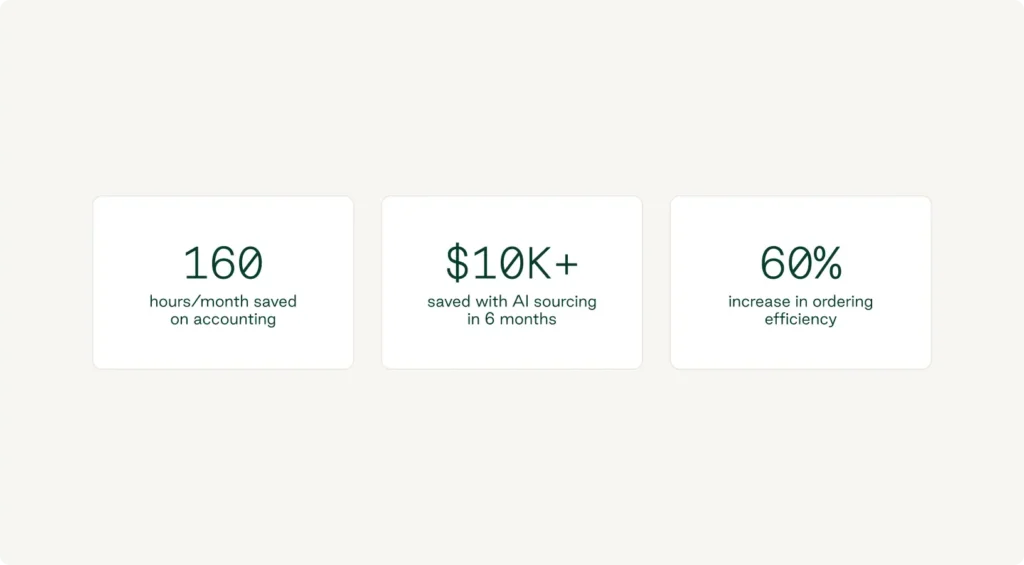
- Standardized intake + automated approvals → 60% increase in ordering efficiency
- Centralized supplier management + AI sourcing → over $10,000 in savings within six months
- Real-time spend data + automated GL coding → 160 hours per month back to the accounting team
“Order.co has streamlined a ton of what we've done by taking out all those manual processes. Everything's already itemized. It links straight to NetSuite for our accounting."
— Kim Arellano, Senior Distribution Manager, AKIRA
Start implementing procure-to-pay best practices with Order.co
Effective P2P happens when buying behavior, finance accuracy, and procurement intelligence all live in the same system. When purchasing reflects how teams actually buy, compliance becomes the default path, and finance stops inheriting a mess at month's end.
That's what Order.co is built for. Curated catalogs guide buyers toward approved vendors, approvals route automatically with AI that surfaces the right context, and every line item is GL-coded the moment it's purchased. The result is faster cycles for buyers, fewer manual handoffs for AP, and procurement leaders making decisions with real-time data.
Book a demo to explore how Order.co can help you implement P2P best practices that actually stick.
FAQs about procure-to-pay best practices
Most teams see improvements in cycle time and approval throughput within 30 to 60 days, especially when starting with practices that touch high-volume workflows, such as intake and approval routing. Bigger structural wins, like vendor consolidation savings and month-end close acceleration, typically show up within one to two quarters as more spend flows through the standardized process and data accumulates for analysis.
Start with whichever practice solves the loudest pain point in your current workflow. For most teams, that's standardizing intake and approval workflows—it's the highest-frequency interaction across the org and tends to be where employees lose the most time. Once that foundation is in place, centralizing supplier management and automating downstream steps build on it naturally.
Procurement best practices cover the full lifecycle, including strategic sourcing, contract negotiation, and supplier evaluation that happens before any purchase decision. Procure-to-pay best practices focus on the operational portion—how a need becomes an approved order and how that order becomes a paid invoice. The two complement each other: procurement decides who you buy from and on what terms, and P2P governs how those purchases actually flow through your business.
Get started
Schedule a demo to see how Order.co can simplify buying for your business.
"*" indicates required fields