8 Best Procurify Alternatives for Growing Procurement Teams (2026)

8 Best Procurify Alternatives for Growing Procurement Teams (2026)
Is Procurify still the right fit as your purchasing volume grows? It's a fair question to ask, since Procurify is one of the platforms growing procurement teams evaluate most often once they've outgrown spreadsheets and email-based approvals.
While Procurify helps you digitize purchase requisition and approval workflows, as procurement volume grows, it's common to discover gaps. The platform excels at routing requisitions and offers punchout catalog integrations for major vendors, but you'll still need to order manually from long-tail suppliers. User reviews also cite ERP integration challenges and workflow limitations, friction that creates post-approval bottlenecks and slows scaling.
Finding the right Procurify alternative requires considering vendor coverage, customization depth, and ERP compatibility. Weighing the leading options against these core requirements helps isolate the platform that best aligns with your team's operational needs.
Quick answer:
- Procurify handles requisition approval workflows effectively but has vendor integration gaps, particularly for long-tail suppliers beyond major punchout catalogs.
- Teams outgrow Procurify when ERP integration challenges, workflow inflexibility, or limited vendor coverage create manual workarounds that offset approval automation benefits.
- The best alternative depends on your vendor ecosystem, whether you need broader automated vendor coverage, more customizable workflows, or deeper ERP integration.
- While purchase order automation reduces manual workloads, effective Procurify alternatives also need to automate actual vendor ordering, since PO generation alone still leaves someone placing the order by hand.
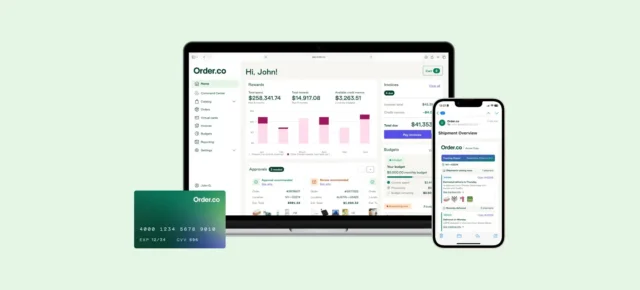
- Order.co addresses these coverage gaps by automating the entire purchasing process — from requisition through vendor ordering, fulfillment tracking, and line-item accounting sync.
Evaluating Procurify alternatives? Start your self-guided tour of Order.co
Procurify alternatives key takeaways
- Procurify handles requisition approval workflows effectively but has vendor integration gaps, particularly for long-tail suppliers beyond major punchout catalogs.
- Teams outgrow Procurify when ERP integration challenges, workflow inflexibility, or limited vendor coverage create manual workarounds that offset approval automation benefits.
- The best alternative depends on your vendor ecosystem—whether you need broader automated vendor coverage, more customizable workflows, or deeper ERP integration.
- While purchase order automation reduces manual workloads, effective Procurify alternatives must also automate actual vendor ordering—not just PO generation.
8 Procurify alternatives procurement teams should consider in 2026
The best Procurify alternative depends on your specific challenges, budget, and stakeholder requirements. Each platform takes a different approach, from end-to-end purchasing automation to enterprise source-to-pay or workflow customization.
| Platform | Best for | Key strengths |
| Order.co | Mid-market and enterprise businesses with distributed teams purchasing physical goods | End-to-end fulfillment and line-item accounting accuracy |
| Precoro | Teams transitioning from spreadsheet-based purchasing to digitized approval processes | Straightforward requisition-to-PO workflows |
| Coupa | Large enterprises with complex procurement requirements and dedicated procurement teams | Full source-to-pay lifecycle and global compliance |
| SAP Ariba | Enterprises already invested in the SAP ecosystem | Deep SAP integration and supplier risk management |
| Kissflow | Organizations with specific workflow requirements that don't fit standard templates | Low-code workflow customization |
| Zip | Teams that want faster, more consistent intake and approvals on top of existing systems | Fast, no-code intake and approval routing |
| Basware | Large enterprises processing high invoice volumes across multiple countries | AI-powered invoice capture and global e-invoicing compliance |
| Vroozi | Teams whose purchasing is concentrated among catalog-enrolled suppliers | Marketplace-style catalog with negotiated vendor rates |
1. Order.co
Customer ratings:
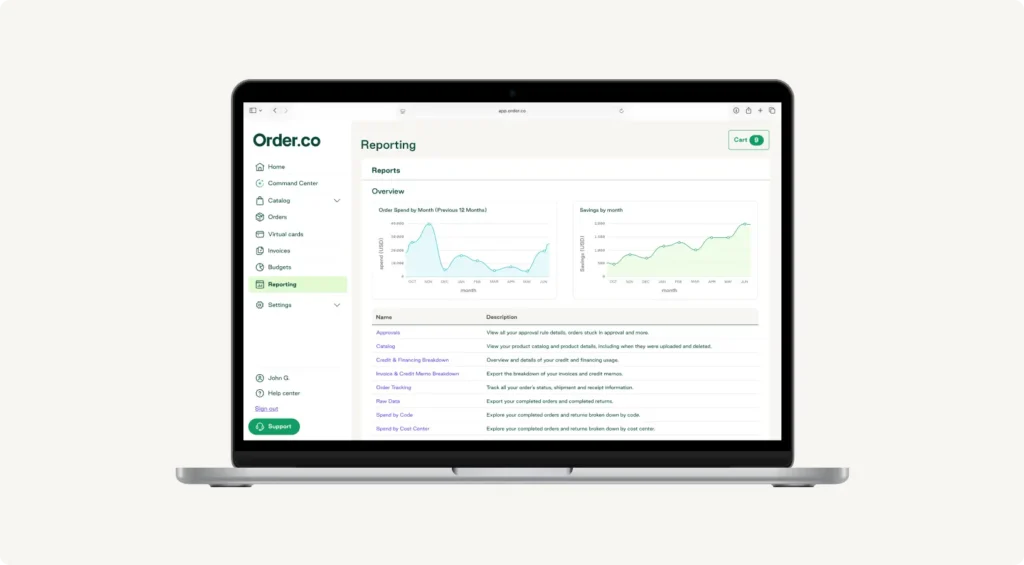
Order.co is a procurement software designed for multi-location businesses that need financial control and operational speed. The platform automates vendor fulfillment, enables line-item accounting accuracy, and embeds approval workflows directly into the purchasing process. Teams choose Order.co when they need end-to-end purchasing and payment facilitation, including the ordering and fulfillment step that request-routing tools skip.
Key features:
- Centralized vendor management that lets you buy from virtually any supplier in one controlled catalog, even if they use different systems or manual ordering methods
- Automated vendor ordering and fulfillment tracking
- Pre-purchase approval workflows with budget controls and GL code enforcement
- Native accounting system integration with line-item sync
Order.co is ideal for both mid-market and enterprise businesses with distributed teams that purchase physical goods and require granular spending controls.
2. Precoro
Customer ratings:
Precoro offers cloud-based procurement management focused on purchase requisitions, approvals, and purchase order creation. It provides customizable approval chains, budget tracking, and vendor management capabilities suitable for teams seeking straightforward requisition-to-PO workflows with minimal implementation complexity.
Key features:
- Multi-level approval workflows with budget management
- Purchase requisition and PO management
- Spend analytics and reporting
- Vendor database and catalog management
Precoro serves teams transitioning from spreadsheet-based purchasing to digitized approval processes.
See how Order.co stacks up against Procurify
Tour the product in under 2 minutes and decide for yourself.
3. Coupa
Customer ratings:
Coupa is an enterprise-grade spend management platform covering the full source-to-pay lifecycle, integrating procurement, invoicing, expenses, and supplier management with extensive analytics. Organizations choose Coupa when they need comprehensive spend visibility across multiple categories and geographies.
Key features:
- Complete source-to-pay functionality, including sourcing and contracts
- Advanced spend analytics with AI-powered insights
- Large supplier network for simplified onboarding
- Global compliance and multi-currency support
Coupa suits large enterprises with complex procurement requirements, a large software budget, and a dedicated procurement team that can manage the platform's extensive feature set.
4. SAP Ariba
Customer ratings:
SAP Ariba provides procurement and supply chain collaboration tools integrated with the SAP Business Network. The platform offers guided buying and contract management through its marketplace, enabling organizations to achieve seamless integration with existing SAP systems and access to a large international supplier network.
Key features:
- Integration with SAP Business Network and SAP ecosystem products
- Guided buying with policy enforcement
- Contract lifecycle management
- Supplier risk monitoring and performance tracking
SAP Ariba works well for enterprises already invested in the SAP ecosystem or that require sophisticated supplier risk management.
5. Kissflow Procurement Cloud
Customer ratings:
Kissflow Procurement Cloud combines procurement management with low-code workflow customization, allowing teams to configure approval processes and purchasing workflows without extensive IT involvement. Organizations select Kissflow when they need procurement tools that can adapt to unique or complex business processes.
Key features:
- Customizable procurement workflows through a low-code interface
- Vendor management and evaluation tools
- Purchase requisition and approval automation
- Visual process designer for workflow customization
Kissflow suits organizations with specific procurement workflow requirements that don't fit standard software templates.
6. Zip
Customer ratings:
Zip is an intake-to-pay orchestration platform that gives every employee a single front door for submitting a purchase or vendor request, then routes it through configurable approval workflows. It's built to sit in front of an existing procurement or ERP system rather than replace it, orchestrating the request and approval steps while a separate platform, or a company's own P2P stack, handles the actual ordering, fulfillment, and payment.
Key features:
- No-code intake forms and configurable, multi-step approval routing
- AI-driven request classification and anomaly detection at the point of intake
- Vendor portal for collecting supplier onboarding documents and compliance forms
- Accounting integrations with major ERP and P2P systems, including NetSuite, SAP, and Coupa
Zip serves teams that want faster, more consistent request intake and approvals layered on top of the systems they already use. Because Zip orchestrates the request rather than executing it, teams still need a separate platform, or manual ordering, to actually place and fulfill the purchase. This is a meaningful gap compared to platforms that carry the purchase all the way through fulfillment.
7. Basware
Customer ratings:
Basware is an invoice lifecycle management and accounts payable automation platform built around processing and matching invoices at scale, with e-invoicing compliance tools for global operations. Its procurement module handles requisitions and purchase orders, but AP automation is the core the rest of the platform is built around.
Key features:
- AI-powered invoice capture, coding, and matching for both PO and non-PO invoices
- Global e-invoicing compliance and reporting tools
- Requisition and purchase order creation within the procurement module
- ERP integrations built for high-volume, multi-entity organizations
Basware suits large enterprises processing high invoice volumes across multiple countries that need deep e-invoicing compliance more than purchasing execution. Because procurement is a secondary module built around the AP core, teams whose primary need is vendor ordering and fulfillment may find the purchasing side thinner than a dedicated procurement platform.
8. Vroozi
Customer ratings:
Vroozi centers its platform on a supplier marketplace: Buyers search and shop from a consolidated catalog of contracted suppliers and negotiated rates, then Vroozi routes the request through approval and generates the PO.
Key features:
- Marketplace-style catalog spanning contracted suppliers and negotiated rates
- Configurable approval workflows and budget checks
- AP invoice matching and digital bill payments
- ERP integrations, including SAP, Oracle, and NetSuite
Vroozi works well for teams whose purchasing is concentrated among catalog-enrolled suppliers. Because the platform is built around its marketplace, ordering from vendors outside that catalog typically falls back to manual work, so coverage depends on how much of your vendor base Vroozi can bring into the marketplace.
Why do procurement teams consider Procurify alternatives?
Teams typically consider Procurify alternatives when coverage gaps, functionality limitations, or integration difficulties prevent them from scaling.
This usually happens after an initial period of success. Many users report satisfaction with Procurify's approval workflow configuration and budget visibility features. The interface is intuitive, implementation is straightforward, and mobile approvals are accessible, all strengths that make the platform a logical starting point for mid-market organizations.
As business needs grow, however, friction tends to arise from vendor coverage gaps and ERP connectivity issues that disrupt the procurement process. Although Procurify offers punchout catalog integrations with major suppliers, manual ordering is still necessary for long-tail vendors. Reviews also cite challenges on the back end, including NetSuite integration difficulties that cause persistent PO syncing issues and require labor-intensive workarounds.
This friction also extends to workflow inflexibility in complex purchasing scenarios. User reviews note the platform lacks sophisticated workflow capabilities for situations like milestone-triggered payments or grant funding compliance. These customization limitations mean businesses with unique processes may struggle to adapt Procurify to their specific needs.
According to McKinsey research, AI and automation can make procurement 25–40% more efficient. Teams ultimately move away from Procurify when the platform's manual workarounds and rigid workflows prevent them from hitting these performance benchmarks.
Key features to evaluate when comparing Procurify alternatives
When evaluating alternatives, focus on capabilities that address Procurify's gaps: automated fulfillment, native vendor integrations, and accounting accuracy that prevents downstream finance work.
Automated fulfillment and vendor management
With Procurify's limited set of punchouts, your purchasing is only as broad as your approved vendor list. Platforms like Order.co take a different approach, using the sourcing algorithm and automated fulfillment engine to place all online and offline orders directly, track shipments automatically, and update stakeholders instantly.
According to research by The Hackett Group, procurement organizations in the top 10% for efficiency and value, which it refers to as "Digital World Class" organizations, achieve 2.6X higher ROI and cut requisition-to-purchase order cycle times by 58% using AI and intelligent operations.
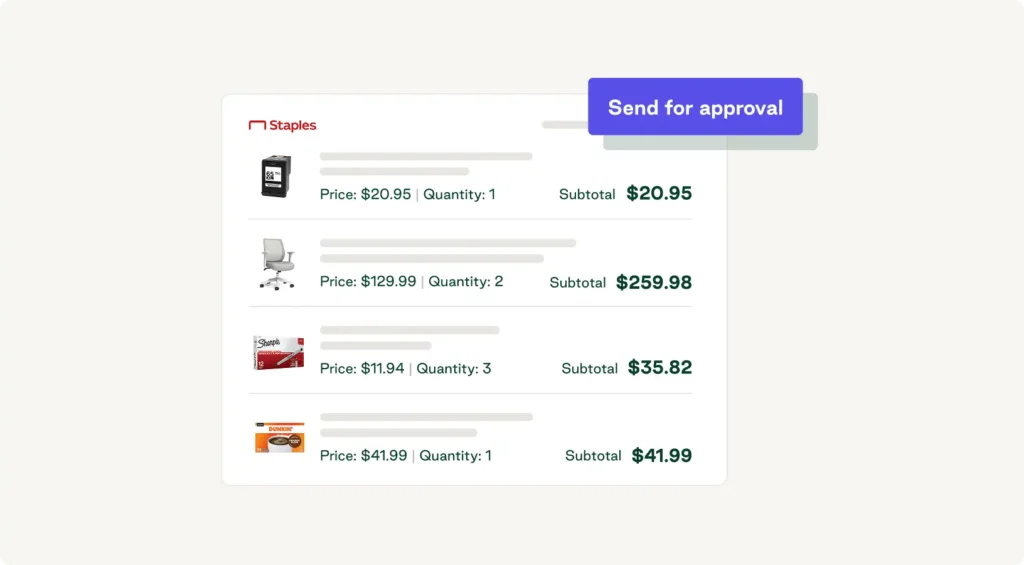
Pre-purchase approval workflows
Pre-purchase approval workflows validate budgets, accounting codes, and policies at the point of request rather than during reconciliation, preventing unauthorized spending before it occurs.
To achieve this without creating bottlenecks, effective workflows balance control with speed by routing purchases based on custom thresholds and budget availability without unnecessary approval layers. This flexibility allows procurement and finance teams to adjust rules as needs evolve.
Accounting system integration and coding accuracy
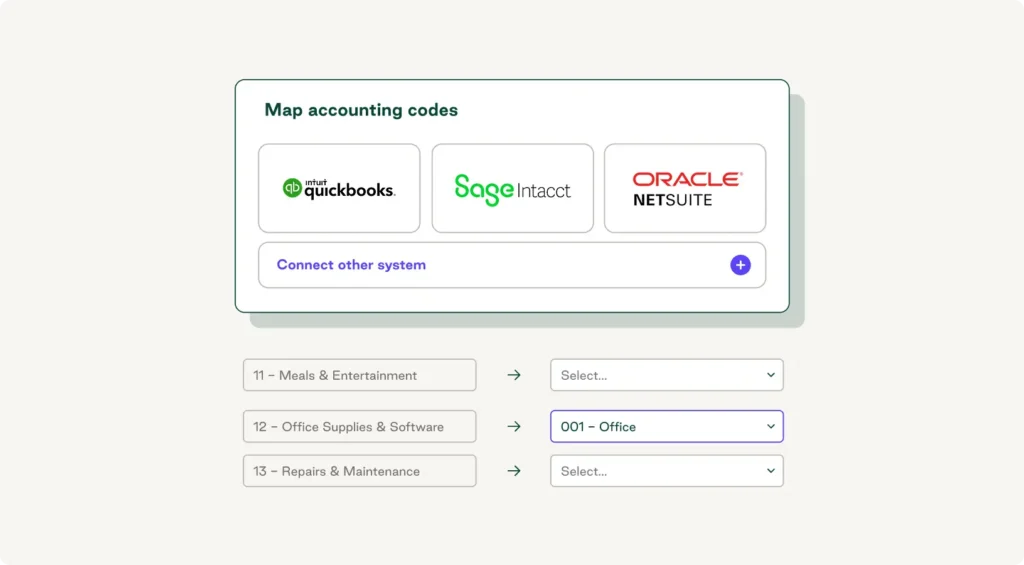
Spend management software should feed clean data into accounting systems without creating reconciliation work. With line-item level integration, you can see exactly what was purchased and how it should be coded.
Accounting code enforcement at the point of purchase prevents errors that would otherwise compound across transactions, while real-time synchronization supports a proactive spend management strategy.
Multi-location and distributed team support
Multi-location operations require platforms that enable autonomy under established guardrails. Each location needs the ability to purchase within enterprise-wide controls for spending limits, approved vendors, and accounting classifications.
Because growing businesses rarely increase procurement headcount in proportion to new locations, effective platforms enable distributed purchasing without requiring additional staff. These systems maintain efficiency by centralizing vendor relationships, consolidating contract terms, and providing consistent catalogs across all locations.
See how Order.co stacks up against Procurify
Tour the product in under 2 minutes and decide for yourself.
How to choose the best Procurify alternative for your needs
The following framework can help you evaluate whether to stick with Procurify or move to a more flexible alternative.
Assess where Procurify creates friction
Document the specific instances where Procurify requires manual workarounds by asking questions like:
- Do we order from suppliers outside Procurify's punchout catalogs often?
- Does our finance team have to spend hours manually fixing NetSuite or ERP sync errors?
- Do we have complex purchasing scenarios, like milestone payments or grant tracking, that Procurify's standard workflows can't handle?
Once you identify these gaps, quantify the impact. Tally the cost of hours spent on manual fulfillment and the number of POs that fail to sync with your accounting system.
Evaluate integration requirements and existing tech stack
If you're considering leaving Procurify due to ERP sync issues, prioritize platforms with native, line-item integrations. Map your integration requirements to ensure potential solutions fit your current infrastructure.
Verify support for your general ledger structure, department codes, and job costing requirements. For sourcing and procurement apps that promise vendor integrations, confirm coverage of your actual suppliers so you aren't forced to order manually. These fundamentals also carry over to broader procure-to-pay best practices, since integration depth and vendor coverage matter well beyond the initial platform switch.
Consider implementation complexity and team adoption
Even the best alternative platform won't be effective if your team doesn't use it. Assess your team's implementation capacity and define the timeline required to realize benefits.
Since user adoption determines long-term value, evaluate interfaces from the perspective of end users. If a system adds complexity, team members will return to the same workarounds they used in Procurify. Compliant purchasing must be easier than any rogue method.
Calculate total cost of ownership and ROI potential
When evaluating price, look beyond the initial subscription fee. Consider how the pricing model supports your growth. For example, a platform that scales with your spend or location count can be more cost-effective than one that requires a new paid license for every occasional requester.
To measure true ROI, factor in the hidden cost of manual work. If a platform eliminates the need to hire additional procurement staff as you grow, long-term savings will far outweigh the sticker price.
Choose Order.co for catalog control, automated fulfillment, and real-time spend visibility
Procurify serves teams whose supplier base aligns with the platform's limited punchout catalogs and standard workflows. But if your vendor ecosystem is broader or you require deeper ERP integration, platforms built around comprehensive online and offline vendor automation deliver better outcomes.
Order.co automates ordering across thousands of suppliers, ensures accounting accuracy, and provides financial controls without the integration challenges of Procurify. Rather than focusing primarily on approval workflows, Order.co manages end-to-end purchasing automation that eliminates manual coordination, even across multi-location businesses.
Using the platform, EPIC4 Specialty Partners cut procurement time by 50% across 55 dental and orthodontic practices. I Love Vacations saw similarly strong results, achieving 100% spend visibility for more than 700 rental properties.
Schedule a demo to see how Order.co can help you manage procurement with built-in controls, automated fulfillment, and real-time visibility that scales with growth.
FAQs about Procurify alternatives
Consider replacing Procurify when vendor integration gaps force manual workarounds, ERP sync issues require duplicate data entry, or workflow limitations prevent automating complex purchasing scenarios. Specific triggers include procurement teams spending hours on manual ordering for suppliers outside Procurify's catalog network, IT teams troubleshooting persistent NetSuite synchronization problems, or finance teams unable to configure workflows that match unique processes. If integration challenges or customization limitations create more manual work than approval automation saves, it's worth evaluating alternatives.
Effective spend control means tying every dollar spent to the right budget and vendor before the purchase happens. While many tools manage the internal request, alternatives like Order.co focus on the actual transaction. By automating line-item coding and consolidating multi-vendor orders into a single fulfillment workflow, these platforms close the gaps that manual ordering leaves behind. Decentralized teams keep their speed while the finance department gains full visibility and accounting accuracy across every location.
Procurify offers punchout catalog integrations for major vendors and can email purchase orders to suppliers, but coverage gaps exist for long-tail suppliers. Alternatives vary, with Order.co automating vendor ordering across thousands of suppliers, even beyond catalog integrations, and Coupa and SAP Ariba offering extensive networks but often still requiring manual ordering for niche vendors. When evaluating alternatives, verify coverage for your specific supplier base—both catalog-enabled vendors and the long-tail suppliers that usually need the most manual coordination.
Neither Order.co nor Procurify publishes public pricing, so a direct cost comparison isn't possible without a quote from each. Pricing for both platforms is typically based on factors like the number of users, purchase volume, and which modules or integrations you need. Rather than comparing sticker price alone, weigh what each platform saves in manual work. A platform that automates vendor ordering and payment reconciliation can offset a higher subscription cost through fewer manual hours and fewer reconciliation errors.
Get started
Schedule a demo to see how Order.co can simplify buying for your business.
"*" indicates required fields