How Operational Procurement Improves Control and Speed

How Operational Procurement Improves Control and Speed
For procurement teams that manage daily buying through a mix of disconnected systems—email, spreadsheets, and vendor portals—the results are predictable. Accounts payable receives invoices that don't match purchase orders. Employees make rogue purchases on personal cards because the approval process is too slow. Finance teams spend days at month-end reconciling what should have been clean data.
Operational procurement is meant to correct this. The right tools and processes embed controls into real buying workflows, enabling teams to be fast, compliant, and accurate.
This guide explains how operational procurement works, the benefits of a well-functioning system, and how automation delivers control to prevent chaos before it starts.
Operational procurement key takeaways
- Operational procurement controls spend at the point of purchase, preventing rogue spend, invoice mismatches, and month-end rework caused by a fragmented purchasing process.
- Effective execution requires automated workflows, smart approval hierarchies, and standardized vendor management that function as a connected system.
- Automation delivers control and speed by enforcing policy during the initial request, routing approvals instantly, and matching invoices automatically to ensure real-time spend visibility across all locations.
- Strong procurement operations protect your bottom line by eliminating unnecessary spend, reducing AP labor costs, improving cash flow forecasting, and strengthening vendor relationships through clean POs and on-time payments.
- Order.co embeds procurement controls directly into the buying experience, replacing manual tasks with a centralized workflow that manages every requisition, approval, and payment in one place.
Download the free ebook: The Procurement Strategy Playbook for Modern Businesses
What is operational procurement, and why does it matter?
Operational procurement is the execution layer of a procurement system, where strategy meets real purchasing workflows. It includes everything from requisitions and approvals to supplier selection, order placement, and fulfillment.
When operational procurement works, purchases flow through the proper approval process, match approved vendors and budgets, and create clean records that finance can reconcile easily. When it doesn't, it leads to rogue spend, invoices that don't match POs, and vendors that bypass negotiated contracts entirely.
For multi-location teams and growing businesses, effective operational procurement is especially critical. When different locations buy in different ways, businesses lose visibility into what's being spent and whether it aligns with their policies. Operational efficiency creates a consistent buying experience across every location, vendor, and purchase type.
How does operational procurement work?
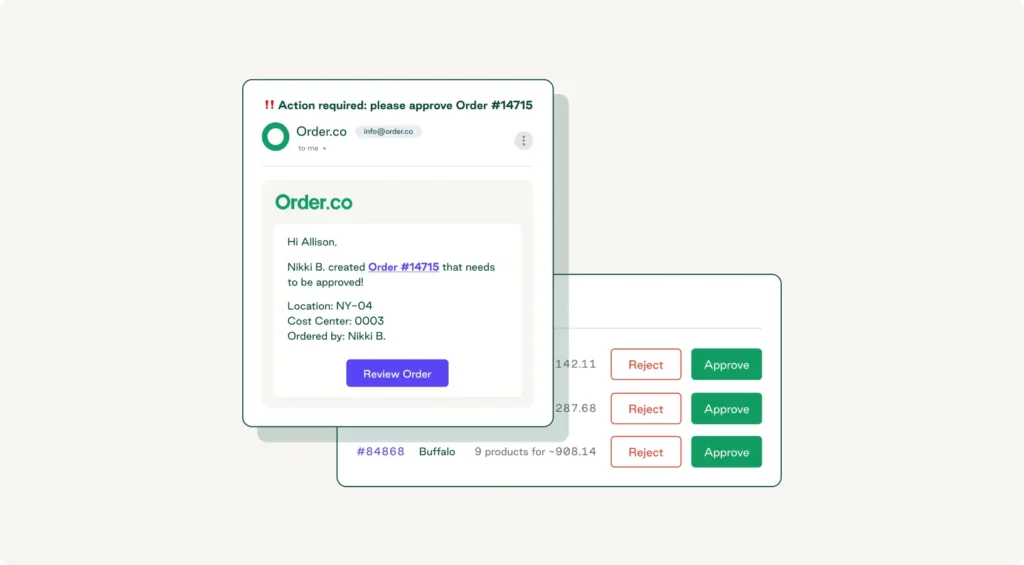
Operational procurement follows a structured cycle that moves purchases from initial need through final payment. Here's how the process typically works in daily operations:
- Requisition: An employee identifies an eventual or immediate need, selects the appropriate vendor, and submits a purchase request.
- Approval: The request routes to the budget holder or manager, who reviews and approves the spend based on policy, budget availability, and business need.
- PO issuance: Once approved, the system generates and sends a purchase order to the vendor, creating the legal contract for the transaction.
- Expediting and receipt: The procurement team tracks the order through delivery and confirms the goods or services arrived as expected.
- Reconciliation (three-way match): The system matches the purchase order, receipt confirmation, and vendor invoice to verify quantities, pricing, and terms before payment.
- Payment: Finance processes payment to the vendor, closing the procurement cycle.
The Procurement Strategy Playbook for Modern Businesses
Want to know more about strategic buying? Read our Procurement Strategy Playbook for even more valuable insights.
Operational vs. strategic procurement
Operational and strategic procurement functions work together but manage different stages of the end-to-end lifecycle.
Here are the key differences:
- Strategic procurement sets the foundation for how stakeholders buy: negotiating contracts, establishing vendor relationships, and defining long-term sourcing strategies. It focuses on high-level decision-making that dictates how a company will approach market changes and which procurement initiatives to prioritize.
- Operational procurement is the day-to-day execution layer that turns those decisions into actual purchases: processing requisitions, routing approvals, managing orders, and ensuring invoices match the items purchased. It focuses on the transactional workflows that keep purchasing moving accurately and efficiently.
The gap between the two is where most procurement systems break down. According to Deloitte's 2025 Global CPO Survey, 57% of CPOs identified siloed ways of working as a top barrier to delivering value. That might mean your business negotiates a great contract with a supplier, but employees still order off-contract because the approved workflow is slow or unclear. Or, you standardize vendor management across regions, but each location still manages its own relationships via email and spreadsheets.
Strategic wins don't always translate into operational control. The key is to get the right components working together as a cohesive system.
What are the core components of effective operational procurement?
Effective operational procurement comes down to three core areas that work together.
Here's what matters most:
- Purchase requisition and approval workflows: The requisition process is where control either succeeds or falls apart. Efficient procurement requires workflows that are fast and simple enough for people to actually use, which means automated routing based on spend thresholds, department budgets, or vendor type, and approvals that happen in minutes rather than days.
- Vendor management and relationship coordination: When different locations maintain separate supplier relationships, you lose visibility into what's being purchased and who's getting what pricing. Operational procurement centralizes vendor information, contact details, payment terms, and performance history to ensure each location maintains the same cost-effective purchasing and quality standards.
- Invoice matching and payment execution: Three-way matching only works when purchase orders and receiving confirmations happen in a structured system. Effective operational procurement captures all upstream data needed to automate invoice processing, so invoices either match and flow straight to payment or are flagged immediately for review.
These components only deliver results when they work together as a connected system. Fragmented tools—separate requisition forms, vendor spreadsheets, and invoice portals—create the gaps where control breaks down and rogue spend happens.
What are the benefits of operational procurement automation?
Automated operational procurement eliminates manual handoffs, disconnected tools, and approval bottlenecks that slow purchasing and cause errors. When your procurement system automates key workflows, supplier management, and invoice matching, you gain control and speed without adding complexity.
Here are some of the key benefits operational procurement automation delivers:
- Real-time spend control and policy enforcement: Automation enforces policy at the point of purchase, preventing non-compliant buying before it creates month-end reconciliation work. Real-time spend visibility gives procurement teams the data they need to consolidate vendors and negotiate better terms.
- Faster, more accurate processes and fewer errors: Automation eliminates bottlenecks by routing requests instantly to the right approver, generating purchase orders with complete accuracy, and matching invoices to orders without manual review. Employees get what they need without waiting, and AP teams process invoices automatically because the data is clean.
- Improved cash flow and financial forecasting: Automation gives you complete visibility into committed spend before invoices arrive, so you can forecast cash needs accurately and avoid surprises. When purchase orders capture complete budget and timing data up front, finance teams can plan payments strategically, take advantage of early payment discounts, and maintain healthier working capital without scrambling to cover unexpected invoices.
- Improved vendor relationships and performance: When you deliver clean POs and process invoices on time using automated workflows, you gain leverage to negotiate better pricing and terms with your vendors. Automation also provides consistent supplier performance data—tracking delivery, accuracy, and pricing compliance in real time—so you can optimize your supply chain and focus spending on partners that deliver the most value.
Research from The Hackett Group shows that top-performing procurement organizations—those in the top quartile—achieve a 2.6X higher ROI than their peers. By using automation to accelerate execution and reduce maverick buying, they see 58% shorter requisition-to-PO cycle times and a 60% reduction in cost savings lost to non-compliance.
How to implement operational procurement best practices for control and speed
Strong operational procurement requires the right controls embedded where buying actually happens. Building compliance into your workflows makes it easy for employees to do the right thing without slowing down.
Here's a practical framework for improving your operational procurement practices:
Establish clear, automated workflows
Manual procurement workflows tend to break down when you scale beyond a single location or a handful of vendors, but they also happen when your system lacks clarity. Automated procurement workflows route requests to the right approvers based on category, amount, and budget availability, helping employees follow company policies without extra effort.
Platforms like Order.co route requests to the right approver based on your configured rules—amount, category, budget availability—automatically. Every purchase captures the accounting details you need up front, so when the invoice arrives, it already matches the PO with complete line-item accuracy.
Start by reviewing your current system to identify bottlenecks or error-prone points. This will help you understand where automation can replace manual steps.
Implement approval hierarchies and controls
Approval hierarchies tend to fail when they're too rigid or too loose. Embedded controls catch exceptions without forcing managers to approve routine orders.
Begin by mapping your approval rules to spend thresholds and budget ownership. This ensures that small purchases below a set amount are automatically approved when they're within an employee's assigned budget. Anything above that threshold routes to the appropriate manager based on department, location, or cost center.
Then, layer in policy-based controls that flag exceptions. For example, if an order exceeds a vendor's contracted rate, duplicates a recent purchase, or falls outside approved categories, the system should automatically pause the purchase for manual review.
Order.co handles this by building controls directly into the approval workflow. Instead of layering them on top of a broken process, the system catches violations and overruns before purchases are finalized.
Standardize vendor onboarding and management
When each branch of a multi-location business maintains its own vendor relationships, you lose pricing leverage, end up with duplicate accounts, and struggle to track total spend.
Standardize how vendors get added to your system. Require tax information, insurance certificates, and payment terms up front. This prevents the scramble that happens when AP receives an invoice from a vendor that doesn't exist in your ERP. Centralize your vendor catalog so employees across all locations can see and order from approved suppliers, consolidating spend and improving your negotiating position for future contracts.
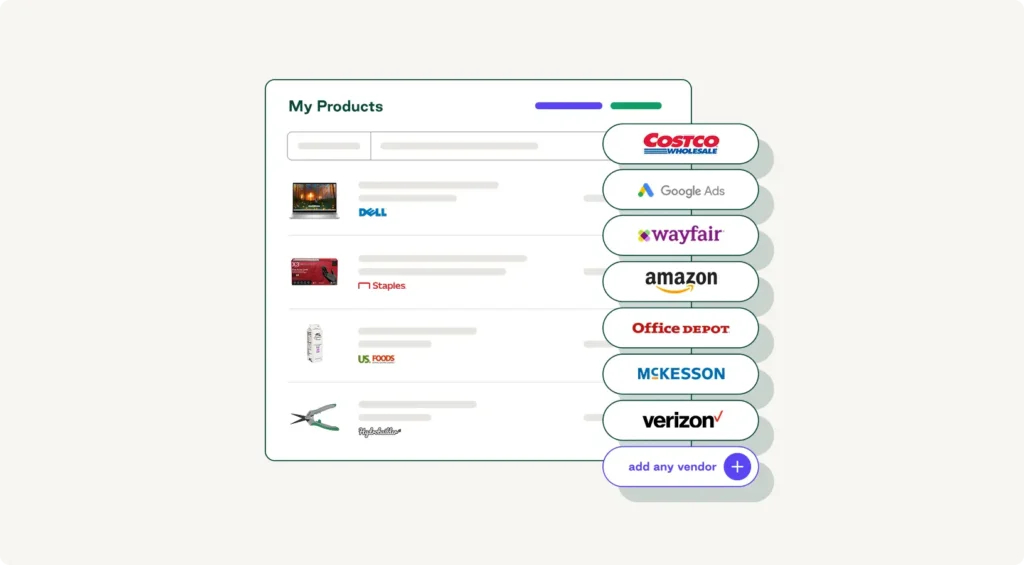
Order.co consolidates all your vendors, products, and purchasing into a single platform, with controls embedded directly into the buying workflow. The vendor-agnostic platform lets you add your existing suppliers (with a dedicated onboarding team handling setup) or tap into a network of 40,000+ pre-vetted vendors. Instead of managing relationships across dozens of vendor portals and payment methods, everything runs through one centralized system.
The Procurement Strategy Playbook for Modern Businesses
Learn the key pillars of a strong strategy, valuable procurement metrics to track, and initiatives you can start implementing today.
"*" indicates required fields
Gain operational procurement control with Order.co
Operational procurement works best when control happens at the right time: the point of purchase. While manual or disconnected systems slow teams down, automating operational procurement with a centralized platform prevents month-end reconciliation chaos and improves vendor relationships and contract terms over time.
Order.co replaces fragmented procurement processes with a single platform that controls spend at the source. It handles the full procurement cycle—from requisition through payment—so invoices match purchase orders without manual rework. This eliminates the downstream cleanup that typically stalls AP teams and provides the real-time spend visibility you need across every location and vendor.
Book a demo to see Order.co in action and explore how it fits your team's procurement workflow.
FAQs about operational procurement
The goal of operational procurement is to control daily spend at the point of purchase while keeping teams moving fast. This means embedding approval workflows, vendor standards, and budget controls directly into how employees buy. Efficient operational procurement helps teams prevent rogue purchases, mismatched invoices, and budget overruns before they create cleanup work.
Track cycle time (how long a purchase takes from request to payment), PO accuracy rate (the percentage of orders that match invoices without manual correction), and rogue spend percentage (purchases made outside approved workflows). Improving all three KPIs signals that your operational procurement process is working: controls are catching problems early, approvals are moving fast, and vendors are being managed consistently.
Modern operational procurement runs on platforms that centralize requisitions, approvals, vendor management, and payments in a single system. Procurement software like Order.co replaces fragmented processes across email, vendor portals, and corporate cards with one unified workflow. It helps you automate approval routing, maintain vendor catalogs, generate purchase orders, and match invoices to orders, giving you line-item accuracy without adding manual work.
Get started
Schedule a demo to see how Order.co can simplify buying for your business.
"*" indicates required fields