Procurement Team: Roles, Structure & How to Build One

Procurement Team: Roles, Structure & How to Build One
You've got business locations in five cities. Each one buys from its own mix of vendors: an office supply company, a cleaning crew, a local grocery run for the break room. Pull every invoice from every location and you still won't know how many vendors you're actually paying, or how many of them are the same supplier billing you five different ways.
When the invoices land in accounting, no one knows what was ordered, who approved it, or which budget line covers it.
This isn't an accounts payable problem, and you won’t be able to fix it by hiring more people to sort through invoices. It's a procurement problem, and it starts upstream with who owns purchasing decisions and how those decisions get made. However, when the compliant way to buy something is easier than the workaround, approvals, spend visibility, and AP all get the context they need automatically instead of having to chase it down later.
Quick answer:
- Purchasing chaos is a symptom of missing ownership, not a headcount problem.
- Clear roles and a defined workflow are what prevent duplicate purchases and vendor sprawl as your business grows.
- Centralizing your vendor catalog early keeps that ownership from unraveling as volume increases.
- Consolidating vendor relationships turns that centralized catalog into less day-to-day work.
- Order.co makes compliant buying the easiest path for your team, using curated catalogs, automated approvals, and AI sourcing to help a lean team operate like a much larger one.
Download the free ebook: The Procurement Strategy Playbook for Modern Businesses
Procurement department roles & responsibilities
A well-structured procurement team divides responsibilities across specialized roles to create clear accountability, stronger oversight, and tighter control over spending and suppliers. This ensures every decision supports broader business operations and mitigates risk.
Core roles within a procurement department include:
- Chief procurement officer (CPO). Sets the overall procurement strategy, aligning supply chain management, risk management, and long-term value creation with organizational goals.
- Procurement manager. Oversees day-to-day purchasing activities to ensure adherence to procure-to-pay workflows, enforce cost control, and reduce maverick spend.
- Procurement analyst. Analyzes data to track procurement KPIs, identify cost-saving opportunities, and provide insights into market trends that inform better decisions.
- Contract manager. Owns contract management processes, ensuring strong negotiations and compliance with terms.
- Sourcing specialist. Leads strategic sourcing initiatives, manages vendor selection, and conducts supplier evaluations to secure the best suppliers.
- Compliance officer. Ensures teams follow procurement policies and regulations, reducing risk exposure and maintaining governance across all purchasing activities.
- Category manager. Develops category-specific strategies that optimize spend, balance supplier diversity, and drive long-term value within defined purchasing areas.
- Supplier relationship manager. Focuses on improving supplier performance, strengthening partnerships, and driving continuous improvement across the supplier base.
How does a procurement team's workflow operate?
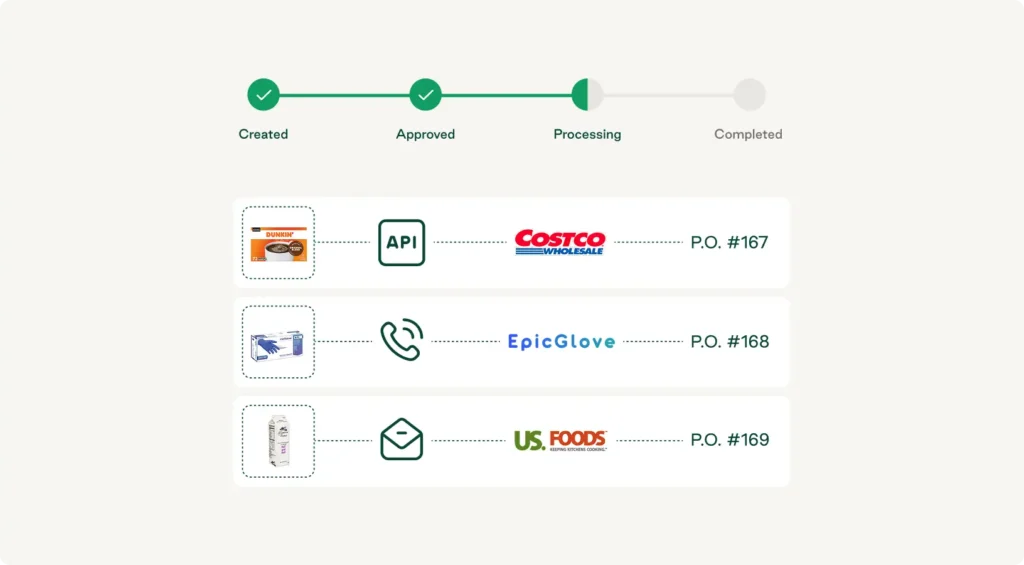
Whether it's made up of one person or twenty, a procurement team runs the same core workflow. Here's what a clean procurement process looks like:
- Request. Someone in your business identifies a need and submits a request.
- Sourcing. The team selects a vendor from an approved catalog or vets a new one if no existing option fits.
- Requisition. The request is formalized with quantity, cost, and business justification.
- Approval routing. The requisition moves to the right approver based on the department, amount, or vendor.
- Purchase order issuance. Once approved, a PO goes out to the vendor.
- Fulfillment tracking. The team tracks delivery and confirms the order matches what’s received.
- Coding and handoff to AP. The purchase is coded to the correct GL account, cost center, and entity, then handed off when it’s reconciled.
Every step depends on the one before it. This is the difference between procurement and purchasing: purchasing is step five, placing the order. Procurement is made up of all seven steps, and a procurement team is accountable for the whole sequence.
Where procurement teams break down
Most purchasing chaos traces back to gaps in your workflow, not to one particular step. Common barriers to success include:
- No defined ownership. When no one is clearly responsible for purchasing decisions, requests bounce between departments or don't get reviewed at all.
- Vendor sprawl. Every department picks its own vendors, so your company ends up with duplicate relationships and no volume leverage.
- No spend visibility. Nobody can see what's being bought, by whom, or as part of what budget until the invoice arrives.
- Approval bottlenecks. When sign-off is slow, buyers find workarounds. They may use personal cards, skip the requisition step, or order from unapproved vendors.
- Duplicate purchases. Without a shared view of what’s already been bought, departments independently order the same things.
- Disconnected tools. Purchasing lives across email threads and spreadsheets instead of in one indirect procurement software system, so none of the context from a purchase carries forward automatically.
Each of these gaps shows up downstream as an invoice exception, accounts payable rework, or plain overspending.
The cost of leaving procurement inefficiencies unaddressed is real. According to research by APQC, there’s a $4 million cost difference in how procurement work gets done between top-performing procurement departments and bottom performers at scale. This gap is created by top-performing teams demonstrating higher productivity and faster cycle times through centralized procurement and standardized processes.
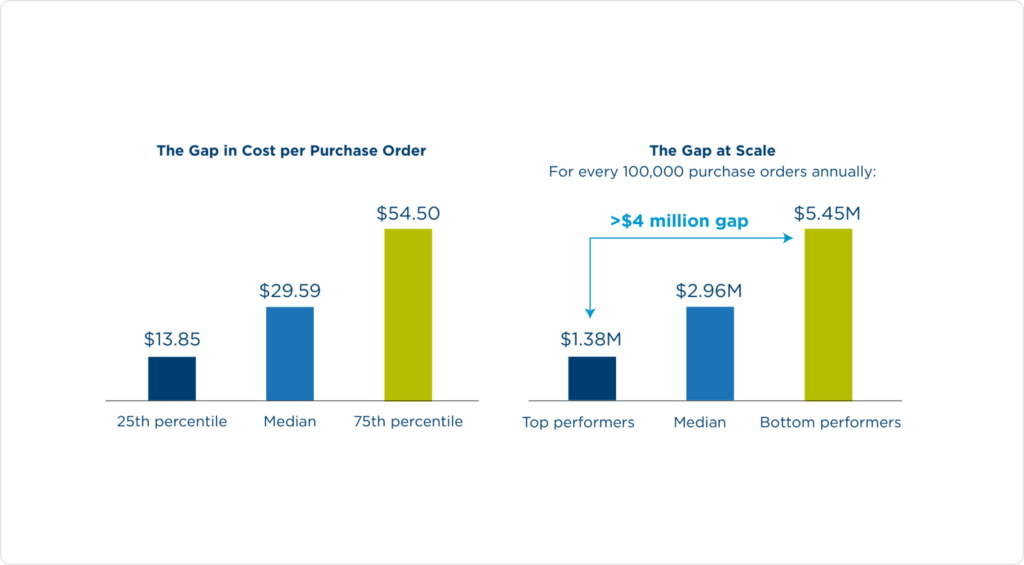
A 2025 report by The Hackett Group also found that top-performing procurement teams generate 2.6 times greater return on investment (ROI) compared to their peers while operating at 19% lower cost as a percentage of spend. They also invest 1.8 times more on procurement technology, freeing their analysts to focus on higher-value work rather than manual data collection.
The Procurement Strategy Playbook for Modern Businesses
Want to know more about strategic buying? Read our Procurement Strategy Playbook for even more valuable insights.
5 ways to build a stronger procurement team
None of these successes require a large team—you just need the right foundations. These are the five pillars of a strong procurement program.
Curated catalogs
Catalogs give buyers a single, curated list of approved products and vendors. They also demonstrate how centralized purchasing works at scale: compliant buying becomes the default option because it's genuinely the easiest one.
Pre-purchase approvals
Pre-purchase approvals let you review spend before the order goes out, not after. Budget and policy checks at the point of decision stop exceptions before they're created, well ahead of when reconciliation would otherwise catch them.
Line-item coding early
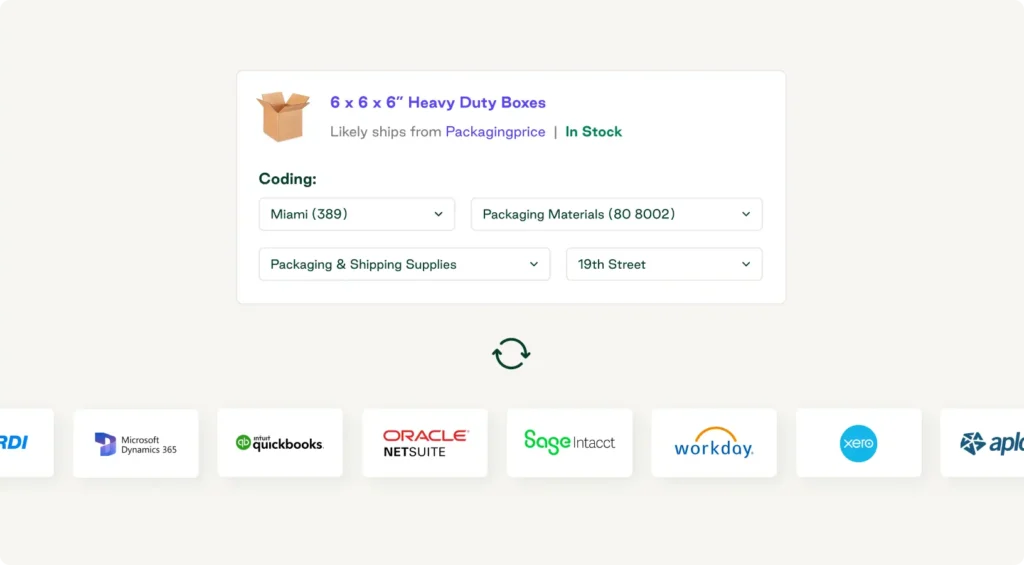
Coding spend to the correct GL account, cost center, and entity at the point of purchase rather than reconstructing it later from the invoice removes one of the most time-consuming parts of any team's job. This is different from coding at the PO level: line-item coding tags every individual item on an order correctly, not just the purchase as a whole.
Vendor sprawl reduction
Fewer vendor relationships means more leverage. Consolidating spend with fewer vendors gives you consistent pricing across locations instead of five departments paying five different rates for the same product, plus enough purchase volume to negotiate bulk discounts. It also means your team can invest in a handful of strong vendor relationships instead of spreading itself thin across hundreds of one-offs, which can pay off in better terms, priority service, or a favor on a rush order.
AI for sourcing and spend
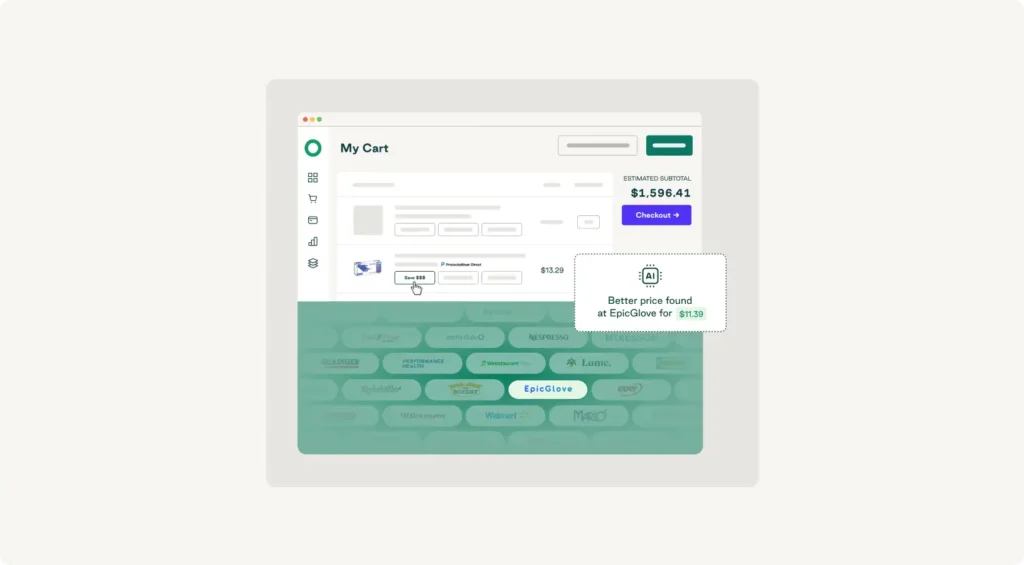
A sourcing algorithm can find the best price for your preferred products or alternative options when items are out of stock, so your team can keep operations moving without having to shop around manually. That kind of procurement automation doesn't replace your team, but gives a small team more reach.
How to choose tools to support your procurement team
The right tools should close the gap between purchasing and the rest of your business instead of leaving your procurement team to bridge it manually. Here's how common pain points map to the capabilities worth looking for.
| Pain point | Capability to look for |
| No single owner for purchasing decisions | One workflow that covers requests, approvals, and orders |
| Vendor sprawl across departments | Centralized vendor and catalog management |
| No visibility into spend until the invoice arrives | Real-time spend tracking across procurement and payments |
| Manual GL coding at month-end close | Automatic, line-item-level coding at the point of purchase |
| Approval processes that don’t prevent out-of-policy spend | Pre-purchase approval workflows tied to budget |
What to look for in procurement software
Look for procurement software that combines the buyer's experience with the finance team's experience rather than treating purchasing and spend management as separate tools. For example, Order.co brings sourcing, approvals, and invoice-ready coding into a single workflow, so your team doesn't have to reconcile two systems just to get a clear picture of spend.
The Procurement Strategy Playbook for Modern Businesses
Learn the key pillars of a strong strategy, valuable procurement metrics to track, and initiatives you can start implementing today.
"*" indicates required fields
Build a stronger procurement team with Order.co
Procurement teams get stronger when purchasing decisions are consistently compliant, coded, and documented. That's the difference between treating AP as its own island and having a process that connects purchasing and AP from the start.
As indirect procurement software, Order.co brings curated catalogs, pre-purchase approvals, and line-item GL coding into one platform, so a lean team can see what's being bought, by whom, and against what budget as it happens.
Order.co is vendor-agnostic, so your team can keep working with the vendors it already trusts or draw from Order.co's network of 40,000+ vetted vendors when it needs to add one quickly. The platform turns compliant buying into your team's default path so you don’t have to enforce it purchase by purchase.
See how Order.co can support procurement teams at any size. Schedule a demo.
FAQs about procurement teams
A procurement team owns the full procure-to-pay workflow:
- Sourcing and vetting vendors
- Routing approvals
- Issuing purchase orders
- Tracking fulfillment
- Coding spend for accounting
Purchasing is one step inside that workflow: placing the actual order. A purchasing team executes orders, while a procurement team owns the process, the vendor relationship management, and the spend strategy around them. That distinction matters as a company grows, because a team that only handles purchasing can't fix the upstream gaps (no ownership, vendor sprawl, no visibility) that cause invoice and spend problems later.
There's no fixed employee count that triggers the need for a dedicated procurement team. Watch for signals like:
- Spend scattered across departments with no single source of truth
- No one able to say how many vendors you work with or what's under contract
- Buyers ordering off-catalog because it's faster than the approved process
- Indirect spend growing without a clear owner
Ideal team size depends on spend volume and complexity. A single procurement lead can run a lean, centralized setup with the right tools, while larger, multi-location businesses typically need category managers and analysts to keep up with volume and vendor relationships.
Software can't replace a procurement team. It extends what a team can handle, automating catalog control, approvals, and sourcing recommendations, while decisions about vendor strategy, policy, and risk still need people.
Lean teams should centralize their vendor catalog early, standardize approvals so review stays consistent regardless of size, and get real-time visibility into spend. However, negotiation and vendor relationship skills still matter most. As automation takes on more of the day-to-day workflow, being able to read spend data and act on it, catching a pricing anomaly, spotting a vendor worth renegotiating with, are becoming vital skills.
Get started
Schedule a demo to see how Order.co can simplify buying for your business.
"*" indicates required fields