Tipalti Alternatives & Competitors: Best AP Automation Tools

Tipalti Alternatives & Competitors: Best AP Automation Tools
Comparing the best Tipalti alternatives and competitors for 2026 based on pricing, current G2 scores, and critical features can help you find the best AP automation software or procurement platform fit to manage your company spending.
Quick answer:
- Tipalti is built for global payments and AP automation, so teams that need pre-purchase controls and procurement capabilities often outgrow it.
- The strongest Tipalti alternatives fall into three groups: accounts payable software (Rillion, BILL, Stampli, AvidXchange), card-first spend tools (Ramp, Airbase), and full procure-to-pay platforms (Order.co, Coupa).
- Pricing ranges widely, from free or per-user plans (Ramp, BILL) to custom enterprise quotes (Coupa, Airbase), so the right fit depends on your company size and transaction volume.
- G2 scores range from 4.2 (Coupa, Rillion) to 4.8 (Ramp), but a high score on a narrow tool doesn't help if you need end-to-end control.
- Order.co is the procurement-first alternative: it controls spend at the catalog level before a purchase happens, tags every line item to the right GL account, and rolls vendor payments into customized bills, closing the gap that payment-only tools like Tipalti leave open.
Evaluating Tipalti alternatives? Start your self-guided tour of Order.co
Tipalti alternatives comparison table
Here's a head-to-head look at how eight platforms compare on the criteria finance teams weigh first: fit, starting price, G2 rating, company size, and whether the card product requires a personal guarantee.
| Tool | Best for | Starting price | G2 score | Company size | Personal guarantee required |
| Order.co | Procurement-led AP automation | Custom quote | 4.4 | Mid-market & enterprise | No |
| Rillion | Flexible mid-market AP automation | Custom quote | 4.2 | Mid-market | N/A |
| BILL | SMB accounts payable/accounts receivable automation | $49/user/mo | 4.4 | Small business | N/A |
| Stampli | Collaborative invoice processing | Custom (≈$500–$2,000+/mo) | 4.6 | SMB–mid-market | No |
| Ramp | Card-first spend management | Free; Plus from $15/user/mo | 4.8 | Startup–mid-market | No |
| Airbase (acquired by Paylocity) | Mid-market spend management | Custom quote | 4.5 | Mid-market–enterprise | No |
| Coupa | Enterprise procurement | Custom (≈$2,500+/mo) | 4.2 | Enterprise | N/A |
| AvidXchange | High-volume AP | Custom (≈$440+/mo) | 4.4 | Mid-market | N/A |
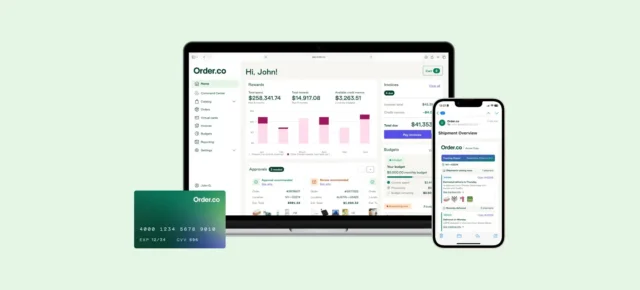
See how Order.co stacks up against Tipalti
Tour the product in under 2 minutes and decide for yourself.
Top 8 Tipalti alternatives and competitors in 2026
These eight platforms are ordered from the most complete to the most specialized. Explore who each platform best fits, what it costs, what users flag on G2, and why it made the list.
1. Order.co: Best for procurement-led AP automation
Best for: Mid-market and enterprise teams that want to control spend at the point of purchase.
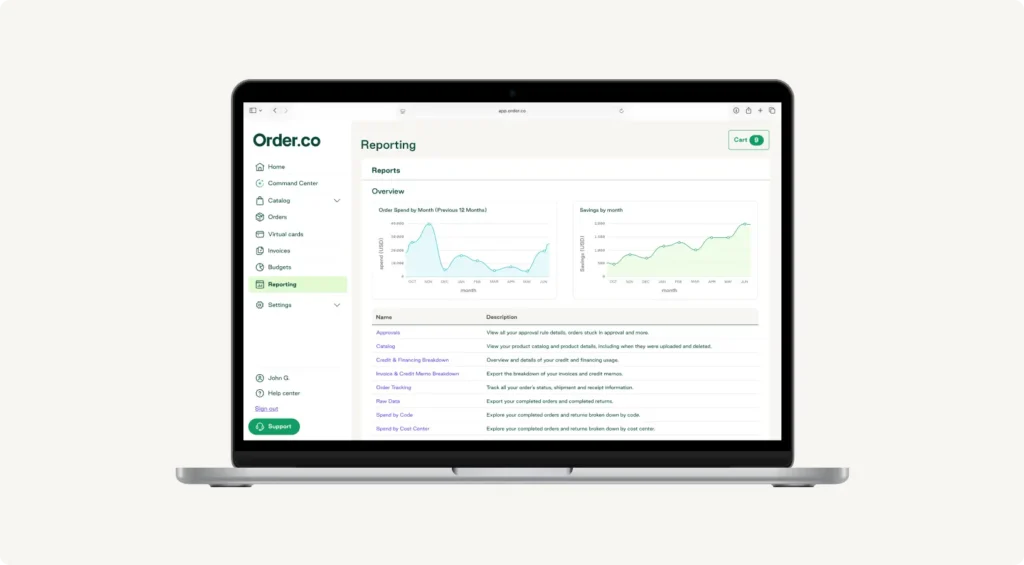
Order.co is a procurement and finance automation platform that covers the full purchase-to-pay process. While Tipalti starts at the payment, Order.co starts earlier, at the catalog level. Only pre-approved products and vendors are visible to buyers, making compliant purchasing the default path. Customizable budgeting and approval workflows sit on top of that first layer of control.
Order.co is vendor-agnostic, allowing you to bring your own vendors into the system or choose from a network of 40,000+ vetted suppliers. The platform automates GL coding at the line-item level, tagging the correct cost center and entity. It then pays your vendors via their preferred method, Net 1, and consolidates those payments into customized bills that fit your bookkeeping.
Invoice data syncs directly with accounting systems like Oracle NetSuite, QuickBooks Online, and Sage Intacct. Additionally, its AI sourcing algorithm finds better prices across different suppliers, which averages companies 5% in hard-dollar product savings.
What you get:
- Curated catalogs of pre-approved products and vendors as the first layer of spend control
- Line-item GL tagging across cost centers and entities, plus vendor payments rolled into customized bills
- AI that finds better prices, surfaces options for out-of-stock goods, and flags spend that deviates from your patterns
- Virtual cards for off-catalog spend that give you control over every transaction in real time
Pricing: Pricing is custom, tied to spend volume and locations rather than published tiers, so expect an upfront conversation rather than a self-serve signup.
Considerations: Order.co is built for indirect procurement, such as operating supplies, packaging, services, and MRO. It handles all types of spend, so manufacturers running formal RFQ processes for direct production materials may want a dedicated strategic sourcing tool alongside it. Order.co holds a 4.4/5 review rating on G2.
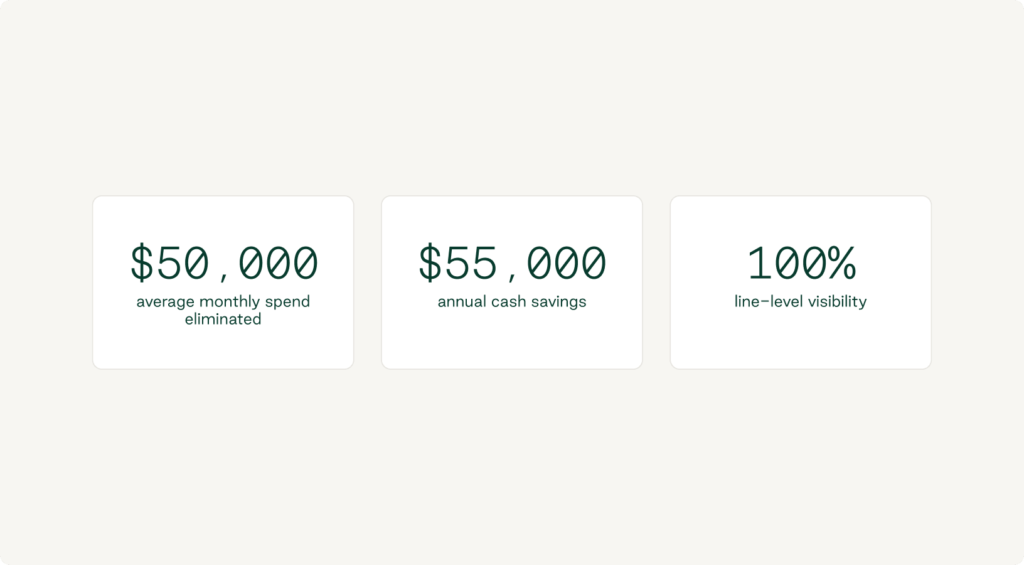
Proof: AKIRA cut purchasing costs by $10K and reclaimed 160+ hours per month on accounts payable after moving to Order.co. CorePower Yoga eliminated an average of $50,000 in monthly rogue spend, saved $55,000 in annual cash, and reached 100% line-item visibility across 175+ studios.
CorePower Yoga at a glance
See how Order.co handles your purchase-to-pay process from request to payment. Schedule a demo.
2. Rillion: Best for flexible mid-market AP automation
Best for: Mid-market finance teams that want deep, configurable AP automation across many ERPs.
Rillion is an AI-powered accounts payable platform that covers the full invoice lifecycle, from data capture and 3-way PO matching to approval routing and secure vendor payments. It integrates with ERPs, including Oracle NetSuite, Microsoft Dynamics, and SAP, and its AI assistant handles invoice capture, coding, and routing. Where Tipalti leans on global payments, Rillion goes deeper on the AP side.
Pricing: Custom. Rillion doesn't publish public pricing, though all plans include unlimited users, approvers, and entities.
Considerations: Some G2 reviewers note that routine tasks can take a lot of clicks to complete, which slows things down at high invoice volume. Rillion holds a 4.2/5 rating on G2.
Verdict: Rillion can be a strong fit if AP automation is the whole job and ERP integrations matter, but it stops short of procurement. Teams that want to govern how employees buy will need a procurement layer on top.
3. BILL (formerly Bill.com): Best for SMB AP/AR automation
Best for: Small and lower-mid-market businesses that want straightforward accounts payable and receivable automation.
BILL digitizes invoice processing and payments for smaller finance teams with ACH, check, card, and international payment options alongside mass pay for vendors and two-way accounting sync on higher tiers. It's widely adopted and easy to learn, which makes it a common first AP tool.
Pricing: Tiered per user, from $49/user/month (Essentials) to $65 (Team) and $89 (Corporate), plus per-transaction fees, including $0.59 for ACH, $19.99 for USD international wires, and 2.9% for card payments. Those fees add up at higher volume.
Considerations: G2 reviewers cite inconsistent customer support, occasional sync issues with QuickBooks and other ERPs, and a tool that struggles to keep up as companies grow into procurement and expense needs. BILL holds a 4.4/5 rating on G2.
Verdict: Bill is a capable entry-level AP/AR option for smaller teams, but mid-market and enterprise buyers tend to outgrow its limited pre-purchase controls as they expand into procurement and expense needs.
4. Stampli: Best for collaborative invoice processing
Best for: AP teams that want faster, more collaborative invoice approvals inside a complex ERP environment.
Stampli is an AP and invoice automation system that centers everything on the invoice. Its AI assistant Billy, formerly known as Billy the Bot, handles coding and routing, centralizes invoice communication to keep approvers and questions in one thread, and supports 2- and 3-way matching. The platform also uses OCR technology to automate invoice capture and data extraction.
Setup is quick and training is light, which is one reason why users rate it so highly.
Pricing: Custom, based on invoice volume, user count, and selected modules. Mid-market teams typically budget $500–$2,000+/month, with month-to-month options and no required annual contract.
Considerations: On G2, users mention that search for older invoices could be better, that you can't limit which GL accounts approvers see, and that costs can climb with volume. Stampli holds a 4.6/5 rating on G2.
Verdict: Stampli is one of the best-liked tools for invoice collaboration, but it doesn't cover strategic sourcing or pre-purchase controls, so it only solves part of the lifecycle.
5. Ramp: Best for card-first spend management
Best for: Startups and growing teams that want corporate cards, expense management, and bill pay in one place.
Ramp pairs corporate cards with expense management, bill payments, and accounting integrations. Its AI receipt matching, auto-categorization, and policy enforcement remove much of the manual work in expense management, and a free tier covers the basics.
Pricing: Free plan; Ramp Plus from $15/user/month; Enterprise is a custom quote. Note that some customers report platform fees appearing at renewal and a minimum business bank balance requirement.
Considerations: G2 reviewers describe slow, bot-heavy support, limited advanced reporting, and incomplete integrations with some ERPs. Ramp holds a 4.8/5 rating on G2.
Verdict: Ramp is excellent for card-led expense control, but procurement and pre-purchase compliance aren't its strengths. Ramp categorizes spend at the transaction level after the card is swiped, whereas a procurement-led platform tags every line item as the purchase happens so off-policy buying never starts in the first place.
6. Airbase: Best for mid-market spend management
Best for: Mid-market teams that want cards, AP automation, and expense management unified in one spend platform.
Airbase combines corporate cards, accounts payable, and expense management with purchase request workflows, giving finance one place to create, approve, and monitor spend. In late 2024, Airbase was acquired by Paylocity and is now part of that broader platform.
Pricing: Custom. Airbase doesn't publish pricing, so buyers have to contact the vendor for a quote.
Considerations: Users on G2 point to a steep learning curve, limited reporting customization, occasional mobile categorization bugs, and a requirement to pre-fund corporate cards. Because the product is now part of Paylocity, some standalone Airbase review pages have been removed. Airbase has carried roughly a 4.5/5 rating.
Verdict: Airbase is a capable all-in-one spend tool for mid-market finance, though it's worth checking into the Paylocity transition before you commit.
7. Coupa: Best for complex approval layers
Best for: Large enterprises that need source-to-pay at scale with complex, multi-entity approvals.
Coupa is an enterprise procurement and spend management suite spanning sourcing, procurement, invoicing, and analytics. It's built for high transaction volumes and intricate approval structures, and enterprise reviewers consistently describe it as robust for multi-entity organizations.
Pricing: Custom enterprise quotes, with reviewers citing starting costs around $2,500/month and up. Modules such as analytics, contract lifecycle management, and sourcing are often paid add-ons on top of the core package.
Considerations: On G2, users describe a steep learning curve, long implementations with a heavy IT lift, clunky navigation, and a vendor experience that can be cumbersome. Coupa holds a 4.2/5 rating on G2.
Verdict: Coupa can be powerful for enterprise procurement teams that have implementation resources, but heavy and expensive for mid-market buyers who want value within the first quarter.
8. AvidXchange: Best for high-volume AP
Best for: Mid-market companies with high invoice volume, especially in real estate, HOA, construction, and similar industries.
AvidXchange automates invoice capture, approval workflows, and supplier management through a large vendor payment hub known as the AvidPay Network, with depth in a handful of specific verticals. It centralizes invoice management and gives AP teams clear visibility into where each invoice sits.
Pricing: Custom, with reviewers citing a starting point around $440/month plus transaction and subscription fees that scale with invoice volume.
Considerations: On G2, users note inconsistent support response times, occasional payment-batching and invoice-upload issues, invoice indexing that can be error-prone, and a learning curve at setup. AvidXchange holds a 4.4/5 rating on G2.
Verdict: AvidXchange is a solid high-volume AP engine for the industries it specializes in, but it focuses on payables rather than procurement or pre-purchase spend control. If you also need to govern how those purchases get made, you'll want a platform that covers the front end too.
Why businesses look for a Tipalti alternative
Tipalti is an accounts payable and mass-payout platform with a payment-first orientation. It's good at the back end of finance:
- Onboarding suppliers
- Collecting tax and payment details
- Processing high volumes of invoices
- Paying vendors across countries and currencies
For companies that struggle with paying a global base of contractors and suppliers, that focus is a strength.
The real question isn't whether Tipalti is a good solution, it's whether it covers enough of what you need.
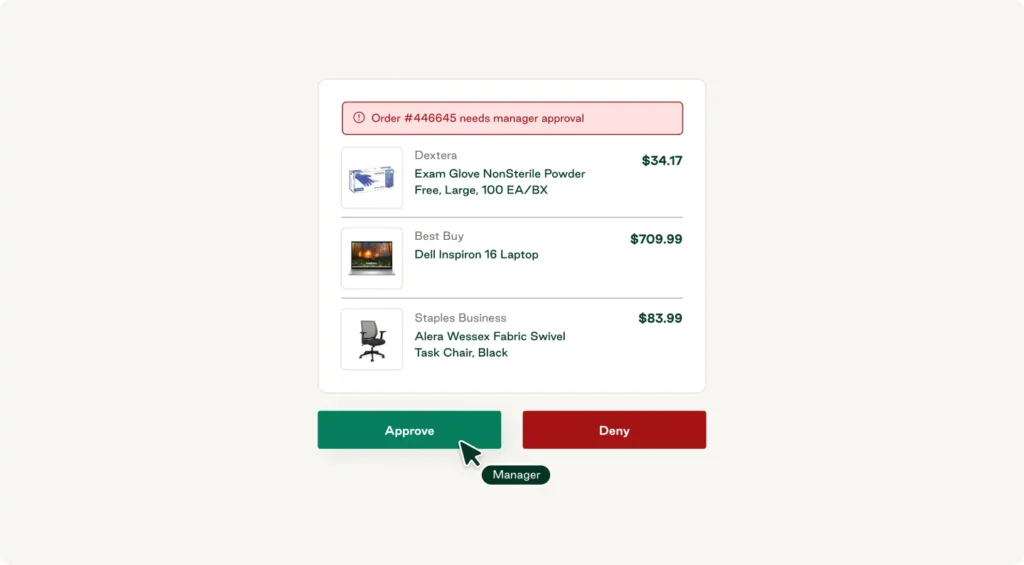
The friction shows up when your team's needs move upstream into procurement. A payment-first model controls costs after they're already committed, which doesn't help if your real problem is how employees buy in the first place. If your goal is to govern the whole process, from request to approval to purchase to payment, a payments tool is only a partial answer.
Common signs your team has hit that ceiling include:
- Rogue spend. When employees buy outside policy because the approved path is too slow
- Reconciliation drag. When you’re coding each transaction to the right GL account, cost center, and entity by hand at month-end
- Vendor sprawl. When you have dozens of suppliers each sending their own invoices, with no single tool tying requests, purchases, and payments together
Instead of asking, "What replaces Tipalti?,” try asking, "Where do we need control, and how much of the purchase-to-pay process do we want in one place?"
See how Order.co stacks up against Tipalti
Tour the product in under 2 minutes and decide for yourself.
How to choose a Tipalti alternative
The right platform depends less on which tool has the most features and more on what your team actually needs. A few questions worth answering include:
- Do you need control before or after the purchase?
Payment and AP tools like BILL, Stampli, AvidXchange, and Rillion govern invoices and payouts after a purchase is committed. Procurement-led platforms like Order.co and Coupa move control upstream, so compliant buying is the default. If rogue spend is your problem, an after-the-fact tool won't fix it.
- What's your company size and ERP fit?
SMBs are usually well served by per-user tools like BILL or Ramp, while enterprises with many entities lean toward Order.co or Coupa. Either way, check that the platform syncs directly to NetSuite, QuickBooks Online, or Sage Intacct and how much manual cleanup reviewers report.
- What's the real pricing model?
Look past the headline number to per-transaction fees, paid add-on modules, renewal platform fees, and minimum balance requirements, all of which appear in this list.
- Do you mostly handle domestic or international payments?
If you pay a global contractor base, prioritize payment breadth. If most of your spend is domestic and tied to physical goods and indirect supplies, a procurement-first platform will do more for you.
- Do you need a point solution or unified platform?
Decide whether you want one tool for one job or a single platform connecting sourcing, approvals, purchasing, and payment. The more of that lifecycle you unify, the less manual reconciliation lands on finance. And since a purchasing system only works if people use it, the platforms that stick make compliant buying the easy option.
For a deeper look at unified options, compare procure-to-pay software options and how they map to your AP workflow.
Find the right AP automation platform for your team
Every tool here solves a real piece of the puzzle:
- BILL, Stampli, Rillion, and AvidXchange move invoices and payments faster.
- Ramp and Airbase put cards and expenses under one roof.
- Coupa brings source-to-pay structure to large enterprises.
The trade-offs come down to four things:
- Pricing and scalability
- How cleanly each tool integrates with your ERP
- How much of the approval workflow it governs
- Whether spend control kicks in before or after a purchase
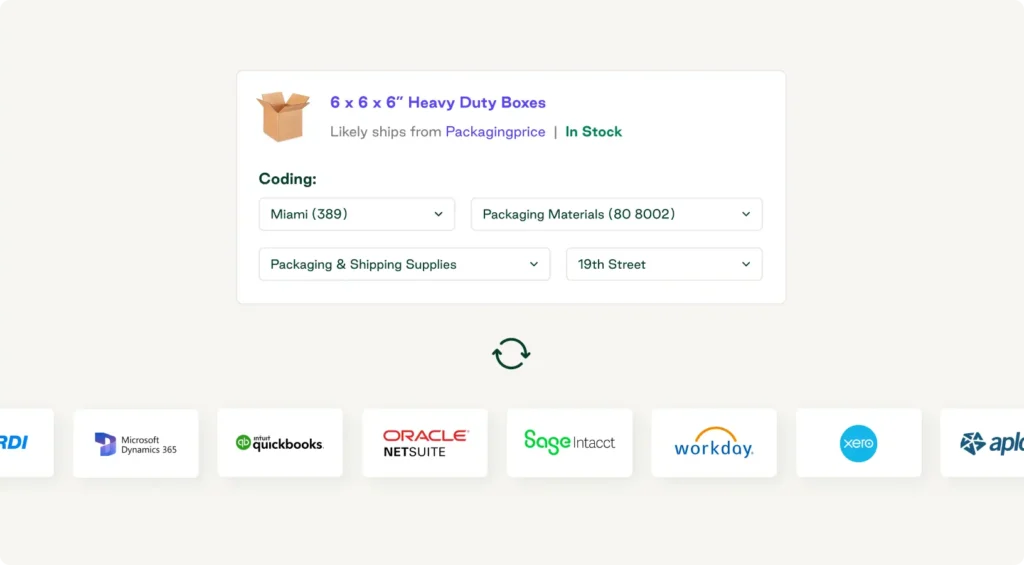
Tipalti and most of its alternatives focus on what happens once a purchase already exists. Order.co offers a broader procurement and finance automation platform that controls spend at the catalog level before a buyer decides what to purchase, tags every line item to the right GL account, pays vendors via their preferred method, and consolidates those payments into customized bills, all syncing back to your accounting system.
The payoff shows up in what customers report: less rogue spend, fewer AP hours at close, full line-item visibility, and hard-dollar savings from AI sourcing.
Curious what your month-end close looks like when every line item is already coded and rogue spend never reaches your desk? Schedule a demo with Order.co to find out.
FAQs about Tipalti alternatives
Tipalti is an accounts payable and mass payment platform used to automate supplier onboarding, invoice processing, and global payouts. Finance teams adopt it to pay a high volume of vendors, partners, and contractors across countries and currencies while collecting tax and compliance details. Its focus is the payment side of finance rather than procurement or pre-purchase spend control, which is why some teams pair it with or replace it with a broader platform.
Ramp offers a free tier that includes corporate cards, expense management, basic accounts payable, and accounting integrations, making it the closest to a free option in this comparison. BILL has low-cost per-user plans starting at $45 a month. Most procurement-led and enterprise platforms, including Order.co, Coupa, and Airbase, use custom quote-based pricing instead of a free plan because their scope and implementation are larger.
AP automation handles the back end of buying: capturing invoices, matching them, coding them, and paying vendors after a purchase is made. Procurement software handles the front end: requesting, approving, and placing orders so spend is controlled before money is committed. Procurement-led platforms like Order.co connect both sides, governing the purchase first and then carrying that data through to payment and your accounting system without manual re-entry.
Get started
Schedule a demo to see how Order.co can simplify buying for your business.
"*" indicates required fields