7 Spend Management Best Practices to Stop Rogue Spend Before It Happens

7 Spend Management Best Practices to Stop Rogue Spend Before It Happens
Finance teams know the struggle of enforcing spend control after a transaction has already gone through. By then, invoice review, exception management, and reconciliation become reactive cleanup tasks that slow down month-end close.
Sustainable spend management comes from proactive purchasing systems that embed control, approval, and visibility directly into the buying workflow, making compliance the default by design.
This guide offers seven spend management best practices to help finance teams control rogue spend before it happens.
Spend management best practices key takeaways
- Centralizing spend data in one system eliminates silos and makes reconciliation faster, cleaner, and less error-prone.
- Automated GL coding, consistent categorization, and consolidated reporting reduce manual work and improve audit readiness.
- Approval workflows, role-based permissions, and location-level budgets help prevent overspend before it happens.
- Curated catalogs and embedded controls make policy compliance easier without adding more manual oversight.
- Order.co supports spend management by combining centralized purchasing, automated coding, proactive controls, and real-time spend visibility in one platform.
Download the free guide: Spend Analysis Toolkit
7 spend management best practices for finance teams
Effective spend management starts with visibility. Finance needs a clear view of who’s spending, what they’re buying, and where controls are breaking down. But visibility alone isn’t enough. These best practices show how to turn that insight into stronger control, reduced manual work, and a more consistent purchasing process.
1. Centralize and standardize all spend data
Most finance teams struggle with disconnected spend data scattered across vendor portals, email inboxes, and department spreadsheets. By the time AP sees an invoice, they’re reconciling fragments rather than a full picture.
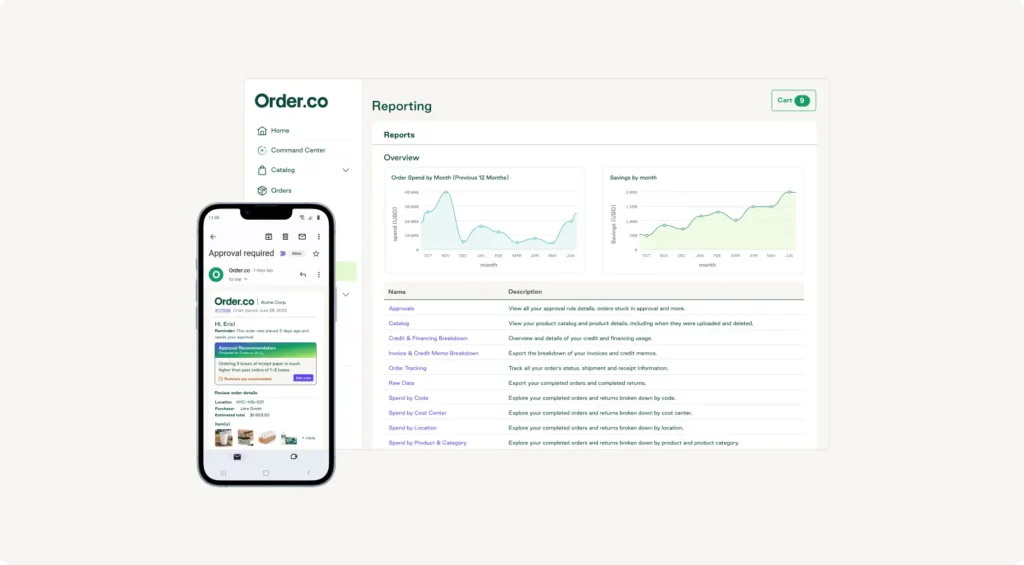
An effective spend management strategy begins with consolidating vendor, category, and SKU-level data into a single system of record. When purchasing data lives in one place, you gain line-level visibility into purchasing decisions, tracked by location, department, vendor, and GL code. Direct ERP sync eliminates manual entry and reduces close errors.
Centralization routes all purchasing through a unified workflow, where spend data is captured accurately from the start, so your AP team can validate invoices rather than investigate them.

Spend Analysis Toolkit
Unlock savings, improve supplier relationships, and make smarter procurement decisions with clearer spend insights. Download the ebook to get started.
2. Categorize spend consistently at the GL and entity level
Inconsistent categorization compounds quickly across multi-location operations. When each site codes purchases differently, or GL accounts are assigned manually, you lose the ability to compare company spending comprehensively, forecast accurately, or close the books cleanly.
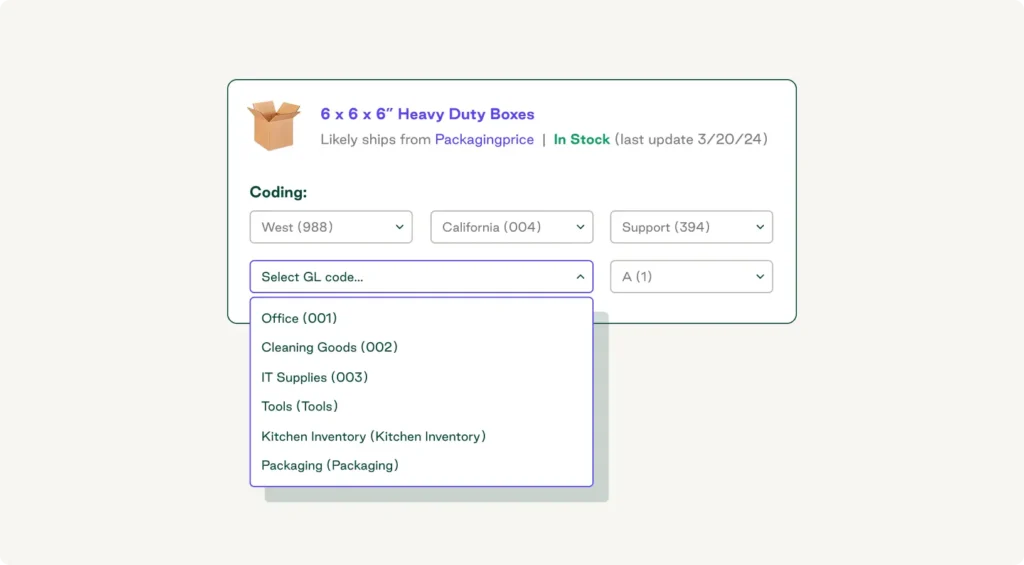
When every line item and purchase order is tagged with the correct GL account, cost center, and entity at the point of transaction, manual reclassification during close is no longer necessary. AP teams don’t have to hunt down miscoded invoices, and auditors can trace spend back to the source without digging through spreadsheets.
The key is to embed categorization logic directly into your spend management software via pre-configured GL mappings, entity-level defaults, and role-based permissions. This allows finance to spend less time fixing errors and more time analyzing what the data actually means.
3. Establish proactive approval and budget controls
Most spend control happens too late. By the time finance reviews an invoice or flags an exception, the purchase is already complete.
Real control starts before the transaction. Set multi-tier approval thresholds aligned to your org structure. A $200 office supply order shouldn't require the same sign-off as a $10,000 equipment purchase. Implement location- or department-level budgets that reflect how your business actually operates, giving local managers accountability without constant finance intervention.
When purchase review is built into your procurement system, compliance becomes automatic.
4. Design purchasing experiences that naturally enforce compliance
Much like approval and budget controls, embedding other guardrails directly into the procurement process enforces compliance and reduces finance’s workload.
These guardrails include:
- Curated catalogs: Limit purchasing options to pre-negotiated, approved items and vendors.
- Role-based permissions: Ensure only authorized users can access certain vendors or spend categories.
- Embedded approval workflows: Route requests to the right person automatically based on amount, category, or location.
- Pre-set budget thresholds: Prevent purchases that exceed allocated spend without manual intervention.
This approach contrasts sharply with card-based systems, where compliance depends on post-purchase policing. In those scenarios, finance teams spend time reviewing transactions, flagging exceptions, and chasing down explanations—work that could have been avoided with the right controls in place.
5. Automate procure-to-pay workflows and invoice management
When you automate the full procure-to-pay cycle, you eliminate the manual handoffs and data entry that slow down AP and create month-end bottlenecks.
A unified P2P workflow standardizes the entire process, from how requests are submitted, approved, and converted into POs, to fulfillment, invoicing, and payment. When these steps happen in one system, you get automatic invoice capture, line-level GL coding, and three-way matching—all without manual intervention.
6. Optimize sourcing and vendor consolidation
If you're working with dozens of suppliers for similar products, you could be overpaying and creating unnecessary invoice volume for your AP team.
Use spend analysis tools to track spending patterns and KPIs to identify where you're paying too much, where vendor consolidation makes sense, and where product substitutions could reduce costs without impacting operations. Consolidating vendors reduces administrative overhead, improves pricing leverage, and simplifies vendor payment management.
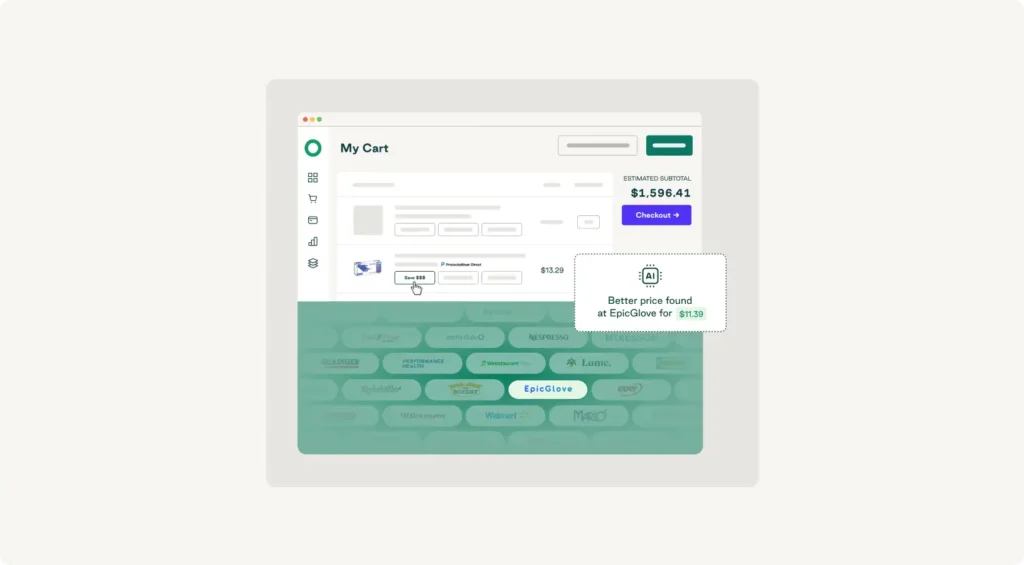
Implement AI-driven sourcing to automate and optimize vendor management, and replace manual, time-consuming tasks with intelligent, data-driven workflows that deliver faster, more strategic outcomes. For example, Removery saved $100,000 in cash-back rewards in a single year using Order.co’s sourcing AI capabilities.
7. Measure financial impact, not just savings
Cost reduction alone does not tell you whether your spend management practices are working. A vendor negotiation may show 15% savings on paper, but if half your locations still order from unapproved suppliers, those savings may never be fully realized.
These metrics help connect day-to-day purchasing activity to broader financial performance:
- Spend under management: Measures the percentage of total spend routed through an approved purchasing process, improving control and visibility
- Compliance and approval adherence: Shows whether purchases follow required workflows instead of bypassing approvals, approved vendors, or PO requirements
- Invoice volume reduction: Tracks how many fewer invoices AP has to process, reducing administrative burden and speeding up month-end close
- Realized savings vs. projected savings: Compares anticipated savings to actual savings captured to help teams evaluate whether sourcing efforts are delivering measurable value
- Days Payable Outstanding (DPO): Measures the average time it takes to pay suppliers so teams better understand how procurement and AP processes affect cash flow predictability and working capital performance
Faster PO-to-payment cycles can also reduce DPO variability and make cash flow more predictable.
How to implement spend management best practices
New spending policies don’t fix broken processes. Results come from changing how purchasing happens in the first place—embedding controls, visibility, and automation directly into the workflows your teams already use.
The steps below outline a practical sequence for building that foundation with Order.co:
Step 1. Choose a spend management platform that gives you visibility from day one
Effective spend management starts with the right system. If purchasing data lives across emails, spreadsheets, vendor portals, and manual ERP uploads, finance can't see spend clearly enough to control it.
When evaluating a spend management tool, look for one that does more than track purchases after the fact. Order.co helps teams manage spend at the point of purchase with real-time visibility, automated coding, and ERP sync built into workflows. That foundation makes it easier to enforce policy, improve reporting accuracy, and identify opportunities for vendor consolidation and savings.
Step 2. Embed controls into everyday purchasing
The most effective controls are the ones employees don’t have to think about. Order.co enables spend management by embedding policies directly into the purchasing experience, guiding teams toward compliant purchases from the start.
With Order.co, finance and procurement teams can set approval thresholds based on role, department, location, or purchase value. They can also define budgets at the location or team level and limit purchasing to approved vendors, products, or catalogs. Instead of relying on employees to remember policy, the platform applies those rules automatically during checkout.
Step 3. Automate high-volume, low-value tasks first
Once controls are in place, decide which tasks you can automate. These are typically the ones that take the most time and require the least judgment. For many teams, this includes tasks such as purchase order creation, invoice capture, GL coding, and invoice matching.
Order.co helps teams automate these workflows in one connected system, reducing manual effort while improving accuracy and speed.
Step 4. Scale purchasing across locations without losing control
As organizations grow, spend management becomes harder to enforce consistently. Different locations may have different needs, but finance still needs a standardized way to manage vendors, approvals, budgets, and reporting.
With Order.co, teams can maintain shared vendor standards and approval policies across the business while still assigning location-specific budgets, permissions, and workflows. Role-based access helps ensure that employees only purchase within their authorized scope, while automated coding and synced transaction data reduce the need for cleanup later.
Spend Analysis Toolkit
Unlock savings, improve supplier relationships, and make smarter procurement decisions with clearer spend insights. Download the ebook to get started.
"*" indicates required fields
Ensure spend management starts before the transaction with Order.co
The goal of spend management is to create a system where employees can buy what the business needs while finance maintains control over budgets, approvals, vendors, and reporting.
Order.co gives finance and procurement teams a more proactive way to manage spend. By moving control upstream into the purchasing process, businesses can reduce friction for employees while improving compliance, visibility, and consistency across locations.
The result is a cleaner, more scalable system that helps teams spend less time reacting to purchases and more time guiding them.
Schedule a demo to see how Order.co supports smarter spend management and stops rogue purchases before they happen.
FAQs about spend management best practices
Spend management controls purchasing before it happens through approval workflows, vendor controls, and purchasing guardrails. Expense management tracks and reimburses employee-initiated costs after they've already spent money—like travel or meals on personal credit cards.
The core distinction is timing: spend management prevents unwanted purchases by embedding approvals into the buying process, while expense management relies on post-transaction review.
Maverick spend is any purchase made outside approved vendors, processes, or contracts—often through personal cards or unapproved suppliers. Spend management reduces maverick spend by making compliant purchasing easier than going around the system.
Order.co’s curated catalogs, pre-approved vendor lists, and embedded approval workflows guide teams toward compliant purchases, while role-based permissions and real-time budget visibility stop unauthorized spending before it happens.
Finance should own the spend management strategy, setting budgets, configuring approval thresholds, and ensuring alignment with business goals. Operations and procurement teams must partner in execution by designing workflows that are effective in practice. In multi-location companies, central finance or procurement stakeholders own the system and controls, while location managers operate within those guardrails for both control and adoption.
Get started
Schedule a demo to see how Order.co can simplify buying for your business.
"*" indicates required fields