Better systems drive better results. A well-automated procure-to-pay (P2P) process doesn't just save time—it keeps spending visible and helps uncover opportunities to cut costs, improving your organization's bottom line.
But what does an effective P2P cycle actually look like? And how can procure-to-pay automation ensure spending stays under control as you grow?
Download the free ebook: The Procurement Strategy Playbook for Modern Businesses
What is procure-to-pay (P2P) automation?
Procure-to-pay automation is the use of automated systems to identify, request, and pay for the products and services your business needs. Instead of relying on manual tasks—such as purchase requisitions, invoice reconciliation, and vendor payments—P2P automation handles workflows automatically. This provides procurement teams with faster processes, fewer errors, and easier access to purchase data, approvals, and spending insights.
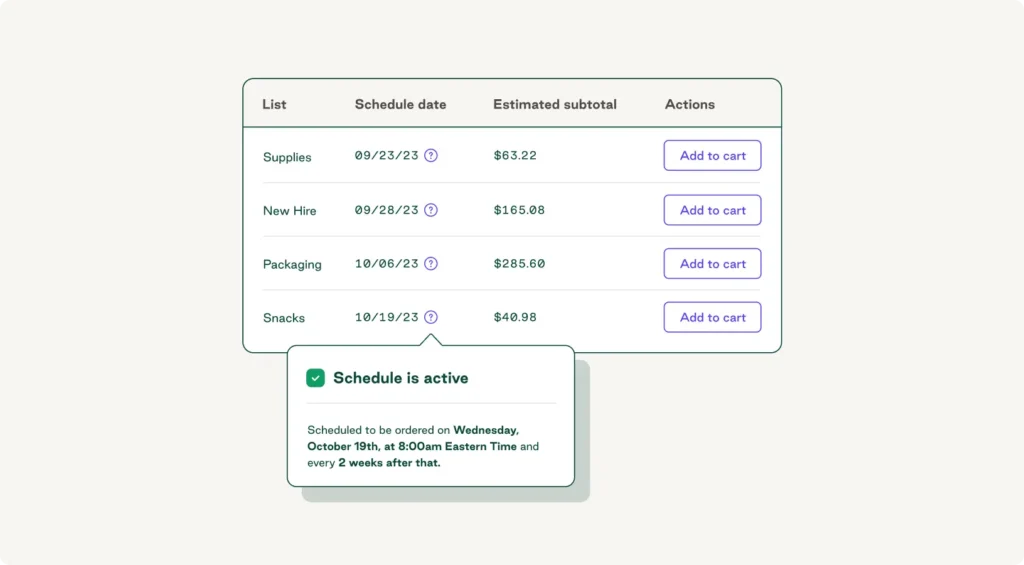
Examples of procure-to-pay automation
Procure-to-pay automation solutions transform theoretical efficiency gains into measurable results. Here's how automation improves each stage of the P2P workflow:
- Requisition management: Automated intake forms route requests to the right approvers instantly, eliminating email chains and manual tracking. Intelligent routing ensures requisitions reach decision-makers within seconds, not days.
- Approval workflows: Rules-based automation enforces spending thresholds and hierarchies automatically, eliminating the need for manual intervention. When a $5,000 purchase requires CFO sign-off, the system routes it automatically while processing smaller purchases immediately.
- Purchase order generation: Once approved, P2P systems auto-populate PO data from requisitions, eliminating re-keying errors. AI-powered procure-to-pay systems can cut PO creation time by up to 70%.
- Supplier communication: Automated PO transmission replaces phone calls and messy email orders. Suppliers receive standardized, error-free POs through integrated portals.
- Invoice matching: P2P systems like Order.co automatically scan incoming invoices and match them to POs and receipts. The procure-to-pay technology flags discrepancies for review rather than holding up the entire payment queue.
- Payment processing: Automated systems schedule payments, prioritize invoices, and optimize timing to improve cash flow while avoiding late fees.
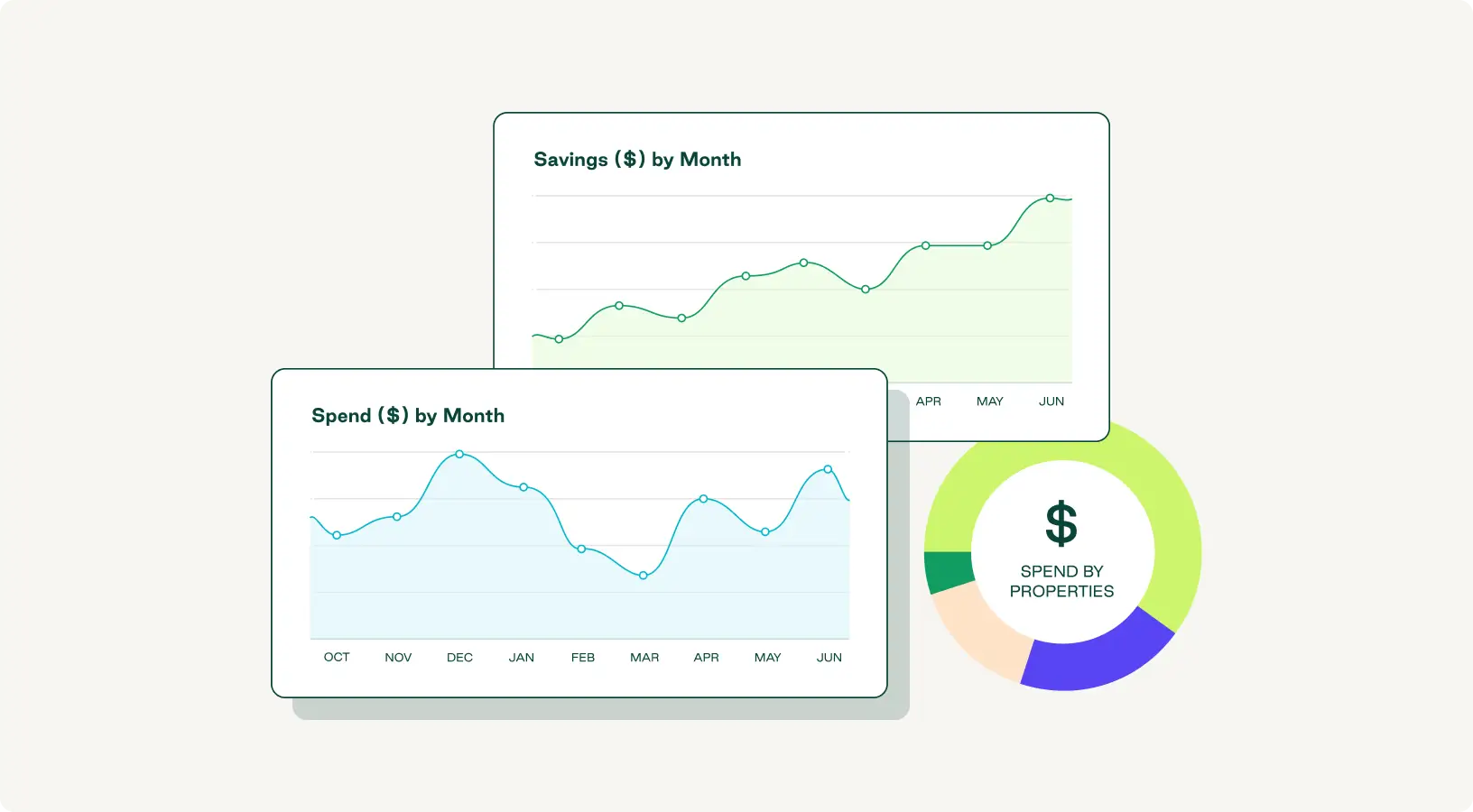
- Spend analytics: Real-time dashboards surface spending patterns, vendor performance, and budget utilization, eliminating the need for spreadsheet gymnastics and month-end reconciliation marathons.
The Procurement Strategy Playbook for Modern Businesses
Learn the key pillars of a strong strategy, valuable procurement metrics to track, and initiatives you can start implementing today.
7 Steps for procure-to-pay automation
Software solutions speed up the P2P process, reduce maverick spending, improve strategic decision-making, and increase stakeholder satisfaction.
Here's how to take control of your procure-to-pay cycle using automation:
1. Identify needs with guided requisitioning
Automating the purchase-to-pay process begins with smart intake forms that guide users through needs identification. Intelligent catalogs suggest preapproved items, flag budget constraints, and recommend alternatives based on past purchases. This eliminates the guesswork of manual purchasing processes while maintaining compliance from day one.
2. Submit automated requisitions
Digital forms autofill requester information, cost centers, and delivery addresses. Template-based requisitions speed up recurring purchases, while dynamic forms adjust fields based on purchase category. Automation captures all necessary information up front, preventing the time-consuming approval delays that can occur with manual processes.
3. Accelerate approval routing
Rules-based workflows route requisitions to the appropriate approvers based on amount, category, or department—without manual handoffs. Approvers receive notifications and can approve with a single click. Automated escalation ensures requests don't get stuck in inboxes, cutting approval cycle times from days to hours.
4. Generate purchase orders instantly
Once approved, automation converts purchase requests into purchase orders without requiring manual data entry. Automated procurement solutions validate supplier information, apply contract terms, and transmit POs electronically. This reduces errors and speeds up processing compared with manual PO creation.
5. Perform 3-way matching and invoice approval
Automation revolutionizes end-to-end accounts payable processes by scanning invoices, extracting line-item data, and matching it against POs and goods receipts. The system flags exceptions—such as price variances, quantity mismatches, or missing documents—for human review, while automatically approving perfect matches.
6. Optimize payments
The automated invoice management system then routes approved invoices for payment. It consolidates payments to reduce transaction fees, optimizes timing for early payment discounts and cash flow, and automatically maintains a complete audit trail.
7. Enable real-time spend analysis
The P2P system feeds every transaction into centralized dashboards, eliminating the need for manual data compilation. Automated analytics surface spending trends, identify cost-saving opportunities, and track KPIs in real time. This allows finance teams to spend less time wrestling with data and more time making strategic decisions.
Best practices for automating your procure-to-pay process
The following best practices can help you improve business processes, maximize outcomes, and get the most out of your purchasing and payment workflows.
Standardize approval workflows
Automation enforces consistency and prevents bottlenecks by removing variability from approval processes. A well-documented procure-to-pay process:
- Gives employees quick access to what they need
- Ensures purchase and budget oversight through enforced rules
- Reduces risk by automatically validating supplier compliance
- Provides finance teams with real-time visibility into spend
Automation removes the guesswork from approval routing. Systems apply the same logic to every purchase, ensuring nothing falls through the cracks. Requestors see approval status immediately, approvers get real-time alerts wherever they are, and the process scales effortlessly as transaction volumes grow.
Integrate contract management into approvals
Clear contract management reduces errors, speeds up approvals, and keeps purchases compliant. Documenting procurement policies ensures a smooth process and less friction for stakeholders.
Consider including these approvers in your process flow:
- Internal department lead
- Legal
- Security
- Finance
Incorporating departmental procurement strategy requirements at the intake stage helps requests start off on the right foot before they even enter the pipeline, preventing bottlenecks and ensuring high-quality purchases every time.
Leverage automation to scale P2P
Manual procurement processes often collapse under the pressure of growth. As organizations expand, purchase volumes often rise faster than procurement headcount. Procurement automation bridges that gap.
Modern procure-to-pay software options handle far more transactions without needing proportional staffing increases. According to Ardent Partners' 2024 AP Metrics That Matter report, best-in-class organizations with high automation achieve invoice processing costs of $2.81, compared to the average of $9.87—a 71.5% reduction. These savings compound as transaction volumes grow.
Procurement software uses process automation to free teams from repetitive tasks like data entry, three-way matching, and payment processing. Staff can redirect that energy toward higher-value activities that drive real business impact, including supplier relationship management, contract negotiation, and strategic sourcing.
The Procurement Strategy Playbook for Modern Businesses
Learn the key pillars of a strong strategy, valuable procurement metrics to track, and initiatives you can start implementing today.
"*" indicates required fields
How does procure-to-pay automation software work?
Modernprocure-to-pay solutions create centralized, automated workflows that cover every step, from requisition to payment. They integrate with existing ERP and accounting systems, routing approvals based on configurable business rules and processing documents through intelligent automation.
Integration architecture
P2P platforms connect procurement with accounts payable, general ledger systems, and supplier networks. API-based integrations enable real-time data flow, eliminating manual data transfers and keeping your entire P2P workflow accurate and up to date.
Approval-routing engines
Rules-based logic automatically determines approval paths based on purchase amount, category, department, or custom parameters. Notifications keep approvals moving, while automated escalation prevents bottlenecks when approvers are unavailable.
AI and machine-learning capabilities
Intelligent P2P software uses AI to analyze procurement data, predict trends, optimize purchasing decisions, and identify anomalies that might signal fraud or compliance issues. These tools include:
- Natural Language Processing (NLP) for extracting information from contracts and unstructured documents
- Machine learning models that learn from historical data to improve matching accuracy
- Predictive analytics for forecasting demand, provider performance issues, and potential payment delays
Emerging AI applications
AI can also help you reduce invoice processing time, increase compliance rates, and improve the vendor management process through more efficient workflows and enhanced data accuracy. Advanced systems can:
- Flag duplicate invoices or potential fraud by analyzing payment patterns
- Recommend suppliers based on performance history and contract terms
- Predict invoices likely to encounter matching issues
- Identify cost-saving opportunities, such as bulk ordering discounts
With these capabilities, P2P automation transforms procurement from a transactional function into a strategic advantage. In fact, the accounts payable automation market is projected to reach $1.9 billion by 2025, driven largely by AI innovations.
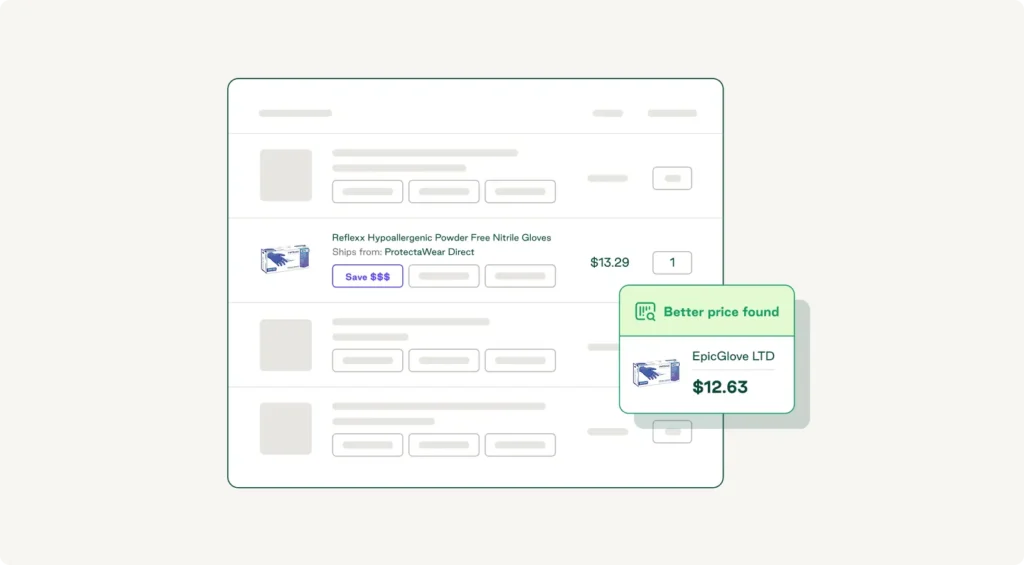
How Order.co's P2P automation improves efficiency and savings
Manual procure-to-pay processes harbor hidden costs that erode profitability. Beyond obvious process inefficiencies, organizations often face maverick spend, duplicate payment risks, and late-payment penalties.
Order.co addresses these hidden costs while delivering measurable efficiency gains. By centralizing purchasing, the automated procurement system ensures compliance with company policies while eliminating friction from everyday procurement tasks.
With Order.co, you can:
- Automatically stay within budgets, purchasing guidelines, and approved vendor lists
- Improve supply chain management across multiple locations with consolidated catalogs
- Reduce invoice volume, invoice processing costs, and exception rates through intelligent matching
- Stabilize and improve cash flow by avoiding late payments with automated scheduling and flexible terms
- Surface cost-saving opportunities through real-time spend analytics
- Gain line-level visibility for strategic spend management across your entire organization
If you’re ready to learn how automating procurement with Order.co can help you achieve these outcomes, schedule a demo of the platform today.
FAQs
Get started
Schedule a demo to see how Order.co can simplify buying for your business.
"*" indicates required fields
If you're managing procurement for a growing business, you know the frustration: what started as simple buying decisions now means juggling multiple vendors, chasing approvals, and sorting through stacks of invoices. You're spending more time on paperwork and less time on work that actually matters, all while rogue spend quietly chips away at your budget. As your business grows, these inefficiencies only get worse—leading to bloated budgets, missed savings, and compliance risks that are hard to untangle.
The fix is getting organized about how you manage procurement. With the right strategy and systems, you can take control of purchasing workflows, consolidate vendor relationships, and gain real-time visibility into spend. You reduce manual effort, enforce policy from requisition to payment, and free up time for more strategic priorities.
Procurement management is about much more than saving money. It's about building systems that scale as you grow. When you understand the fundamentals and get support from the right tools, you turn procurement from a daily headache into something that actually helps your business succeed.
Download the free guide: Spend Analysis Toolkit
What is procurement management?
Procurement management is the process of sourcing goods and services, approving purchases, tracking spend, and optimizing how your organization buys. Your procurement team's primary goal is to reduce bottom-line costs while improving the way your business acquires the resources it needs.
A strong procurement management process typically includes:
- Resource planning
- Supplier sourcing and evaluation
- Purchase requisition approval
- Purchase order processing
- Order reconciliation
- Vendor payment processing
Procurement also plays a critical role in meeting broader business needs. Even if you treat procurement and supply chain management (SCM) as separate functions, they share common goals: cost control, operational efficiency, and risk mitigation. Intelligent procurement helps you find reliable vendors, secure goods that meet your quality standards, avoid delays, and maintain greater control over spend.
The importance of procurement management
A solid procurement management strategy is your first line of defense against rising costs and unstable cash flow. It provides the foundation for more accurate budgeting and forecasting, ensures more efficient use of revenue, and creates more room to invest in business growth for long-term stability.
To build a procurement management system that supports smarter spend and stronger operations, prioritize:
- Strategic sourcing: Commit to vendor management in your procurement management plan to identify the best potential suppliers based on price, quality, and terms. A curated list of pre-vetted partners reduces research time and allows you to leverage negotiated pricing and mutually beneficial partnerships for better outcomes.
- Purchasing optimization: Formalize your purchase requisition and approval workflows to improve efficiency and reduce delays. An optimized procurement process helps your team move requests through review and approval quickly to keep purchasing on track.
- Waste reduction: Eliminate maverick spend (unauthorized or unmanaged purchases) that can quietly drain your budget. Tracking spend closely helps you eliminate process gaps and enforce procurement policies to minimize waste.
- Risk management: Mitigate supply chain, contract, and vendor risks by standardizing your procurement process. A consistent approach reduces exposure to disruptions, disputes, and reliability issues. It prevents costly emergencies like stock-outs, shipping delays, and supplier failures.
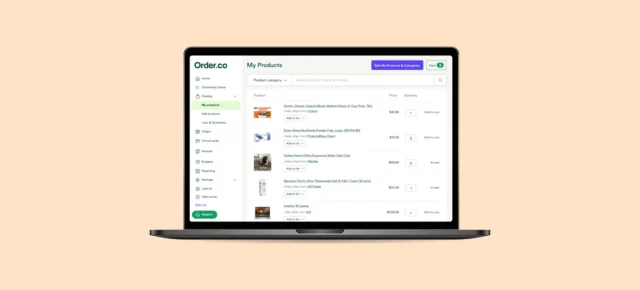
Manual procurement is costing you more than you think.
Centralize purchasing, streamline approvals, and control every order to improve compliance and lower costs in one, AI-powered platform.
6 best practices for better procurement management
Procurement management requires dedicated resources, clear processes, and consistent metrics tracking to ensure accuracy and scalability. But refining your procurement practices doesn’t have to be complex.
Use these techniques to improve your procurement strategy for better results:
1. Use spend analysis to optimize cost
Spend analysis helps uncover savings opportunities across the entire procurement cycle by reviewing data from invoices, contracts, receipts, and purchase orders. It gives you clear visibility into how you use resources, helping you track supplier performance, identify cost-efficient alternatives, and make smarter negotiation decisions. That insight strengthens strategic sourcing, reduces waste, and boosts operational efficiency.
2. Centralize your procurement process
Centralizing procurement gives you a comprehensive view from request to delivery via real-time tracking and reporting. Greater visibility helps you identify opportunities for improvement so you can respond faster to minimize disruptions. A centralized platform also reduces manual work tied to purchase orders, invoicing, and payment tracking to minimize errors and save time.
Modern procurement software like Order.co lets you manage the entire procurement process in one place. It helps you control costs, customize workflows, and improve forecasting for better results.
3. Automate and document wherever possible
Documenting your procurement management process establishes standards for all procurement activities, including spending, purchasing, and performance measurement. It keeps stakeholders aligned, prevents maverick spend, and creates an audit trail to support regulatory compliance.
When you pair thorough documentation with automation, you reduce human error and improve overall system efficiency. Automating repetitive tasks like purchase order creation, approvals, three-way matching, and reconciliation frees up time for higher-value initiatives.
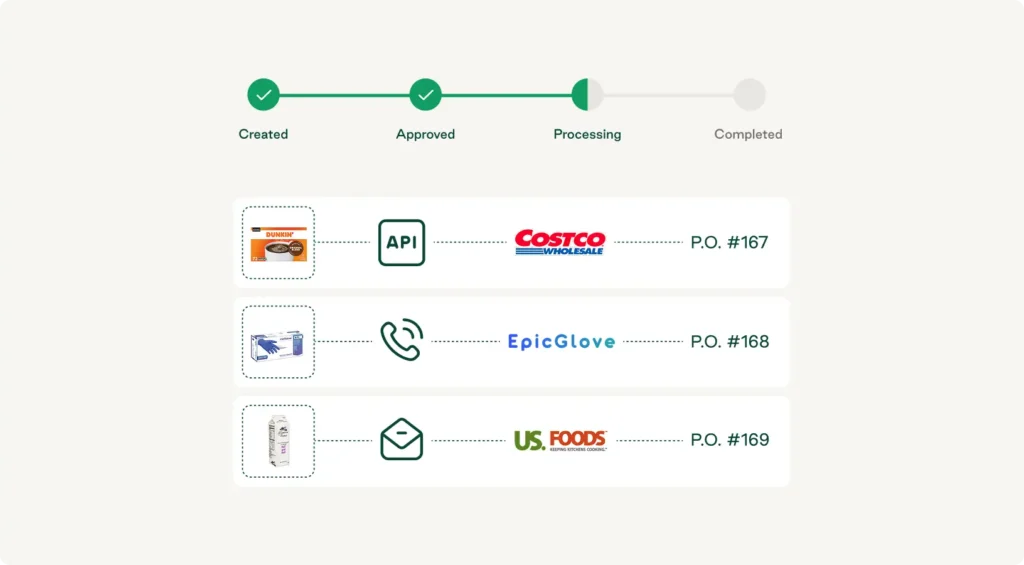
4. Integrate tools for smooth management
Connecting procurement data with other financial systems gives your team access to accurate, up-to-date information across platforms. With unified data, you can make faster, more informed decisions while reducing redundant processes and manual data entry errors.
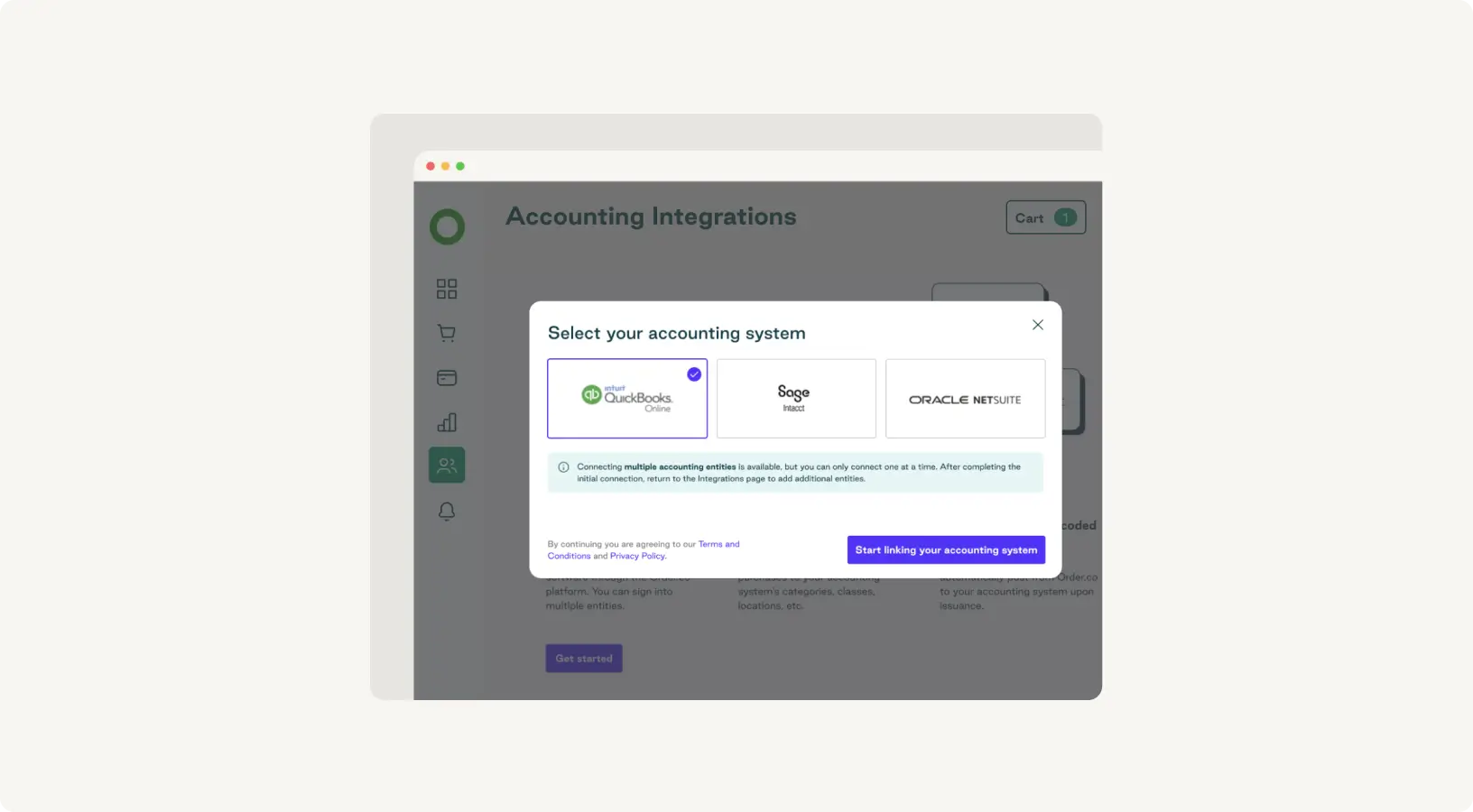
For example, integrating accounting software like QuickBooks with your centralized eprocurement solution improves the accuracy and efficiency of purchasing, invoicing, and financial reporting. Instead of switching between disconnected tools or updating records by hand, you can sync data automatically and keep workflows running smoothly.
5. Manage your vendor lifecycle
A vendor lifecycle management program helps you monitor your suppliers’ performance by analyzing data on past purchases, delivery times, and order costs. This insight lets you reward vendors who deliver value and quality service with more business, while helping identify underperforming suppliers you can replace.
Vendor lifecycle management also simplifies vendor onboarding by centralizing all relevant supplier details, enabling faster order processing after vendor approval. Automated offboarding removes access privileges and archives related records, making transitions much easier.
6. Measure performance to control spend
Measuring performance is crucial for driving ongoing procurement improvements. Vendor scoring helps you evaluate supplier performance based on criteria like quality, delivery time, and pricing. By tracking procurement KPIs like invoice accuracy, order turnaround time, and policy compliance, you can uncover process gaps and opportunities for improvement. This allows you to forecast expenses, control costs, and allocate resources more effectively.
You can also use analytics to assess supplier risk. By evaluating factors like financial stability, regulatory compliance, and geopolitical exposure, you can identify vulnerabilities and take proactive steps to avoid disruption.
Download The Complete Guide to Procurement Management KPIs to learn how to measure what matters and turn data into savings.
Why should you automate procurement management?
Procuring goods and services is one of an organization's most significant financial activities. It’s no surprise that 56% of procurement leaders automate manual processes to control costs and improve efficiency.
Understanding your procurement spending is essential for reducing expenses and improving budget accuracy. But conducting these practices across dozens of vendors and hundreds of monthly invoices is a tall order.
Procurement automation helps you overcome this challenge while delivering additional money-saving benefits, including:
- Increased focus on strategic work: Intelligent procurement management helps procurement professionals and supply chain team members spend more time on high-impact tasks. This includes data-driven decision-making, strategic project management, and capacity planning—leading to better ROI and more efficient spending.
- More efficient payment processes: Automation lets you batch, process, code, and issue multiple payments simultaneously. This reduces processing costs and helps your purchasing department take advantage of early payment discounts.
- Improved contract management: Efficient procurement contract management and vendor lifecycle tracking improve accountability for the quality of goods and services purchased. Automating payment workflows speeds up processing and benefits both your organization and your suppliers.
Manual procurement is costing you more than you think.
Centralize purchasing, streamline approvals, and control every order to improve compliance and lower costs in one, AI-powered platform.
What to look for in a procurement management software solution
If you are considering automated procurement software to improve your operations, a thorough evaluation process will help you select the right solution. Your current procurement management system, monthly invoice volume, tech stack, and typical procurement activities all influence which supplier will be best for your company's needs.
The platform you choose should offer features like:
- Full integration options: The right automated procurement platform will integrate with your larger financial or accounting infrastructure. Look for solutions that share data across systems to reduce duplication, errors, and manual work.
- Robust analytics tools: A strong procurement platform will let you leverage your data to support informed decisions and cost-savings analysis. Seek out software with advanced reporting and visualization tools that deliver real-time insights by location, category, product type, and general ledger (GL) code.
- Budget controls: A solution with automated purchasing controls simplifies the purchase requisition process while aligning spending with organizational goals. Choose a platform with dynamic budget controls and approval workflows that let your team manage limits by dollar amount, role, location, or other key parameters to enable self-service without sacrificing oversight.
These features give you the flexibility to create efficient procurement workflows and share financial information across your entire organization. Order.co combines automation, centralized management, and real-time visibility in a single platform designed to modernize and scale your procurement operations.
The added advantages of managing procurement with Order.co
If you’re struggling with scattered vendors, manual approvals, and invoice processing that's draining your time and budget, a comprehensive procure-to-pay platform can transform your procurement management process. By centralizing and automating your sourcing, purchasing, and vendor oversight activities, you reduce complexity, improve visibility, and gain better control over spend to help your business grow.
Order.co dramatically transforms procurement by:
- Creating a unified experience: Order.co lets you purchase across all your suppliers in one checkout cart through a curated catalog of preferred partners. Instead of juggling multiple supplier relationships separately, you can consolidate suppliers and use AI-powered sourcing engines to find cost-effective alternatives that optimize spend.
- Automating the procurement process: Order.co manages everything from purchase requisitions and automated PO generation to customizable approval workflows and order tracking. The platform provides real-time spend visibility and reporting, ensuring compliant and accurate outcomes.
- Simplifying payments and accounting: Order.co offers flexible financial offerings, including capital advances, net terms, and virtual cards. Automated invoice management, three-way matching, and accounting system integrations eliminate manual data entry and provide precise financial control.
Request a demo of Order.co to see how you can transform your procurement operations and spend optimization today.
Get started
Schedule a demo to see how Order.co can simplify buying for your business.
"*" indicates required fields
Procurement and supply chain management are important components of spend management, following a product's life from manufacturing until it arrives in the hands of the end user. Despite increasing understanding in the SaaS market regarding these functions, confusion remains regarding where the supply chain ends and procurement processes begin. Clarifying this distinction is the first step in improving your company’s operating efficiency.
By the end of this article, you’ll know:
- The major functions of the procurement and supply chain management departments
- Where procurement and supply chain management overlap and how they differ
- How procurement and supply chain management can work together to produce better outcomes
Summary:
- Procurement handles sourcing and purchasing, while supply chain management oversees production, logistics, and delivery.
- Both functions work to reduce costs, increase efficiency, and strengthen supplier relationships for organizations.
- Coordinating procurement and supply chain strategies enhances transparency, forecasting, and overall business performance.
- Utilizing automated platforms and spend analysis tools provides greater control, visibility, and resilience throughout procurement and supply chain operations.
Download the free ebook: The Procurement Strategy Playbook
What is procurement?
In simple terms, procurement focuses on evaluating new suppliers and working with existing ones to buy goods and services for a business. The procurement process aims to build strong relationships, with great procurement teams seeking mutually beneficial partnerships with both internal clients and external suppliers.
In larger organizations, procurement also serves as a bridge between the finance team and departmental stakeholders. Effective procurement makes it easier for departments to get what they need while providing accountability and data for financial approval.
Procurement is sometimes confused with purchasing, as many organizations use the two terms interchangeably. However, there is a distinction between procurement and purchasing.
While purchasing describes the act of acquiring and paying for materials, procurement covers a much wider range of activities, including:
- Needs identification: Procurement helps stakeholders understand and support company needs and initiatives, develop forecasts, and plan resource acquisition to meet deadlines.
- Supplier relationship management: Procurement teams manage the supplier lifecycle from evaluation and onboarding to renewal or termination.
- Negotiation: Using benchmark data and a partnership approach, procurement leverages supplier relationships to secure the best terms and pricing.
- Contract management: The procurement team, along with Finance and Legal, monitors and manages supplier agreements to ensure vendors meet contract terms and deliver goods on expected timelines.
- Receipt of goods: Procurement may work with receiving to reconcile invoices against the purchase requisition, purchase order, and invoices, ensuring accuracy and proper delivery of goods.
- Payment: Procurement and accounts payable (AP) teams intersect to manage approval, GL coding, and processing to make timely supplier payments.
The Procurement Strategy Playbook for Modern Businesses
Learn the key pillars of a strong strategy, valuable procurement metrics to track, and initiatives you can start implementing today.
What is a supply chain?
A supply chain is a network of suppliers, service providers, logistical partners, and other organizations working together to provide companies with raw materials, manufacture them into final products, and deliver them to end users. It involves coordinating activities, people, entities, information, and resources to ensure the efficient flow of materials sourcing and goods production. The supply chain represents the steps it takes to get a product or service from its place of manufacture into the hands of the customer, including warehousing, transportation, distribution, and delivery.
What is supply chain management (SCM)?
Just as procurement bridges upstream suppliers and an organization, supply chain management bridges the downstream network and the promotional and logistics providers connecting the company and its customers.
While shipping and delivery play a crucial role in supply chain management, they represent only a small portion of the process. Managing the manufacturing and the flow of goods to buyers encompasses a much more complex set of activities.
Supply chain management teams are responsible for:
- Inventory management: Supply chain teams manage and track the intake of both raw materials and distribution of finished goods. They maintain inventory levels of necessary components to meet production goals.
- Manufacturing: Supply chain professionals handle the process and timelines of turning raw materials into products and the methods of improving efficiency in the entire process.
- Supply chain risk management: Finance and supply chain managers evaluate the stability of the supply chain network and the ability of suppliers to help get goods to market on time and at the expected cost.
- Quality control: SCM teams work to improve the overall condition of products and reduce manufacturing issues and product defects.
- Delivery and return management: SCM and logistics teams manage the transport of finished products from the manufacturing site or wholesale warehouses to distribution points (retailers, etc.) and handle returns for defective or unwanted products.
How do procurement and supply chain management differ?
Procurement and supply chain share the core objective of driving organizational success, though they achieve it in different ways. Procurement is a subset of the overall supply chain process.
Some key differences between the two are:
- Procurement is “where things end up” in terms of production. The main goal of procurement professionals is to acquire inputs like materials and services.
- Supply chain management is “where things start” in terms of materials. Supply chain professionals are concerned with transforming procured raw goods and services into products.
- Procurement is a support system for production. Supply chain management serves as the agent of production and distribution of goods.
- Procurement’s objectives center on capital efficiency (finding cost-effective ways to save money and improve profitability), whereas supply chain management focuses on operational efficiency (finding ways to reduce friction and distribution costs).
The Procurement Strategy Playbook for Modern Businesses
Learn the key pillars of a strong strategy, valuable procurement metrics to track, and initiatives you can start implementing today.
"*" indicates required fields
What do procurement and supply chain management have in common?
Procurement and supply chain management share several objectives and critical activities, including reducing costs, improving operational efficiency, and building mutually beneficial supplier relationships.
Cost-saving opportunities
Procurement’s main concern is with spend optimization, identifying ways to save money and improve your bottom-line performance. On the supply chain side, the focus is on maintaining quality standards and increasing value to improve topline performance.
Procurement management and supply chain management both seek to save by maximizing spend efficiency on new projects, analyzing current projects and contracts to realize cost reductions, and negotiating optimal prices and terms to maintain efficiency. Teams achieve this by practicing an effective supply chain strategy or employing procurement software for process automation.
Operational efficiency
On the procurement side, efficient administration of the purchasing process shortens the time to performance for purchases and reduces the research hours necessary to execute deals.
On the supply chain side, building efficient production and distribution channels allows you to get goods to market faster and more cost-effectively. Improving both sets of processes saves hundreds of hours in employee wages and increases the productivity of the manufacturing function.
Strong supplier relationships
Strong supplier relationships play a critical role in procurement and supply chain. By improving your sourcing strategies with suppliers and distributors, you can leverage better pricing, reduce the time spent evaluating suppliers, and streamline functions like goods requisitions, order processing, and invoice payment.
Supply chain and procurement strategy
Good systems are foundational to a productive purchasing and supply management process. Incorporating the best practices outlined below helps you position the business for better cost efficiency, stronger relationships with suppliers, and improved business outcomes.
Leverage technology
Using software to manage purchasing and supply chain provides control and visibility for everything from sourcing suppliers and engaging in negotiations to evaluating supplier performance and conducting spend management. A platform like Order.co can help automate routine tasks, reducing human error and enabling data-driven decisions that enhance operational efficiency.
Perform spend analysis
Conducting routine spend analysis is a fundamental step toward mastering procurement and supply chain optimization. By systematically examining expenditures, you unlock insights into spending patterns, supplier performance, and potential cost-saving opportunities. This proactive approach streamlines business operations, significantly boosting cost efficiency and strategic sourcing effectiveness. Embracing spend analysis as a regular practice helps you stay ahead of the curve, improves decision-making, and allows for process improvements that maximize impact and value.
Nurture supplier relations
Good partnerships can have a big impact on business goals. Forging solid relationships with suppliers helps create a foundation of trust and collaboration, resulting in enhanced supply chain quality, reliability, and innovation. You can encourage stronger partnerships in several ways:
- Build a strategic sourcing program to vet new potential vendors
- Streamline the number of vendors your organization works with
- Prioritize open communication and collaboration with suppliers
This approach optimizes the procurement process while securing a competitive advantage and creating resilience. Adopting this mindset helps transform transactional supplier interactions into valuable alliances that propel your business forward.
Establish contingency plans
Contingency planning is an essential tool for managing supply chain disruptions effectively. The process helps your business anticipate potential challenges and devise robust strategies to mitigate risks. By establishing comprehensive contingency plans, you equip your organization with the agility to respond swiftly and efficiently to unforeseen events. This proactive approach safeguards operations and ensures continuity and stability in the face of adversity.
Ways supply chain and procurement can work together better
Though procurement and supply chain operate independently, their coordination is essential to progress. They are, in essence, the two legs responsible for your organization’s forward motion.
Procurement and supply chain can improve overall performance through:
- Improved cross-departmental planning: Planning and resource allocation for the manufacturing and distribution functions should be a team effort. Improving interdepartmental alignment can produce more accurate forecasts, offer a holistic view of contract terms and potential impacts, reduce capacity and warehousing friction, and shorten the time from raw materials acquisition to goods delivery.
- Increased data transparency: Centralizing data can greatly improve the ability of both departments to reduce lead times, identify trends, and realize opportunities for cost savings and efficiency. Integrated software can bring the supply chain management process into full view, allowing procurement to better support supply chain functions and improve performance times throughout the production cycle.
- Supplier streamlining: Though procurement many have a well-honed preferred vendor list, extending that concept to embrace an interdepartmental approach can more fully leverage optimal pricing and terms. Doing so can further reduce the time and cost of order and payment processing.
If you’re looking to bring procurement and supply chain into better alignment within your organization, schedule a demo to see how Order.co can help.
FAQs
Get started
Schedule a demo to see how Order.co can simplify buying for your business.
"*" indicates required fields
To launch successful procurement initiatives, stabilize cash flow, and uncover savings, procurement teams need a clear view of every step in the procure-to-pay (P2P) cycle—from sourcing to settlement. Top teams rely on procurement analysis as an essential part of their strategy, using it to answer questions quickly and efficiently, gain better control over projects, and identify real cost-saving opportunities.
This guide breaks down everything you need to know about procurement analysis: what it is, how often to conduct it, and how it can boost savings and productivity. It also shares best practices you can start using immediately to begin seeing positive impacts.
Download the free tool: Procurement KPI Tracker Template
What is procurement analysis?
Procurement analysis is the process of examining your company's spending to understand where your money is going and how to control it. It helps you anticipate costs, turn information into actionable insights, and make more informed decisions.
Well-visualized procurement data can show you:
- What the company is spending on goods
- How your spend compares to market benchmarks
- Where to secure the best deals on future purchases
- How to manage cash flow and improve your financial performance
Procurement analysis brings a data-driven approach to vendor selection and purchasing, drawing on past performance, current market data, and predictive insights to guide more informed decision-making. It's a bit more technical than a crystal ball, but when done correctly, it works like magic.
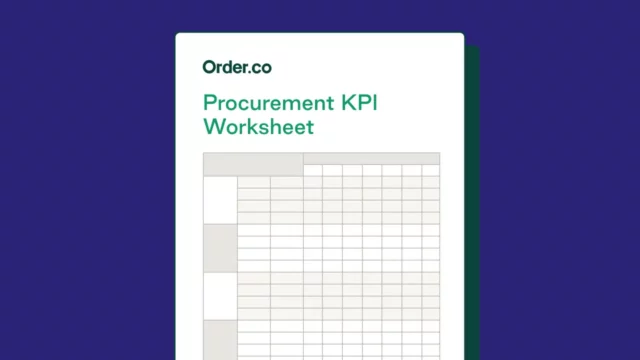
Procurement KPI Tracker Template
Download our free Procurement KPI Tracker Template today to monitor essential procurement numbers and demonstrate value in your procurement strategy.
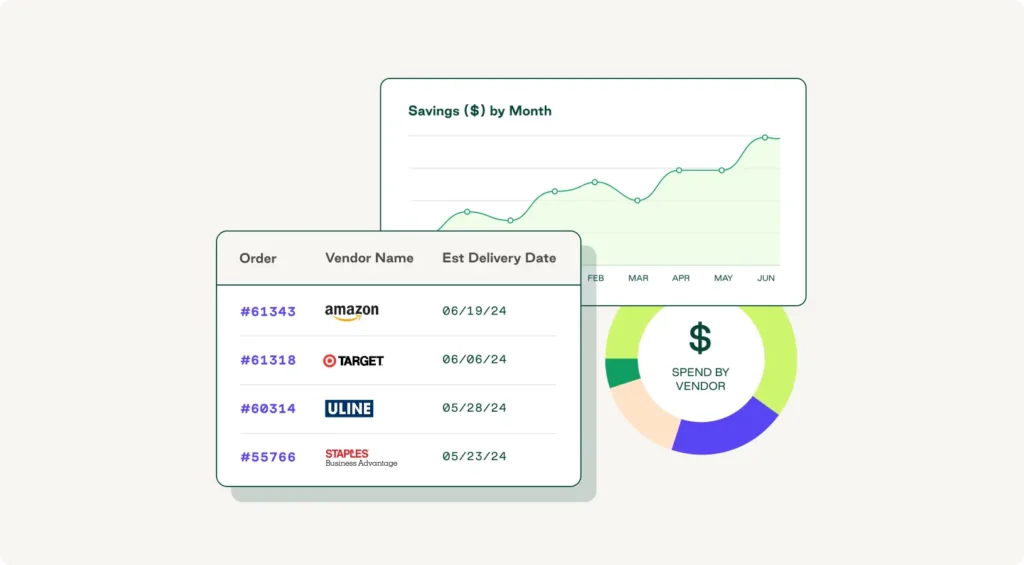
Examples of the different types of procurement analytics
You can categorize procurement analytics into four main types: descriptive, diagnostic, predictive, and prescriptive. Each offers a different lens on purchasing, and together they provide a complete view of performance.
Descriptive analytics
Descriptive analytics answers the question, "What happened?" It summarizes historical data to reveal spending patterns and establish performance baselines.
Key metrics include:
- Total spend by category, supplier, and department
- Purchase order volume and average order value
- Contract compliance rates
- Historical supplier delivery performance
Diagnostic analytics
Diagnostic analytics goes deeper to explain why certain outcomes occurred. It uncovers the root causes behind procurement results and spending anomalies.
Key metrics include:
- Variance analysis comparing budgeted vs. actual spend
- Maverick spending identification
- Drivers of supplier performance issues
- Purchase order cycle time delays
Predictive analytics
Predictive analytics looks ahead, using statistical models and machine learning to forecast market trends and make more proactive decisions. Teams using predictive analytics report 25–40% faster response times to supply chain disruptions.
Key metrics include:
- Demand forecasting accuracy
- Price trend predictions
- Supplier risk scores
- Inventory optimization projections
Prescriptive analytics
Prescriptive analytics answers "What should we do?" It combines predictive insights with optimization algorithms to recommend the best procurement strategies.
Key metrics include:
- Optimal reorder points and quantities
- Recommended supplier allocations
- Contract negotiation timing
- Sourcing strategies
What are the business benefits of procurement analysis?
Procurement analysis isn't just for large corporations—vendor spending often makes up 40-80% of total costs, so every business can benefit from keeping a close eye on it.
A strong procurement analytics process can help you:
- Improve spend management: Consolidate fragmented purchasing data across departments to see total spend by category. This visibility helps you allocate budgets more effectively and makes it easier to spot opportunities to negotiate volume discounts with preferred suppliers.
- Increase profitability: Uncover cost-saving opportunities through supplier rationalization, contract optimization, and early payment discounts to directly improve bottom-line margins. You can reinvest these savings in strategic initiatives that drive revenue growth.
- Establish performance metrics: Set standardized procurement KPIs, such as cost per purchase order, procurement cycle time, and contract compliance rates. These benchmarks help you track progress and demonstrate procurement's value to stakeholders.
- Evaluate supplier performance: Use data on on-time deliveries, quality defects, responsiveness, and pricing competitiveness to assess suppliers objectively. Evidence-based insights and constructive feedback support better sourcing decisions and strengthen supplier relationships.
- Identify cash leaks and savings opportunities: Detect maverick spend, duplicate payments, and non-compliant purchases as they happen. Real-time dashboards alert you to price variances and expiring contracts, preventing missed savings opportunities. with considerably less friction.
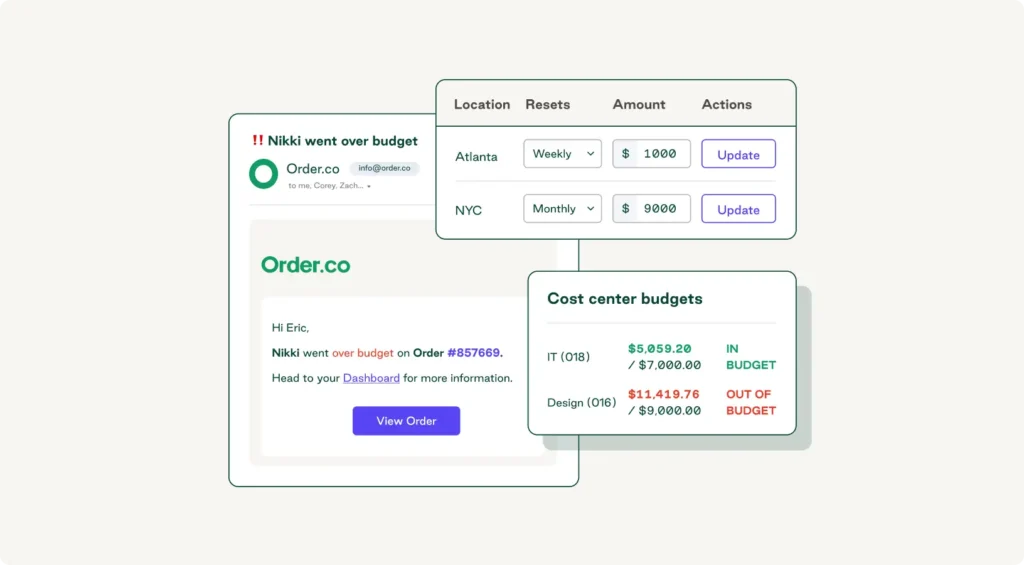
What does the procurement analytics process involve?
The procurement analytics process involves turning raw procurement data into actionable insights that drive smarter purchasing decisions. It begins with collecting information from data sources like ERP systems, procurement platforms, supplier portals, and market intelligence databases. Organizations that deploy large-scale P2P software often see up to 60% improvement in spend visibility and management.
Once collected, the data is cleansed and classified to standardize categories and ensure consistency and accuracy across departments. Next, teams conduct spend analysis to uncover spending patterns, assess supplier performance, evaluate contract compliance, and analyze market conditions. They then visualize and report these insights through dashboards and executive summaries, making the information clear and accessible to stakeholders at all levels. Finally, teams act on the findings, identifying cost-saving opportunities, negotiating better supplier terms, optimizing inventory levels, and implementing process improvements to reduce procurement costs.
How often should you do a procurement analysis?
How often you should run a procurement analysis depends on your business cycles, spending volumes, and risk profile. Most organizations benefit from a tiered approach that combines regular scheduled reviews with event-triggered data analysis.
Monthly monitoring is ideal for focusing on high-priority categories, major suppliers, and key performance indicators. Regular check-ins help you course-correct and keep procurement aligned with broader business objectives.
Quarterly reviews work well for comprehensive spend analysis and supplier performance evaluations. This cadence provides enough data to spot meaningful trends and implement improvements between reviews.
Annual strategic analysis supports big-picture procurement benchmarking against industry standards, comprehensive category reviews, and the development of long-term sourcing strategies.
In addition to routine reviews, several triggers call for ad-hoc analysis, including:
- Major market changes, such as commodity price fluctuations or currency exchange rate shifts
- Supplier performance issues like quality problems, delivery failures, or financial distress
- Budget variances that exceed set thresholds
- New product launches or business expansions that require different sourcing strategies
- Regulatory changes that impact compliance requirements or trade policies
- Supply chain disruptions from geopolitical events, natural disasters, or capacity constraints
Who should be involved in the procurement analysis process?
Procurement analysis works best when it’s a team effort. While procurement leaders typically take charge, success depends on input from across the organization:
- Procurement team: Owns the process, from data collection to insight generation. Their deep understanding of sourcing strategies and supplier relationships provides essential context.
- Finance team: Contributes budget data and cost insights as well as financial impact assessments. They validate cost-saving calculations and ensure analysis aligns with financial reporting requirements.
- Category managers and business unit leaders: Provide operational context, validate findings, and help prioritize improvement opportunities based on business needs.
- Supply chain and procurement operations teams: Offer insights into inventory management, demand patterns, and logistics factors that impact procurement decisions.
- Executive leadership: Reviews summarized findings and participates in strategic decision-making, particularly for high-value categories or significant process changes.
- IT and data analytics specialists: Maintain data infrastructure, ensure system integrations function properly, and provide advanced analytical capabilities for complex modeling when needed.
Analysis results should be shared across the entire organization. While procurement leads the effort, finance applies insights to budgeting, and operations teams use them to adjust production planning. Business units incorporate these insights when aligning purchasing with strategic objectives.
What procurement analysis challenges might you encounter?
Even with advanced tools and organizational buy-in, procurement analysis comes with common hurdles that can slow progress or limit impact.
Common procurement analysis challenges include:
- Data quality and integration issues: Procurement data often lives across multiple systems with inconsistent formats, incomplete records, and duplicate entries. It takes significant effort to cleanse and normalize this data before meaningful analysis can begin.
- Lack of standardized processes: When departments use different suppliers, approval workflows, and categorization schemes, consolidating procurement data becomes difficult and time-consuming.
- Limited analytical skills: Even with improved data access, many procurement professionals still lack expertise in statistical analysis, data visualization, or predictive modeling techniques.
- Resistance to change: Analysis findings can challenge existing supplier relationships or established practices, causing stakeholders to dismiss data-driven recommendations that conflict with their experience or preferences.
- Technology limitations: Legacy procurement systems may lack advanced reporting features, require manual data extraction, or fail to integrate with modern analytics platforms.
- Resource constraints: Smaller teams often struggle to balance analytical work with day-to-day operational demands, limiting how frequently and comprehensively they can conduct analyses.
Overcoming these challenges requires the right mix of technology, governance, and culture. Investing in integrated procurement platforms, data quality standards, and analytical training while fostering a culture that values evidence over mere intuition helps unlock the full potential of procurement analysis.
Procurement KPI Tracker Template
Download our free Procurement KPI Tracker Template today to monitor essential procurement numbers and demonstrate value in your procurement strategy.
"*" indicates required fields
7 best practices for saving on purchasing costs
If your company struggles with budget overruns and untracked purchasing, these seven best practices can help you optimize spend and strengthen your bottom line.
1. Formalize your procurement spend process
The first step to cutting costs is standardizing your procure-to-pay process. A formalized procurement function details how to move from requisition to payment, establishes set spending rules, fosters accountability, and forms the foundation for effective contract management.
For example, establishing a process was one of the first steps to savings for NY Kids Club. The company used Order.co to replace its inefficient, email-based purchase order system and get a handle on spending across its 19 locations. Automating the process eliminated wasteful spending, improved cash flow, and saved 1,325 hours on manual tasks annually.
2. Increase your procurement data visibility
Saving requires visibility. A modern, automated procurement analytics platform helps you see exactly where your money is going—by category, department, product type, supply base, tax nexus, or location. This transparency moves you beyond basic “revenue minus expenses” reporting to real-time, actionable spend intelligence.
Once your spend data is extracted and refined, a P2P platform can display it in dashboards that make insights easy to understand and apply, helping you continuously refine your procurement strategy.
3. Build strategic supplier relationships for sourcing goods
Strong vendor partnerships can help you realize cost savings and operational efficiencies. By consolidating spend with preferred suppliers for high-volume and recurring purchases, you open the door to volume discounts and more flexible terms.
Relying on strategic vendor partnerships also saves time by reducing repetitive due diligence and the tasks associated with bringing on a new vendor. With a curated preferred vendor list and a solid supplier management process, you can buy smarter and with less friction.
4. Stabilize your inventory and sourcing practices
Inefficient sourcing and poor inventory control can cut into profits in multiple ways. Delivery delays, stockouts, or rush orders often lead to expedited shipping fees, quality issues, and invoice errors.
A centralized P2P system like Order.co simplifies procurement by automating purchase requests, sourcing, and approvals while providing real-time visibility into spend data and order statuses. While it does not directly track inventory levels, Order.co integrates with most major ERP and accounting systems to help you connect purchase activity with inventory management, supporting more informed buying decisions and greater supply chain responsiveness.
5. Identify cash leaks with spend analysis
Once you have a structured process in place, it becomes easier to uncover inefficiencies and prevent waste.
Common cash leak sources include:
- Non-preferred vendor use: When employees purchase from whichever supplier they want, they may miss out on negotiated discounts that would save the company money.
- Maverick spending: A lack of visibility means buyers order first and ask questions later. By centralizing your procurement process, you eliminate the occurrence of one-off, corporate card, and unplanned purchases that drive up costs.
- Overordering or duplication: Decentralized ordering across departments or locations can lead to duplicate orders and reduce leverage on volume pricing. Centralizing orders allows you to track total costs across sites, avoid unnecessary purchases, and apply strategic sourcing to save money.
6. Use AP automation to eliminate mistakes and busywork
Manual purchase-to-pay (P2P) process administration creates risk. Missed payments, duplicate entries, and mismatched data can lead to late fees, delays, and unnecessary reconciliation work.
Automating supplier invoicing, reconciliation, and payments reduces human error and administrative overhead, improving accuracy and efficiency. By minimizing repetitive tasks, you free your teams up to focus on more meaningful projects.
7. Simplify your sourcing and payment process with Order.co
To apply all these money-saving practices effectively, you need a unified platform that brings your procurement data and processes together. With Order.co as your P2P system, you can build a purchasing workflow that reduces cash leaks and rogue spending, connects you with the best suppliers and prices, speeds up approvals, and simplifies payments using automated reconciliation and invoice batching.
If you’re ready to realize cost savings and boost revenue with smarter workflows and actionable analytics, schedule a demo to see Order.co in action.
FAQs
Get started
Schedule a demo to see how Order.co can simplify buying for your business.
"*" indicates required fields
Are manual tasks, decentralized data, and poorly documented policies bogging down your financial operations? If so, it’s time to stop relying on short-term fixes such as increasing headcount, and start implementing automation in your Finance function.
80% of CFOs report accelerating their investment in digital finance functionality for 2022. These numbers exceed the investment in other areas like talent, fixed assets (real estate and equipment), and supply chain. While migrating to a platform is a significant project and investment, it’s the most efficient and scalable long-term solution. Human teams, no matter how large or well-trained, can’t beat technology for optimizing processes.
In this article, you’ll learn how to improve your operational efficiency and save money by:
- Streamlining your supplier list for better leverage
- Establishing a formal purchasing process to improve productivity
- Building a cross-functional purchasing policy
- Automating AP to save time and money
- Integrating your systems into a single solution
Download your free ebook: How Automation Can Solve Finance Teams’ Biggest Challenges
Where to start optimizing financial operations
If your accounting and finance processes aren’t yet running on automated platforms, there are still ways to build in efficiency and prepare for automation. Implementing a few small process improvements will have immediate upside in terms of efficiency, and pave the way for easier integration of platforms and automated workflows.
Let’s review the top five methods of increasing efficiency in your current Finance and Procurement functions:
1. Use strategic sourcing to improve savings
Streamlining your vendor list and strengthening supplier relationships is one of the first and easiest ways to improve financial efficiency. While strategic sourcing requires some work to collect your supplier data and benchmark pricing, you can start the process with only a spreadsheet and some help from the purchasers in each department or location.
Embracing strategic sourcing has many benefits, including:
- Cost savings: By relying on one supplier for a specific category or service, you can take advantage of volume discounts across locations, helping realize significant cost savings.
- Improves spend management: Streamlining your vendor list significantly reduces the number of invoices you process by consolidating your purchases across locations. Fewer invoices mean faster processing and opportunities to improve spend management.
- Consistency: Consolidation makes it easier to evaluate contracts for high-volume goods and services. By using one supplier to service all your locations, there’s no need to go back to the drawing board. No matter how many locations you service or how quickly you expand, the purchasing process will remain the same.
2. Standardize your procurement workflows
Start your stakeholders on the right foot by creating a well-documented, repeatable purchasing and approval process. There are a few benefits to codifying your purchasing process that include:
- Faster process: A standardized workflow for purchasing makes the requisition process faster and cleaner for your stakeholders.
- Easier financial reporting: Standardizing your purchasing creates a paper trail for financial audits and reporting and captures important data for future spend analysis.
- Improves internal processes: Approval workflows help stakeholders route approvals to the correct decision-maker. For instance, clear rules let them know when to include the Financial Operations Manager or Chief Financial Officer in high-value contract approvals.
- Creates transparency: It reduces the back-and-forth of manual or email-based approvals and builds transparency into the process. Stakeholders will know exactly what steps they must perform to get their needs met and have reasonable expectations of the timeline.
3. Establish purchasing prerequisites
Identifying departmental prerequisites lets stakeholders know the conditions they must meet for capital expenditures. For example, if your Finance department has certain requirements for contracts, such as avoiding single-year discounts or bundled services. Outlining your prerequisites avoids friction and wasted time during the approval process. This is especially true when negotiating a contract with a non-preferred or new supplier.
By setting expectations in advance, you won’t be caught heading back to the drawing board halfway through a negotiation, potentially saving hours of time for you, your sales rep, and your approvals team. Establishing these internal policies in advance also reduces risks and liabilities for your organization. It creates guardrails for finance and legal reviews and ensures everyone adheres to the practices that successfully reduce risk.
How Automation Can Solve Finance Teams’ Biggest Challenges
Take a few pages out of WeWork’s playbook and learn how automation can solve some of the greatest challenges facing your finance team.
4. Automate your AP process
On average, companies spend about 1% of revenue on their Finance function, with top performers (as defined by APQC’s Open Standards Benchmarking database) coming in at just over .5%. For bottom performers, that number climbs as high as 1.6%. The difference between top and bottom is automation.
When it comes to reducing waste spending, realizing cost savings, and improving productivity, there’s no better place to start automating than your accounts payable and accounts receivable functions. Moving to a touchless process has some excellent short-term impacts on your business, such as:
- Speeds up invoice processing - Automated systems capture, code, and pay thousands of invoices per day, where full-time AP clerks typically average five processed invoices per hour.
- Reduces errors and fees - The reported average exception rate for manual invoicing is 13%. Even high-performing departments average 4%. Automating eliminates these exceptions and saves thousands in late fees annually.
- Increases early payment discounts - On the other side of the coin, moving to integrated payments and financial transactions speeds up the process. It helps companies realize more cost savings from suppliers.
5. Integrate your accounting and financial operations systems
Data silos between accounting and the larger finance organization create problems and reduce visibility. When the accounting and larger ERP platforms don’t integrate, you’re creating redundant work and opening the door to discrepancies.
Integrating your accounting and finance platforms creates:
- Cleaner data: Creates parity between the data in all your financial systems.
- More visibility: Gives the finance operations team a full view of the numbers, in turn improving financial planning and forecasting.
- Granular control: Helps finance get a handle on expenditures by location, team, department, and supplier to identify areas for improvement.
- Better record-keeping: Improves the integrity of your financial records, quarterly/annual statements.
- Accurate accounting: Supports GAAP accounting principles and audit preparation.
How Automation Can Solve Finance Teams’ Biggest Challenges
Take a few pages out of WeWork’s playbook and learn how automation can solve some of the greatest challenges facing your finance team.
"*" indicates required fields
Moving to an end-to-end procurement solution
While any one of the above tips can improve your financial operations and efficiency, implementing them all as part of a fully-featured procurement platform like Order.co helps the finance and procurement teams work together and revolutionize their practices.
A procure-to-pay solution works by integrating your requisitions, invoicing, reconciliation, and payment processes into a single, automated system. These systems leverage AI and machine learning so your teams can get away from manual tasks. Automation removes many of the logjams and inefficiencies of manual operations and scales in step with business growth.
A procurement platform offers the finance team:
- Consolidated invoicing and payments that avoid fees and promote savings.
- Lower costs for every aspect of the procure-to-pay lifecycle
- Better visibility into the financial activities that improve the bottom line.
- Robust analytics and data visualization for data-driven decisions.
- Easier preparation of quarterly and annual financial statements.
Operations teams will benefit from:
- A single view of your purchasing lifecycle, from requisition to remittance.
- A unified purchasing experience for stakeholders across all locations.
- Curated, strategic sourcing that leverages the best prices and terms.
- An approvals process that leaves behind guesswork, rejected requests, and risk.
With an integrated end-to-end solution, your finance, operations, and procurement teams can take advantage of advanced features to make better decisions and improve bottom-line strategy.
If you’re ready to future-proof your financial operations with end-to-end automation, get to know Order.co by scheduling a demo of the platform.
Get started
Schedule a demo to see how Order.co can simplify buying for your business.
"*" indicates required fields
Picture your accounting department at the end of every month—is it calm or chaotic?
If your staff is scrambling and cash reconciliation is always a nail-biter, your accounts payable (AP) workflow may be broken. Accounts payable automation is the best way to avoid month-end madness while bringing visibility and efficiency to accounting processes.
Automated accounts payable workflows help you identify issues in advance and access information that drives good decision-making. They let you scale your department without adding headcount, reduce errors by automating manual tasks, and accelerate financial operations from approvals to payments.
To help you understand AP automation, this article answers the following questions:
- What is accounts payable automation?
- How does the AP automation process work?
- What are the benefits of automating AP workflows?
Download the free ebook: How Automation Can Solve Finance Teams’ Biggest Challenges
What is AP automation?
AP automation means using technology to handle accounts payable tasks like invoice coding and matching, vendor payments, and month-end reconciliation. A smooth accounts payable process can help reduce errors, improve operational efficiency, and ensure timely payments. It also simplifies invoice management, approvals, and procurement operations.
Traditional vs. automated AP processes
Traditional AP processes rely on manual tasks and lack a centralized data source for visibility, verification, or auditing. The dependence on manual data entry increases the risk of errors, resulting in a 50% higher invoice exception rate compared to automated AP workflows. This can lead to missed deadlines, duplicate payments, and other costly mistakes.
AP automation software provides a unified platform that automatically collects and cleanses invoice data from different sources. It uses automated payment scheduling to help prevent cash flow deficits and ensure on-time or early payments, strengthening supplier relationships and improving overall AP efficiency.
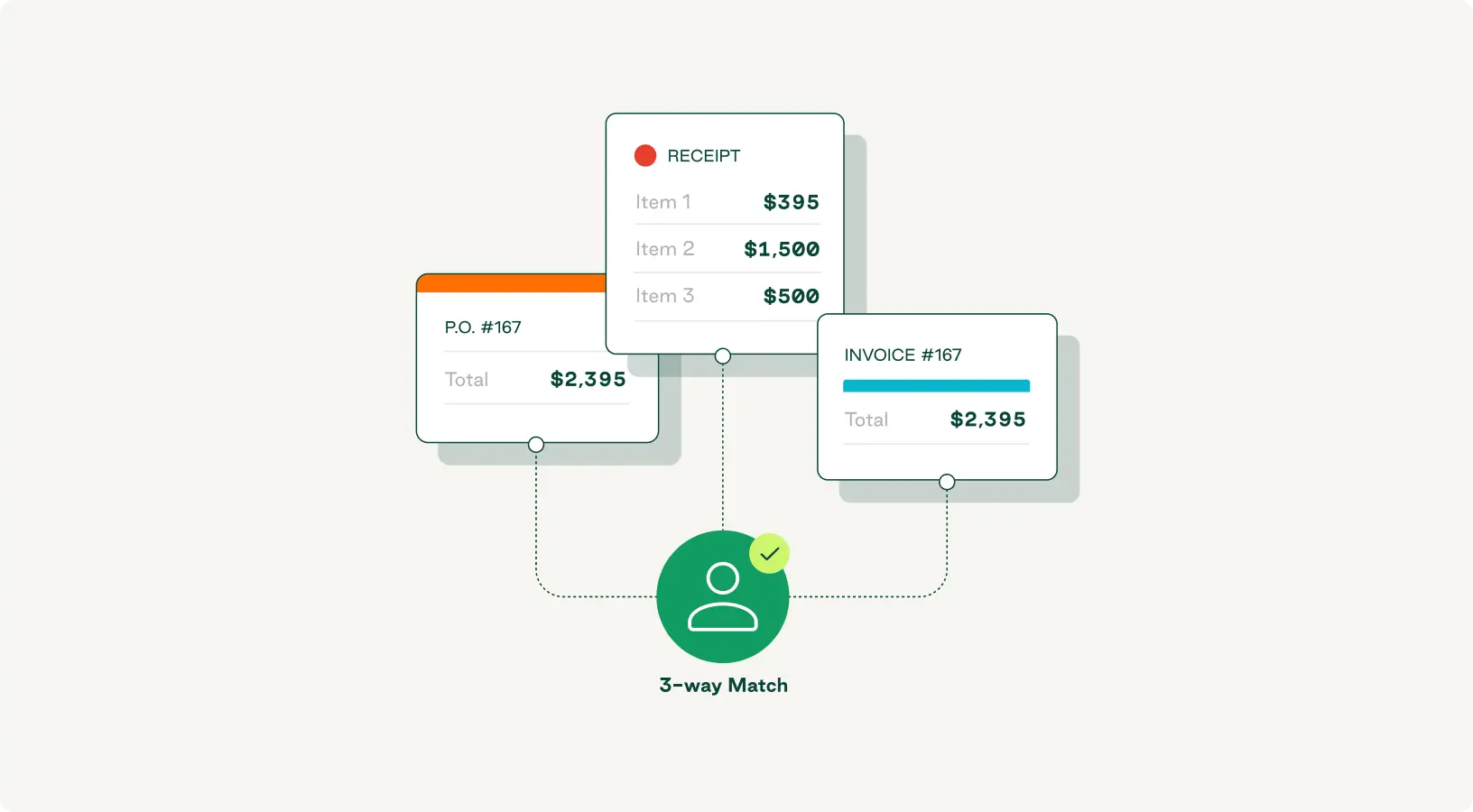
How AP automation works
AP automation replaces time-consuming manual tasks with faster, smarter, and more accurate workflows. AP software synthesizes data from multiple sources to transform your accounts payable process into a valuable business asset.
To learn more about automating your AP workflow for greater efficiency and savings, check out our Finance Automation Guide.
Vendor onboarding and data management
AP automation software simplifies supplier onboarding with automated workflows that ensure all compliance, security, and operational requirements are met. It centralizes vendor and product data to provide real-time visibility into supplier performance, item availability, and contract terms.
Some AP systems—including Order.co’s vendor management software—also provide automatic catalog creation for fast and easy eprocurement.
Approval routing and workflows
Automated workflows route captured invoice data to the appropriate department or individual based on highly customizable approval rules. Automations automatically send notifications to approvers whenever an invoice is ready for review.
This flow directly addresses a major flaw of traditional invoice approval routing, where invoices get stuck on an employee’s desk or in their email inbox, resulting in late or missed payments.
Invoice capture and validation
When an invoice is received, AP automation software automatically standardizes its formatting, extracts and codes essential data, and validates it by matching it against existing purchase orders and goods receipts.
Software automatically flags discrepancies for review by your AP team, helping optimize invoice processing efficiency and serving as a critical first line of defense against potential fraud or compliance issues. Advanced systems like Order.co can even prevent them altogether.
Payment execution and settlement
Modern AP systems support a wide range of digital payment methods, from bank transfers and checks to more advanced solutions like virtual credit cards.
You can schedule payments based on various factors—such as vendor terms and early payment discount opportunities—and your AP automation software will trigger payments on those predefined dates to ensure timeliness.
Reconciliation and reporting
Robust reconciliation and reporting functionality strengthens financial accuracy, improves spend visibility, and supports compliance requirements. Software that integrates with your accounting or ERP systems can automatically categorize expenses and match payments with your financial data to provide a clear audit trail for tax purposes.
With AP automation, all invoices and approval records are stored securely in a centralized database. Dynamic dashboards and live reports present this data visually for a complete view of invoice statuses, spend performance, and cash flow.
How Automation Can Solve Finance Teams’ Biggest Challenges
Take a few pages out of WeWork’s playbook and learn how automation can solve some of the greatest challenges facing your finance team.
The top AP tasks to automate
AP automation drives efficiency across the entire accounts payable process. However, certain accounts payable challenges, when managed correctly, offer more significant opportunities for substantial returns on investment.
Three best-practice AP tasks to automate include:
- Data capture: By leveraging machine learning and artificial intelligence, AP automation software automatically extracts, formats, and codes relevant invoice data from your suppliers to significantly reduce invoice processing times and error rates.
- Approval processes: Automated approval workflows mitigate three of the biggest accounts payable risks—payment deadlines, cash flow, and vendor relationships—by speeding up the entire AP cycle and enforcing robust financial controls.
- Virtual card issuance and payment runs: AP automation solutions use optimized payment runs and virtual credit cards to maximize savings by enabling early payment discounts and avoiding late payment penalties.
The benefits of automating these processes are supported by a recent PYMNTS survey of 412 financial executives: 73% reported that AP automation improves cash flow and increases savings, while 85% cited accurate, efficient, and simplified processes as key advantages.
The benefits of AP automation
AP workflow automation takes the stress out of processing invoices and lets your AP team focus on higher-level projects that drive value. It also offers several other benefits, including error reduction, risk mitigation, and increased profitability.
Preventing overpayment
Traditional AP processes are complicated and lack safeguards that prevent overpayment. This disrupts working capital for business expansion and jeopardizes timely payments essential to strengthening vendor relationships.
Accounts payable automation solutions introduce electronic invoicing and digital purchase orders. With fewer paper invoices and manual processes, your AP department gains increased visibility, accuracy, and control.
Improving your business's credit score
Early payments and favorable cash ratios indicate your business can manage its finances and will likely repay future debts. A simplified payment process reduces late payments, which boosts your creditworthiness and improves access to loans or favorable supplier terms.
Creating positive vendor relationships
Your business relies on suppliers to process purchase orders and deliver goods on time and in the agreed-upon volume and condition. Paying vendors promptly motivates them to keep providing consistent service and can unlock discounts. Automated AP systems help you track invoices, schedule payments, and manage approvals, ensuring you pay only for goods received as ordered while strengthening supplier relationships.
Reducing financial fraud
Fraud—through false billing, fraudulent checks, overpayments, or manual entry errors—is difficult to detect without proper data. Automating your AP tasks improves fraud detection by routing invoices automatically, extracting and validating invoice data, and maintaining electronic audit trails.
Increasing profitability
Automating your AP workflow can help you eliminate fees and control overhead costs, which boosts overall profit. Managing an automated system also requires fewer AP staff, reducing hiring costs while allowing you to scale your operations.
Creating better audits
Electronic AP systems provide full visibility for auditors, linking invoices to purchase orders, approvers, and payments. Accounts payable automation prevents bottlenecks caused by manual data entry and lengthy paperwork reviews, simplifying the audit process.
The ROI of AP automation and performance metrics to track
Manual AP is expensive, but the true cost is often hidden in numerous small cash leaks that quickly add up.
Three of the biggest contributors to spend inefficiency include:
- Invoice processing: Processing invoices manually is expensive, costing as much as $15 to $40 each. Faster processing reduces per-invoice costs, and accounts payable software can handle thousands of invoices simultaneously, lowering overall expenses.
- Errors and penalties: Human errors, such as missed or duplicate payments, reduce the integrity of your AP processes and can result in penalties that drain cash flow. Automation minimizes these errors by replacing manual tasks with accurate and reliable workflows.
- Wages: Companies posting hundreds or thousands of invoices per month often need to expand headcount to keep up. Automation allows your team to meet processing demands while creating time to tackle more strategic projects.
To measure the ROI of an AP automation system, start by establishing baseline metrics for your current manual processes. Common examples include:
- Average cost per invoice
- Invoice processing cycle time
- Days Payable Outstanding (DPO)
- Invoice exception rate
- Early payment discount capture rate
- Labor hours spent on manual data entry
After implementation, use your findings to calculate additional metrics, such as error reduction, cost savings per invoice, and time savings per approval, to get detailed insights into automation's impact.
How Automation Can Solve Finance Teams’ Biggest Challenges
Take a few pages out of WeWork’s playbook and learn how automation can solve some of the greatest challenges facing your finance team.
"*" indicates required fields
How to get buy-in for AP automation
While the cost of implementing software is often cited as a concern, automation generally creates far more savings than expenses. Here’s how to improve adoption and gain executive support.
1. Find and engage a champion
Build a solid business case for automation and introduce it to at least one receptive manager or department head. Equip your champion with the insights and data necessary to advocate for the software to other executives or decision-makers.
2. Workshop the savings
Highlight the measurable benefits of automation in your business case. Outline the total cost of continuing with manual processing and contrast it with the expected savings an AP solution could deliver.
3. Bring solutions ready to evaluate
Take a “three bids and a buy” approach to sourcing accounts payable automation software. Research the best options for invoice automation, detail the costs involved, and weigh them against the total value automation can provide.
Automate your AP workflow with Order.co
The time is right to reap the benefits of a fully automated purchasing and AP workflow. With Order.co, buyers get the goods and supplies they need, while AP focuses on driving business impact instead of just processing invoices.
Order.co has all the features necessary to automate and digitize your AP workflows:
- Centralized purchasing for stakeholders
- Automatic line-level GL coding for purchases
- Three-way invoice matching for processed orders
- Electronic payment of approved invoices
- Integrations and exports for better data visibility
Book a demo today to see how Order.co can simplify and automate your AP processes.
FAQs on AP workflow automation with Order.co
Here are answers to some common questions accounting and finance teams often have about automating AP workflow processes.
Get started
Schedule a demo to see how Order.co can simplify buying for your business.
"*" indicates required fields