Indirect Procurement: 4 Strategies for Cost Savings

Indirect Procurement: 4 Strategies for Cost Savings
Every business purchases goods and services that don't directly contribute to final products but keep business operations running. These indirect expenses—from training programs to software subscriptions—often make up a significant portion of overall spending. In fact, indirect procurement accounted for 42.84% of outsourcing spend in 2024, totaling $2.46 billion globally.
Yet many organizations struggle to manage indirect spend and keep costs under control. Maverick spending, disconnected systems, and inconsistent buying practices make it difficult to track where money goes—and even harder to rein it in. Without proper oversight, spending can spiral, leading to budget overruns and missed savings opportunities that erode profit margins and put pressure on cash flow.
The good news is that the right indirect procurement strategy and tools can transform this business function from a cost drain into a value driver. This guide examines four proven approaches that can help your procurement team enhance visibility, minimize waste, and achieve tangible cost savings.
Download the free ebook: The Procurement Strategy Playbook for Modern Businesses
What is indirect procurement?
Indirect procurement is the process of buying the goods and services an organization requires for day-to-day operations. Rather than focusing on raw materials or components needed for manufacturing or project development, it covers behind-the-scenes items like office supplies, IT services, and maintenance. Although indirect spend doesn't contribute directly to a company's output, it's vital for keeping teams equipped and operations efficient.
What kinds of goods and services are considered indirect procurement?
Indirect procurement comprises a wide range of items and services—from everyday essentials like pens and paper to specialty items specific to your industry, such as those tied to retail procurement or hotel purchasing.
Common indirect categories include:
- Office supplies: Paper, stationery, toner, ink, and similar items
- Equipment and tools: Computers, furniture, machinery, and specialized equipment
- MRO (maintenance, repair, and operations): Equipment maintenance, spare parts, and facility upkeep services
- Professional services: Legal, consulting, accounting, and temporary staffing
- Information technology: Software licenses, cloud subscriptions, and technical support
- Travel and expenses: Business travel, accommodations, and corporate events
- Facilities management: Catering, cleaning, security, and building maintenance
- HR-related services: Recruitment, training programs, employee benefits administration
Understanding the breadth of indirect procurement categories can help you identify where to focus your cost-saving efforts.
The Procurement Strategy Playbook for Modern Businesses
Learn the key pillars of a strong strategy, valuable procurement metrics to track, and initiatives you can start implementing today.
What are the top challenges in indirect procurement?
Without a centralized purchasing system, indirect procurement budgets can spiral out of control. Uncoordinated buying across departments makes overspending difficult to track and manage—and introduces several additional indirect procurement challenges.
Limited spend visibility across categories
Indirect procurement typically involves a high volume of lower-dollar transactions scattered across teams, which makes oversight challenging even when budgets are in place. Without centralized tracking, you can't see your company's spending patterns, identify savings opportunities, or leverage volume discounts.
This fragmentation also creates downstream risks. When procurement teams lack real-time dashboards for monitoring purchases, they have limited insight into supplier performance and purchasing trends, complicating supply chain management and risk mitigation. Without proper data collection, effective spend analysis becomes nearly impossible.
Fragmented supplier and contract data
Because indirect procurement spans such a wide range of goods and services, your organization's supplier base can grow quickly. Different departments may handle indirect buying in their own ways, leading to contract management inconsistencies and inefficiencies.
Without a clear view of supplier data, you may struggle to build strong supplier relationships or negotiate better contract terms.
Manual, error-prone workflows
Paper-based requisitions, email approvals, and disconnected systems slow down the procure-to-pay process and introduce unnecessary errors. These manual workflows create bottlenecks that frustrate stakeholders and waste valuable time.
Automation can make a measurable difference. AI implementation in contracting can reduce contract lifecycle time by up to 39% and increase productivity by up to 44%, allowing procurement teams to devote more time to strategic work.
Compliance and risk management gaps
Indirect procurement is often less controlled than direct, making policy compliance harder to enforce. Without standardized processes, employees may bypass procurement policies—leading to maverick spending and increased risk.
Because weak governance undermines purchasing decisions and exposes your organization to audit issues and operational disruptions, consistent oversight is essential.
Difficulty measuring ROI on services
Since indirect goods and services don't directly tie to product output, quantifying return on investment is complicated. As a result, indirect procurement is often viewed as having less strategic importance than direct spend, meaning it gets less leadership attention and fewer resources for optimization.
4 strategies for enhancing indirect procurement
While keeping indirect costs in check can be difficult, certain tools and strategies can help. The following process improvements, technology, and data can enhance your operational efficiency and enable better procurement decisions.
Centralize all vendor and contract data
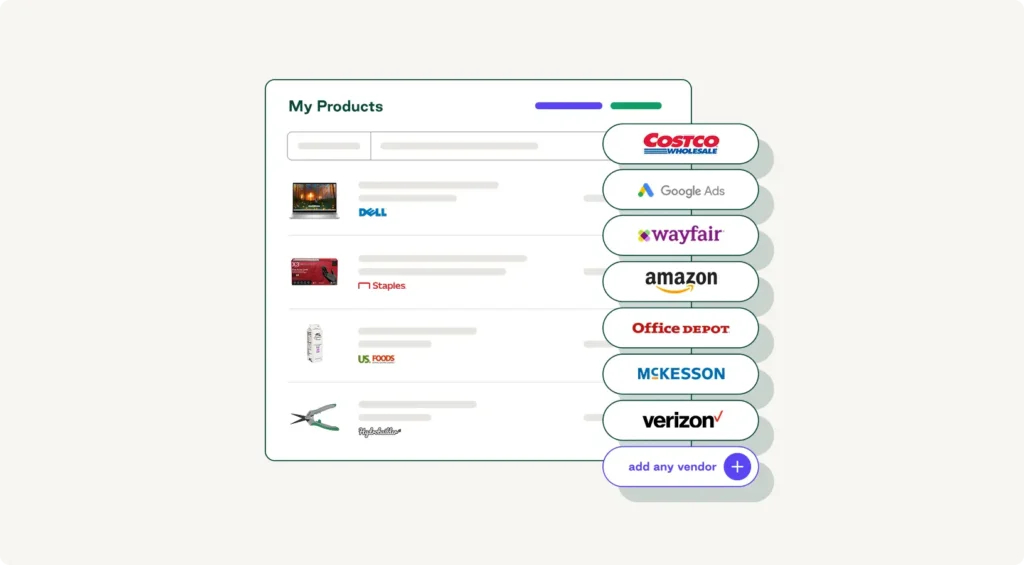
Bring supplier information, contracts, pricing, and performance data into a single source of truth. A consolidated view makes it easier to negotiate better terms, secure volume discounts, and maintain consistently high-quality products and services.
Key actions:
- Store all vendor data in one unified platform with real-time visibility.
- Track contract terms, renewal dates, payment schedules, and performance benchmarks.
- Identify duplicate providers and consolidation opportunities across categories.
- Implement a preferred supplier program to support strategic sourcing and build long-term partnerships.
Focusing on creating strong supplier relationships through effective supply chain management tends to drive better business outcomes. Modern procurement software makes centralization seamless by integrating with existing systems.
Automate approval and requisition workflows
Replace manual, email-based approvals with automated workflows that route requests instantly. According to purchase order data from Mysa, 73% of transactions can move from requisition to purchase order without manual touchpoints, dramatically improving cycle times.
Implementation steps:
- Standardize indirect procurement processes to ensure organization-wide compliance.
- Configure approval hierarchies based on purchase amount, category, and department.
- Set up automatic routing to preferred providers for pre-approved purchases.
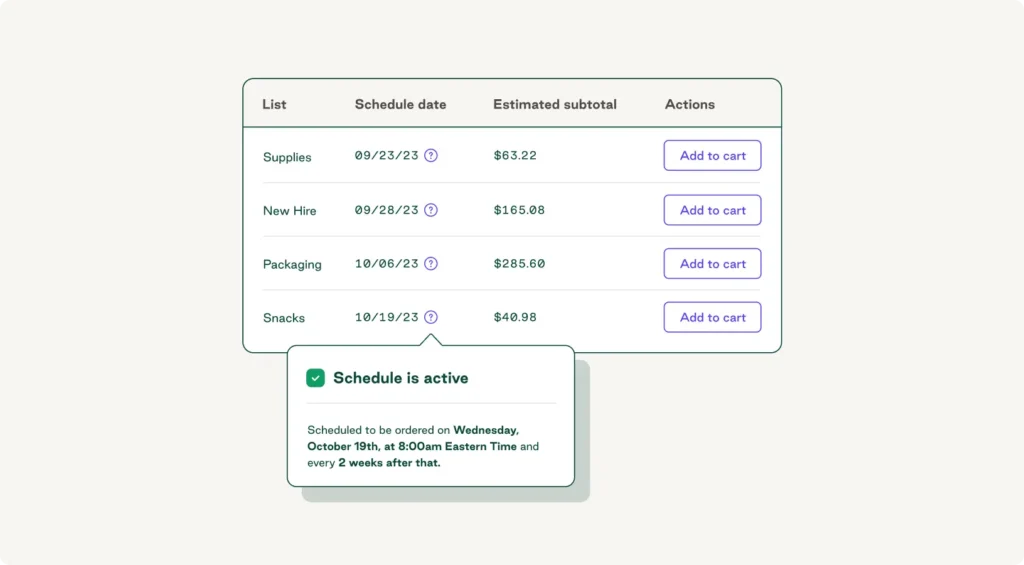
- Create open purchase orders for recurring purchases.
- Enable mobile approvals for faster decision-making.
Automation reduces procurement costs while capturing clean transaction data, which supports forecasting, price optimization, and more informed inventory management.
Use analytics to drive spend decisions
Conduct regular spend analysis to identify cost-saving opportunities and reduce waste. Turning procurement data into actionable insights using robust analytics reveals where money goes, how it’s spent, and why.
Analytics applications:
- Analyze spending patterns across all indirect procurement categories to pinpoint high-cost areas.
- Track price variance (PPV) to ensure you're getting negotiated rates and competitive pricing.
- Review purchase orders to eliminate unnecessary or duplicate items.
- Benchmark costs against industry standards and flag outliers.
- Monitor supplier performance based on delivery, quality, and contract compliance.
Data-backed insights make category management more effective and strengthen your ability to manage supply chain risk.
Standardize compliance and audit trails
Establish clear procurement policies to ensure transparent communication across stakeholders. Document and communicate the procurement process so everyone understands their roles, responsibilities, and compliance requirements.
Compliance framework elements:
- Define purchasing policies for different spend categories and amounts.
- Create preferred supplier lists with pre-negotiated contract terms.
- Require proper authorization for all purchases above set thresholds.
- Maintain complete audit trails showing who requested, approved, and received each purchase order.
- Generate regular compliance reports to identify policy violations and maverick spending.
Order.co provides complete visibility into your purchase order management process with detailed audit trails—critical for financial planning, audits, and sustainability reporting.
Key benefits of strong procurement management
Good procurement solutions boost the ROI of your procurement function. When you implement these strategies effectively, their benefits extend far beyond simple cost reduction, creating a competitive advantage.
Cost savings per category
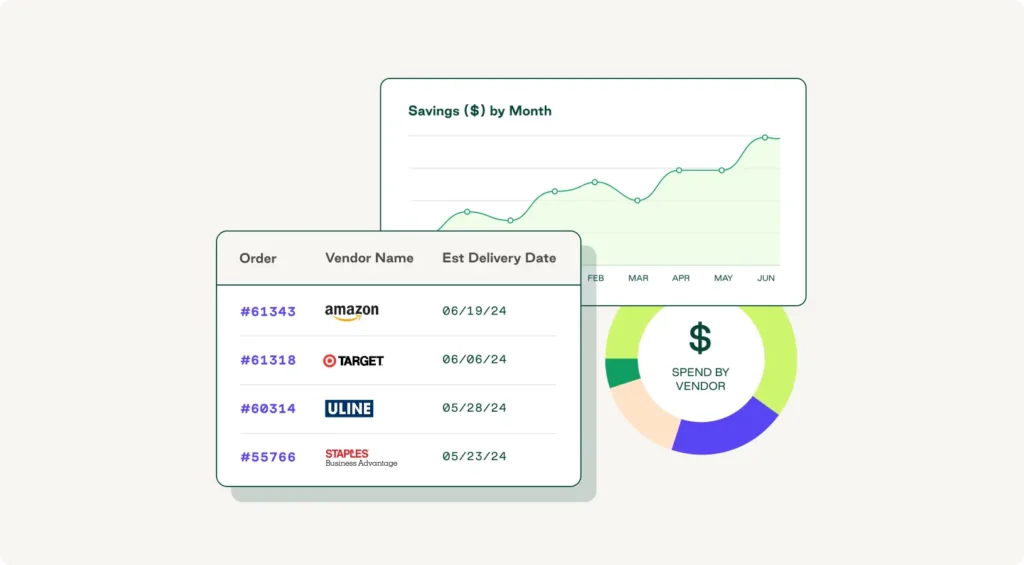
Strategic indirect procurement management can help you identify savings opportunities and reduce waste, but these aren't one-time wins. Proper spend management creates ongoing value by maintaining cost discipline, and Order.co helps by tracking savings by category, supplier, and business unit with real-time dashboards.
Cycle time reduction
Strong indirect procurement processes mean orders take less time to fulfill, freeing your team from transactional work and boosting productivity. Automated workflows and tools like Order.co's Smart Checkout with stock visibility make these efficiency gains possible, helping you compress cycle time and make more informed purchasing decisions.
These improvements also enhance employee satisfaction and increase control—when your stakeholders can get what they need quickly through proper channels, maverick spending decreases.
Compliance and risk mitigation scores
Standardizing indirect procurement processes and maintaining complete documentation reduces purchasing-related risks, including supply chain disruptions and non-compliance issues. You achieve:
- Improved audit readiness with complete, accessible records
- Reduced financial risk via established approval hierarchies
- Enhanced supplier performance through visibility that enables vendor performance auditing
- Regulatory compliance with automated checks in approval workflows
- Clear spend visibility through data transparency for strategic decision-making
Organizations need procurement solutions that provide visibility, enforce policies, and document every transaction to manage sustainability goals and regulatory requirements.
The Procurement Strategy Playbook for Modern Businesses
Learn the key pillars of a strong strategy, valuable procurement metrics to track, and initiatives you can start implementing today.
"*" indicates required fields
Manage indirect procurement spend efficiently with Order.co
The ability of indirect spend to influence financial health makes managing it a top priority. Order.co addresses the challenges of controlling indirect procurement, giving you the power to keep every purchase compliant, visible, and well-managed.
Key features include:
- Curated catalogs for easy, compliant ordering
- Approval workflows for enhanced budgetary control
- Permission-based buying by budget, role, department, or location
- Automatic, line-level GL coding for comprehensive financial tracking
- Automated matching to ensure accuracy
- Consolidated payments for faster processing
The platform automates indirect procurement processes, enhances spend visibility, and improves accuracy—speeding up the procurement cycle while giving you the control needed to manage spend and risk. To learn more about managing indirect procurement with Order.co, request a demo today.
FAQs
Get started
Schedule a demo to see how Order.co can simplify buying for your business.
"*" indicates required fields