Although “purchasing” and “procurement” are used interchangeably in organizations and online resources, these two terms have different meanings. More importantly, the two concepts call for individual approaches. Knowing their differences may mean the difference between saving a few dollars this quarter and building a truly resilient strategy long-term.
What are the differences between purchasing and procurement, and how should you apply techniques to ensure you’re balancing short-term savings goals against long-term procurement benefits?
Let’s cover the finer points of purchasing vs. procurement, and discover how each plays a role in the long-term financial health of your company. The first step is getting a clear definition of each term.
Download the free ebook: The Procurement Strategy Playbook for Modern Businesses
The difference between purchasing and procurement
Purchasing
Purchasing is the act of buying supplies for your business. It deals with the transactional portion of the procurement process, from the identification of a needed product to the payment for its delivery. A purchasing strategy deals with several things:
- Purchase requisition to define the type, quality, and quantity of a needed product
- Price comparison and competitive analysis of the deal
- Negotiation of price and terms
- Shipment tracking, receiving, and reconciliation of the order
- Invoice processing and payment to the supplier
Purchasing is one aspect of the total procurement process that deals with the logistical and accounting processes for getting what your company needs.
Procurement
Procurement is, according to Thomasnet.com, “an all-encompassing strategic array of processes that includes both purchasing and sourcing.” Sourcing is the process of selecting a vendor, either through an e-procurement platform or a bid process. Procurement policy covers the following aspects:
- Optimization of supplier relationships
- Third-party risk management
- Supply chain management and inventory control
- Competitive market analysis and benchmarking
- Contract negotiation
- Sustainability and resiliency
- Supplier management and lifecycle evaluation
A procurement strategy takes into account not just, “What am I buying and for how much?” but also, “Who am I buying it from, why them, and how does that relate to the current market?”
Having defined these concepts, it should be clear that purchasing and procurement aren’t “either/or” practices, but a collection of activities that work together to save the business money, build resilience, and drive value creation through the procurement function.
The Procurement Strategy Playbook for Modern Businesses
Learn the key pillars of a strong strategy, valuable procurement metrics to track, and initiatives you can start implementing today.
An effective purchasing strategy can save your business money
A purchasing strategy defines how your company buys things. Its primary goal is to reduce the bottom line and maximize cost savings by reducing inefficiencies, establishing approval workflows, and forming a tactical buying plan to get desired results. By implementing requirements and processes around purchases, you can lower costs and avoid many common money leaks in the short term.
One of the goals of a purchasing strategy is to codify clear rules for stakeholders to follow when buying goods and services. Doing so can reduce overall tail spend and eliminate instances of maverick spend.
- Tail spend is the concept that 80–90% of spend will be taken up by 10% of vendors, usually in bulk purchases, while the remaining 10–20% of spend is taken up by 90% of vendors, usually in one-off situational purchases. It creates a tail shape when graphed.
- Maverick spend, which refers to purchases made outside the established approval workflow, can be a huge issue for companies of all sizes. CIPS reports that maverick spending can make up 80% of a company’s total spend.
If your finance department consistently has trouble keeping tail spend in check or tracking down maverick spend—usually indicated by the inability to match spending to purchase orders or invoices—it may be time to implement a purchasing strategy.
Using a well-crafted purchasing strategy, a finance or procurement team can analyze tail spend in the context of sourcing and vendor development. They can ask and start to answer questions like, “Is the tail spend partially a result of a vendor not fulfilling our employees’ needs?” They can then identify if they need a new vendor, if they need to adjust a contract with an existing vendor, or if they need to improve internal processes.
An effective procurement strategy can make your business more resilient
A procurement strategy goes further than defining how purchases are made. It determines the sourcing strategy for choosing vendors, establishes business goals for buying, and uses strategic sourcing techniques to build and maintain a resilient supply chain network.
The key concept here is “network.” Procurement positions the company as part of an interconnected ecosystem of upstream and downstream suppliers, reliant on partnerships to drive initiatives forward. This is both internal (for instance, a strong partnership between finance, procurement, and manufacturing to improve production time frames and reach desired goals) and external (building a global sourcing network that coordinates between external stakeholders such as logistics partners, distributors, and end users).
The Procurement Strategy Playbook for Modern Businesses
Learn the key pillars of a strong strategy, valuable procurement metrics to track, and initiatives you can start implementing today.
"*" indicates required fields
Steps for building a strong procurement strategy
The procurement strategy for every organization looks a little different. Developing the right mix of controls and long-term techniques should be an ongoing priority for your procurement team, with well-defined business goals and total quality management leading the way.
When you want to establish or improve your procurement strategy, use these steps as a guide:
1. Identify internal needs
You need to know where you’re starting from—identify the current issues with your procurement process. Poor visibility, increased tail spend, maverick spend issues, or supplier risk incidents are all common reasons companies choose to establish or improve procurement policies.
Ask yourself some questions to identify gaps:
- Do you have a clearly defined purchasing process for stakeholders?
- Are you using budgets and purchasing guidelines effectively?
- Are you buying from a preferred list of suppliers and/or a competitive supply market?
- Have you sufficiently mitigated third-party risk with suppliers?
- Can you effectively track spending and tie it to POs and invoices?
- Do you need to improve initiatives like green purchasing or sustainable procurement?
2. Establish goals and KPIs
Based on your answers to the previous questions and an evaluation of your currently available procurement data, you will surface goals and objectives to prioritize in your strategy. Clearly outline a short list of business needs and priorities, and identify the key performance indicators (KPIs) to track your success using a procurement KPI tracker.
3. Build and implement a plan
Establish a purchasing and approval plan that supports your business objectives. This plan should include the following elements:
- Approval workflows and purchasing thresholds for each type of procurement
- Guidelines or policies to encourage desired purchasing behavior in your stakeholders
- Standards for quality of goods and services, and compliance parameters for suppliers
- Departmental requirements for bid evaluations and contract negotiations
- Lifecycle evaluation policies for suppliers
4. Evaluate and refine
After building and launching your procurement strategy, conduct regular evaluations to improve and refine your policies. Use the data from tracked metrics to determine the success of your plan and adjust it accordingly. Include stakeholders in the evaluation through employee surveys to gain insight into how the new procurement policies work from a buyer perspective.
5. Employ technology
Increasingly, leading organizations are using digital procurement tools to establish their supply chain networks. These digital tools have introduced an era of automation that makes it much easier to put a procurement strategy into place and definitively track its impact on things like tail spend and maverick spend.
According to Boston Consulting Group, “Firms that use digital [tools] to manage tail spend can cut their annual expenditures by 5% to 10%, on average.” With a tool like Order.co, a good procurement strategy can address the short-term issues handled by a purchasing strategy, while also instilling a network-based perspective that can build long-term resilience in the face of uncertainty.
A procurement strategy needs a procurement tool
Cutting expenditures, finding better prices, and building resilience are only the tip of the iceberg when it comes to the benefits that the right procurement software can provide. Using Order.co, companies are streamlining and automating their strategic procurement practices, centralizing contract management, improving cost savings and cost reduction, building better procurement roadmaps, and using data to drive decision-making.
If you’re ready to join these forward-thinking companies in implementing a next-generation procurement strategy, schedule a demo of Order.co today.
Get started
Schedule a demo to see how Order.co can simplify buying for your business.
"*" indicates required fields
B2C business success brings its own headaches.
Here is the simple reason why — B2C businesses succeed by selling current and new products and services to existing customers, and then, they sell to those customers more often. B2C businesses will also acquire new customers, and then repeat the whole process over again.
Having more customer orders means ordering more supplies from current and new vendors, and that is what causes headaches for many businesses. COVID-19 has made it worse. More people are working remotely, teams are introducing new monitoring and checking procedures, and flaws are coming to light. Managing the increased orders and deliveries leads to workload problems because much of it is not standardized and the work is done manually. Your team must then process everything through the accounting system.
The entire accounts payable (AP) process has been in place forever. It is often cumbersome, flawed, inefficient, and leads to dislocations in supplier relationships. In this article, we will discuss:
- The accounts payable system, its shortcomings, and how to fix them.
- How fixing problems is not just about making some improvements.
- Specific and measurable benefits to changing the way AP accounting is done and how the AP department works.
Download the free ebook: The Hidden Risks Behind Your AP Balance Sheet (Some Will Surprise You)
Accounts Payable shortfalls
Staying on top of your accounts payable accounting system is essential. Non-standardized and inaccurate purchase order processing, inaccurate bookkeeping, and imperfect account balances all create problems for the accounts payable department and the C-suite (once the company's general ledger and balance sheet are produced), as well as for suppliers. Late, missed, or short payments caused by those inaccuracies can damage vendor relationships because payment terms are not met. It also generates inaccurate financial statements for the FD and CFO, which negatively affects cash flow and, usually, adds burdens to AP accounting team members' already heavy workload. This then impacts productive workflow and encourages more errors.
In the age of COVID-19, B2C business employees are already under stress from worry, staff absences, potential illness, home-schooling demands, family emotions, and so on. Those problems and performance shortfalls escalate.
When they are working in isolation or as part of a skeleton crew, errors can increase. This wastes time and money and strains vendor relationships.
AP accounting success
Managing AP accounting well has the opposite effect:
- Vendor relationships improve.
- Staff workload goes down.
- Morale stays high.
- Costs go down.
- Liquidity improves.
- You get ahead of competitors who are not on top of everything.
- Your profits rise.
In B2C accounts payable accounting, the ordering process tends to operate differently across each outlet, studio, store, or restaurant. In addition, if all truth lies in the balance sheet, you sow the seeds in the accounts receivable and accounts payable accounting functions.

The Hidden Risks Behind Your AP Balance Sheet (Some Will Surprise You)
Start recognizing inflation on your balance sheets, identify its causes, understand the business risks it poses, and discover effective strategies for mitigation.
The AP accounting cycle
Accounts payable is based on the expenditure and purchasing cycle. This, in turn, is part of the overall procurement to payment process (P2P). The steps include:
1. Customers place orders
These may be regular orders for in-stock items and services or included in regular delivery schedules. Consumer orders may be poorly explained (especially if done over the phone or by text) or may need to be corrected. Also, what could have been a bulk order often comes in parts. Servicing those orders requires that direct materials are available to meet known and expected customer demand. It also requires other items such as equipment, cleaning supplies, and office supplies.
2. You place orders with vendors
To meet display, production, customer use, or factoring demands, managers and other individuals in each outlet place purchase orders directly with vendors. Separate ordering systems develop, even if the vendor supplies other outlets Quite often, so do separate order- and delivery-monitoring systems. Vendors then deliver, often to separate sites or to one site for subsequent internal distribution to separate departments within the site.
3. Received deliveries trigger internal controls
Deliveries trigger internal controls, which result in delivery documentation receipts or vouchers. These are checked for accuracy against the original purchase order paperwork. The paperwork is then either passed for processing, or the vendor is contacted to check details or correct any errors.
Once delivery details are approved, vendor invoices are received and checked against delivery records. They are then passed to the AP accounting team for processing. Again, if discrepancies are noticed, then internal checks are made and the vendor is contacted to solve errors.
4. Documents receive approval and enter the system
After documents receive approval, AP accounting team members input invoices to the vendors' accounts as ready for payment. A single invoice for multiple deliveries, or situations in which items in a single delivery are allocated to different sites or functions, will then be analyzed and costs allocated accordingly to generate management accounts. In many B2C businesses, there are additional internal analyses and controls, all of which add to the pressure people feel.
5. Payments are scheduled and made
Unpaid invoices form part of current liabilities. So payment schedules must be prepared and approved. The purchase ledger balance includes trade payables and forms part of the liability account (which includes utilities, bank interest, etc.). Payments are then made according to the internal protocols and current liquidity.
How different B2C businesses handle AP accounting
Accounts payable accounting processes are detailed, complex, and time-consuming. Some businesses automate the entire cycle, while others process some of it manually and integrate those parts with automated financial accounting practices later in the cycle. Managing individual orders, monitoring each vendor's shipments and deliveries, handling paper invoices, and paying vendors by check is also how many B2C businesses operate now. It’s also how they see their future.
The inefficiencies systemic in accounts payable have grown because of COVID-19 lockdowns, social distancing, and basic human stress. There is a better way, and the pandemic can be the match that lights the fire of change.
The Hidden Risks Behind Your AP Balance Sheet (Some Will Surprise You)
Start recognizing inflation on your balance sheets, identify its causes, understand the business risks it poses, and discover effective strategies for mitigation.
"*" indicates required fields
The fire of change for AP accounting
Successful businesses approach AP accounting as an integral part of the entire process, from ordering through to the paying cycle. Integrating and automating delivers real results. It begins with ordering via a centralized and controlled system. It then moves on to monitoring logistics, managing physical deliveries, and handling delivery and purchase records. Then, accounting for those purchases continues through to payment scheduling and to final payment.
This complete-cycle system generates a level of efficiency and accuracy that a traditional ordering and accounting system cannot. This comprehensive approach is, as we have said, called "Procurement-to-Pay" or P2P.
The result of introducing a full P2P system is that the time spent processing all those records goes down — and accuracy goes up. Costs go down, internal efficiencies rise, vendor relationships improve, and the net result is greater profitability. You also gain the real ability to increase your business's marketplace footprint without all the on-the-ground stress too many people are currently living under.
Customers may still place orders in their old, inefficient ways. But the time saved on P2P and AP accounting can improve the customer experience by introducing methods to raise their game. More time can go into assessing customer profitability so you can let the costly and unprofitable ones go. This enables systems to be put in place to coach the profitable customers to place their orders in ways that benefit them, your business, and your staff.
The practical benefits of fully automated and integrated AP accounting
It is easy to talk about increased efficiency and lower costs, but where do they show themselves? Consider these two different B2C examples, one in Japan and one in the United States.
MINISO Is a retail business with 33 locations selling beauty supplies, household items, and fashion accessories. By introducing a consolidated vendor order and invoicing system, the process became streamlined, managers became more conscious of expenditure, and their hands-on involvement increased. Apart from obvious efficiencies, everyone saw better control, more staff involvement, and a feeling of empowerment. This boosted morale and created a real sense of camaraderie.
[solidcore] is a health and wellness business. It originally had 25 locations. By automating its AP accounting process, it then expanded to 50 locations. The company saved approximately 356 labor hours a month by not having to manage and reconcile separate purchase orders placed independently by studio managers operating their own accounts with common suppliers.
These two examples show that — by centralizing purchase orders and logistics management, and by automating accounts payable — real savings are there for the taking. It is much easier for individual staff members to contact a central hub online to place orders, check progress, and monitor processing using appropriate accounting software than for them all to do it separately and with no comprehensive standards to work to. Having all of that managed and controlled for them doesn't just relieve pressure. It also reduces the stresses associated with operating in lockdown isolation and eases the feeling of "it is all on my shoulders."
Delivering the solutions
Accounts payable accounting has always been bound up in complex inefficiencies. The way COVID-19 impacted businesses and team members made those inefficiencies worse. It was easier for many businesses to hunker down and hope.
There is an old adage in business, "Winners make it happen. Losers let it happen." Making AP accounting happen in ways that deliver worthwhile savings, greater efficiencies, greater accuracy, and better vendor relationships make financial planning easier and more certain. It also helps raise team member morale. Your marketplace footprint grows, and competitors are left behind.
In summary, when you link your AP accounting with Order.co's purchasing process — coupled with integrated payments and consolidated billing — you will:
- Simplify your purchase order and AP accounting process.
- Lose the traditional AP processes problems.
- Shorten the whole accounts payable cycle.
- Increase control over orders, supplies, the company's cash, payments, and reconciliation processes.
- Lower operating costs and improve vendor relationships.
- Boost team member morale.
Order.co's platform excels in maximizing the benefits of effective order processing and accounts payable systems. Request a free demo to learn more about how your business can remove AP processing problems and get the benefits. We look forward to working with you.
Get started
Schedule a demo to see how Order.co can simplify buying for your business.
"*" indicates required fields
Whether small businesses or global giants, all companies must follow the same basic accounting principles — the Generally Accepted Accounting Principles (GAAP) standard in the US or International Financial Reporting Standards (IFRS) abroad.
Accounting according to these principles helps companies dutifully manage their cash flow to maintain stability and give employees confidence in the future of their workplace. These standards also protect investors and banking institutions by creating a trustworthy reporting standard for financials.
These standards reassure current and prospective suppliers that your company is trustworthy for supplying goods on credit. This makes it easier to develop relationships and negotiate mutually beneficial deals. Without these partnerships, it becomes difficult for the business to maintain growth.
A healthy accounts payable balance starts with an accounts payable audit program. This helps growth-minded companies detect and avoid damaging financial irregularities such as misreporting, overspending, and fraud.
To help AP audit procedures run as smoothly as possible, it’s integral to modernize your workflow. This article answers the following common questions about implementing an AP audit program:
- What is an accounts payable audit program?
- Why is an accounts payable audit program important to your business?
- How is an accounts payable audit conducted?
- What standards should you adhere to when conducting an accounts payable audit?
Download the free ebook: The Hidden Risks Behind Your AP Balance Sheet (Some Will Surprise You)
What is an audit program for accounts payable?
An accounts payable audit is a research activity that certifies the accuracy of financial statements. It ensures your accounts payable transaction reports are accurate representations of the financial activity in the company.
Typically, audits are conducted by professional auditors, certified public accountants (CPAs), or internal accounting employees. External audits are sometimes required for publicly traded companies to certify financial activity to investors. These audits are reported using an SEC reporting website called Edgar.
Why are accounts payable audit programs important?
Audit procedures are used by the AP department to verify the amount of money listed in the balance sheets and accounts of companies. Any discrepancy or lack of information will cast a poor light on your company if the problems aren’t caught and resolved. Therefore it's important to support auditors and give them the best resources for their job.
Accounts payable can be a particularly high-risk item to audit because of its subjectivity. This can lead to financial misstatements due to intentional fraud or accidental errors. Without proper internal controls, things like unrecorded liabilities, expense fraud, and duplicate payments could happen at any time — in businesses big and small.
While the traditional methods of crunching these numbers are still fine and good, now is the time to modernize the process into something more efficient, more accurate, and more cost-effective than using a paper-based system.
Moving to a totally paperless format can be difficult, and some companies aren’t in the position to do so. But even moving some of your accounts payable processes to a digital space will benefit your company.
Here’s why going paperless is so essential and how to enact these changes within your business.
The Hidden Risks Behind Your AP Balance Sheet (Some Will Surprise You)
Start recognizing inflation on your balance sheets, identify its causes, understand the business risks it poses, and discover effective strategies for mitigation.
What is the most important objective when conducting an accounts payable audit?
The goal of every audit, internal or external, is the same — a “clean” audit result. Clean audits are achieved when the auditor certifies that there are no material misrepresentations or issues with the review of the financial statements.
Depending on the type of audit, companies may also need to demonstrate the effectiveness of their internal controls. For instance, a Sarbanes-Oxley (SOX) audit result (called an opinion) certifies that the company uses sufficient internal controls in handling financial information and transactions.
How to conduct an AP audit
Before beginning an internal AP audit, it’s important to schedule a meeting with management and other stakeholders to nail down the scope and desired outcome. Planning ahead creates an outline for use during the fieldwork, reporting, and follow-up stages.
Collect essential work documents
Some examples of essential work documents include:
- A review of existing internal controls for accounts payable
- A detailed period-end accounts payable ledger
- A comparison and comprehensive analysis of budgets as compared to expense reports, with clarifying information on any unexpected deviations
- Complete documentation of any unrecorded liabilities
- A detailed risk assessment of AP and expenses
- A summary of potential weak points in accounts payable controls
- An overview of planned audit procedures for accounts payable
- Documentation related to any fraud investigation required by weak or absent controls
Ask questions
You can also ask internal questions to further detail the goals of the audit:
Process questions
- What is the company’s annual expense budget?
- Who receives budget and expense reports?
- Is there a policy in place to ensure all payables are recorded within the proper period?
- Are purchase orders digital, physical, or both?
- What is the numbering system used for POs?
- Who authorizes purchase orders?
- Are purchase orders made by any methods other than PO? If so, what other methods are used in the payment process?
- Does the accounts payable department have a clear separation of responsibilities for approving, paying, and recording payables, as well as reconciling bank statements?
- How are new vendors evaluated and added to the approved vendor file?
- Who can authorize adding new vendors to payables?
- Are purchases limited to approved vendors?
Technology questions
- Is there a software solution in place to simplify the audit? If so, does the system support three-way matching?
- Is the software used in conjunction with a purchasing policy that follows generally accepted accounting principles (GAAP)?
- Are credit card purchases recorded and tracked by the system to avoid invisible spending? If not, how are credit card purchases approved, and what considerations are in place to limit or eliminate maverick spending?
- What methods, such as Automated Clearing House (ACH) or wire transfers, does the company use to make electronic payments?
The Hidden Risks Behind Your AP Balance Sheet (Some Will Surprise You)
Start recognizing inflation on your balance sheets, identify its causes, understand the business risks it poses, and discover effective strategies for mitigation.
"*" indicates required fields
Accounts Payable audit assertions
An accounts payable audit can also include tests for these four main audit assertions:
1. Audit for completeness
Auditing for completeness focuses on the most fundamental auditing objectives and procedures during the accounts payable auditing process. Auditors use cut-off tests, reconciliations, and audit trails to verify the proper recording and calculation of AP documents.
Reconciliation procedures determine if accounts payable ledger transactions are identical to summary figures in the general ledger. Purchase and cash disbursement cut-off tests determine if a company’s end-of-year financial statements include all transactions for the fiscal year.
Auditors use accounts payable audit trails to match payments to recorded payables. They look for open files with unmatched documents.
2. Audit for validity
Auditors use accounts payable audit procedures for validity to ensure the legitimacy of AP transactions. The most common way of accomplishing this is to reach out to vendors and suppliers to get a confirmation request.
The number of requests sent out varies depending on the business. Most auditors contact regular vendors and suppliers regardless of whether there is an outstanding balance.
If there are one or more open invoices, they will also reach out to a percentage of the business's partners.
3. Audit for compliance
When evaluating compliance, auditors must discover proof that GAAP for AP transactions is being followed. This proof is often found by working backward, starting with the inspection of end-of-year financial statements like purchase orders, balance sheets, journal entries for both AP and inventory, and cash flow statements.
Auditors then choose random entries in the general ledger to trace back to their origin, creating an audit trail. This form of tracing allows auditors to examine the exact path of a transaction. They can then evaluate if the accounting procedures were used.
4. Audit for disclosure
The final step of the accounts payable audit process is to ensure that your accounts payable balance is properly disclosed in your year-end financial statements. Auditors do this by inspecting financial statements to verify things such as current liability. They also verify if purchases are included in the cost of goods calculations.
Using footnotes provides additional details regarding unusual transactions that may require further explanation beyond simply recording the transaction.
A final method auditors use is asking a business to disclose a mandatory management representation letter attesting that all their financial statements fully represent accounts payable and purchase figures.
Why going paperless is the present and the future
All of these steps are easier to complete via a paperless process. But going paperless is a real challenge.
Transitioning the entire department all at once isn’t always practical, and you may find out that your business isn’t equipped to go completely digital. But the benefits of a partly paperless accounts payable system are too substantial not to use.
Going paperless helps your company in the following ways:
Cheaper processing and storage costs
Fees to keep paper records storage add up fast, and records take up valuable space if stored on-site. It also takes more time and money to process physical invoices.
Incorporating automation to digitize vendor invoices allows your team to focus their energies on more important daily matters.
Records are easier to access
Even if you have the best filing system in the world, finding that one piece of paper you need can take a frustrating amount of time. It takes even more time if you keep your records at an off-site location. Invoices can also get lost in the AP department and lead to:
- Unpaid orders
- Late fees
- Accounts payable audit issues in the future
By changing to a paperless system, information is easily accessible through a search engine built to serve up digital documents at a moment’s notice. Automated systems also initiate much faster invoice processing than doing so manually.
Environmentally friendly processes
Going paperless isn’t just good for business — it’s good for the environment. A substantial amount of the paper used in accounts payable processing eventually ends up in the landfill once it’s no longer useful. Moving to a more digital system means fewer trees are harvested to support paper-based systems.
Use Order.co to bring automation to your company
AP automation is the best way to give your accounting team the ability to stay ahead of the competition and work in a less stressful environment. 2022 is the year to drop the paper trail.
Order.co provides the perfect tools to automate and simplify many aspects of your business and allow you to focus on more pressing daily operations:
- Automatic general ledger (GL) coding for correct accounts every time
- Three-way matching to ensure accuracy in the procurement process
- Vendor payments and consolidated billing to handle hundreds of payments with just a few clicks
These features decrease the number of invoices and other paperwork you’ll need to conduct your business, making the auditing process smoother than ever. If you are ready to take your accounts payable program to the next level, request a demo of Order.co.
Get started
Schedule a demo to see how Order.co can simplify buying for your business.
"*" indicates required fields
“Work smarter, not harder” is a constant refrain in business. While the phrase is a little thin on specifics, few doubt the power of technology to boost outcomes and improve teams' day-to-day lives. Still, how should you approach using technology to work smarter?
One great place to start is in accounting. The accounting process touches many business aspects and departments, from stakeholders placing orders to the accounting clerks processing final payments. Automating AP workflows makes such end-to-end processes easier.
This article covers the basics of an AP automation workflow. You’ll learn why it’s so valuable, how to get started, and see examples of automation in action for diverse businesses.
Download the free ebook: The Hidden Risks Behind Your AP Balance Sheet (Some Will Surprise You)
What is an accounts payable (AP) workflow?
An AP workflow is a structured process that manages and streamlines the accounting process, from receiving an invoice to making a payment. It begins when the finance team gets an invoice for processing and proceeds through several steps to verify the expense, approve it, and remit payment to the vendor.
Every invoice should go through the following basic steps, though your process may vary based on industry or reporting requirements:
- An electronic or physical invoice arrives from the vendor.
- The AP team keys the invoice into the system to capture the necessary information (this step is handled within the system if using accounts payable automation as part of AP best practices).
- AP checks the invoice against other documents in the order, such as the purchase requisition, purchase order, bill of lading, and/or receipt.
- The team submits the invoice payment request to the necessary approvers based on the department, spend category, or dollar amount.
- When approvals are in place, the accounting team pays the invoice according to outlined contract terms and payment methods.
- Accounting records the payment in relevant systems for later reporting and spend analysis.
How does an AP automation solution work?
When you use an AP automation platform, most of the time-consuming manual tasks occur within the system and need no human intervention. Automation allows even a small business to capture, process, approve, and pay hundreds or thousands of invoices without manual keying, discrepancy research, duplication issues, or logjams.
The automated AP process goes something like this:
- The vendor sends the invoice electronically to the company's AP automation system. Upon receipt, the AP automation software automatically captures and digitizes the necessary information from the invoice using optical character recognition (OCR) technology or similar methods.
- The system then validates the captured invoice data by cross-referencing it against related documents, such as purchase requisitions, purchase orders, bills of lading, and stored receipts.
- Once validation is complete, the AP automation software uses preset rules to route the invoice for approval. These rules can be based on factors like department, spend category, or dollar thresholds.
- Approvers receive notifications to review and approve invoices directly within the system. This can often be done from anywhere and at any time, significantly speeding up the approval process.
- After receiving all necessary approvals, an AP automation workflow processes payment for the invoice according to predefined and agreed-upon terms and methods.
- The payment transaction gets automatically recorded in the company's financial systems for accurate and timely financial reporting, audit trail analysis, and spend analysis.
Through this streamlined process, AP automation speeds up invoice processing times, significantly reduces manual input errors, and enhances visibility and control over a company’s payables process.
The Hidden Risks Behind Your AP Balance Sheet (Some Will Surprise You)
If your company’s balance sheet is not portraying an accurate picture, you’re shooting in the dark. Download the ebook to learn how to avoid this lethal pitfall.
Where AP workflows benefit most from automation
Nearly every aspect of accounts payable benefits from automation — if you have the right technology. A procurement platform with AP automation features removes the repetition, human error, and delays common in manual accounting processes.
Choose AP workflow automation to systematize high-touch aspects of invoice processing and payment.
Invoice receipt and data capture: Invoice automation tools for invoice capture and digitization of received invoices eliminate the need for manual data entry.
Three-way matching and verification: With digitized data, the system can automatically match purchase orders, receipts, and bills of lading to verify accuracy before payments are made.
Approvals workflow: A streamlined approval process routes invoices to the appropriate approvers and departments based on predefined rules, eliminating delays and hang-ups that inflate cycle times.
Duplicate payment detection: Automated systems can identify and prevent duplicate payments through automated systems that flag repeat vendor invoices.
Vendor management: A system that manages vendor information, including payment terms and details, helps companies increase efficiency and ensure compliance with contractual obligations.
Payment processing: A platform can automate payments according to scheduled terms, including electronic fund transfers (EFT), checks, or credit card payments.
Financial reconciliation: Centralizing data within a platform facilitates the reconciliation of payable accounts by automatically matching payment transactions against the general ledger.
Reporting and analytics: A system that provides real-time insights into AP processes with dashboards and reporting tools helps identify bottlenecks, enables spend analysis, and creates opportunities for further optimization.
How to automate your AP workflow
To effectively automate your trade accounts payable (AP) workflow, follow set steps and AP automation best practices with software that make the whole process easier.
1. Collect historical data
Start by gathering and analyzing historical AP data. This provides valuable data on your current procurement program, including average processing times, common bottlenecks, and vendor payment terms. This data will also be used to optimize spend and reduce redundancy in your spend categories. The analysis allows teams to improve business processes and set benchmarks for the automated system.
2. Centralize vendor information
Vendor management is an important component of spend management. Create a centralized database of all current vendor information, including:
- Contact details
- Contract terms
- Payment timelines
- Historical transaction records
This central repository ensures easy access to vendor data and facilitates smoother transactions.
3. Develop an intake form for orders
Implement a standardized intake form for all purchase requests. This form should capture necessary details about the order, including the vendor information, product or service description, quantity needed, and desired delivery timeline. A standardized form streamlines the procurement process and ensures consistency in order submissions.
4. Identify approval stakeholders
Determine the stakeholders within your organization who need to approve purchases and under what circumstances approvals are needed. Establish clear approval workflows that specify the hierarchy and thresholds for different types of expenditures.
5. Connect platforms for reporting
Integrate the AP system with your company's other financial platforms, such as accounting software or enterprise resource planning (ERP) systems. Integration enables seamless data flow between systems, facilitating real-time reporting and analytics on AP processes. It also allows teams to establish KPIs to fuel future improvements.
6. Train purchasing stakeholders on the procurement platform
Ensure that everyone involved in making purchases is trained on the procurement platform and follows the new automated AP workflow. Provide training sessions and detailed documentation to help stakeholders adapt to the system efficiently. Selecting an easy-to-use procurement and AP automation system makes this process simpler.
7. Review and refine the process
After implementing an automated AP workflow, monitor its performance against the benchmarks set during your initial project outline. Solicit feedback from system users to identify issues or inefficiencies. Review and refine the process based on feedback and evolving business needs to ensure ongoing optimization of your AP department.
By following these steps diligently, you can transform your AP processes into a streamlined, efficient workflow that saves time, reduces errors, and enhances financial management within your organization.
The Hidden Risks Behind Your AP Balance Sheet (Some Will Surprise You)
If your company’s balance sheet is not portraying an accurate picture, you’re shooting in the dark. Download the ebook to learn how to avoid this lethal pitfall.
"*" indicates required fields
3 Case studies showcasing the power of AP workflow automation
Every organization benefits from the time efficiency and invoice management improvements of automation. Check out these case studies highlighting automation and its ability to change the game for brands across different industries.
Faherty Brand
Running a business with over 65 locations requires a lot of coordination and scalability. Faherty Brand, a family-led retail chain offering casual clothing, has expanded considerably over the last decade. This exciting growth required solid systems and attention to operations. Automating AP was essential to the brand’s success and expansion.
Faherty Brand partnered with Order.co to help streamline orders and payments for new locations. Using the platform, Faherty can quickly and easily order everything for a new grand opening. The platform's centralized features mean no more tracking orders, researching missing information, or manually matching data to ensure everything arrives as needed.
With the streamlined procurement process in place, Faherty can now:
- Process orders through a single system from intake to payment and reporting
- Match order details to purchase requisition and receipt information
- Pay suppliers for orders in a timely manner to save money and unlock discounts
Read the complete Faherty Brand case study here to learn more.
Lucy Therapeutics
Lab sciences is a supply-intensive niche of the biotech industry with constant demand for testing, safety, cleaning, and administration consumables. Lucy Therapeutics, an MA-based molecular therapies firm, needed a way to keep teams supplied with necessary items while maintaining visibility into spend.
Lucy partnered with Order.co in 2023 to create an AP automation workflow. With help from the platform, Lucy was able to:
- Eliminate manual ordering and payment processes for procurement orders
- Connect its information systems to the accounting process for automated reporting
- Reduce vendor payments to a single invoice per month
You can read more in the full Lucy Therapeutics case study.
Trade Roots
Cannabis dispensaries are complex organizations. One dispensary may operate cultivation, manufacturing, and retail distribution — all under one roof. This makes dispensary procurement and accounting needs complex. What’s more, cannabis companies are highly regulated, so they must maintain total visibility into financial operations for compliance reasons.
Trade Roots faced these complexities at its Wareham-based facility. Operations needed supplies to grow, manufacture, package, and sell its cannabis products alongside AP automation to ensure smooth financial management.
The company partnered with Order.co in April 2023, and through that collaboration, it:
- Reduced the burden of time-consuming accounting processes
- Centralized invoice processing and vendor payments
- Eliminated the errors and information silos that bog down AP teams
Learn how Order.co helped Trade Roots grow. Read the full Trade Roots case study.
Use Order.co to automate AP workflows
With Order.co, businesses can eliminate the burden of the accounting process and replace it with seamless automation that brings all vendor and order information into one place. The platform's customization capabilities make it easy to create workflows that work best for the organization.
In addition to the AP automation benefits, Order.co offers features to streamline every aspect of procurement, from purchase requisitions and approvals to budgeting and reporting.
Ready to eliminate manual data entry and automate your accounts payable workflow? Schedule a demo of Order.co today.
Get started
Schedule a demo to see how Order.co can simplify buying for your business.
"*" indicates required fields
Ask any modern business decision-makers about the essence of trade accounts payable, and you'll soon realize that it's one of the greatest tasks they face. After all, businesses must pay their debts, and they cannot afford to get this wrong.
Managing invoices accurately and promptly is almost an art, and it’s the key to maintaining good vendor relationships. It's essential to understand the critical relationship between trade accounts payable and vendor relations and its impact on your company's bottom line.
In this article, we'll look at:
- What are trade accounts payable?
- How trade accounts payables are intertwined with procurement and vendor relations
- Managing the accounts payable process and its effect on profitability
- Why trade accounts payable matters
Summary:
- Trade accounts payable reflect your commitments to suppliers, influencing vendor trust and daily operations.
- Paying invoices promptly strengthens supplier relationships and supports supply chain reliability.
- Strategic accounts payable practices enable accurate budgeting and maintain liquidity for business growth.
- Automating accounts payable reduces errors, increases efficiency, and enhances opportunities for favorable supplier terms.
Download the free tool: AP Ledger Template
What are trade accounts payable?
Trade accounts payable (also called trades payable) refers to an amount that suppliers bill a company for delivering goods or providing services in the ordinary cause of business. When paid on credit, the company enters the billed amounts in the accounts payable module of their accounting software or balance sheet.
Any amounts owed to suppliers that the company immediately pays in cash are not part of trade account payables since they are not a liability. In the accounting system, businesses record trade accounts payables in a separate accounts payable account. They also credit the accounts payable account and debit whichever account closely represents the payment's nature, such as an asset or an expense.
It is worth noting that the classification of trade accounts payables is ‘current liabilities’ since they are payable within a year. When that's not the case, the business can classify the trades payables as long-term liabilities. Since long-term liabilities tend to have an attached interest payment, the accountant is more likely to classify them as long-term debt.
Trades payable vs. non-trades payable
One significant difference between the two is that you usually enter trades payable into the accounting system through a special module that automatically generates the required accounting entries. On the other hand, you typically enter non-trades payable into the system using a journal entry.
Trades payable vs. accounts payable
It's normal for some people to use the two phrases interchangeably, but they have a slight but important difference. Trades payable refers to the money you owe vendors for inventory-related goods — for example, business supplies or inventory. On the other hand, accounts payable include all your short-term debts or obligations, including trade payables.
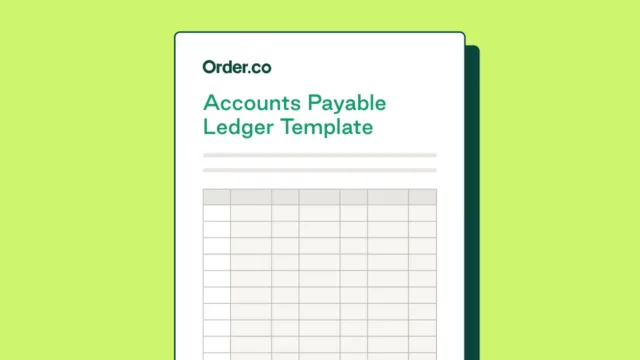
AP Ledger Template
An accounts payable ledger template makes it easy to track purchases and ensure timely payments. Download your free template for Excel or Google Sheets here.
How is trade accounts payable intertwined with procurement and vendor relations?
Traditionally, your procurement department is responsible for maintaining vendor relationships, including contract negotiations, the pursuit of discounting opportunities, compliance to terms, and repayment processes.
Still, it is essential to know that the trade accounts payable process also plays a crucial role in the daily business mechanisms to keep vendor relationships on a positive track.
Research reveals that 47% of companies pay one in ten invoices late, while 16% admit that they pay one in five invoices late. Only a paltry 5% of businesses assert that they always pay their obligations on time, whereas one in 12 firms never monitors its payments processes at all.
Late vendor payments risk causing disruptions in the supply chain and cash flow. Some of the causes of late invoice payments include lack of automation, slow internal processes, lack of capacity to manage invoice volume, and administrative error. Unfortunately, all these are mere excuses for poor performance. Besides, vendors shouldn't have to accommodate internal process flaws.
Supporting a strong, continuous supply chain
Business vendors are crucial to your company's success. Consider, for example, the retail and manufacturing sectors. Regular business relies on vendors to provide the necessary products, parts, and raw materials to complete their end offering. As such, these companies can't afford to lose their key vendors due to inefficient trade accounts payable processes resulting in late, lost, or faulty payments.
Automating your accounts payable workflow speeds up invoice processing and ensures your vendors receive payments accurately and on time. In return, vendors are likely to deliver goods swiftly and offer future discount opportunities.
47% of companies pay one in ten invoices late, while 16% admit that they pay one in five invoices late.
AP Ledger Template
An accounts payable ledger template makes it easy to track purchases and ensure timely payments. Download your free template for Excel or Google Sheets here.
"*" indicates required fields
Profitability impact of trade accounts payable management
Just like other current assets or liabilities, trade accounts payable have a significant impact on your profitability. The single most critical thing you can ever do to maintain good vendor relations is pay your bills on time. Unfortunately, accounts payable management can get hectic and unwieldy. As your business grows, so does its suppliers and the invoices you have to pay.
Good vendor relationship management requires a mutually beneficial relationship between you and each supplier or vendor. A positive relationship is a win-win for all parties. Vendors will cut you good deals, suggest new and better products, and work with you on delivery policies and times.
It is prudent to cultivate good supplier relationships because they also mean increased company efficiency. To do this, always ensure that you:
- Pay your bills on time.
- Don't cut off suppliers without a valid reason.
- Keep open lines of communication.
- Elicit trust with all of your vendors and suppliers, regardless of how many you have.
In return, a good vendor could respond by offering you their best trade credit terms possible, hence maximizing your profitability.
One critical metric in any business's financial management process is its cash flow, which comes from business operations like financing and investing. It's worth noting that you generate profit from sales after paying all expenses.
Inadequate monthly cash flow means you won't have enough cash at hand to pay your bills on time, which means trouble with your suppliers. Often, vendors offer cash discounts if businesses pay within a specified number of days, like three months. That discount can have a significantly positive effect on your profitability.
Now, imagine getting cash discounts from all of your vendors and having enough cash on hand to take them. It will result in a significant effect on your net profit margin.
Why accounts payable management matters
The accounts payable management process focuses on ensuring that you pay your bills timely without choking cash flow. It further ensures you have sufficient liquidity to fund process optimization, investment opportunities, and product innovation to reduce your ongoing costs.
It's critical to optimize your accounts payable management, particularly for small business owners who rely heavily on their working capital compared to larger companies. Below are some reasons why accounts payable matter:
- Accurate and efficient workflows in your trade accounts payable system provide transparency and accuracy in your cash flow tracking and planning.
- Better cash flow management allows for more accurate budgeting.
- Effective management provides actionable insights that you can leverage to enhance contract negotiations and strategic sourcing. It also allows you to build stronger vendor relationships that give you access to better discount payment terms.
How do you audit trade payables?
The best practice to follow is to review the recorded cash disbursements subsequent to the corresponding balance sheet date. It allows you to determine which period to apply the related payables and whether it belongs to the previous one. Identifying unrecorded trade accounts payable enables you to manage all your current liabilities. You can also make payments on time to safeguard your vendor relations.
Trade accounts payable is among the essential tasks to get right. The risks of failure are too significant to leave to chance. A poor trade accounts payable process can damage your vendor relations and open you up to fraud risk.
Order.co helps finance and operations teams spend less time placing and managing orders. Peloton, Hugo Boss, XpresSpa, SoulCycle, and WeWork all use Order.co to:
- Place orders from one cart and approved catalog automatically across every vendor.
- Track real-time spending.
- Make actionable purchasing decisions.
Order.co automates your purchase orders, tracks delivery issues, saves you money, offers spend tagging and visibility, consolidates billing and vendor transactions, and unifies all your trade accounts payable data under one platform. To get started, schedule a free demo today.
FAQs
Get started
"*" indicates required fields
Procurement seems pretty straightforward: A company needs something, and the procurement department figures out where and how to buy it. The difference between surviving and thriving as a company, however, is in how strategic and intelligent your procurement process is.
Intelligent procurement, or the strategic process by which companies manage their vendor-related spend, is key for companies that are looking to succeed, particularly in a macro environment defined by uncertainty.
As companies look to an unpredictable future, they should prioritize the implementation of intelligent procurement, which helps them cut costs, reduce inefficiencies, and mitigate risk.
What is procurement?
Procurement is the process a company follows to obtain the supplies and services it needs to run its business.
There are two main types of procurement: direct and indirect. Together, these account for most of the purchases made within the company. Effective direct and indirect procurement requires a strategic process and transparent oversight of organizational spend.
What are the types of procurement?
Direct procurement: Direct procurement (also known as direct spend or direct cost) is, according to GEP, “the process of obtaining raw materials, resources, goods and services that are utilized in the core operations of a business.” If you run an ice cream shop, for example, the cost of ice cream and cones would be considered direct procurement. Companies optimize direct procurement by strategically sourcing the most reliable and cost-effective vendors, automating purchases of frequently used items, and buying in bulk to achieve the lowest possible unit price.
Indirect procurement: According to SutiSoft, indirect procurement involves “the expenses incurred for materials, services and maintenance required to operate [your] business.” At that same ice cream shop, the cost of freezers, air conditioning, and email marketing software would be considered indirect procurement. According to McKinsey, “most companies do not have mechanisms to monitor indirect categories and reflect their performance on financial statements.” Without the ability to identify exactly where employees and departments are spending money, companies cannot hope to control and curtail that spend. Thus, effective indirect procurement processes require organization-wide spend visibility for procurement teams.

Choose the Right Procurement Technology With This Decision Matrix
Find 15 must-ask questions to narrow down your software search and make your research process MUCH easier.
What procurement isn’t
Procurement is often used interchangeably with “sourcing” or “purchasing,” but it shouldn’t be. Each is a distinct component of the overall procurement process. Both sourcing and purchasing are most effective when implemented as part of a holistic intelligent procurement process.
Procurement vs. sourcing
Sourcing is one component of procurement. It refers to the process of selecting a supplier or vendor. Identifying an item or service to meet a business need, culling a list of vendors, and comparing prices across vendors are all part of the sourcing process. The ultimate goal of sourcing is to minimize purchasing costs so the business can achieve its ultimate goal: maximizing ROI.
Sourcing is most effective when combined with intelligent procurement, which eliminates repeat purchases across departments, centralizes sourcing tasks, and automatically compares costs across vendors. Strategic sourcing, which allows companies to identify cost-saving opportunities and mitigate risk, is a key element of intelligent procurement. Order.co’s software helps companies source strategically.
Procurement vs. purchasing
Purchasing is another component of procurement and refers to the distinct act of buying goods and services for your business. It does not refer to a formal process or policy as procurement does. Purchasing can add costs and inefficiencies to the business when conducted independently of a strategic procurement plan. Impulsive purchasing by various employees who have not conducted appropriate cost comparisons or due diligence can lead to cash leaks, data security breaches, and even business-continuity disruptions.
Like sourcing, purchasing is most effective—and most controlled—when combined with intelligent procurement. Intelligent procurement tools like Order.co streamline haphazard purchasing, add controls on employee spending, and improve the purchasing experience for all parties. By implementing Order.co’s single catalog and cart for all its purchasing, for example, BLANKSPACES was able to achieve 93% faster ordering and ensure perfect spend compliance.
Procurement = sourcing + purchasing
At its core, procurement is the combination of sourcing and purchasing. It is, according to Thomasnet.com, an “all-encompassing strategic array of processes that includes both purchasing and sourcing.” The development of a strategic procurement process implements safeguards—like strategic sourcing and controlled spend—that protect against some of the risks inherent to sourcing or purchasing alone.
Effective procurement doesn’t need to be complicated. It’s essentially the combination of a few important steps:
- Evaluating spend across the business
- Identifying opportunities for cost-savings
- Creating policies and controls around future purchasing
- Establishing a system for approvals
- Implementing a vendor selection-policy
Companies that complete these necessary steps are on their way to developing an intelligent approach to procurement. Businesses that utilize intelligent procurement optimize sourcing and purchasing, mitigate risk, and cut unnecessary costs.
What is intelligent procurement?
Intelligent procurement is the process by which companies manage all aspects of their vendor-related spend in one central digital place so they can gain a holistic view of that spend. Companies that implement intelligent procurement gain better insight into and control over their spend.
Digital transformation has accelerated the rise of intelligent procurement by leveraging software and automation to reduce costs and risks with minimal human oversight. Intelligent procurement platforms like Order.co connect businesses to thousands of vendors via one centralized platform, implement rules and restrictions to reduce rogue spending, streamline invoice management, automate ordering, and more.
Intelligent procurement protects against supply-chain risk and empowers companies to become more sustainable.
Transparent, holistic insight into total spend makes procurement easier. Procurement departments that know where and how the organization spends money can more easily cut costs, make decisions, and identify potential problem areas. The ultimate result of better control over organizational spend? Greater efficiency, lower costs, and reduced risk.
To their detriment, most companies do not apply an intelligent, dedicated strategy to their procurement process. Most companies handle spend in silos, which creates confusion, inefficiency, and unneeded expense for the organization.
Why is intelligent procurement so important?
The main benefit of intelligent procurement is to save companies money. This, however, is far from the only upside of an intelligent procurement process. When applied strategically, intelligent procurement also protects against supply-chain risk and empowers companies to become more sustainable.
Intelligent procurement helps companies save money
By definition, procurement is a massive cost center: it is the hub of corporate expenditure. But managing spend more intelligently has multiple benefits. Companies that implement intelligent procurement can improve their bottom line.
Moreover, intelligent procurement helps protect companies from macro trends and events that create uncertainty for the business. According to McKinsey, companies with high-performing procurement departments have historically recovered from economic crises more quickly. The companies succeed thanks to their ability to respond to supply-chain disruptions, reduce costs through automation, and make more agile business decisions due to insights gleaned from digital tools.
As procurement leaders at The Future of Customer Engagement and Experience write, unpredictable events happen—the past 10 months exemplify that fact all too well—and businesses should prepare for them: “The solution is not planning for every possible contingency. How could we? Rather, it’s gaining visibility into your systems—increasing efficiency and flexibility—to create resilience.”
Intelligent procurement mitigates supply-chain risk
Supply-chain management is a critical responsibility of the procurement department. Intelligent procurement can ensure business continuity when the supply chain is disrupted.
Supply chains are inherently risky. According to McKinsey, “today’s complex and long supply chains are almost inevitably subject to disruption.” Multiple factors—from trade disputes and natural disasters to human error and shortages caused by events like the COVID-19 pandemic—cause these disruptions. Then, because every supply chain comprises multiple links, a domino effect of trouble (and costly delays) occurs when even one is disrupted.
How intelligent procurement creates an efficient, risk-free supply chain
To minimize risk, companies need a holistic view of their spend and their vendors in order to identify the origin of supplies and make adjustments as needed in the face of disruptions. Intelligent procurement platforms like Order.co provide this transparency, which enables agile action by procurement departments when business continuity is jeopardized.
Intelligent procurement helps protect companies from macro trends and events that create uncertainty for the business.
Moreover, intelligent procurement tools allow procurement teams to immediately identify and cost-compare new or replacement vendors so unexpected hiccups don’t result in exorbitant costs. Order.co’s intelligent procurement solution, for example, connects businesses to thousands of vendors and automatically sources out-of-stock or lost items from comparable sellers with comparable prices, ensuring business continuity even amid disruptions.
Plus, intelligent procurement platforms keep track of deliveries, so companies can easily identify delays and problem-solve more quickly.
Intelligent procurement can lead to sustainable procurement
When you implement intelligent procurement, you’re more likely to reach sustainable procurement, which, as we said in our piece on the topic, ensures all the way down the line that “your suppliers—and your suppliers’ suppliers—are proactively seeking ways to minimize waste and reduce their carbon footprint.”
It’s important to aim for sustainable procurement because, according to IBM research, a full 62% of consumers would be willing to change their shopping habits to support more sustainable businesses. That effectively means that companies cannot afford not to be sustainable. Those companies that pursue short-term savings might find themselves losing revenue when discerning customers and investors take their dollars elsewhere.
Sixty-two percent of consumers would be willing to change their shopping habits to support more sustainable businesses.
Companies can augment their approach to sustainability by taking a long-term view of their procurement efforts. Business leaders tangibly demonstrate their values to key constituents when they source from sustainable companies and institute sustainable practices.
How intelligent procurement can help achieve sustainable procurement
Companies can achieve sustainable procurement by leveraging procurement tools to identify and cost-compare sustainable vendors. An intelligent procurement system, which gives companies holistic insight into their spend, reveals which vendors are sustainable and allows companies to track that information in one central place, so they can more readily source and purchase from such vendors going forward.
Sustainable procurement is an excellent example of the necessary teamwork between intelligent procurement tools and the intelligent humans who compose an effective procurement department. Individual employees can leverage the benefits of intelligent procurement platforms to make needed department-wide policy decisions that bolster a company’s reputation, generating value that transcends simple dollars and cents.
Choose the Right Procurement Technology With This Decision Matrix
Find 15 must-ask questions to narrow down your software search and make your research process MUCH easier.
"*" indicates required fields
How to achieve intelligent procurement
There are several components of an intelligent procurement process. To achieve it, procurement leaders must do the following:
Deploy an effective procurement strategy and process
Intelligent procurement requires strategic planning. Leaders need to devise an effective procurement strategy — a plan for purchasing business supplies that achieves two core objectives: risk reduction and cost-efficiency. Then, they must implement a repeatable procurement process.
Why is an effective procurement strategy and process important?
Procurement is inherently risky. Procurement departments necessarily rely on third parties over which they have little control. Without an effective procurement strategy, procurement departments find themselves constantly putting out small fires: recurring purchases made by an employee who has since left the company, for example, or duplicate purchases made by members of different departments. They may find themselves navigating relationships with unreliable, noncompliant, or cost-ineffective vendors. They may be constantly policing maverick spend among employees. And, inevitably, they will devote more of their own team members’ time to handling inefficient manual processes.
A defined strategy and process help mitigate these risks. Moreover, an effective strategy helps the department run more smoothly by keeping information organized, simplifying invoicing, and creating a transparent spend management environment. Perhaps most importantly, an effective procurement strategy helps build a lean operating model that decreases wasteful ad hoc spend.
How to craft an effective procurement strategy
Procurement departments need to first identify all sources of spending within the organization. Spend management software tools like Order.co can help companies organize their spending sources in one central place, so they can easily identify and analyze spend across departments.
Procurement departments can more easily predict future costs and identify opportunities to reduce them once they’ve identified sources of spend within the organization. Order.co’s software lets teams automatically compare prices across vendors, so they can guarantee they’re getting the best value for each product and service they purchase. They can also implement policies that control maverick spending by employees and grant the procurement department greater control over the organization’s total spend.
Without an effective procurement strategy, procurement departments find themselves constantly putting out small fires.
Companies can devise a strategy that safeguards against unknown expenses by gaining a comprehensive understanding of the organization’s costs and identifying potential risks that could increase them. Effective procurement departments work closely with finance teams to allocate budgets to various departments while making sure to include a cushion that protects against unknown future expenses.
Today’s best procurement strategies incorporate technology, which increases efficiency by minimizing human busywork (and associated human error) and reduces costs. Automation improves procurement strategies in multiple ways: by easily comparing costs across vendors, bundling orders, organizing information, and reducing time spent on purchasing, among other benefits.
Leverage procurement technology and procurement software
Technology is perhaps the single most important contributing factor to an intelligent procurement department. Procurement technology and software drive efficiency by automating processes and providing holistic insight to spend across the organization.
Why use procurement technology and software?
Historically, procurement requires a lot of time and manpower. The work of sourcing, reviewing and approving purchases, managing vendor relationships, and keeping track of invoices is both necessary and repetitive. When conducted manually, these tasks monopolize employees’ time and introduce more opportunities for human error.
Procurement technology automates much of the unwieldy and inefficient manual work that claims so much of employees’ time. Moreover, implementing technology reduces risk by eliminating human error.
Ultimately, companies that leverage procurement technology and software can reduce their overall spend. Technology automatically compares vendor costs, identifies instances of duplicate or off-budget spending, and offers detailed analytics that allow companies to evaluate their spend in real-time. According to a BCG study, companies that use digital procurement tools can decrease their annual expenditures by an average of 5% to 10%.
Technology is perhaps the single most important contributing factor to an intelligent procurement department.
The rapid pace of technological innovation has yielded a bevy of tools that procurement teams can add to their arsenals. Today’s companies face an unprecedented need to manage their spend and maintain control over an increasingly distributed workforce. Technology and software can help.
Procurement departments that automate elements of the procurement process can reallocate their employees’ time to higher-value initiatives that help protect the business from risk. Truly intelligent procurement combines technology’s speed and scale with humans’ instincts and knowledge to yield a process that’s efficient, cost-effective, and risk-reductive.
How to implement the right procurement technology and software
To choose the best tools for the business, procurement teams must first identify their overarching procurement challenges. Common obstacles include the following:
- Too much or not enough time spent on sourcing
- A fragmented, inefficient purchasing process
- Management of multiple vendors
- Confronting and reducing maverick spend
- Vendor errors that risk disruption of business continuity
Once they’ve identified their main challenge or challenges, teams can more easily research and select the technology needed to solve those problems.
Most teams will face more than one challenge. Rather than purchase multiple tools and cobble them together in a fragmented way, procurement departments can rely on Order.co to confront each of their concerns. Among industry-leading solutions, only Order.co’s platform can automate and improve every element of the procurement process, from strategic sourcing and vendor API integrations to purchasing and invoice reconciliation.
Companies that have decided to purchase procurement technology need to feel empowered to implement the tool(s) in a way that maximizes ROI. Even the best procurement technology would be ineffective if it could not integrate with a company’s existing tech stack.
Before deciding to purchase any procurement software, procurement departments should first consult the IT team to ensure API compatibility, then confirm company data-related vendor guidelines with the compliance team. Once they’re assured that their preferred tool can integrate seamlessly with the company’s API and that it will not violate data security policies, procurement teams should prepare to ask the right questions of vendor sales teams. To help in this endeavor, we’ve created this Decision Matrix, which helps procurement teams quantify their choices and make a data-driven decision when selecting procurement technology.
Intelligent procurement is key now and in the future
Effective procurement is anything but simple in modern companies. For one thing, 81% of non-executive employees can influence purchasing decisions, according to Think With Google. Additionally, oversight of increasingly distributed teams has become difficult, and unprecedented macroeconomic uncertainty threatens business continuity in new and unexpected ways.
The result, at most companies, is a siloed procurement process. Purchasing is fragmented and haphazard across the organization, which steadily increases unnecessary costs and exposes the business to needless risk.
81% of nonexecutive employees can influence purchasing decisions
It doesn’t have to be this way. Procurement can be a tool businesses deploy to help them become leaner, more efficient, and more risk-proof. Forward-looking companies can use procurement to protect their organizations and bolster their bottom lines.
To get there, companies need intelligent procurement. They need the tools and technology that streamline systems, offer organization-wide oversight, and automate historically inefficient procurement tasks. Companies that implement intelligent procurement can cut costs, increase efficiencies, reduce risk, and operate more sustainably. Order.co can help.
Procurement is a vital component of healthy, efficient, and cost-effective organizations. Companies that take a thoughtful, strategic approach to procurement will be more likely to succeed—both now and in the future.
Get started
Schedule a demo to see how Order.co can simplify buying for your business.
"*" indicates required fields