Having the right financial professionals on your team is critical to securing your company’s bottom line. After all, these are the people responsible for managing your accounts payable ledger and future planning, as well as optimizing your budgets by aligning spending, curbing fraud, and eliminating maverick spending that harms your profitability.
Spend analysis is a method the best financial professionals use to examine their companies’ core financial operations and maintain long-term financial health.
This type of analysis shows organizations how they spend their money on products, materials, and services. It allows finance and procurement teams to identify their primary expenses and purchases.
With this data, firms make better forecasts, ensure budgetary compliance, and improve their financial performance.
Does your business need a comprehensive process to optimize and track the budget and control maverick spend? In this guide, you’ll learn several ways your business or procurement department can conduct a spend analysis of your accounts payable ledger.
In this article, we’ll discuss:
- How to define accounts payable (AP) spend analysis of general ledger (GL) balances
- The top four benefits of spend analysis for businesses
- How to conduct a seven-step spend analysis process
Download the free tool: AP Ledger Template
What is an accounts payable spend analysis of general ledger balances?
An accounts payable spend analysis is a critical process within strategic sourcing. AP spend analysis helps companies improve their financial processes by:
- Reviewing payment, purchasing, and spending practices
- Gaining clarity into the organization’s overall cash flow
- Improving efficiency and optimizing buying power
- Managing long-term risks and enforcing contract compliance
- Reviewing budget and forecasting needs
- Tracking income statements and account balances
Accounts payable ledgers explained
An accounts payable (AP) ledger, sometimes called a creditors’ ledger, shows the past transactions between a company and its suppliers. It includes information such as amounts owed, dates, and other details relevant to the repayment of short-term liabilities.
Compiling an AP ledger brings together all available vendor payment information in one place. This makes it easy to track all your creditor payments, due dates, and associated information. The ledger also acts as a budgetary control tool that compares to the general ledger for accuracy. This is a dual control process, where one employee enters transactions and another employee checks for issues or errors.
AP Ledger Template
An accounts payable ledger template makes it easy to track purchases and ensure timely payments. Download your free template for Excel or Google Sheets here.
4 Benefits of spend analysis
Spend analysis provides businesses with a qualitative advantage over their competitors. For this reason, nearly 60% of organizations are considering using advanced and predictive analytics in their practices.
Many of these companies cite the following benefits from analyzing their spending data:
1. Increased spend visibility
Spend visibility is more than tracking company spending. It is a detailed analysis that provides insights into how money travels through the business. It also helps companies identify suspicious activity or fraud.
Spend analysis provides a full history of how an organization spends each dollar during the entire purchase cycle, from sourcing to payment. For instance, if you hire a construction contractor for your company, detailed transaction reporting will identify the employee that approved the quote.
2. Identifying outstanding saving opportunities
Spend analysis identifies new opportunities to reduce companies’ total budgetary costs. The data they receive allows financial professionals to understand spending at the line-item level and develop a pipeline to optimize that spending.
This analysis can also create or capture value through process optimization, where the procure-to-pay process is automated to reduce invoice and purchase order life cycles. This improves supplier relationship management and increases productivity, accuracy, and cost reductions.
An enterprise-level platform helps companies conduct spend analyses to track their cash flow and save money. Xpres Spa, an airport spa destination, says that Order.co’s software has helped the company save 9.6% on its products while simplifying delivery to airports.
“From our first meeting in spring 2016 to now, Order.co has helped us find savings and solutions to match ever-increasing demand,” said Tesh Ramsarup, Director of Operation Services for Xpres Spa. “The knowledge gained over the past three years has allowed us to make decisive choices to provide our people with the best tools and our customers with exceptional service—all while being conscientious of spending.”
You can read the entire case study here.
3. Superior spend forecasting models
Spend analysis constructs better forecasting models that predict ways businesses can take advantage of savings in future quarters.
Spend forecasting integrates historical data analysis with market intelligence and forecasting trends from various sources. It provides decision-makers with reliable insights they can use to optimize their supply chain, slash costs, and make strategic spending decisions. This enables companies to optimize profits and attain a market advantage.
In the past, financial teams created their spend forecasting models manually—they combined months of analysis to identify cost-cutting strategies. Unfortunately, many opportunities expired before they could capitalize on them.
The digital era provides real-time descriptive analytics (analysis of historical data). Companies use descriptive analytics to identify patterns they can leverage to create steady forecasting models and improve their financial performance. With holistic data categorization, simplified trend analysis, and improved spend forecasting methods, organizations build reliable spend data performance sets from specified periods.
4. Ability to track diversity reporting
When spending data is organized into a centralized platform, a wealth of data becomes available for analysis and action. Diversity is one such category. By identifying and collecting diversity information from current supplier relationships, businesses can examine and improve their diversity numbers across all accounts. This data both informs future spending and helps businesses communicate the positive impacts of their strategic partnerships.
AP Ledger Template
An accounts payable ledger template makes it easy to track purchases and ensure timely payments. Download your free template for Excel or Google Sheets here.
"*" indicates required fields
How to conduct a spend analysis process of your accounts payable ledger
Now that you know why a spend analysis is critical, we’ll walk you through completing a spend analysis at your company. Here are seven steps to get you started:
1. Use the right accounting system to conduct a spend analysis
Your finance team should have the tools they need to do a comprehensive spend analysis of your financial statements.
You’ll recognize the right accounting system tool when it offers these advantages:
- Contract management improves because the tool extracts insights from actual data and journal entries instead of only from forecasted pricing and vendor performance benchmarks.
- Supplier relationships are efficient and strategic. Software like Order.co monitors vendor balances, tracks merchandise inventory, eliminates redundant relationships, and shifts your focus to shared economic opportunities.
- The tool offers insights for reducing waste, increasing efficiency, and lowering procurement costs. At the same time, it improves general cost reduction initiatives across your entire organization. Ultimately, you will be able to increase the value of your company assets at a lower cost and strengthen your bottom line.
- Indirect spend, ad hoc spend, payable balances, and project-based budgets integrate into your spend data for analysis.
Accounting software is designed to help your organization view all your spend data in one place for easier access and better analysis.
For example, NY Kids Club uses the Order.co platform to manage and control all their spend analysis, journal entries, and balance sheets.
2. Define your objectives
The next step for your AP spend analysis process is to define your objectives. Clear goals make data gathering and analysis efforts easier. Here are some common objectives to follow during your spend analysis:
- Understand your spend at a basic level, including your cash flow, debt amounts, and current liabilities, so your team can identify savings opportunities
- Track key vendors so your finance team or procurement office can define and execute a strategic vendor plan
- Discover key spend areas that affect your earnings before interest, taxes, depreciation, and amortization (EBITDA)—including COGS (cost of goods sold) and SG&A (sales, general, and administrative)
3. Identify all spend data sources
Next, create an inventory of all the systems where your spend data lives, including payable journals, payable subsidiary ledgers, and general ledger accounts. This should include all your departments, accounts payable, general ledger, p-cards, credit cards, and eprocurement system.
This step will help AP capture all your spend data for analysis. If your business has separate business units, locations, or verticals, you’ll likely have to integrate multiple channels.
Take care to create uniformity in your data sources throughout the next steps. Without uniformity across your organization, data integrity is easily compromised. For example, inconsistency in coding materials or describing products ordered can make it difficult to accurately analyze that data later on.
A simple inventory table should capture the total amount of data in subsidiary ledgers and may include the following data sets:
- System name
- Business units
- Type of spend
An effective software platform helps your company keep internal control of your data from subsidiary ledgers, general ledger accounts, income statements, and a variety of bookkeeping sources.
4. Create a spend category tree
Next, establish a spend category tree. This tree can span continents, cost centers, functions, organizational belongings, and responsibilities. Since you’re pulling data from multiple systems, you will probably have different fieldsets.
Identify the data you want to capture. Then use a shared schema to capture what that data means. This step will ensure the information gathered across data sources adheres to a unified standard for analysis.
Most enterprise resource planning (ERP) systems use unified methods to categorize spending transactions into buckets. The most common approach used is a general ledger chart of accounts. You can also use your own in-house or industry-specific schema if that fits your purpose better.
Here are two additional standard schema classification options:
- United Nations Standard Products and Services Code (UNSPSC): This global, open standard is an efficient way to classify your products and services. It is free to browse and download in PDF form. You can also download alternative formats from the UNSPSC website for $100.
- North American Industry Classification Schema (NAICS): Federal agencies use this code to classify businesses. It’s the primary classification schema system used by the US government for reporting statistics.
5. Identify and extract data
Extract the spend data from all your ledgers. For instance, pull data from your subsidiary ledger, general ledger, and accounts payable ledger via your ERP system.
You can also draw this data from your company’s invoice management system. This should include all invoices and invoice rows associated with supplier information, dates, totals, currency, accounts, and cost centers. Your accounts payable process should capture all this information on invoices down to the item level.
6. Cleanse your data
Cleanse, correct, and standardize the data in your accounts payable ledger. Fix any misspelled item or supplier names. Also, eliminate any duplicates and manage errors in your supplier list. This step will help you better control accounts in your AP departments.
7. Categorize your purchases
Categorize your AP data. Classify all information starting on the account level.
Next, analyze your suppliers. Depending on how you’ve constructed your spend category tree, suppliers may fit into one or several categories.
Create categories for invoice numbers, vendor accounts, vendor balances, and income statements. Pay attention to whether suppliers belong to multiple categories.
Use Order.co to simplify accounts payable spend analysis
Businesses that conduct spend analyses have a distinct advantage over their competitors—they see improved spend visibility, cash flow, and vendor relationships. Spend analysis produces superior forecasting models and diversity reports.
Before starting a spend analysis, select a reliable accounting platform. It will help your finance team conduct a thorough, error-free analysis. Choose software that will cover all the bases:
- Buying and approving products
- Setting budgets for each accounting period
- Enforcing approvals by user, location, product, and category
- Providing real-time analytics for actionable purchasing insights
A platform like Order.co enables your finance team to conduct a spend analysis that tracks your spend and saves you money.
For more information on using data and technology to drive business growth, download our complimentary ebook, “Creating a Growth Machine.”
Get started
Schedule a demo to see how Order.co can simplify buying for your business.
"*" indicates required fields
When it comes to your company’s financial health, revisiting the basics can bring new perspectives to current problems. Consider a sports analogy:What do the world’s most famous coaches make their players do in the off season? Practice the fundamentals. Coaches have their teams practice rookie-level drills because it trains their minds and bodies to react with cat-like reflexes. They solidify the fundamentals to the point they're instinctual.
The same concept applies to any profession, whether you’re a novice or an expert. Even if you know the fundamentals, there is a reason for the adage, ‘Use it or lose it.’
That is why we are going back to the basics in this article to re-examine T-accounts.
Summary:
- Mastering accounts payable T-accounts establishes the basis for precise spend management and financial transparency.
- T-accounts enable businesses to quickly recognize spend trends and identify cash flow risks across vendors and locations.
- Double-entry bookkeeping with T-accounts minimizes balance sheet errors and supports informed, data-driven decisions.
- Automating accounts payable processes boosts efficiency, saves time, and provides real-time visibility into business expenses.
Download the free tool: AP Ledger Template
What is an accounts payable T-account?
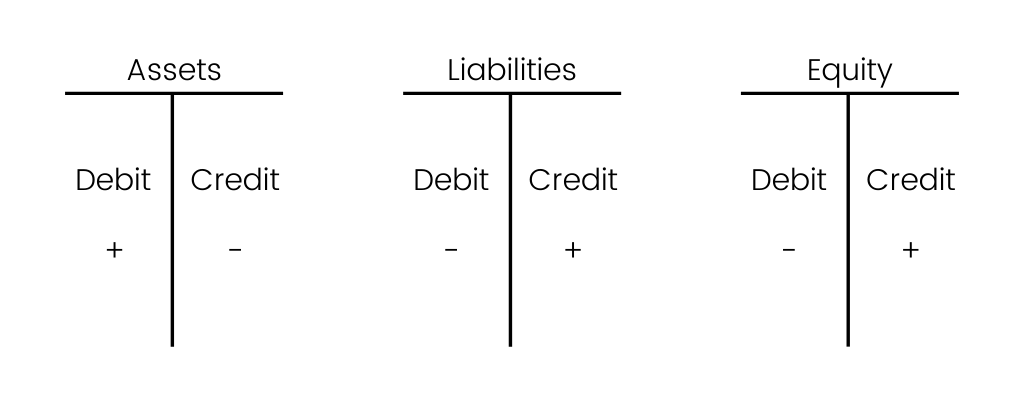
A T-account is named for the visual presentation of double-entry bookkeeping. The left side of the ‘T’ is where a debit is recorded in the general ledger, and the right side is for credits. Each account — whether it’s accounts payable, accounts receivable, payroll, assets, etc. — will have its own T-account setup. The account title sits above the top bar of the ‘T.’
In double-entry bookkeeping, each accounting entry affects at least two of the company’s accounts. When a debit is entered onto the left side of one account, it sends a credit to the right side of another account. The reverse is also true. If you enter a transaction on the credit side in one account, there will be a corresponding entry on the debit side of another account. In this way, debits and credits increase or decrease the corresponding accounts to keep the books balanced.
AP Ledger Template
An accounts payable ledger template makes it easy to track purchases and ensure timely payments. Download your free template for Excel or Google Sheets here.
Examples of accounts payable T-account
T-accounts are a useful visual representation of many types of balance activities. Some common types of T-account representations are:
Assets: Cash transactions, accounts receivable, physical inventory, hard assets like furniture, or technical assets such as computers and phones
Liabilities: Accounts payable, loans, and notes payable
Revenue: Receipt of payment from customers for goods or services
Expenses: Costs incurred to run the business such as rent, supplies, insurance coverage, incidentals, travel, and utilities
Equity: The conversion of company funds into financial instruments, such as shares sold as part of employee stock purchase plans (ESPP) or incentive shares
T-Accounts and their role in accounting systems
The most common method for bookkeeping is the double-entry accounting system of T-accounts. For the balance sheet to be balanced, a business transaction entered into the system must take away from one account and add the same amount to another and vice versa. The most common reason for balance sheet discrepancies is a ledger account entry erroneously placed on the debit side or credit side of the wrong account.
The idea of an accounts payable T-account gets a little confusing for even the most seasoned professional bookkeepers. When using a T-account, you must ensure the correct figure is applied to the correct side of the ‘T.’ It’s common to think of a debit entry as a subtraction to an account and a credit entry as an addition to an account. But this is not always the case:
- Entering a debit (left side) transaction to cash accounts, accounts receivable, or asset accounts like inventory and PP&E increases the account. When you enter a credit (right side) into these accounts, it decreases the amount.
- For the liabilities or shareholders’ equity accounts, debit entry decreases the amount and a credit increases it.
- Income statements also rely on the accuracy of the accounts payable T-account journal entry to reflect accurate figures.
- Accounts that track expense accounts, revenue accounts, gains, and losses use the debit/credit method in the same way as accounts receivable. A debit transaction increases the revenue accounts and a credit entry decreases it. Conversely, a debit will decrease the amount for expense accounts, whereas a credit will increase it.
Case in point: If your business issues common stock, you debit the cash account and credit the shareholders’ equity account to reflect this. But if an employee leaves before their shares are fully vested, they forfeit their shares and you record it as a debit to the shareholder’s equity account and a credit to the cash account.
How do AP T-accounts help spend management?
T-accounts allow a business to easily track its spending. You can see journal entries over a given period of time and view business transactions. But a T-account doesn’t necessarily help your business make wise decisions regarding managing its spending intelligently.
Accounting software tracks your company’s balance sheet and income statements. But it can only give you dynamic figures that provide superficial insight into ways to improve spend management.
The biggest problem with every fast-paced business is identifying areas that are leaking cash unnecessarily. Obvious signs in your financial statements — such as the accounts payable figure being much higher than the accounts receivable — stand out. But without 100% visibility into your spend management, you’ll be left high and dry on how to curb your spending. Worse yet, you may find some balances inflated or deflated, painting a picture that may not reflect reality. Working capital, cash flow, and your bank account suffer as a result.
AP Ledger Template
An accounts payable ledger template makes it easy to track purchases and ensure timely payments. Download your free template for Excel or Google Sheets here.
"*" indicates required fields
Streamlining accounts payable
Streamlining your accounts payable and accounts receivable processes may sound like a daunting task, especially when you work with a significant number of vendors. But eliminating maverick spend means finding ways to gain clarity on your company’s balance sheet. Simplifying your procurement process across different accounts with vendors is the first step toward reducing the time spent on the short-term process. This will significantly reduce money spent in the long term.
To help you understand what we mean, let’s take a look at the story of one of our customers, [solidcore]. As a health and wellness company, [solidcore] was expanding quickly with increasing demand for their products and services. In one year, they doubled the number of locations from 25 to 50. With such explosive growth comes a lot of chaos if you’re not properly prepared.
At first, [solidcore] held multiple accounts across multiple vendors and multiple users. Spend tracking was chaotic. The accounts payable department recorded receipts in the general ledger one by one, leading to a backlog. Without a proper purchasing management system, company executives couldn’t get real-time, accurate data on their cash flow, current assets, and expense accounts.
Since implementing Order.co, [solidcore] streamlined a process that once took at least two days and tons of back-and-forth emails for its 25 locations. Today, the process takes about four hours across all 50 locations. Now [solidcore] can see their spending at the product, location, and aggregate levels. With standardized processes steadily implemented in a more reliable manner, the company has much more transparency in its working capital and bank account balance than ever before.
Since implementing Order.co, [solidcore] streamlined a process that once took at least two days and tons of back-and-forth on emails for 25 locations. Today, the process only takes about four hours across all 50 locations.
Use Order.co to streamline accounts payable
Whether refining the fundamentals or digging deep to find innovative ways to streamline your accounts payable process, expertise requires your eyes to stay on the prize—but on potential hindrances, too. The figures on your company’s financial statements tell only a small part of the story even though they reflect the bigger picture.
Using the Order.co platform, many basic tasks such as reporting and visualization, invoice reconciliation, and spend analysis happen automatically within the platform. It takes the guesswork out of managing spending across locations and gives accounting professionals granular insight into every dollar flowing into and out of the organization.
Order.co offers growing businesses the most comprehensive and user-friendly accounts payable management & automation available. We invite you to request a free demo to learn more.
FAQs
How can businesses avoid common errors when using accounts payable T-accounts?
Businesses can avoid errors by recording each transaction on the correct side of the T-account, as misplacement often leads to balance sheet discrepancies.
What is a key challenge businesses face in managing spend with traditional T-accounts?
Traditional T-accounts provide limited visibility into spending patterns, making it difficult to identify cost-saving opportunities and control unnecessary expenses.
How does streamlining accounts payable impact business efficiency?
Automating accounts payable processes reduces manual tasks, speeds up transaction approvals, and increases transparency across vendors and locations.
Why is real-time spend visibility important for businesses?
Real-time spend visibility enables accurate cash flow tracking, prevents financial inaccuracies, and supports more strategic financial decision-making.
Get started
Schedule a demo to see how Order.co can simplify buying for your business.
"*" indicates required fields
Sustainability, once considered a “nice to have,” is becoming standard practice for many businesses—and procurement is at the forefront of driving sustainable operations and supply chains. Major global brands like Bain, Bayer, and Air Liquide have already committed to more sustainable procurement practices.
But how can you be certain you’re increasing the stability and sustainability of your supply chain? And what's the easiest way to partner with vendors aligned with your environmental standards?
As we discuss the basics of developing a more sustainable procurement process, you’ll learn:
- The benefits of increasing procurement sustainability
- Why companies are moving toward sustainability
- How one top brand makes sustainability a competitive advantage
- The steps to building a sustainability strategy
Download the free guide: Building a Sustainable Office Supplies Procurement Strategy
What is sustainable procurement?
Sustainable procurement refers to the practice of purchasing goods and services sourced and produced in environmentally responsible ways. It's about making choices that preserve natural resources, promote environmental stewardship, and reduce negative impacts on the planet and society.
Some examples of sustainable actions businesses can take include:
- Reducing water use or water pollution
- Using renewable raw materials and natural resources
- Ensuring human rights and safe working conditions
- Reducing all sources of greenhouse gas emissions
- Producing lower-carbon and recyclable goods
- Using local production to reduce transportation impacts
- Avoiding toxins like PFAS (per- and polyfluoroalkyl substances) and other “forever chemicals”
Sustainable procurement requires companies to conduct due diligence and work with vendors that use sustainable practices. The goal is to ensure your suppliers—both direct vendors and those across the broader supply chain—actively seek to minimize waste and reduce their carbon footprint.
How is sustainable procurement different from green procurement?
Green procurement focuses on purchasing products and services with minimal environmental impact. It emphasizes using eco-friendly renewable or recyclable materials produced with energy-efficient practices.
Though often used interchangeably, sustainability and green initiatives differ in scope and approach. Green procurement targets specific environmental goals, such as reducing emissions, improving resource efficiency, or minimizing waste. Sustainable procurement takes a more holistic view. It considers environmental, social, and economic factors across the broader supply chain, evaluating everything from ethical labor practices to long-term community impact.
As stakeholder expectations and climate risks increase, making sustainable procurement decisions is becoming a business priority—not just for compliance but also to improve cost savings, innovation, and reputation. To ensure continuous improvement, many sustainability-focused organizations are aligning their efforts with global frameworks like the United Nations Sustainable Development Goals (SDGs).
Building a Sustainable Office Supplies Procurement Strategy
Sustainability is a top priority, and strong procurement is key to meeting these goals. Learn how to make procurement of sustainable office supplies easier.
Key principles of sustainable procurement
Sustainable procurement focuses on maintaining and improving environmental conditions, safeguarding the social impacts of procurement and production, and balancing sustainability with economic growth. The following three pillars form the basis of sustainable procurement policies.
Triple bottom line
The triple bottom line of sustainability considers three critical dimensions: economic, social, and environmental. It encourages organizations to move beyond financial performance by embracing social equity and environmental stewardship, emphasizing long-term sustainability as well as ethical business practices.
Environmental, social, and governance (ESG) Integration
ESG integration embeds environmental, social, and governance factors into decision-making. It not only assesses the immediate impact of purchases but also their extended implications on sustainability goals. By prioritizing ESG criteria, organizations can mitigate risks, enhance their reputation, and drive innovation to create a more sustainable future.
Corporate social responsibility (CSR)
CSR is a business model that incorporates social and environmental concerns into daily operations and stakeholder relationships. It reflects a company's commitment to more than mere regulatory compliance by considering sustainable development goals like ethical practices, environmental conservation, and positive community engagement.
Circular economy principles in procurement
The circular economy focuses on minimizing waste and reclaiming resources by keeping products and materials in use for as long as possible. In procurement, this means selecting suppliers and materials that prioritize recyclability, reusability, and resource efficiency. Embracing circularity not only reduces procurement's environmental impact but also helps companies meet ESG goals.
7 Benefits of sustainable procurement
Sustainability is about more than appearances. Yes, customers may connect with the idea of brands acting as environmental stewards, but implementing sustainable procurement practices also has internal benefits.
Here are some of the ways sustainability drives value creation:
- Improved cost savings: Sustainable procurement helps lower costs by reducing waste, streamlining the supply chain, optimizing logistics, and enabling more strategic sourcing.
- Enhanced risk management: Sustainable sourcing minimizes reliance on harmful materials and fuels while also increasing supply chain resilience and protecting against reputational and regulatory risks.
- Increased innovation: Sustainability drives the exploration of better technologies and more eco-friendly resources and methods, spurring internal innovation for improved processes, products, and services.
- Reduced environmental impact: Sustainable procurement cuts emissions and waste, promotes responsible consumption, and fosters a culture of environmental accountability that can influence competitors as well as the wider public.
- Increased cost efficiency: Thanks to its focus on conserving resources, sustainable procurement can not only help save the planet but also translate to saving cash. Companies with strong ESG credentials reduce costs by 5 to 10 percent through improved operational efficiency and waste reduction.
- Greater compliance: Though each administration has its own agenda, early adoption of sustainable practices increases adaptability as new legislation comes into play.
- Improved brand reputation: Sustainability-forward companies appeal to values-driven consumers, expanding market reach and strengthening trust through transparent, purpose-led initiatives.
Implementing sustainable procurement practices
Building sustainability into the procurement process has its challenges. Getting people excited for change—and following it up with the right implementation approach—may give some procurement professionals pause. But by focusing on a few key components of sustainability, you can ease reluctance and pave the way for lasting positive impacts.
Supplier selection
Selecting sustainable suppliers is a smart way to bring more sustainability into your procurement practices. Look for partners that prioritize environmental and social responsibility, ethical sourcing, and waste reduction. Engage in transparent communication and establish clear evaluation criteria to help develop long-term partnerships that support shared sustainability goals.
Product specifications
Sustainable product selection is another easy-to-implement practice that has an immediate impact. Choosing suppliers with certified sustainable practices makes it easier to find products made from renewable resources and those with minimal environmental impact throughout their lifecycle. Defining and adhering to stringent product standards can help your company prevent waste, lower carbon emissions, and promote ethical labor practices.
Supply chain transparency
Greater visibility in your supply chain helps uncover inefficiencies and ensure fair labor practices. Start by mapping your current supply chains, conducting audits to assess suppliers' sustainability credentials, and leveraging technology to track sourcing and logistics information. Engage with suppliers that share a commitment to creating a more sustainable supply chain to ensure continuous improvement.
Waste reduction
Reducing waste in purchasing and inventory management offers tangible benefits with minimal operational disruptions. Simple measures like optimizing resource use, recycling obsolete supplies, and streamlining procurement across locations can have a substantial positive impact on your sustainability journey.
Lifecycle assessment
Fine-tuning your vendor lifecycle management program by adding sustainability metrics strengthens supplier relationships and improves brand reputation. Track sustainability credentials like green certifications and prioritize open communication to foster improvements over time. This ensures your supply chain contributes to environmental goals across every contract and vendor transaction.
Navigating sustainability regulations in procurement
Guidelines around sustainability are evolving. While regulations differ in various regions and industries, it’s important to stay informed and build compliance management programs into your procurement process. By getting ahead of regulations, you not only avoid pitfalls like extra fees or unnecessary paperwork, you also increase alignment with global standards, improve agility, and make efficient progress toward long-term goals.
Stay informed: Keep up with local and international sustainability regulations by subscribing to industry newsletters, attending relevant webinars, and participating in forums.
Educate stakeholders: Make sure your procurement team understands the importance of environmental sustainability regulations and how to comply with them. Regular training sessions can be beneficial.
Incorporate sustainable selection criteria: When choosing suppliers, include sustainability performance as a key criterion. This not only ensures compliance but also promotes environmental responsibility.
Audit regularly: Conduct regular audits of your supply chain to flag compliance risks early and take prompt corrective action when needed.
Seek expert advice: Large organizations and those facing complex requirements may benefit from consulting with sustainability advisors or legal experts specializing in environmental law.
Leverage technology: Use compliance management software to track regulatory changes and assess their impacts. Intelligent procurement tools can also help with reporting and adherence.
By building these practices into your procurement strategy, you can not only navigate the complexities of today's sustainability regulations but also put your organization in a better position to adapt to future challenges.
Building a Sustainable Office Supplies Procurement Strategy
Sustainability is a top priority, and strong procurement is key to meeting these goals. Learn how to make procurement of sustainable office supplies easier.
"*" indicates required fields
The hidden impacts of ignoring sustainable procurement
Ignoring sustainable procurement can have far-reaching effects on the immediate business environment as well as a company's financial health and reputation. Here are several critical consequences organizations may face:
- Inefficient spend: Without sustainable practices, companies often spend more in the long run. Sustainability leads to cost savings through more efficient use of resources and reduced energy consumption.
- Fines for noncompliance: As regulations regarding sustainability continue to change, failure to comply can result in hefty fines and penalties that negatively impact the bottom line.
- Loss of competitive advantage: Many businesses and governments require suppliers to meet specific sustainability criteria. Ignoring these requirements means potential disqualification from lucrative contracts.
- Reputational impacts: Consumers are increasingly environmentally conscious, and backlash spurred by harmful procurement practices can spread quickly, leading to a public relations nightmare and a damaged brand reputation.
These hidden impacts underscore the importance of integrating sustainable practices into procurement strategies. Ignoring sustainability is no longer just an ethical issue—it's a critical business risk.
Sustainable brands are already winning
The data is in, and it shows that brands prioritizing sustainable procurement are outperforming those that don’t. Higher ESG-rated companies fared better than lower ESG-rated companies when markets tumbled at the start of the COVID-19 crisis, and BlackRock believes this trend will continue.
In a recent report, the firm said, “We believe companies managed with a focus on sustainability should be better positioned versus their less sustainable peers to weather adverse conditions while still benefiting from positive market environments.”
Take Patagonia as an example. The brand is known for championing sustainable initiatives—even encouraging customers not to buy new products. Their famous 2011 “Don’t buy this jacket” ad encouraged gear repair over replacement, yet it led to a 30% increase in sales.
Today, Patagonia's core values are front and center, showcasing “build the best product” to prolong usability and reduce waste as well as “protect our home planet” to address the connection between environmental destruction and social justice. As a privately held company, Patagonia doesn't make its full financial records available, but its continued brand loyalty and growth reflect the power of well-executed sustainable practices.
Enabling sustainable procurement through smarter tools with Order.co
Procurement platforms help create visibility in the procurement process, a key aspect of improving sustainability in purchasing. With Order.co, you can increase the efficiency of your supply chain and streamline your order process to eliminate redundancy and errors.
Order.co helps you take control of your purchasing process by:
- Enabling buying from preferred vendors and curated selections
- Finding sustainable options for important supplies
- Detailing usage trends so you can make better purchasing decisions
- Reducing waste and unnecessary spending in the procurement process
Want to make your office supplies procurement more sustainable? Start with our sustainable office supplies guide. To learn more about driving efficiency in the procurement process, request a demo of Order.co today.
Get started
Schedule a demo to see how Order.co can simplify buying for your business.
"*" indicates required fields
To allow for more growth opportunities, accounting and finance teams must work together to explore 'creative' accounting systems that shift current assets around. Depending on the techniques used, some methods are merely exploiting legal loopholes. Others toe the line between 'creative' and downright fraudulent. Far more often, though, an inflated accounts payable balance sheet results from incongruities in record-keeping and inefficient accounting systems.
Regardless of the underlying cause or intent, the bottom line is this: if your company's balance sheet is not portraying an accurate picture, you're shooting in the dark. Your finance team can't turn insights into action if the big picture is incomplete. When your business isn't growing, it's stagnating. To help you avoid this potentially lethal pitfall, we're going to dive into an in-depth exploration of:
- How to recognize inflation on your balance sheets
- How errors and different regulations can cause inflation
- The business risks of inflation
- How Order.co can help solve inflated financial statements.

How Automation Can Solve Finance Teams’ Biggest Challenges
Take a few pages out of WeWork’s playbook and learn how automation can solve some of the greatest challenges facing your finance team.
Recognizing inflated financial statement
As an equity shareholder or potential investor, understanding how to recognize inflated balance sheets is an invaluable bit of knowledge. The formula for calculating the inflated percentage is:
Inflation Level = (Goodwill - Brand Value) / Brand Value
Goodwill assets
Goodwill assets are usually the result of a company acquiring another business. Businesses consider them intangible assets under the long-term asset account. If the acquiring company pays more than the company's fair value, that is the target company's goodwill value. However, if the acquiring company pays less than the fair value, it has 'negative goodwill.'
Brand value
Simply put, the brand value is the purchase or replacement value of a brand. There are several ways to approach calculating brand value, which leads to it being a highly speculative figure. Regardless of the technique used, your accounts payable, accounts receivable, cash flow, long-term debt, short-term debt, and company assets will be examined in-depth. From there, analysts will apply various financial ratios and compare the results to your competitors.
Corporations with inflated balance sheets
It's a surprisingly common practice for mega-corporations to use legal loopholes to inflate their balance sheets. For example, Tesla recently came under fire from critics when their accounts payable and other short-term liabilities ballooned to more than $3 billion. That's an increase of $425 million from Q1 of 2020. By increasing the amount it owed to its suppliers, Tesla was able to show a higher cash account balance and push forward with larger projects.
Sometimes, entire industries are notorious for inflating balance sheets. One such industry is banking. Unlike their tech or pharmaceutical counterparts who have high-valued intangible assets that make them unique, the banking industry is a near-perfect competitive environment. Many people point to Bank of America when examining the banking industry and this practice.
Ways an accounts payable balance sheet can be inflated
Theoretically, there are countless ways to manipulate a company's assets. However, there are two ways that are the most common. The first is exaggerate earnings on the income statement. This is done by inflating the current period's revenue and cash flow, deflating expenses, or both. The second is the exact opposite of the first. A company's revenue is deflated, and the expenses are inflated.
Those approaches are examples of purposeful, legal manipulation to frame a company's total assets over a period of time in the desired way to attract investors and appease shareholders. But other ways that a company's financial statements can be inflated have less to do with framing and more to do with circumstance.
Changing regulations and standards
In 2016, the Financial Accounting Standards Board updated its lease accounting standards. Under the new standards, companies must record leases of more than 12 months for property or equipment on their balance sheets and liabilities. Previously, GAAP-accepted standards allowed leases to be classified as financing or operating leases. Only capital leases were required to be recognized on balance sheets.
Now, both types of leases are required to be recognized. This change means that the balance sheets of some companies will show inflated assets and liabilities but without any real change in their equity.
Errors in the accounts payable balance sheet
This is the most common reason for an inability to see a company's assets clearly. Errors involving transposed numbers in accounts payable, accounts receivable, or the general ledger can snowball quickly, leading to long-term problems. Often, data is misclassified; common instances include confusing long-term liabilities with short-term liabilities and vice versa.
For companies that lack a consistent accounting system, errors of omission are the most common problem. Take, for example, the case of BlankSpaces. As this small business expanded into new locations, their processes became much more chaotic as each new location had separate purchasing processes. This led to purchases of office supplies being lost or never recorded and other accounting inconsistencies. Each location had a separate credit card for purchases, and far too often, purchases were entered under the wrong credit card.
All the chaos meant their accounts payable balance sheet was consistently incorrect, inflated in some areas, and deflated. BlankSpaces is not alone when it comes to this type of stumbling block. Luckily, their AP department realized quickly that they were headed for disaster if they didn't find a way to shape all locations into a more cohesive unit.
With Order.co, they could eliminate using multiple credit cards and consolidate all accounts payable under one umbrella. Additionally, because Order.co has already established partnerships, they're saving additional time and money by not dealing with annual memberships.
Risks associated with inflated financial statements
There are a plethora of issues that can result from inaccurate bookkeeping and a bad account payable balance sheet. An inflated income statement may help in one area but lead to higher taxes, thereby canceling any perceived benefit. An accurate reflection of your current assets, accounts payable, and accounts receivable plays a fundamental role in forecasting, budgeting, and developing key performance indicators. But there is much more risk involved when your company's balance sheet is off. And, it goes far beyond bad forecasting.
Wasted time
time spend of staying on top of their accounts payable balance sheet was slashed from 8 hours to 20 minutes on average once they streamlined their workflow with Order. This represents a 96% reduction in time spent in that area so they could focus on attending to more important matters.
Reputation damage
While reputation is everything regardless of the business, a small business relies on this much more than a larger business. Why? Because most new small business customers come from word-of-mouth referrals. If word gets out that your small business is 'cooking the books,' customers may view that as a sign that your business is not trustworthy.
But it's not just your reputation with customers that's on the line. Inaccurate financial statements could mean traditional lenders turn you down or offer unfavorable payment terms for loans. Is potentially restricting access to the working capital you need to grow worth the risk?
Lastly, if your company issues statements of earnings to shareholders, you're really not going to want to have to say the company made significant errors. Issuing restatements that correct errors will cast doubt on your company's ability to get things done right.
Potential legal violations
A flawed accounting system can lead to serious headaches with more than just your shareholders and lenders. If your financial statements falsely convey an inflated valuation, you may find yourself in hot water with regulatory bodies. This is perhaps the number one reason to ensure you're always on top of bookkeeping issues and have accounts payable balance sheets you can trust.
Reduced valuation
If you're creatively managing your current assets to reduce your valuation, this could harm your ability to secure the working capital you need to grow in the future. Inflated current liabilities could make it appear as though your company is deeper in debt than it really is. An erroneous cash flow statement screams that you lack liquidity.
Poor spend management
An often-overlooked drawback of an inaccurate accounts payable balance sheet and other financial statements is that it can increase your debt levels unnecessarily. Unfavorable payment terms for loans, increased cost of goods sold, and inaccurate liquidity are all potential side effects of bad bookkeeping. Additionally, your reports will contain erroneous data that skews quarterly performance metrics or how actual spending compares to the budget.
Faulty ROI results
One of the most powerful arguments for automating your AP process is to capture the transformation's ROI accurately. You can evaluate the returns from accounts payable automation through measurable cost reductions and rebates. It is one reason why the results will be evident much sooner than most other forms of technological transformation happening across businesses today.
How Automation Can Solve Finance Teams’ Biggest Challenges
Take a few pages out of WeWork’s playbook and learn how automation can solve some of the greatest challenges facing your finance team.
"*" indicates required fields
Streamlining spend management
Whether you have a new company that is just getting started or an established company looking for ways to integrate automation with legacy technology, you must make a solid plan to streamline your spend management and improve your accounts payable balance sheet processes. Using automated end-to-end financial tools will help mitigate the risks involved with manual, flawed accounting systems.
At the absolute minimum, your AP department should be looking for these features:
- Templates for commonly ordered products
- Tools that reduce labor spend on account payable and accounts receivable reconciliation by a number of days every month
- Ways to capture discounts by paying before the due date
- Tools that lower the cost of goods sold and office supplies by helping you negotiate better deals
- Ability to boost transparency company-wide
- Tools to increase liquidity and working capital
- Reports and dashboards so you can see current liabilities, total liabilities, cash flow, due dates, your accounts payable balance sheet, and other financial metrics in real-time
That is where Order.co comes in. Recruiting new talent, exploring new markets, and maximizing purchase power all depend on transparency in your financial data. Greater accuracy from the accounting department will give your finance team the tools they need to make more informed plans for growth. Seeing the big picture is impossible when pieces are missing.
None of the risk, all of the reward
We understand the challenges you face when running a lean and agile business. Internal and external stakeholders may be hesitant to change established accounts payable balance sheet and spend management processes. Concerns about ROI, integration abilities, and ease of adoption can be at the top of the concerns list.
But these concerns are exactly the reason Order.co is different from other spend management platforms. The return on your investment starts rolling in from the very start because there is no initial investment. Our strategic partnerships lift the responsibility of integrations off your shoulders and onto ours. Once it's customized to your business' needs, adoption is as simple as point and click. Schedule your free demo today!
Get started
Schedule a demo to see how Order.co can simplify buying for your business.
"*" indicates required fields
Sourcing and procurement get used interchangeably. While this isn’t totally accurate—in many respects, they’re not that different.
Larger organizations break these processes into separate departments, with procurement and sourcing functioning as linked activities. At smaller organizations, where these disciplines may not have dedicated departments, stakeholders often consider sourcing and procurement as one. Sourcing is seen as a subset of procurement.
While the similarity between these activities is often blurred, the principles of sourcing and procurement are both essential to minimizing costs and risks in purchasing. Both allow businesses to maximize their ROI.
Instead of focusing only on how the two activities differ, it’s valuable to understand how they should be used in tandem to maximize their mutual benefits.
This article will cover the differences and similarities between procurement and sourcing by:
- Defining procurement, sourcing, and purchasing
- Exploring the difference between sourcing vs. procurement
- Explaining the fundamental value of these processes
- Revealing how technology enhances sourcing and procurement
Download the free tool: Procurement KPI Tracker Template
What is the difference between sourcing and procurement?
The terms procurement, sourcing, and purchasing are often confusing for stakeholders. While interconnected, these three terms refer to distinct activities and stages within the overall process.
What is procurement?
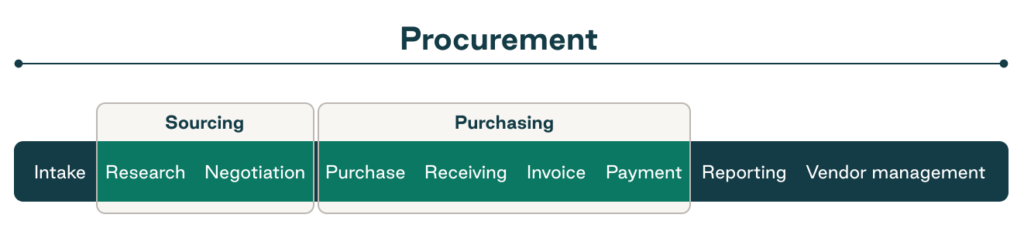
Procurement is the overarching set of processes and activities a company undertakes to find, purchase, and pay for goods and services. It follows the procurement cycle of a purchase from the point of needs identification through supplier selection, negotiation, purchase, three-way matching, payment, vendor management, and reporting.
What is sourcing?
Sourcing is a component of the total procurement process. It begins after needs identification and intake and before the purchasing stage of procurement. It refers to selecting potential vendors to meet company needs when buying a product or service. Sourcing involves examining a list of potential vendors, conducting due diligence on each, and selecting the best vendor for your business based on a criteria list.
What is purchasing?
Purchasing is the portion of procurement that occurs after sourcing activities are completed. It entails ordering, receiving, and meeting payment terms for procured goods and services. Sourcing and purchasing are two main stages of the procurement process.
Procurement KPI Tracker Template
Download our free Procurement KPI Tracker Template today to monitor essential procurement numbers and demonstrate value in your procurement strategy.
Does the distinction between sourcing vs. procurement matter?
Ultimately, the goal of the sourcing process is to improve risk management, reduce cash leaks, and enhance the purchasing process so businesses can maximize their procurement goals to maximize ROI.
The logistical differences between sourcing and procurement aren’t as important as their combined potential. Both are strategic.
Unlike the purchasing process (a tactical approach to acquiring and paying for goods), sourcing includes a formal process for identifying and vetting potential vendors. It offers the strategic outcome of reducing risk for the business through:
- Development of search criteria and sourcing policy
- Vendor shortlisting and vetting potential suppliers
- Producing RFP/RFQ documentation
- Implementing sustainability and diversity standards
- Risk matrix assessment and security questionnaires
- Improving resilience and supply chain management
Procurement represents the broader methodology for sourcing and acquiring goods, including:
- Establishing purchase request and purchase order approval
- Setting procurement policy and budget guidelines
- Implementing technology for procurement processing
- Conducting spending analysis and data reporting
- Creating procurement project roadmaps
- Negotiating pricing and contract terms
- Conducting supplier performance analysis
Thus, even if sourcing and procurement are performed across separate departments, the two teams should work closely together. After all, a sourcing department’s goal of reducing costs and risk directly affects the procurement department’s goal of maximizing ROI and vice versa.
Procurement KPI Tracker Template
Download our free Procurement KPI Tracker Template today to monitor essential procurement numbers and demonstrate value in your procurement strategy.
"*" indicates required fields
Using sourcing best practices to improve procurement
Ultimately, sourcing is only effective when conducted within a strong procurement function. For instance, you require a buyer or organization needs analysis before sourcing begins. That way, you aren’t duplicating resources across the business or investing in products with low ROI.
You need effective purchasing and contract management after sourcing ends so your business receives the products it set out to acquire—on time and without errors.
Conversely, a successful procurement process relies on a strategic sourcing process. Strategic sourcing is the foundation of the procurement operation. It’s how companies can identify opportunities for cost savings and mitigate potential risk.
How sourcing improves procurement and maximizes ROI
Strong sourcing practices greatly improve a company’s ability to achieve its goals and return better results. These results are further enhanced when companies take a sustainable approach to their sourcing.
In the years to come, sustainable sourcing will become imperative for procurement teams. According to McKinsey, the fashion industry already considers this discipline a “must-have,” as consumers show increasing allegiance to clothing brands that are committed to social and environmental causes.
In fact, 56% of CPOs in McKinsey’s Apparel CPO Survey 2019 agreed that “responsible and sustainable sourcing is considered a key strategic part of doing business, as is apparent from its position as a top 10 priority on the CEO agenda today.”
Ethical and sustainable sourcing is easier than it sounds. Sourcing teams should look at the business practices of first-tier suppliers and downstream suppliers, Verónica H. Villena and Dennis A. Gioia, professors at the Smeal College of Business, wrote in Harvard Business Review. These best practices lead to overall better and more impactful sourcing.
How Order.co makes sourcing and procurement work for your business
Sourcing is an essential component of a procurement strategy. That’s why Order.co's procurement software offers vendor relationship features and strategic sourcing tools that help finance and procurement professionals optimize their procurement and sourcing strategy. It helps procurement implement good budgetary controls and maintain total visibility into the process.
Here are a few Order.co features that make sourcing and procurement easy:
- Purchasing through preferred vendor lists
- Real-time visibility into spending
- Procure-to-pay and single-click payment features
Our platform allows each customer to identify strategic savings opportunities across more than 3,000 vendors. At the same time, Order.co helps streamline many logistical aspects of purchasing—such as submitting orders, bundling like purchases, and tracking deliveries. To learn more, schedule a demo with a member of our sales team.
Get started
Schedule a demo to see how Order.co can simplify buying for your business.
"*" indicates required fields
When you need to get products or services to make your business run, are you purchasing them, procuring them, or both? The definitions might seem a little hazy.
Though these two terms get equal billing in the acquisition process, knowing the difference between procurement and purchasing (and integrating it into your finance practices) creates a huge impact on the health of your organization and its ability to grow and retain revenue. Good procurement management can be a competitive advantage, especially for organizations intent on growth.
Let’s look at the key characteristics of procurement and purchasing:
- The relationship between procurement and purchasing
- The common activities associated with each of these functions
- The benefits of good procurement and purchasing practices
- How technology can further improve a good procurement process
Download the free ebook: The Procurement Strategy Playbook
What is the relationship between procurement and purchasing?
Though the two terms are often used interchangeably, procurement and purchasing refer to two different interconnected business concepts. While both are important functions in the materials acquisition process, it is important to clarify the relationship between the two.
Purchasing refers to the process of buying and paying for the products, raw materials, and services necessary to run a business. In most cases, purchasing is initiated by stakeholders searching for solutions to their work challenges. Ideally, purchases go through an approval process before funds are committed. Purchasing is a subset of procurement.
Procurement refers to the strategic, multi-step process a company follows to obtain supplies and services. The procurement function encompasses the entire buying process within a company, from finding the right suppliers to ensuring timely and correct payment of vendors.
Some common tasks procurement teams perform include the following:
- Planning a corporate strategy for buying
- Identifying short-term and long-term goals
- Assisting with budgeting and forecasting research
- Sourcing and evaluating potential suppliers
- Negotiating deals with suppliers
- Administering the purchasing and payment process
- Conducting spend analysis and reporting
While both purchasing and procurement are important functions for the organization, they involve different activities and should be considered separately when discussing spending activities within the company.
Key procurement activities
Procurement teams help plan and regulate spending within an organization using a systematic process and techniques to ensure cost efficiency, maintain product quality, streamline logistics, and plan future improvements. Following are some of the most common procurement techniques for achieving these goals.
- Needs analysis: This is an audit of a business’s internal needs, often with the goal of identifying inefficiencies. For example, if two departments need the same supply or service, it would be inefficient to purchase them separately.
- Due diligence: Due diligence is research on a vendor or supplier’s business model, code of ethics, client history, client reviews, etc. It should also include market analysis and thorough competitive analysis.
- Contract negotiation: It is necessary to create a legally binding agreement between a business and its supplier or vendor. The goal of this document is to outline a long-term partnership that will be mutually beneficial for both parties.
- Strategic sourcing: Sourcing supplies in bulk or bundled with other products reduces their individual costs.
- Supplier and vendor management: Supplier relationships and contract management require routine maintenance. This includes, but is not limited to, order information, delivery tracking, evaluation and receipt of goods, supply chain management, logistics, pay processes, and continuous vendor performance analysis.
- Spend data and analytics: This technique entails gathering metrics and analyzing spend and supplier performance. The goal is to identify spending inefficiencies or determine where there is room for improvement in vendor relationships.
The Procurement Strategy Playbook for Modern Businesses
Learn the key pillars of a strong strategy, valuable procurement metrics to track, and initiatives you can start implementing today.
Purchasing as a part of the procurement process
Purchasing is the portion of the procurement cycle that deals with buying and paying for goods and services. It begins at the point of creating a purchase order (PO) and follows a predictable workflow of PO transmittal, fulfillment, invoicing, and payment.
Purchasing is a cross-departmental activity, so adhering to a formal purchasing process is important. A typical firm with 100–500 employees has an average of seven stakeholders involved in B2B purchasing decisions, according to the Gartner Group. These stakeholders may include the original employee making the purchase request, department heads, legal, IT, security, C-suite members (who may seek involvement in big-ticket purchases), and members of the finance and procurement teams. In the absence of good systemic controls, problems such as unnecessary spending and difficulty in tracking and analyzing spend are apt to flourish.
Poorly controlled purchasing exposes businesses to cash leaks when they do not have safeguards against things like maverick spending, poor due diligence, and accidental orders. It also puts business continuity, reputation, and data security in jeopardy if employees don’t follow the appropriate steps to mitigate these risks.
Finally, the lack of visibility created by uncontrolled purchasing can mean chaos for accounting departments. It leaves these teams responsible for processing a sea of invoices and expense reports with no clear access to information with which to efficiently complete the purchasing process.
Why is procurement management important?
An effective and well-controlled procurement process is the antidote to haphazard spending. It creates controls and systems of accountability that safeguard against cost inefficiencies and risk. It also allows your organization to take a proactive versus reactive approach to spending.
Reduces operating costs: Effective procurement takes a strategic, organization-level approach to buying that reduces operating costs. Organizations that build their procurement strategies well can realize significant savings every year. In 2021, the average procurement team anticipated nearly 8% in savings for their organization.
Improves negotiating outcomes: Contract negotiation and strategic sourcing are two main drivers of bottom-line savings. A well-negotiated contract establishes purchase and payment terms that are mutually beneficial to both parties. Many vendors will agree to lower prices in exchange for longer-term contracts because guaranteed revenue allows them to make more accurate business forecasts. A well-designed procurement process aids contract negotiation by increasing visibility for all stakeholders.
Aids strategic sourcing: Strategic sourcing involves using well-vetted, preferred suppliers for all your purchasing needs. It may also involve bundling orders, which allows businesses to eliminate the need for repeated compliance checks and associated paperwork. Building a streamlined sourcing practice creates cost savings, simplifies purchasing, and improves the quality of goods obtained.
Reduces risk: Good Procurement practices reduce risk by building controls around the purchasing process. These risks, such as fraud and data security breaches, can generate significant expense and affect every company—from small businesses to huge enterprise organizations. For context, PwC’s Global Economic Crime and Fraud Survey showed that the costs of ransomware and breach incidents among their 2020 respondents totaled $42 billion in damages.
Enables effective due diligence: Due diligence is the primary procurement process that guards against risk. Conducting due diligence ensures that purchasers are evaluating any potential source of risk before they commit to a supplier or vendor. Taking the time to vet every supplier and deal pays continuous dividends.
A well-implemented procurement process addresses many aspects of the potential supplier’s business practices, from corporate values to the quality of its products and services. By ensuring that a third-party vendor or supplier aligns with their own values, procurement teams reduce reputational risk. Verifying the quality of products and services reduces the likelihood of late deliveries, wrong orders, and unusable items—thereby reducing risk to business continuity.
The Procurement Strategy Playbook for Modern Businesses
Learn the key pillars of a strong strategy, valuable procurement metrics to track, and initiatives you can start implementing today.
"*" indicates required fields
Implementing better procurement and purchasing
Effective procurement offers improvement for companies of every size and stage. Many large manufacturing companies have robust procurement departments that handle every step of the procurement process. But you don’t need a dedicated procurement professional to employ this approach to spending. Even CFOs and COOs at small companies can employ the basic principles of procurement to reduce their operating costs and risks.
5 Easy steps to implement procurement controls
Using these simple steps, finance teams can get better control of purchasing in order to optimize spending and reduce unnecessary costs:
- Evaluate current spending practices across the business. Look across departments and geographies to identify all operating spend. This should include your office supplies, hardware, software, equipment, cleaning supplies, etc.
- Identify opportunities for cost savings. For example, if two departments are purchasing the same item or service, you may be able to buy this item or service in bulk for a discounted price. You can also negotiate a contract to achieve the same goal.
- Create controls around future purchasing. One way to do this is to set parameters for what can be purchased and from whom based on user profile, department, location, or authorization level. These parameters can be established by centralizing purchases within preferred vendor platforms or a vendor management system.
- Establish a system for approval and reimbursement workflows that ensures transparency across the organization. Include all relevant departments (e.g. security, IT, legal, and finance) in the approval process.
- Implement a vendor selection policy that allows your team to evaluate vendors on an ongoing basis. This will ensure that the vendors you work with align with your business’s needs, goals, and core values in both the short term and the long term.
Simplify purchasing and procurement with technology
A well-executed procurement strategy benefits organizations in many ways, but trying to accomplish procurement controls manually is a time-consuming and cumbersome process.
Fortunately, technology can reduce much of the manual labor involved and bring additional cost savings. In fact, a Boston Consulting Group study found that companies using digital tools like procurement software decreased their annual expenditures by an average of 5% to 10%.
A procurement management system like Order can automate many tasks in the procurement process. The platform reduces manual labor for many activities:
- Comparing costs across vendors
- Creating purchase requisitions and POs
- Routing purchasing approvals
- Tracking and reconciling deliveries
- Organizing invoice and payment data
All of these tasks are handled within a single centralized database, greatly improving transparency in the spending process across every level of an organization.
To ensure the success of your procurement management, it’s important to identify the best procurement management software for your company’s needs and goals. We’ve created this Procurement Technology Decision Matrix to help you select the best fit for your business.
Get started
Schedule a demo to see how Order.co can simplify buying for your business.
"*" indicates required fields