Are your finance and operations teams still working in silos?
Most likely, yes.
So, what does that mean for your business?
For starters, you can be among the 49% of CFOs who don’t have timely and accurate data to drive real-time, informed decisions. Additionally, you may even feature on the list of 73% of finance professionals who complain about the lack of in-depth data.
The truth is sad, out there, and hurting your bottom line.
Moreover, it will continue to impact your business growth as long as your finance and operations work as individual teams. Unfortunately, that is what most organizations are going through, even in this age of technological advance. The flip side of the coin is, however, quite appealing and profitable. Your business can operate as a whole unit when your finance and operations managers put their heads together.
What are the results?
You get real-time, accurate, and comprehensive data to fuel strategic decisions; you can generate vital insights and make accurate forecasts; the two teams can take your company to a whole new level.
Both finance and operations teams are crucial to a business. Therefore, it only makes sense that they can deliver better results by collaborating and sharing knowledge.
Let’s explore the role and impact of both teams, and how getting them to work seamlessly together can make for higher levels of both efficiency and company growth.
Download the free guide: How Automation Can Solve Finance Teams’ Biggest Challenges
What does a typical finance team do?
Most of us think the job of the finance team is to maintain accounts and create financial reports. It also ensures tax compliance and helps the business stay within its budget.
Undoubtedly, those are the traditional responsibilities of a finance team. However, today, the duties of the finance department are not so trivial. In today’s world, a finance team guides all of the internal and external financial decisions of a company. It provides the number and insights required to stay competitive in the market.
So, what are some examples of the responsibilities of a modern finance team?
Conducting financial planning & analysis to facilitate strategic planning.
Financial planning & analysis is crucial to making realistic forecasts. It enables the business to predict how it will perform financially in the coming days.
The process pits forecasted results with actual ones to identify areas of improvement. It also allows the business to stay agile and deal with disruptions, like losing customers to a competitor.
Managing risks to avoid unpleasant surprises.
Most businesses today rely on debt to operate. As per Deloitte, the corporate debt of nonfinancial businesses grew by 5.5% annually on average between 2010 and 2019. In 2020, that percentage shot up to 9.1%. Debt is not always a bad thing. However, it brings a range of risks to the table. Therefore, finance teams try to identify and evaluate the risks applicable to a business. It looks at several factors like interest rates, legal nuances, and more to predict quantifiable impact.
This data empowers the organization to be in a better position to mitigate risks.
Managing and budgeting capital for optimum ROI.
The finance department is in charge of ensuring your business never runs out of money. Therefore, financial professionals manage working capital and make necessary forecasts. In addition, the team participates in capital budgeting to support business growth. It identifies the best projects and assesses the risks of investing available capital to derive maximum ROI.
Therefore, the finance team is (or, at least, should be) at the core of each and every company’s business decisions.
How Automation Can Solve Finance Teams’ Biggest Challenges
Discover how WeWork automated finance and accounting tasks to support global expansion, reducing their team's AP burden to save time and money.
What does a typical operations team do?
Would you think of conquering Mount Everest without a guide?
Even trained mountaineers will not dare to climb Everest without a guide. You will surely need someone who is aware of the local conditions to chalk out the best route. Additionally, you will rely on their assistance to arrange suppliers or predict bad weather.
Your operation team performs the same task for your business. It ensures your company keeps running efficiently and effectively to meet all business objectives. However, the exact processes and responsibilities may vary across organizations and industries.
So, what is the main focus for operations teams?
Help the business run smoothly and profitably
An operations team stays on top of all internal details that ensure the profitability of a company. It tries to provide all the right conditions for the business to deliver the right products.
As a result, operations teams are closely tied to customer satisfaction. Take the case of a restaurant for example. The operations team will be in charge of looking after the inventory and raw materials. However, the process is more complex than many can imagine. You not only need to ensure enough raw materials but also their quality and freshness. Additionally, your operations will consider the cost of the materials, labor, and associated processes. It will also work with vendors and suppliers to create long-term relationships.
Some of the responsibilities of operations teams include:
- Managing and facilitating the optimum use of resources
- Ensuring products and services meet customer needs
- Helping C-suite in planning KPIs
- Assessing customer feedback to suggest improvements
- Optimizing supply chain to boost productivity
- Managing and minimizing costs and risks
The final goal of any operations team is to encourage all stakeholders to champion an organization’s value. It also plays a big role in quality management and strengthening the reputation of the company.
Therefore, the operations team is as vital as the finance team to any business or entrepreneur.
How Automation Can Solve Finance Teams’ Biggest Challenges
Discover how WeWork automated finance and accounting tasks to support global expansion, reducing their team's AP burden to save time and money.
"*" indicates required fields
How can finance and operations teams work together?
A business can walk several ways to allow its finance and operations teams to work together. The process begins with a cultural change where everyone works to achieve business objectives.
We have seen how the responsibilities of finance and operations overlap for better results. However, organizations rely on different methods to facilitate collaboration. The simplest way to tie their processes together is to acknowledge two key truths:
Technology can come in handy to bring your finance and operations teams closer.
For example, spend management software can help your operations team to stay on top of monthly purchases and payments. In the same way, it can allow your finance staff to improve visibility over business expenses.
All team members can access accurate and real-time data from a single interface. As a result, you can also become proficient in expense management and spend management.
In addition, you can discover ample opportunities to cut costs and maximize value. AKA: grow your bottom line.
Automation can streamline the processes of both teams and lead to more profitability.
Your employees spend countless hours on manual and repetitive tasks. This applies to almost all departments—including finance and operations.
For example, your finance team has to go through endless invoices every day, week, and month. The process not only dents your productivity, but also adds to your costs and time. Fortunately, automation can be a key solution to streamline processes and eliminate manual work. Best of all, 1/3rd of tasks in 2/3rds of existing jobs have the potential to be automated. Therefore, it can help your teams save time and focus more on collaboration. It can also facilitate smooth operations and the expansion of your locations.
Take the case of High Level Health, for example. The company had to go through 400 pages of invoices and waste countless hours finding, verifying, and paying each and every invoice. However, High Level Health—in their expansion—utilized invoice consolidation and streamlined their vendor payment process using Order.co. They've since been able to achieve 100% invoice consolidation and save $4,400 in monthly costs.
Getting your finance and operations teams on the same page
Businesses can increase profitability, cut costs, and improve the bottom line when finance and operations work together. That’s a given. However, no matter how “simple” it may seem, some organizations still find it challenging to bring the two teams closer.
To those companies who find themselves struggling to unify their finance and operations teams and cultivate growth, here are a few tips:
Encourage more communication between your teams.
The first step of the process is to get the two teams to communicate more. You have to stay impartial and become the advocate for members of the two teams. You should aim to develop an environment like DevOps where developers and operations work together—only for finance and operations. Call it “FinOps”, or something like that. Be creative.
This way, both teams can share insights easier, faster, and collaborate to achieve your business objectives.
Standardize your business tools for optimum interoperability.
“Optimum Interoperability” seems like a big word. Technically, it’s two big words. Really, what it actually means is “the best way for your teams to communicate and work together”. Your teams may use a range of tools to work productively. That may work in some instances, but after a while, it may not always be the most efficient. In the modern world, you should always aim to standardize your business tools. Look for ways to integrate your apps using APIs or already integrated platforms.
Let's face it: Finance and operations teams are indispensable for businesses. Both teams impact the performance of the organization and growth. Therefore, it is imperative for both teams to work efficiently to achieve success. Moreover, the two teams should work together in close cooperation for making informed decisions.
Make growing easier on your business.
Book a demo today to find out how Order.co can help your finance and operations unify for unprecedented company growth.
Get started
Schedule a demo to see how Order.co can simplify buying for your business.
"*" indicates required fields
Imagine walking into the office on a Monday morning and seeing your desk buried in invoices. You spend the next week manually uploading each one. You barely have time for a coffee break because the piles never actually go away. You keep at it because that’s your job and how your company manages invoices. But you know your desk will look exactly the same next week and next month.
This is the reality of day-to-day life for thousands of accounts payable (AP) professionals. Half of respondents to a recent IOFM survey say they are working longer hours to keep up with the rising volume of invoices. The same report showed that invoice volume increased 75 percent in Q1 of 2022 alone.
This increase in volume and associated work are leading many AP professionals to burn out, with one in four overworked individuals considering leaving the field as a result. Additionally, one in five AP professionals is approaching retirement age. In total, nearly 50 percent of the professionals surveyed are at risk of leaving the industry.
Since the list of reasons new businesses fail is already long enough, there’s no need to add overwork to the mix. Thus, using proper invoice management is vital for your employees and your company. Before we hop into how to fix invoice management, let’s first define what it is — or at least what it’s supposed to be.
Download the free tool: Invoice Tracking Template
What is invoice management?
Simply put, invoice management is a process by which a company receives, organizes, validates, pays, and records supplier invoices.
Seems easy, right? It is, but believe it or not, proper invoice management isn’t as common as you might think. If you’re not careful, poor invoice management can plague your company’s growth and bottom line.
What is the manual invoice process?
The core problem with invoice management is not the invoices themselves. Businesses have to purchase products — that’s a given. For many companies, even in today’s digital world, the problem with invoices is the manual process by which they’re managed.
Each invoice flowing into the company follows a process. Invoices must be:
- Entered into the system
- Processed and coded
- Matched against purchase requisitions and purchase orders
- Approved and submitted for payment
- Tracked and reconciled at month-end
Ask anyone in Finance — manual invoice management is a lot of work. Not only that, if you don’t keep the massive piles of paper invoices organized as you go, you might as well take Donnie Brasco’s advice and “Forget about it!”
The vicious cycle of poor invoice management
Most companies procure a constant flow of products, especially when expanding or adding locations. With all those purchases come invoices that must be managed. The basic process goes something like this:
- AP collects invoices submitted via email, fax, or snail mail
- Team members manually enter invoices, taking time to match the invoices against POs or other purchase data
- Once matched and entered, AP initiates the payment processes, typically by issuing paper checks; manual supplier payments take more time than electronic payments and may incur late fees or missing payments
- Finance conducts reconciliation on a spreadsheet or in a homegrown system
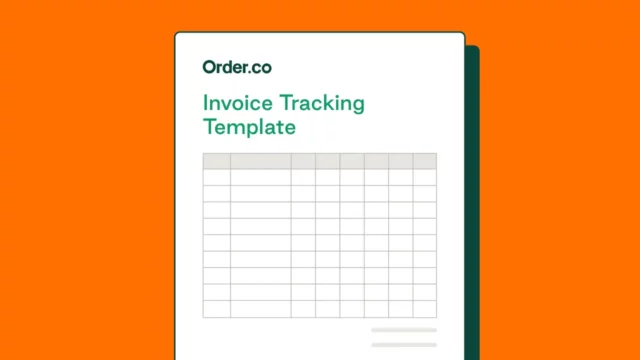
Invoice Tracking Template
Download the invoice tracking template to avoid costly mistakes, clarify financial patterns, and track spending throughout the year.
The top 5 impacts of manual invoice management
The effects of manual invoice management go beyond wasted time. The process can present a host of negative impacts for organizations. These are the five most damaging outcomes of manual invoice management:
1. Poor visibility: Manual invoice processing relies on outdated data collection methods like spreadsheets or homegrown tracking software. These manual organization methods offer no options to search through or contextualize data dynamically. This creates data silos that rob decision-makers of valuable information for future planning and analysis.
2. Frequent errors: Everyone makes mistakes, and overwhelmed AP staff are no exception. Manual entry creates an average exception rate of up to 23 percent, with errors requiring research and remedy — if they’re even detected. Over time, such frequent exceptions add up to considerable wasted hours and lost revenue.
3. Slower processing: AP clerks can only type so fast, and even skilled clerks can only process an average of 5 invoices per hour. For companies generating thousands of monthly invoices, the headcount required to process everything promptly is prohibitive.
4. Higher processing costs: It’s expensive to perform manual data entry, with higher costs coming from a variety of places, including:
- Increased labor cost
- Late payment fees
- Invoice exception costs
5. No scalability: The most pervasive problem with manual processing is the lack of scalability. With only so many people to process invoices, manual entry issues worsen over time. For growth-minded companies, scalable systems are the key to success. That’s hard to accomplish if your AP team is treading water or falling behind. AP automation can keep up with your company no matter how fast you scale.
What does good invoice management look like?
Manual invoicing can seriously weigh down the finance department. Fortunately, there’s a better way. Automated invoice processing software converts invoice management from a days-long, high-touch process to an instantaneous, touchless event. It streamlines every invoice batching, matching, and processing step to reconcile thousands of invoices per hour.
Here’s how automated invoice processing works:
- Batching/receipt: Invoices flow into the organization from one of several channels (mail, email, or e-invoicing). Optical character recognition (OCR) scanners batch and digitize paper invoices, integrating invoice data. Email and electronic billing information go into the system automatically for validation and processing.
- Reconciliation and matching: Formerly tedious processes such as invoice reconciliation and three-way matching between the purchase order, invoice, and purchase requisition happen automatically. These processes occur within the system during invoice processing, eliminating the need to manually check vendor payments against spreadsheets.
- Approval: Invoice approval is automatically routed through approval workflows so any relevant stakeholders (for instance, Finance or Procurement) can sign off. The entire process happens within the system, eliminating the need for back-and-forth communication that would otherwise slow things down.
- Payment: Using an integrated electronic payment method linked directly to accounting systems, the platform approves the invoice and issues an electronic payment directly to the supplier. This enables cost savings through early payment discounts.
- Reporting and archiving: All centralized data is available for real-time reporting and analysis. AP or other stakeholders can dynamically search for information by time period, vendor, category, department, or other criteria.
Invoice management software can help you achieve all this and more. The best platforms can also help consolidate billing and payment into a single, automated event, saving AP hundreds of hours of work researching and paying vendors. Instead, a single click pays them all.
Invoice Tracking Template
Download the invoice tracking template to avoid costly mistakes, clarify financial patterns, and track spending throughout the year.
"*" indicates required fields
Real-life examples of effective invoice management
Cutting down on the number of invoices your company processes saves your team and business time and money. With consolidated invoices, a company can reduce monthly invoices from hundreds or thousands to just a few — or even pay just one bill a month.
Let’s look at some real-life examples of how consolidated invoicing and proper invoice management drastically increase the productivity of finance teams and foster companies' exponential growth.
ZeroCater gets better process efficiency
ZeroCater discovered the time and money it could save using consolidated invoices and efficient invoice management.
Once describing invoice management as “the bane of my existence,” IT and Operations Director Keith now credits Order.co with lightening his workload, freeing up time for more valuable tasks.
They receive 50x fewer invoices, cutting monthly invoices from 200 down to three or four. What used to take two full business days every month to reconcile and pay invoices is now accomplished with a single click.
Clinton Management gets payments under control
Getting a call from a vendor who says your payment is late is just awkward.
Clinton Management, a property management company based out of New York, suffered from this exact problem. Its team was trying to manage hundreds of separate invoices, which led to backlogs and overdue payments. By consolidating invoices and keeping track of payments, the company became the gold standard for both property and invoice management.
“Our vendors aren’t calling to ask where their payments are anymore,” explains Purchasing Manager Nadia Nizam. When you consolidate all your invoices into one, paper stacks go away, and you can see exactly whom you owe and ensure they are paid on time.
3 Invoice management tools to consider for 2026
The right tool is one of the biggest differentiators in launching a successful digital invoice management process. Platforms with a host of features provide flexibility and performance so that you can build a system tailored to your business.
Order.co offers one of the most comprehensive invoice and procurement management platforms on the market, giving companies of every size access to streamlined processes and total visibility.
Order.co
Order.co makes invoice management automated and simple. It provides a single space for matching, approving, processing, GL coding, and paying all invoices within the organization, even across locations.
The platform offers invoice processing features that let you pull valuable data from your accounts. You’ll always know the details of an invoice, which will always tie to a purchase through the system. While offering a granular view of your payables activity, the system also allows you to pay all your vendors efficiently for timely settlement.
Procure-to-pay software lets your staff get the preferred items they need through approved channels while offering approvals for spend control and reporting tools to identify invoicing trends.
Top features:
- Invoice consolidation that lets users pay multiple invoices, even across vendors
- Dynamic budget guidance by user, location, department, product type, and more
- Streamlined approvals to keep the invoice and payment process moving forward
Pros:
- Order.co makes invoice management part of the total procure-to-pay process within one powerful platform.
- The platform automates invoice collection, matching, reconciliation, and payment.
- Consolidated payments give businesses the power to pay multiple invoices across vendors with a single click.
Cons:
- Some limitations on reporting, though the development team responds swiftly to requests for needed functionality.
- Order.co does not support OCR, but the platform eliminates the need to manually batch invoice information.
Best for: Order.co is great for companies of all sizes.
Spendesk
Spendesk provides tools to streamline the invoice process. The system makes it easy to make purchases, track approvals, and monitor spending through reporting. It also offers real-time budget management features to prevent surprises at the end of the fiscal year
Top features:
- Streamlined month-end close
- Invoice processing
- Zero-cost setup
Pros:
- The app-based interface makes it quick and easy to upload invoices.
- Real-time budget management helps Finance see spend as it happens.
- Automated receipt matching enables easier end-of-month close.
Cons:
- The upload feature for certain images doesn’t always harvest information accurately.
- Spendesk isn’t intended for small businesses or solopreneurs. It’s a mid-market tool meant for larger, more mature finance teams.
Best for: Spendesk primarily serves the mid-market.
Stampli
Stampli is an AP management and invoice processing software designed to streamline and simplify accounting workflows. It features a user-friendly interface that employs AI to seamlessly adapt the program to your enterprise resource planning (ERP) systems. Billy the Bot, Stampli’s AI and machine learning technology, learns the organization’s current AP processes for invoice capture, coding, and approvals.
Top features:
- AI-enhanced processes
- Mobile app capabilities
- Easy integration with the existing stack
Pros
- According to online user reports, Stampli delivers good value for the money.
- Its user-friendly design makes it easy to process and pay for invoices.
- It provides AI-enhanced and OCR-based invoice capture with some GL coding options.
Cons
- Filtering out duplicate invoices with Stampli can be challenging, leading to confusion and data accuracy and visibility complications.
- Deleting duplicate or incorrect invoices from the system takes time and research.
Best for: Stampli primarily serves the mid-market.
Free yourself from invoice management with Order.co
Establishing a good invoice management process is essential to scaling your business. Without it, you’ll be stuck in the vicious cycle of invoice overload with no clear way out. If your company is looking to tighten up its invoice management system (and let its finance teams sleep better at night), we’re here to help.
Order.co consolidates your invoices and automates many manual processes that bog down invoice management. The platform centralizes invoice management and brings you a competitive advantage. Never again will you ask, “Where did I put that invoice?” or “Did I pay that vendor yet?”
Order.co’s invoice automation features help some of the world’s fastest-growing companies streamline their invoicing and payment processes. Reduce manual entry, increase productivity, improve invoice management, and consolidate payments, all within one robust automation software tool.
Schedule a demo to see exactly what Order.co can do for your business.
Get started
Schedule a demo to see how Order.co can simplify buying for your business.
"*" indicates required fields
As one of the biggest sources of liabilities on the balance sheet, accounts payable accruals can spur your company’s growth—or hobble it. Accurately tracking and maintaining your accounts payable balance prevents cash underruns, unwanted fees, and friction in your procurement process, all of which destroy progress.
Finance's accounting method may also impact the accuracy and stability of your financial reporting. For example, since it's straightforward, many small businesses and startups run financials using the cash basis of accounting. But as a business becomes more complex, a more accurate and compliant accrual method of accounting is preferred.
In this article, we’ll discuss the accrual method of accounting and the importance of accounts payable accruals in maintaining stable and accurate financials for your business. By the end of this article, you’ll understand:
- Cash versus accrual basis of accounting
- The importance of accruals to your accounts payable reporting
- Tips on managing accounts payable accruals
- How procurement software helps maintain accurate AP accruals
First, let’s clarify the difference between cash and accrual basis of accounting.
Summary:
- Accrual accounting provides a comprehensive, real-time understanding of your organization’s financial position and obligations.
- Accurate accounts payable accruals require thorough invoice verification, order matching, and diligent month-end review.
- Segregating duties and closely monitoring large or new vendor transactions strengthens fraud prevention in procurement.
- Leveraging solutions like Order.co enhances AP workflow efficiency, ensures data accuracy, and centralizes procurement information for streamlined reconciliation.
Download the free tool: AP Ledger Template
Accounting methods and terms explained
In its simplest form, accounting is the process of recording the money a company makes and spends.
- Money made (from any source) is called revenue. Revenue is the gross income a business makes before it subtracts expenses.
- Money spent (for any purpose) is called an expense. A company generates expenses for overhead (general business costs), wages, materials, and production.
There are two methods an accountant or CPA uses to record the money coming into and out of a business. These are called the cash basis of accounting and the accrual basis of accounting.
The cash basis of accounting works as follows:
- When you receive money, you record it as revenue.
- When you spend money, you record it as an expense.
While this is a simple way of looking at financials, the cash basis isn't accurate enough for businesses with more complex financial activity. Cash basis accounting does not meet the standard for Generally Accepted Accounting Principles (GAAP) or International Financial Reporting Standards (IFRS).
These businesses use the accrual basis of accounting:
- Income is recognized when earned. This may or may not be when you are paid. For instance, you might receive payment via a yearly contract with quarterly retainer payments.
- Expenses are recognized when they are incurred. This may or may not be when you pay the invoice. For instance, you may order inventory on credit to be delivered later.

AP Ledger Template
An accounts payable ledger template makes it easy to track purchases and ensure timely payments. Download your free template for Excel or Google Sheets here.
Why should you use the accrual basis of accounting?
The reality of business transactions is that bills aren’t always paid as soon as services are rendered or products are delivered. But a large bill to be paid later still affects your company’s financial picture.
Cash basis accounting records a change only when the bill is paid. With accrual accounting, revenue and expenses are recorded when they occur—rather than when payment is made.
Even if a short-term liability isn’t due to be paid for 60, 90, or 180 days, it still appears on your balance sheet as a liability, so you know it’s on the horizon.
This gives you a clearer picture of your accounting. But it also makes things a little more confusing and requires extra bookkeeping.
In accruals basis accounting, you must reconcile credit and debit information for accounts receivable (revenue) and accounts payable (expenses) at the end of the accounting period.
Adjust the balance sheet when payment is made to ensure it matches what was previously recorded by creating a journal entry to adjust the general ledger (GL). These adjustments are called accruals.
Tips on managing accounts payable accruals
To understand accounts payable accruals further, let’s focus on expenses recorded under the accrual method.
Some of these are consistent, ongoing expenses. The cost of utilities and upcoming employee wages are examples of these expenses.
Goods or services provided by a third-party supplier may also be consistent and ongoing, but these are accounts payable accruals. Accounts payable refers specifically to short-term debts (those repayable within 12 months) owed to vendors. This differs from notes payable, which refers to long-term debts whose payment occurs over a longer period.
Like accrued liabilities such as loan payments and wages, accounts payable count as current liabilities. But often, these payments are harder to track and reconcile than recurring, predictable expenses like payroll or loan payments. Developing an effective strategy for these is essential to avoid running afoul of financial regulations.
Let’s look at how a business can take steps to improve the accuracy of its accounting.
1. Verify the accrual invoice, vendor, and goods
Accuracy and timely delivery of orders are essential to maintaining strong financial performance. When ordering supplies, services, or products, it’s important for purchasing and AP departments to verify and reconcile the goods delivered against the goods ordered.
This process is called three-way matching. It verifies that the purchase order, invoice, and receipt of goods (sometimes called a bill of lading) all match—including price, terms, item quantity, and item quality.
2. Increase scrutiny on large orders and unknown vendors
When working with or processing invoices from a new or unknown vendor, take time to verify that the invoice is tied to an actual order that has been received, accepted, and reconciled. Not only does this increase the accuracy of your financial statements, but it also detects and prevents procurement fraud.
Another way to prevent fraudulent activity is to segregate reconciliation duties in your organization. Different employees should review accrued expenses, adjust entries, reconcile orders, and verify vendor information. An accounts payable audit program improves accuracy and dissuades bad actors from perpetrating fraud.
3. Make review part of month-end close activities
Month-end closing is vital to the financial health of your organization. A robust month-end close process covers all the bases with your vendors and short-term liabilities. Reviewing your cash accounts and accurately reconciling AP and AR accruals is key to a smooth month-end close. This practice ensures the numbers accurately reflect your current financial position.
- A robust month-end close process reduces the time-to-close, saving money and allowing AP teams to focus on other high-priority activities.
- Accurate month-end closing figures translate to strong and accurate financial statements.
- Accurate financial statements empower business growth through stabilized cash flow, access to loans, and attractiveness to potential investors.
AP Ledger Template
An accounts payable ledger template makes it easy to track purchases and ensure timely payments. Download your free template for Excel or Google Sheets here.
"*" indicates required fields
How Order.co manages AP accruals
The accuracy of your company’s income statement, balance sheet, and cash flow statement relies on accurately keeping track of your short-term liabilities. If you don’t properly track and reconcile expenses, your end-of-the-year financial outlook will not accurately reflect how your business performed.
Procurement software automates that workflow and removes human error. Using Order.co to automate and streamline purchasing:
- Enables automatic approval, purchase order, and three-way matching workflows to ensure accuracy of purchases and payments
- Reduces human error and procurement fraud that damage financial performance
- Creates an accurate record of your purchase history, spend management, and procurement reporting for future analysis
- Centralizes data used for reconciliation and financial reporting at month end
Would you like to learn more about using procurement software to make managing accounts payable accruals easier? Schedule a demo of Order.co today.
FAQs
Get started
Schedule a demo to see how Order.co can simplify buying for your business.
"*" indicates required fields
The goal of a Finance team
When it comes to the word "Finance", most people—and some companies, as well— get overwhelmed. They think of complicated spreadsheets, calculations, budgets, you name it. And, the truth of the matter is, that can certainly be the case. But, for the sake of simplicity, let's break the role of your Finance team down to the brass tacks: the main function of a high-performing Finance team is planning for future growth. The way your Finance team can truly add value to your company is if they are able to access cash flow, identify financial strengths and weaknesses, and set your company up for growth and success in the future.
The problem with many Finance teams today is that they aren't able to plan for the future when they are stuck doing mundane tasks that can easily be automated. Companies want to grow, but their Finance teams are stuck doing tasks that chip hours away from their work every week—making strategic planning close to impossible. It's a classic Catch 22 of the Finance world, and we can to put a stop to it. We're here for two reasons, and two reasons only:
1.) To help your Finance team automate daily tasks
2.) To save your company time and money by allowing time to strategize growth
Let's go over 4 grueling, time-consuming tasks your Finance team probably hates doing, and learn how to automate them so your Finance team can get back to what you're really paying them to do: grow your business.
Grueling Task #1: Purchase Approvals
What happens if you give a teenager a credit card and send them to the mall? Rhetorical question. However, that is exactly how some companies run their purchasing process. Managers and employees with purchasing privileges are allowed to, in many cases, buy whatever they want—without them having to be approved by upper management. As a result, each month, companies get overloaded with invoices from purchases that they not only didn’t approve of, but that they didn’t budget for.
This creates what is called “rogue spend” or “maverick spend”—companies spending more than what is allotted for product purchases; the small purchases add up, and companies have no choice but to pay the “surprise” invoices.
And, the thing is, not even big, powerhouse companies are immune to a lack of an approval workflow and spend control. CorePower Yoga, before gaining full control over their finances and growing into a nationally recognized fitness brand, were spending upwards of $50,000 in unapproved spend every month—an issue that, put lightly, was “causing the Finance team a ton of headaches.”
How can I get my company to stop buying unapproved products?
It’s a simple solution—a one-click solution, in fact. Centralize your company’s purchasing process on a platform that allows you to “Accept”, “Reject”, or suggest a more cost-effective solution with a click of a button. Schedule a demo with Order today, and never spend another dollar without approval.
Grueling Task #2: Spend Analysis
Truth: Spend Analysis is a critical process if you want to grow your company.
Also truth: Many companies have no idea what they are spending.
Spend analysis and total spend control have essentially become a Holy Grail for some companies. They want it, they know they need to have it, but it is very difficult for them to achieve. For Finance teams in particular, spend control and strategic growth is an absolute priority. That being said, why is it so difficult for companies to have spend control and do proper spend analysis?
Truthfully, it all comes down to organization.
Many companies simply do not have an organized purchasing process. Without organized approvals, a transparent order process, and centralized payment system, it is impossible to know exactly what your company is spending at any given time. Order’s bi-monthly spend reports give companies like Elliott Physical Therapy the ability to look at how much they have spent, how much they have saved, and they can pace themselves in making smarter, more-informed business decisions. Finance Director for Elliot PT Caroline Dodero states that “having full visibility into each clinic helps [growth] tremendously.”
How can my Finance team keep track of our spending?
The best way for your Finance team to track spend: use a purchasing platform that gives you line-level, real-time spend visibility. Schedule a demo with Order today and stay on top of every dollar your company spends.
Grueling Task #3: Invoice Management
Your Finance team is supposed to strategically plan for the future—plain and simple. However, that’s not always what your team actually ends up doing. Aside from having to look at numbers all day, there is one thing that Finance teams have to do that is less than ideal: clean up messes.
Now, we’re not talking about the mess at your office’s coffee station. We’re talking about the messy stacks of invoices that are constantly coming in as though you worked at a Kinkos; so many invoices that your entire Finance team wastes hours and hours of their day by trying to organize vendor invoices and asking themselves: “Where did this invoice come from? Was this in our budget?”
If this sounds like your finance team, trust us, you’re not alone.
Finance and accounting teams spend hours shuffling through hundreds of receipts to make sure every product and purchase is accounted for. If you’re trying to open new stores and grow your business, your invoice overload may be 10x worse.
So, when we say “Invoice Management”, what does that mean? Well, good vendor management is when a company is able to pay all of their hundreds of invoices on time. Superior invoice management is only having to pay one invoice—with all of your purchases—once a month. When your finance team only has to pay one invoice every month instead of spending valuable time sorting stacks, it gives them more time to do other, more important things like planning for your company’s future.
How can my Finance team have better vendor management?
Only use one vendor of record. Pay all of your vendors in one monthly invoice—saving your Finance team the headache of hundreds of messy invoices every month. See Order in action today.
Grueling Task #4: Strategic Sourcing
A.K.A: keeping up with the constant pressures to cut costs and save as much money on products as possible. Nobody likes having to price shop; in fact, having your finance teams spending hours every week searching for the best prices on products could actually end up costing your company a lot more than they end up “saving” the company in the long-run.
Strategic sourcing, for many companies, is a bottleneck for not only the productivity of the Finance team, but for the company’s overall growth. Clinton Management, a New York City based property management company, had this exact realization; small purchases were adding up, and they had no idea where to start in order to find the best deals on products and services they used every day. Purchasing Manager Nadia Nizam explains, “We needed to find a way to save money wherever we could. Order finds us savings for all of our office supplies”—saving Clinton Management an average of $1,200 on products every month.
A simple and automatic strategic sourcing process is make or break for companies; the time and money savings of strategic sourcing can be used to give your Finance team more time to focus on how to reinvest that money for future growth. Whether you’re looking for the best prices on office tissues or laptops for the office, it helps to have all of the price-shopping done for you.
How your Finance team can find the best prices on products
Automate your strategic sourcing; utilize Order’s product substitution feature—suggesting high-quality products that are similar to those in your cart at checkout and save an average of 8% on your product purchases annually. Get started and save thousands—in one click.
There’s a lot of growing going on in the cannabis industry—and it’s not just the plants.
In the United States alone, the cannabis industry has only a very recent history with legalization. But, let’s face it: Marijuana has been popular far longer than it's been legal. Since its recreational legalization in Colorado and Washington in 2012, the cannabis industry has been growing like a weed—literally.
However, even today, getting a cannabis company off the ground comes with many different challenges. Regulations, licensing, competition, you name it. The cannabis industry is a promising one, but there are many hoops to jump through if you want to take your cannabis company from one or two backyard plants and grow into a multi-state cannabis powerhouse.
Of course, with great challenges, come great opportunities for cannabis.
Recent trends in the cannabis industry show that the many different uses for cannabis products are being not only normalized, but endorsed. This means an increase in sales, popularity, industry education, and—inevitably—competition. As more and more cannabis companies work to take advantage of the emerging market, the industry's weaknesses begin to reveal themselves.
At no fault of their own, cannabis companies are experiencing growing pains that many other industries don’t have to endure, and here are a few of them:

How Centralized Purchasing Saves Cannabis Businesses Time and Money
Learn how to grow your cannabis company faster and more efficiently by streamlining your purchasing process.
Cannabis problem #1: Industry biases
Let’s face it: the biases against the cannabis industry are very real—socially, politically, and economically—even in 2021. A growing cannabis company, just like every other company, needs everyday products like computers, light fixtures, cleaning supplies, and office supplies. However, it's harder for some cannabis companies to easily access these products due to limited opportunities of partnerships—financially and commercially.
Businesses, product vendors, banks, and many different institutions refuse to work with cannabis companies for a number of reasons. Sure, the volatility of a new, highly regulated market may scare some businesses away from partnering with cannabis companies. However, to be frank, many businesses don’t want to be associated with cannabis companies because the industry itself isn’t “socially acceptable”—to their standards.
Vendors refuse to have relationships with cannabis companies due to the infancy and controversy of the industry; cannabis companies are struggling to grow because they don’t have strong vendor relationships due to the infancy and controversy of the industry. A catch 22 of the 21st century.
How to overcome cannabis industry biases
Purchase your cannabis company’s products through a reliable, centralized, and cannabis-friendly purchasing platform that “revolutionizes” your cannabis company’s growth—allowing for “almost instantaneous” expansion. All the vendors you need to grow your cannabis company—in one place.

Q&A with Grasshopper Farms CEO on Streamlining Cannabis Operations
Discover how the CEO & Founder of a decentralized MSO overcame cannabis industry bias and secured financing.
Cannabis problem #2: Unequal payment terms
As mentioned above, institutions—such as banks—do not offer cannabis companies the same accounting terms as they do companies in other industries for fear of financial risks and legal prosecutions. By receiving extended payment terms, such as Net 30, companies are able to have more cash on hand to strategize for growth as opposed to paying for bills and products immediately.
We are able to split up our bigger bills and better forecast our payments. Instead of having a $300,000 bill at once, we can split up our payments so that they are easier to manage. -Neil Hesse, High Level Health
With Net 30 payment terms being unavailable to the cannabis industry, cannabis companies can kiss the idea of having cash on hand to execute growth plans goodbye. That is, of course, unless cannabis companies can get Net 30 terms—without a banknote.
How to overcome unequal payment terms in the cannabis industry
Partner with a platform that allows you to have more cash on hand to make smarter business decisions. “Forecast payments” with a purchasing system that grants your cannabis company Net 30 terms to execute growth plans in a highly restrictive, yet promising market.
Cannabis problem #3: Disorganized operations
Organizing operations processes—from purchasing products to organizing invoices to making sure those payments are made on time—is a challenge for any new industry. It is especially a challenge for the cannabis industry because the cannabis industry itself can feel like the “Wild West” in some respects. It’s a contradiction really: a highly regulated industry that feels almost as though there are no established, efficient practices for cannabis companies to follow in order to grow.
To touch on one operations issue in particular, invoice control for cannabis companies seems to be a constant issue. High Level Health, before consolidating their hundreds of invoices into one monthly invoice, had no approval process for their purchases and were struggling to manage both their time and payments by trying to organize and pay over 400 invoices every month. A decentralized payment process took away from High Level Health focusing on doing what they were best at: growing—both their plants and their business.
Hundreds of invoices across all High Level Health locations—consolidated into one monthly invoice.
How to Overcome Disorganized Operations in the Cannabis Industry
Consolidate your monthly invoices into just one monthly invoice. With a centralized payment process across all of your locations, your cannabis company can “focus on making [your] business better, and not have to focus on a tedious payment process.”
The Bottom Line for Cannabis Companies
The potential for the cannabis industry is exciting; partner with a purchasing platform that specializes in helping you grow your cannabis company. Pay one monthly invoice across all locations. Take advantage of Net 30 terms to invest in your growth—not bank interest rates. Partner with a vendor that supports you, your cannabis company’s growth, and this budding industry.
All of your purchases. All of your payments. All on one platform. Ready to take your cannabis company to the next level? Schedule a demo with Order.co today!
Get started
Schedule a demo to see how Order.co can simplifying buying for your business
"*" indicates required fields
The global fitness industry took a hit in 2020; however, even amidst the astonishing list of statistics that shows the true wake of the pandemic on the fitness industry, there are still signs that the fitness industry will continue to grow in the years to come.
Now, it’s no secret that the fitness industry was one of the most hard hit industries from the COVID-19 pandemic, but the fact that it is still predicted to be one of the fastest growing industries in the world is a testament to the resilience and responsiveness of the industry, the people that work within it, and the innovations in fitness technology. With the global fitness industry being worth more than $96.7 billion, the potential for the industry is exciting, but the high-growth itself can present issues of its own.
The fitness industry is much more than selling gym memberships; it’s more than scheduling group spin classes. To those who run these businesses, they understand the logistics behind it all—it can be overwhelming. The truth is that these fitness companies are not alone. It turns out that purchasing, vendor payments, countless invoices, and controlling expenditures are common problems for fitness companies—even some of the biggest names in the industry.
We sat down with clients and fitness giants SoulCycle, [solidcore], and CorePower Yoga, and they have a few words of wisdom to pass down to other fitness companies looking to grow in the most sustainable, efficient way possible.

Fueling Your Fitness Business’s Growth with Centralized Purchasing
Major fitness businesses like CorePower Yoga, [solidcore], and SoulCycle have automated their purchasing process to drive sustainable growth. Read the eBook to learn how you can too.
Tip #1: Keep your vendor accounts organized
Like we said before, there’s a LOT more that goes into growing your fitness company than selling gym memberships. Gyms and fitness centers need a wide-array of supplies: equipment, office supplies, cleaning supplies, toilet paper, shampoo, towels, you name it. Too often, companies find themselves wasting hours and hours every week ordering these products because they have too many sites to order from. Forgetting passwords, using expired credit cards, and ordering duplicates of products are just a few of the many consequences that come from having unorganized vendor lists in the fitness industry.
Even [solidcore], a national HIIT pilates gym and fitness brand, once experienced the stress of ordering from countless vendor platforms. Like many fitness companies, [solidcore]’s purchasing “was a mess” before using a centralized purchasing platform. An inside look on [solidcore]’s entire purchasing process revealed that they struggled with having “multiple user accounts on Amazon, and also used Wayfair and many third party vendors for wipes, cubbies, sweat bags, etc”; [solidcore] employees and managers were logging into accounts one at a time, sharing logins, and forgetting passwords. However, by using a platform that organizes all of their vendors in one place, [solidcore]’s entire purchasing process is “simpler, and [they] have the ability to see all of [their] spend on the product, location, and aggregate levels,” explains [solidcore]’s Charly Williams.
To say “unorganized” to describe many fitness companies’ purchasing process would be an understatement. So, what’s the best way to organize your company’s vendors? Keep them in one place.
Tip #2: Make sure you know how much you are spending—at all times
The best way to sustainably grow your fitness company? Know what you are spending. In fact, that’s a rule of thumb in any business. If you have no idea how much your company is spending on a monthly basis until the invoice comes in, sustainable growth is out of the question.
If this is you and your company, trust us—you’re not alone. SoulCycle, the indoor cycling fitness company, had this issue exactly. The spin class powerhouse revealed their biggest pain-points as they began to grow, and spend visibility was at the top of that list. Before using a centralized procurement platform, SoulCycle’s studios manually tracked company spend across all of their vendors to determine where they were in their monthly budgets—making for a “complicated” process to see exactly how much they were spending each month.
There are many reasons why spend visibility is important for a company’s growth, but for fitness companies in particular, just remember this: if you want to open more studios, open your books and make sure you know your numbers—down to every last cent. If you still don’t know what you’re spending because you have too many invoices or an overall disorganized purchasing process, look into using a platform that will track your spend for you.
Fueling Your Fitness Business’s Growth with Centralized Purchasing
Major fitness businesses like CorePower Yoga, [solidcore], and SoulCycle have automated their purchasing process to drive sustainable growth. Read the eBook to learn how you can too.
"*" indicates required fields
Tip #3: Make a budget...and stick to it
A natural consequence of not adhering to tip #2: spending more than you should. Seems pretty obvious, right? If you want to grow your business, don’t spend more than you’ve budgeted for. There are plenty of growth strategies for companies to use to expand quickly, but if there’s no line in the sand on budget, viable growth and long-term success is an impossibility.
Let’s use CorePower Yoga for example; the fitness industry behemoth once had “no process or system to manage spend for each of [their] locations. Each location was making their own spend decisions and regularly going over budget,” says CorePower’s Facilities Management Specialist Stefanie Teintze. CorePower “had no visibility or control of spend, and invoice audits showed [they] were averaging close to $50k in unapproved spend monthly.” $50,000 in unapproved purchases—every month. Their budgets were essentially non-existent—given that they did not have enough visibility into their purchases to create one.
CorePower “had no visibility or control of spend, and invoice audits showed [they] were averaging close to $50k in unapproved spend monthly.”
Unfortunately, CorePower Yoga, before turning to a platform that gives them real-time spend visibility and budget updates, was not alone in spending more than they thought they were each month. Now, there are many different reasons why companies go over budget, but from what we’ve gathered, not knowing how much your company is spending consistently tops the list.
It’s pretty simple, really. If you want to grow your fitness company, you need to have a budget; in order to budget, you need to know what you’re spending.
A last word to the wise from CorePower Yoga
If you’re looking for one last piece of advice to help you take your fitness company to the next level, take it from Stefanie and “go for it!”
Get started
Schedule a demo to see how Order.co can simplifying buying for your business.
"*" indicates required fields