Punchout Catalogs Guide: Why They Matter for Procurement Teams

Punchout Catalogs Guide: Why They Matter for Procurement Teams
Static PDF catalogs and manual order forms slow teams down—and they go out of date fast. Punchout catalogs provide a powerful solution, offering a smarter and more efficient way to manage your procurement process while maintaining control and compliance.
This guide explains how you can use a punchout catalog to cut procurement costs and accelerate purchasing workflows. It also highlights common challenges and shows how to overcome them to ensure successful implementation.
Download the free ebook: The Procurement Strategy Playbook for Modern Businesses
What is a punchout catalog?
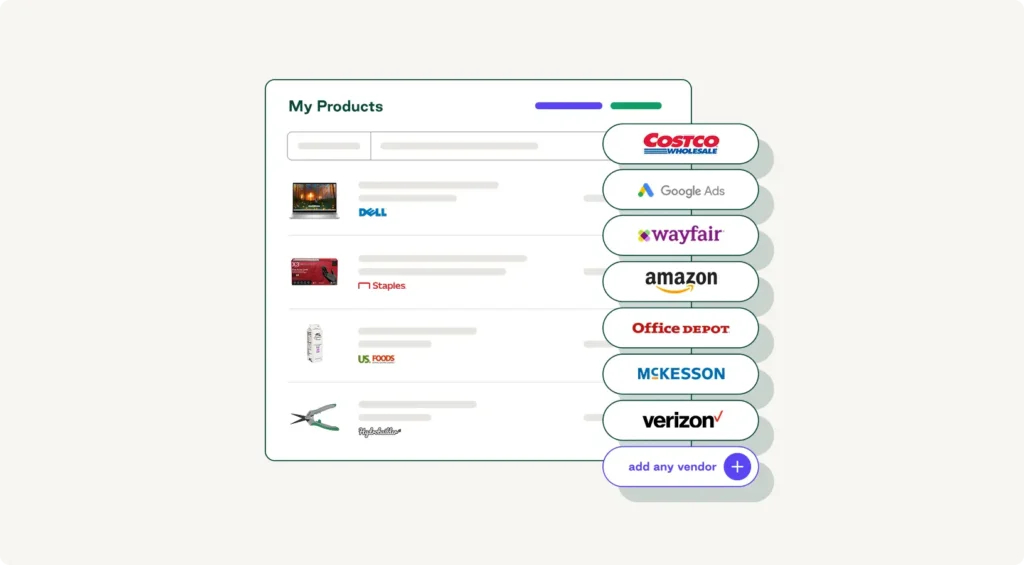
A punchout catalog is a dynamic procurement tool that allows buyers to access a supplier's real-time product catalog directly from within their own procurement system or ERP. Instead of maintaining static catalog files that quickly become outdated, users can "punch out" from their familiar procurement interface into the supplier's ecommerce site, select the catalog items they need, and send those selections back to their system for approval and purchase.
This eliminates the disconnect between what buyers see and what suppliers actually offer. With supplier punchout catalogs, procurement teams get instant access to current pricing, specific product availability, and contract-specific terms without leaving theirprocurement software environment.
Order.co makes this process simple by plugging directly into major ERPs, preventing the usual integration headaches. For example, a manufacturing company using NetSuite can connect to its industrial supply vendor's catalog in hours rather than weeks.
The Procurement Strategy Playbook for Modern Businesses
Want to know more about strategic buying? Read our Procurement Strategy Playbook for even more valuable insights.
How do punchout catalogs work in procurement systems?
Punchout catalogs function through a secure, standardized connection between yourprocurement system and supplier websites or ecommerce platforms. When you initiate a punchout session, you're temporarily taken to the supplier's catalog, where you can browse and select items before returning those selections to your procurement platform.
The punchout session flow
The standard punchout workflow follows a simple sequence:
- Initiation: You click the supplier's catalog link within your eprocurement system.
- Authentication: Your system sends a secure punchout request to the supplier.
- Browsing: You're redirected to the supplier's catalog with company-specific pricing already applied.
- Selection: You add items to the shopping cart within the supplier's system.
- Return: You click "Return to Procurement System" to package the cart contents.
- Transfer: The items you selected get transmitted as a pre-populated requisition.
- Approval: The requisition moves through your company's standard approval workflow.
This entire process typically takes just minutes and eliminates the need to manually re-enter product information, saving time and preventing costly mistakes.
Technical integrations and standards
Punchout catalogs rely on industry-standard protocols to ensure seamless communication. These include:
- cXML (Commerce eXtensible Markup Language): The most widely used standard for supporting complex procurement scenarios, including multi-level approval workflows
- OCI (Open Catalog Interface): Developed by SAP, this simpler protocol works well for straightforward catalog browsing
- OCI-Light: A more efficient version of OCI that reduces technical complexity for smaller suppliers
Order.co takes the complexity out of these standards with pre-built cXML adapters that work with major ERP and accounting platforms. The platform's step-by-step onboarding wizard guides IT teams through each field mapping and validation checkpoint—making the implementation process fast and simple.
What are the benefits of punchout catalogs for procurement teams?
Punchout catalogs deliver measurable improvements across procurement operations, from increasing cost savings to boosting user satisfaction. Research from Manutan shows that orders validated through electronic catalogs cost approximately $75, compared to $109 for standard transactions—demonstrating significant savings from process automation and reduced labor costs.
Real-time pricing and contract compliance
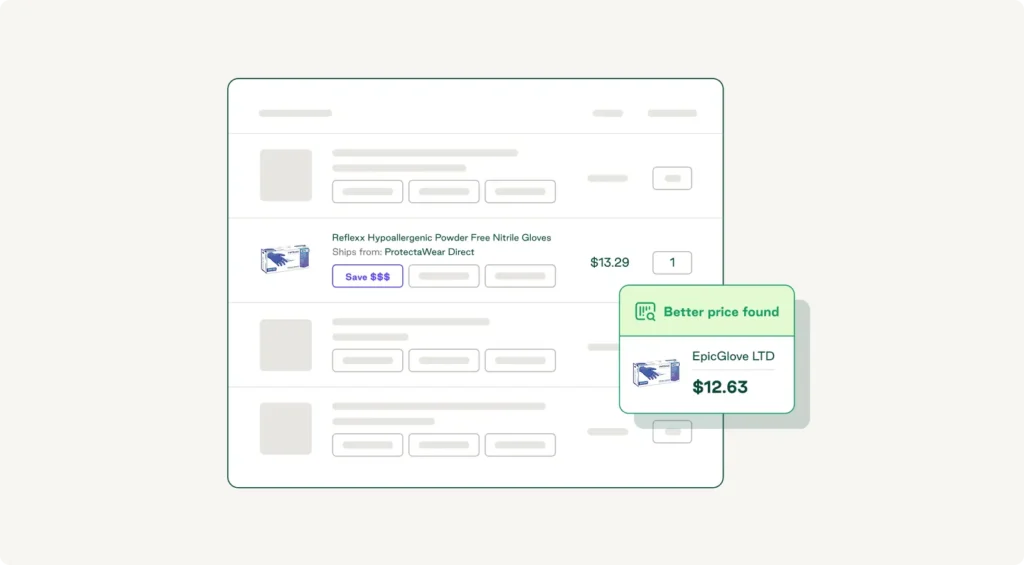
Two of the major benefits of punchout catalogs are automatic price accuracy and contract enforcement. When you access a punchout catalog, you see the exact pricing negotiated in your contract—without relying on outdated lists or manual verification.
Order.co's live price syncing ensures every product displays the current contracted rate, including volume discounts and special terms. The platform’s auto-enforced contract rules prevent unauthorized purchases by only showing items available under your agreement. This takes compliance off your plate while keeping budgets on track.
SUPLARI data shows that maverick spending can cost organizations 5–16% of negotiated savings each year. Automated contract compliance helps your team stick to on-contract purchases and protects those hard-earned savings.
Seamless user experience and reduced PO errors
Punchout catalogs optimize the buying process. They give you a familiar buying experience with access to rich, searchable supplier catalogs. Instead of toggling between multiple systems or calling suppliers for product details, they allow you to browse intuitive interfaces with product images and detailed specifications.
This improved experience directly translates to fewer errors. Selecting items straight from your supplier's system means you're choosing from current SKUs with accurate descriptions. The automatic transfer of this data eliminates manual transcription—one of the biggest sources of purchase order errors.
Automated catalog updates and version control
Traditional catalog management requires constant maintenance—updating prices, removing old products, and adding new items. Punchout catalogs put that work on the supplier so you always see the latest information. When they update a product or add something new, it appears instantly for you.
This is especially helpful as your business scales. Imagine managing 50 suppliers: Without punchout catalogs, you'd have to track and update 50 separate catalogs—a daunting task for even the most efficient procurement teams.
What challenges and considerations are associated with punchout catalogs?
Understanding potential punchout challenges can help you set your organization up for smooth implementation. Modern platforms like Order.co have developed solutions specifically designed to address these common obstacles.
Integration complexity and IT overhead
Traditional punchout setups can eat up a lot of IT resources. Each supplier connection usually needs custom configuration, protocol mapping, and extensive testing.
Order.co makes this easier with pre-built integrations for major accounting systems and ERPs. The platform includes native connectors for systems like NetSuite and Sage Intacct, typically eliminating the need for custom coding. Plus, a strategic partnership with Stormloop Technologies makes Workday procurement integration simple and straightforward.
Supplier onboarding and catalog maintenance
Getting suppliers ready for punchout can be difficult. Smaller suppliers may not have the technical know-how, while larger ones might have their own timelines.
Order.co simplifies supplier onboarding with templates, documentation, and dedicated support. The automated catalog refresh feature continuously monitors connected catalogs for updates, flagging significant changes for review. At the same time, role-based admin controls let you designate catalog owners within supplier organizations who can manage their content directly, reducing the burden on your procurement team.
Security and data governance
Punchout catalogs involve data exchange between systems, raising questions about security, privacy, and compliance.
Order.co applies best-in-class security throughout the punchout process. All connections use encrypted protocols (HTTPS/TLS), and authentication relies on secure tokens. The platform includes comprehensive audit logging that tracks every punchout session—critical for compliance in regulated industries. Granular permission controls also let you decide exactly which users can access each supplier catalog.
How to get started with punchout catalogs
Implementing punchout catalogs requires thoughtful planning, but the process is straightforward when you follow a structured approach. Success comes from selecting the right partners, establishing clear processes, and ensuring your team is prepared.
Select the right suppliers and catalog formats
Begin by identifying which suppliers will deliver the most value from punchout integration. Prioritize providers who represent significant spend, high transaction volumes, or complex product selections.
Then, evaluate each supplier's technical capabilities. Can they support cXML or OCI protocols? Suppliers with existing punchout capabilities will typically integrate faster and with fewer friction points.
Catalog complexity and update frequency also matter. Suppliers with large, dynamic catalogs (like office supplies or MRO items) benefit most from punchout connections, while those with small, static catalogs may be better suited for basic eprocurement solutions. Work with your vendor management team to communicate the business case to selected suppliers.
Establish clear governance and change-management processes
Once your suppliers are in place, it's time to define who owns the punchout program within your organization. Governance ensures punchout catalogs stay accurate, reliable, and aligned with your procurement workflows.
Create standard operating procedures for:
- Approving new punchout connections
- Resolving catalog content issues
- Handling punchout session errors
- Monitoring pricing accuracy
- Reviewing and approving catalog updates
To keep catalogs functioning smoothly, set expectations with suppliers around update frequency, data accuracy, and response times for technical issues. Clear accountability—internally and externally—prevents downtime and maintains user trust.
Ensure user training and support
After your governance processes are set, you need to ensure end users have the knowledge and tools to adopt punchout catalogs. Develop short, focused training materials that show them how to initiate a punchout session, navigate supplier catalogs, and handle errors. Create a simple FAQ and establish a clear support channel for punchout-related issues.
After launch, keep an eye on adoption metrics. If certain punchout catalogs see low usage, investigate whether technical issues, poor catalog design, or inadequate training are holding team members back.
The Procurement Strategy Playbook for Modern Businesses
Learn the key pillars of a strong strategy, valuable procurement metrics to track, and initiatives you can start implementing today.
"*" indicates required fields
Why Order.co is your ideal punchout catalog partner
Punchout catalogs represent a significant leap forward in procurement efficiency, giving you real-time accuracy, fewer errors, and a better user experience. Order.co is purpose-built to deliver exactly that, combining powerful punchout capabilities with an intuitive interface that procurement teams love.
While many legacy punchout catalog solutions demand extensive IT resources and constant upkeep, Order.co's modern architecture handles the technical complexity behind the scenes. Pre-built ERP integrations get you up and running quickly, and automated maintenance features keep those connections healthy without constant attention.
Order.co’s comprehensive approach to procurement modernization includes:
- Pre-built ERP connectors for Oracle NetSuite, Sage Intacct, Workday, and other major platforms
- Smart Checkout with stock visibility so buyers always see current inventory
- Automated catalog refresh to keep product info current
- Advanced payment integrations managed by Order.co's dedicated payments and integrations team
- Comprehensive analytics for clear visibility into spending patterns and supplier performance
- An intuitive user interface with advanced features for teams seeking a Procurify alternative with modern capabilities
Simplify your punchout catalog integrations with Order.co. Schedule a free demo today to unlock automated catalog updates, real-time compliance, and frictionless ERP connectivity.
FAQs
Get started
Schedule a demo to see how Order.co can simplify buying for your business.
"*" indicates required fields