Vendor Scorecards: How to Control Costs, Reduce Risk & Improve ROI

Vendor Scorecards: How to Control Costs, Reduce Risk & Improve ROI
Making vendor decisions based on gut instinct or anecdotal feedback can cost businesses real money. Without objective performance data, problems like inconsistent pricing, delivery issues, and compliance gaps often go unnoticed until they affect operations or surface during an audit.
Vendor scorecards help teams replace guesswork with measurable performance data. By tracking what happens across orders, deliveries, and invoices, they give finance and procurement teams a clearer way to evaluate suppliers and make better purchasing decisions.
This guide covers what to measure, when to start, and how to build and maintain a vendor scorecard program.
Vendor scorecard key takeaways
- Vendor scorecards replace subjective supplier evaluations with measurable performance data, giving finance and procurement teams a clearer view of cost, delivery reliability, and compliance.
- The most useful scorecards focus on metrics that match your business priorities, so teams can evaluate vendors against what matters most.
- Reviewing scorecards regularly helps teams hold vendors accountable, improve negotiations, and decide which supplier relationships are worth expanding or reevaluating.
- Platforms like Order.co help centralize purchasing and invoice data, making vendor scorecards easier to maintain and more accurate over time.
Download the free tool: Vendor Scorecard Template
What are vendor scorecards, and how do they work?
A vendor scorecard is a structured vendor management tool that helps businesses evaluate supplier performance using data from orders, deliveries, and invoices. Instead of relying on informal reviews, surveys, or anecdotal feedback, vendor scorecards track what actually happened across pricing, delivery reliability, quality, and compliance.
Teams use vendor scorecards to compare suppliers against the metrics that matter most to their business. For example, a company focused on cost control may prioritize price consistency and total cost of ownership, while a company focused on service may prioritize delivery reliability and order accuracy.
Vendors with the highest scores consistently meet the standards the business cares about most, whether that means delivering high-quality products, meeting pricing expectations, or following ethical business practices.
Why use a vendor scorecard?
Vendor scorecards help teams compare suppliers more consistently, reduce risk, and make better vendor decisions over time.
Key benefits of vendor scorecards include:
- Better cost control and lower risk: Scorecards help businesses compare vendor performance across price, compliance, and service levels to identify savings opportunities and reduce exposure to avoidable risk.
- More visibility for finance: Centralized performance data helps finance teams track cost trends and flag issues across locations without chasing down updates manually.
- More objective vendor decisions: Scorecards give teams a shared set of metrics, so vendor decisions rely on measurable outcomes instead of personal preference alone.
- Stronger vendor selection: Historical performance data helps teams compare suppliers more accurately and make better sourcing decisions over time.
- More productive supplier relationships: Clear performance data helps teams identify which vendors to grow with, which ones need corrective action, and which relationships may no longer make sense.
- Stronger contract negotiations: Historical pricing, service levels, and outcomes data give teams more leverage when renegotiating terms or addressing performance issues.
Vendor Scorecard Template
Download our free vendor scorecard to make objectively evaluating vendors easier.
When to use a vendor scorecard
Vendor scorecards work best when implemented early in vendor relationships and used consistently throughout the partnership lifecycle. They’re especially useful at key points when businesses need objective data to compare vendors, track performance, or address risk.
Common use cases include:
- When onboarding new vendors: Scorecards ensure teams set baseline metrics early in the relationship and confirm that the vendor can meet their most important performance standards.
- During regular performance reviews: Quarterly or annual scorecard reviews help teams track consistency over time and assess whether vendors still meet expectations or service-level commitments.
- Before contract renewals or negotiations: Historical performance data helps organizations decide whether to renew, renegotiate, or move on from a vendor. It also creates stronger leverage in supplier conversations.
- When risk or compliance concerns increase: Scorecards can highlight compliance gaps, service failures, or other signs of risk before they turn into bigger operational or audit issues.
- When a vendor starts underperforming: If delivery issues, pricing discrepancies, or invoice errors start piling up, a scorecard provides objective data to support corrective action.
- During strategic sourcing decisions: When comparing multiple vendors, scorecards help companies evaluate total value based on performance, not just price alone.
Review frequency should generally match vendor criticality and spend. Many teams review strategic or high-spend vendors quarterly and lower-priority vendors less often.
How do you create and implement a vendor scorecard (step by step)?
Building a vendor scorecard doesn’t require a team of analysts or an enterprise platform. The process comes down to five key steps that help you evaluate suppliers more consistently.
Step 1. Clarify your goals
Before tracking any metrics, define the outcomes that matter most to your business. Are you trying to reduce costs across locations, improve delivery reliability, or meet compliance requirements?
Your scorecard should connect directly to those goals to help you avoid tracking metrics that don’t actually influence decisions.
Step 2. Define what success looks like
Turn your goals into specific key performance indicators (KPIs). Each priority needs a measurable benchmark. If cost control matters most, you might track purchase price variance or total cost of ownership. If reliability is the priority, focus on on-time delivery and order accuracy.
Since KPIs that depend on manual tracking rarely hold up over time, choose metrics you can capture with your current data sources.
Step 3. Build a scoring system
Decide how you’ll rate vendor performance. Many teams use a simple three-tier system, such as meets expectations, needs improvement, or exceeds expectations. Others use numerical scales or color coding.
The format matters less than consistency. Everyone evaluating vendors should use the same scoring method and thresholds.
Step 4. Create a repeatable template
Set up a scorecard template for each review period. A simple spreadsheet often works well, especially at the start.
Include the vendor name, review period, KPIs, scores, and a place for notes or exceptions. Keep the format simple enough to update quickly and use consistently.
Step 5. Review and act on results
Look for patterns across vendors and review periods, not just one-off issues. Use the results to guide conversations about vendor expectations, corrective action, renewals, and future sourcing decisions. One poor score may be an outlier, but repeated underperformance usually signals a deeper issue.
Get stakeholder buy-in before you launch. Share the scorecard framework with your AP team, operations managers, and anyone else who regularly interacts with vendors. Their input on what to track and how to grade those items makes the program more accurate and more likely to stick.
What vendor performance metrics matter most?
Vendor performance metrics are the data points you track to measure how well a supplier meets expectations. They turn vague impressions into concrete data you can compare, trend over time, and use during renewals or negotiations.
The right metrics depend on what drives value in your business. A fast-growing restaurant group may care most about delivery speed and order accuracy, while a school system may prioritize contract compliance and consistent pricing.
Without clear metrics, vendor evaluation turns into guesswork. The right metrics create accountability on both sides by setting clear expectations for vendors and giving procurement teams the data to support tough conversations or recognize strong performance.
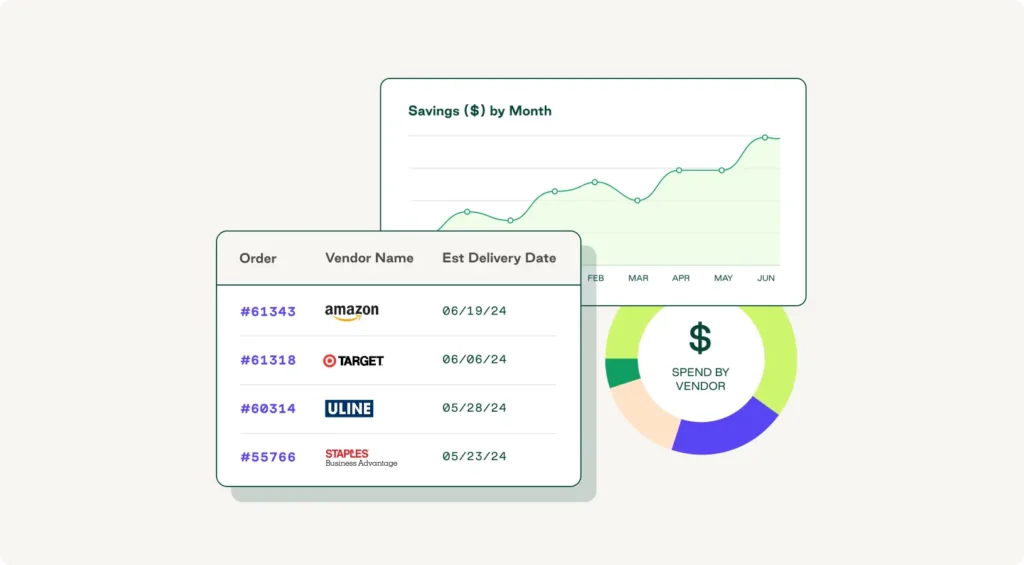
Start by defining what success looks like for each vendor category, then choose the metrics that best reflect those priorities. If margins are tight, cost metrics may carry more weight. If you’re scaling quickly, delivery reliability may matter more.
Most vendor scorecards include metrics from these core categories:
- Cost and pricing: Purchase price variance, total cost of ownership, volume discount compliance
- Delivery and fulfillment: On-time delivery rates, lead times, backorder frequency
- Product quality: Defect rates, return rates, replacement frequency
- Compliance: Contract adherence, regulatory compliance, SLA performance
- Responsiveness: Issue resolution time, communication quality, flexibility during exceptions
Focus on five to eight metrics that best show whether a vendor is helping or hurting your operations. Weight them according to your business priorities to avoid false trade-offs. For example, a vendor may deliver on time 98% of the time, but if they consistently miss pricing commitments, that performance may still fall short when cost control matters most.
Vendor Scorecard Template
Download our free vendor scorecard to make objectively evaluating vendors easier.
"*" indicates required fields
How do you run vendor scorecard reviews and drive improvement?
Start each review by gathering data for the period, including delivery records, invoice accuracy, pricing compliance, and any exceptions. Then look for trends over time, not just one-off results. A vendor that drops from 94% to 82% on-time delivery over three quarters may need a different response than one that has held steady at 82% for two years.
Once you have the results, share them directly with the vendor. Be specific about the metric, the target, and the gap. Clear feedback makes it easier to align on next steps and hold both sides accountable.
From there, use the scorecard in three ways:
- Guide contract decisions: Historical performance data gives teams a stronger footing during renewals and negotiations.
- Create improvement plans: If a vendor keeps missing expectations, document what needs to change, by when, and what happens if performance doesn't improve.
- Adjust oversight based on vendor importance: Strategic vendors may need more frequent reviews and deeper scorecards, while lower-risk vendors may only need basic tracking.
With Order.co, you can connect scorecard data to your procurement workflows. When delivery, pricing, and invoice data live in one place, you can spend less time pulling reports and more time acting on what the data shows.
How Order.co supports vendor scorecard programs
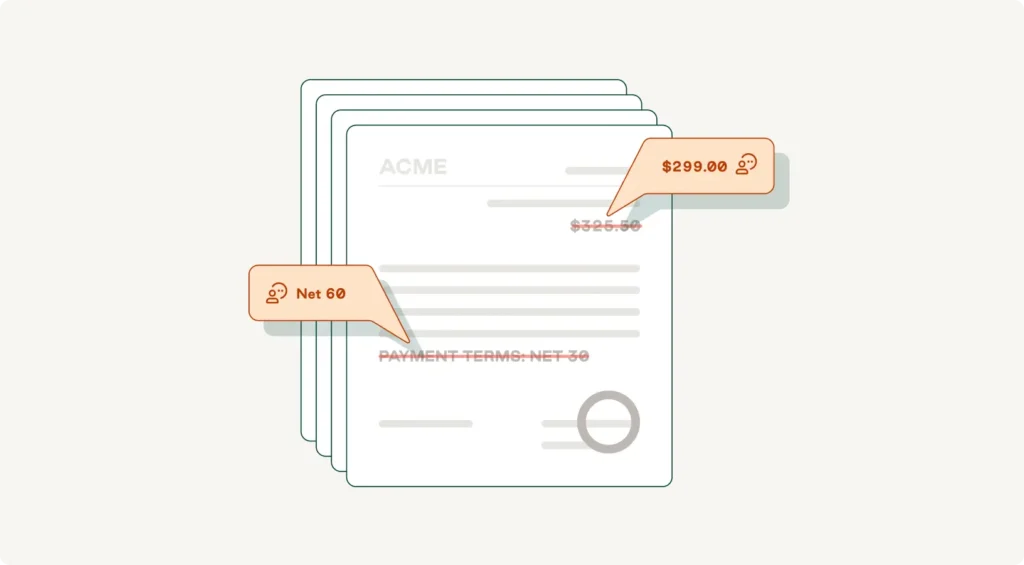
Vendor scorecards depend on reliable, centralized purchasing data. Order.co brings purchasing activity across vendors, locations, and categories into one platform, making it easier for finance and procurement teams to track supplier performance and maintain consistent scorecards.
Because orders placed through Order.co generate line-item purchasing data, you can more easily track the inputs scorecards rely on, including:
- Order details and fulfillment outcomes
- Pricing consistency and contract compliance
- Invoice discrepancies and exceptions
- Historical purchase trends across vendors and categories
This centralized data makes it easier to benchmark vendor performance, identify patterns over time, and bring concrete evidence into vendor reviews and negotiations.
If you’re building your first scorecard program, start with a vendor scorecard template, then use Order.co’s reporting and historical purchase data to simplify scorecard tracking.
Schedule a demo to see how Order.co helps teams build and maintain more effective vendor scorecards.
FAQs about vendor scorecards
Get started
Schedule a demo to see how Order.co can simplify buying for your business.
"*" indicates required fields