Purchasing Management: Processes, Systems, and Best Practices

Purchasing Management: Processes, Systems, and Best Practices
A vendor invoice arrives that nobody approved, a remote location ordered from a random supplier, and finance is still reconciling it three weeks later. The problem usually isn't a lack of policy. It's that policy lives in email threads and spreadsheets instead of the actual buying process.
Effective purchasing management is about embedding the right controls at the moment of purchase, so buying fast and adhering to purchasing policies aren’t in conflict.
Purchasing management key takeaways
- Purchasing management is the operational layer where procurement strategy becomes day-to-day buying decisions—covering intake, approvals, supplier selection, and order execution.
- Controls need to happen before spend occurs, not after invoices land in AP's inbox.
- The metrics that matter most are operational: approval compliance, PO accuracy, invoice matching rates, and cycle times.
- A vendor-agnostic purchasing system like Order.co lets you standardize workflows without disrupting existing supplier relationships.
Download the free guide: Spend Analysis Toolkit
What is purchasing management, and how does it differ from procurement?
Purchasing management governs how purchases actually happen, from the moment someone submits a request to the moment an order ships. It covers intake and approvals, supplier selection, PO creation, and order execution. It’s the execution layer where procurement strategy meets real-world buying decisions.
Procurement is the broader strategic function. It includes sourcing strategy, contract negotiation, supplier relationship management, and long-term category planning. Procurement sets the rules—purchasing management enforces them in daily workflows.
| Dimension | Procurement | Purchasing Management |
| Focus | Strategic planning and vendor relationships | Operational execution and daily buying decisions |
| Key Activities | Sourcing strategy, contract negotiation, supplier relationship management, category planning | Request intake, approvals, PO creation, order tracking, invoice matching |
| Example | Negotiate a preferred supplier agreement with a national vendor | Ensure remote locations actually use that vendor, follow the approval process, and create compliant POs |
| Timeframe | Long-term planning and optimization | Day-to-day transaction management |
| Control Point | Sets policies and establishes vendor relationships | Enforces policies at the point of purchase |
You can have excellent contracts and approved vendor lists, but if your team is still placing orders through email or personal credit cards, none of that strategic work translates into controlled spend. Effective purchasing management closes that gap by making the right way to buy the easiest.
Spend Analysis Toolkit
Unlock savings, improve supplier relationships, and make smarter procurement decisions with clearer spend insights. Download the ebook to get started.
How does the purchasing management process work?
The purchasing management process runs through three stages, where control either happens or falls apart. Controls need to happen before spend occurs, not after invoices arrive in AP's inbox.
1. Intake and approval
This is where purchasing management often breaks down. For example, someone may need to buy something right away, or their purchase is so small that going through the process feels too time-consuming.
To simply the buying process, the system should immediately answer three things: Is this purchase allowed? Does the budget exist? Who needs to approve it?
Effective intake means:
- Routing requests through the right approval chain based on amount, category, and department—automatically
- Running budget checks in real time, not days later when finance reviews the PO
- Enforcing policy compliance at the point of request, so approvers see clean requests instead of playing detective
- Ensuring high-quality ERP and accounting integrations that enable a seamless flow of data between systems
Email chains and spreadsheets create two problems: no audit trail (approvals get lost, context disappears) and no enforcement (employees bypass the process entirely).
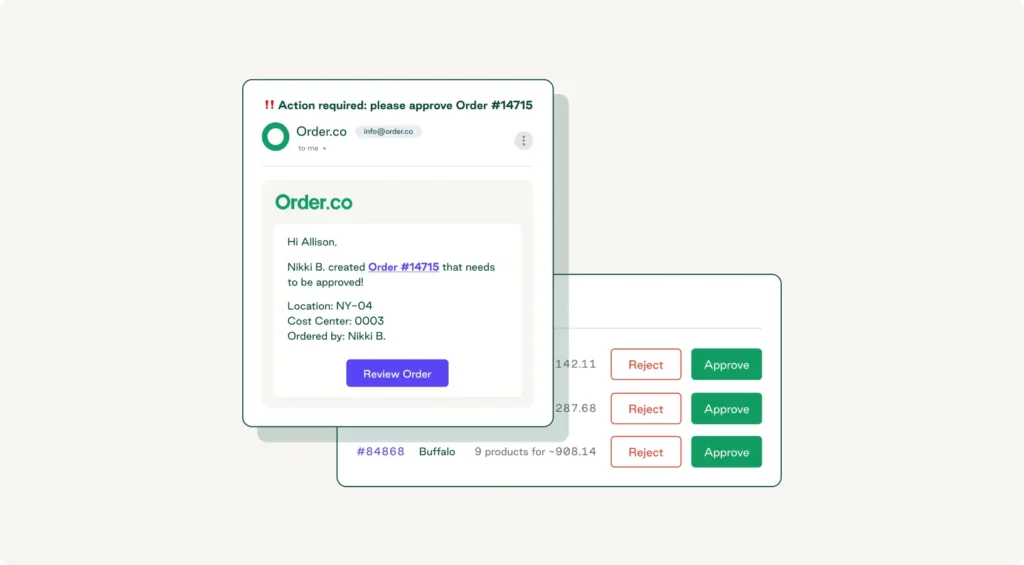
Platforms like Order.co route requests to the right approvers based on spend thresholds, GL codes, or vendor type, and block non-compliant purchases before they happen. When approval workflows are designed around how people actually work, compliance stops being a battle.
2. Supplier selection and negotiation
Once approved, purchasing management guides buyers toward the right supplier. The question isn't just which supplier is cheapest, it's which is actually the right choice once you factor in the cost of working with them.
Effective supplier selection starts with total cost of ownership (TCO): shipping costs, payment terms, minimum order quantities, and hidden costs like expedited freight, quality issues, and invoice discrepancies. When vendor information lives in someone's inbox, you lose pricing history, cannot track performance, and end up re-negotiating the same terms every quarter.
Supplier risk matters too. Single-source dependency, unreliable lead times, and supplier financial instability are the factors that turn a purchasing decision into an operational crisis—and they're rarely visible at the point of purchase unless your system surfaces them.
A purchasing management system centralizes supplier data, pricing, and lead times, enabling your team to make consistent decisions.
3. PO creation, changes, and order execution
With manual purchasing management, PO accuracy often depends on individual memory and attention to detail, leaving too much room for human error.
Effective purchase order management requires:
- Accurate PO creation that pulls from approved requisitions and locks in pricing and delivery terms
- Change management workflows that track revisions without version control chaos
- Supplier confirmations that close the loop before problems surface
- Expediting processes that don't fall through the cracks when orders are delayed
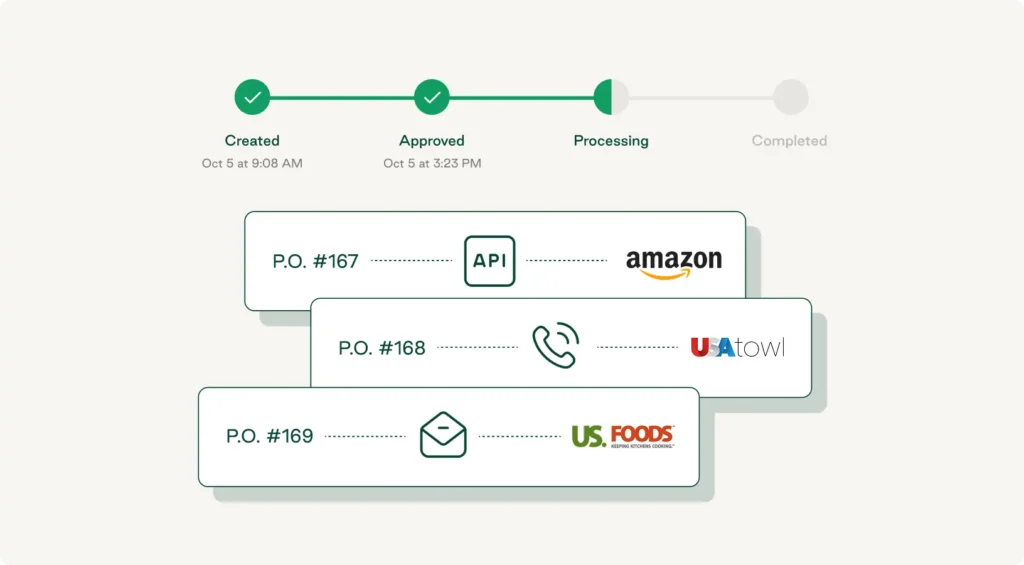
A purchase order management system automates PO creation from approved requests, tracks changes in real time, and ensures that what you ordered matches what gets invoiced, eliminating the three-way matching headaches that slow down AP.
How do you manage suppliers, pricing, and contracts in purchasing management?
Most teams struggle to manage vendors consistently across locations, categories, and buyers. Scattered spreadsheets and individual buyer relationships erode pricing leverage, obscure contract terms, and eliminate performance visibility. This fragmentation drives rogue spend and cripples finance operations.
Effective purchasing management centralizes vendor work across three areas:
- Consolidates pricing agreements, payment terms, and lead times so every buyer works from the same information
- Tracks negotiated rates and volume discounts so you actually capture them
- Monitors delivery times and order accuracy in real time instead of surfacing problems during month-end reconciliation
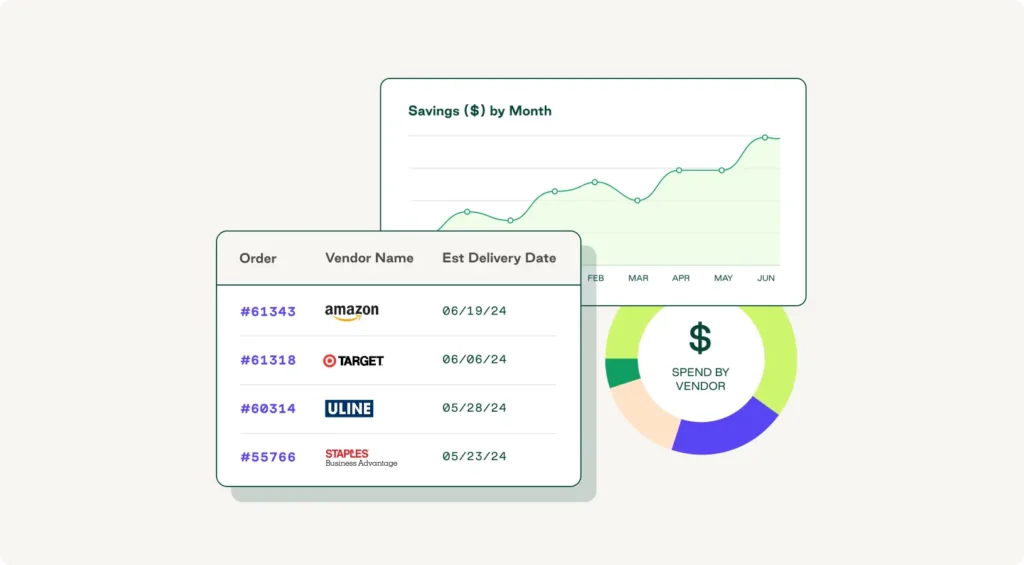
Procurement software platforms like Order.co surface approved vendors and contracted pricing at the point of purchase, making compliance automatic. The difference shows up in how much time your team spends chasing information versus making informed buying decisions.
Supplier performance management
Selecting a supplier is the easy part. The harder work is knowing, three months later, whether that decision was the right one. Most teams start with informal tracking: a spreadsheet of late deliveries or a few email threads about quality issues. That works until you're managing dozens of suppliers across multiple locations.
Scorecards bring performance data into one place, tracking metrics that matter: on-time delivery rates, order accuracy, invoice matching errors, and response times. The goal is to identify patterns early so you can address problems before they disrupt operations. ISM recommends a supplier score of four or below for critical items.
Two mechanisms turn performance data into action:
- Corrective actions: When a supplier consistently misses deadlines or ships incorrect items, a documented corrective action process lets you escalate formally rather than letting underperforming vendors stay in your rotation longer than they should.
- Preferred supplier programs: When vendors consistently hit their marks, preferred supplier programs formalize that relationship with priority status or faster payment terms, creating a feedback loop where good performance earns more business.
When performance data lives in one place, underperforming suppliers can’t hide in the gaps between locations, categories, and inboxes, and you gain the visibility to make decisions based on data, not guesswork.
How do you implement a purchasing management system?
Implementing a purchasing management system doesn't always require a massive IT project or months of change management. Start with the workflows that create the most friction today, usually approvals, vendor selection, and PO accuracy, and build from there.
Step 1: Map your current purchasing workflow
Begin by mapping your current purchasing workflow across locations and teams. Identify where requests get stuck, where rogue spend happens, and where finance loses visibility. This baseline shows you exactly where you need to implement control.
Step 2: Choose a vendor-agnostic system
Select a system that works with your existing vendor relationships rather than forcing you to rebuild them. Order.co is a vendor-agnostic procurement platform that lets you standardize purchasing workflows without disrupting the supplier relationships your operations teams rely on.
Step 3: Build approval workflows that match reality
Configure approval workflows that match how your team actually operates. If regional managers approve purchases under $5,000 but finance reviews anything above that threshold, your system should route requests automatically based on those rules. Embed policy into the workflow, rather than layering on bureaucracy.
Step 4: Roll out in phases
Start with high-volume or high-risk categories, and get one location fully operational before expanding company-wide. This lets you refine workflows based on real feedback and build internal champions who support broader adoption.
Step 5: Connect to your existing tools
Order.co integrates with the ERP and accounting systems that finance already use, so purchasing data flows directly into your financial close process without creating another data silo. The right purchasing management system can transform procurement from a reactive cleanup function into a proactive operating system that gives finance control without slowing down operations.
Spend Analysis Toolkit
Unlock savings, improve supplier relationships, and make smarter procurement decisions with clearer spend insights. Download the ebook to get started.
"*" indicates required fields
What controls and metrics make purchasing management predictable and auditable?
Procurement KPIs, such as cost savings or supplier diversity, are useful, but they don't tell you whether your day-to-day purchasing process is actually under control. The metrics that matter are operational, and they answer a simpler question: Is what's supposed to happen actually happening?
To answer that question, you need to look at the operational metrics that reveal how purchasing actually functions day to day:
- Approval compliance measures whether purchases go through the right workflow before they happen. High rates of maverick spend or retroactive POs signal that your approval process isn't embedded where buying decisions occur.
- PO accuracy tracks how often purchase orders match what was actually ordered, approved, and budgeted. Low accuracy means your team is spending time fixing errors and reconciling invoices that don't match.
- Invoice matching rates show how cleanly invoices reconcile against POs and receipts—low matching rates indicate you're either missing data at the time of purchase or your vendors aren't aligned with your process.
- Cycle time metrics, from requisition to approval, approval to PO, and PO to delivery, reveal where bottlenecks slow your team down and where automation can eliminate delays.
A recent Gartner report found that traditional workflows are 26% more likely to overcomplicate new projects compared with automated sourcing and procurement processes. The goal is to build a process clean enough that the data is already there when you need it.
Gain more control over purchasing management workflows with Order.co
Order.co embeds controls directly into the buying process—approved vendors, pre-negotiated pricing, real-time budget visibility—so the right purchasing decision becomes the easiest one. Finance gets full audit trails and embedded purchase controls that remove the need for traditional three-way matching, reducing reconciliation work at month-end.
Every purchase flows through a consistent process that enforces policy compliance and delivers complete spend visibility without manual tracking. Operators move fast, finance stays in control, and you eliminate hours of monthly cleanup work.
That's what effective purchasing management actually looks like: not more oversight, but a process so well-designed that doing it right takes less effort than cutting corners.
To better understand how Order.co can deliver full spend visibility without adding process overhead or headcount, schedule a demo to see the platform in action.
FAQs about purchasing management
Get started
Schedule a demo to see how Order.co can simplify buying for your business.
"*" indicates required fields