Cannabis Equipment Financing: Options, Costs & Qualifying
Cannabis Equipment Financing: Options, Costs & Qualifying
The first step to starting or scaling a cannabis business is securing the funding and equipment necessary to produce high-quality products. Access to the right technology helps growers, processors, and dispensaries deliver great experiences and build their brands.
However, finding capital for this specialized equipment can be one of the most challenging parts of running a cannabis company. Since traditional business loans may not be an option for those in the sector, non-bank cannabis business financing can be an effective way to get operations off the ground. Understanding your cannabis equipment financing options can help you make a smart funding choice.
Quick answer:
Cannabis equipment financing helps growers, processors, and dispensaries fund equipment when traditional lenders won't.
- Financing options. Since many traditional lenders won't underwrite plant-touching companies, equipment loans, leases, and vendor financing are the main paths.
- Rates and requirements. Rates for cannabis equipment financing generally fall between 7% and 30%, depending on your credit score, time in business, revenue, and collateral.
- Tax treatment. Whether you lease or buy carries different implications under federal tax provisions Section 179 and Section 280E.
- Order.co's approach. Order.co gives cannabis businesses access to Buy Now, Pay Later financing of up to $500,000 and extended net terms of 30 to 60 days, so equipment purchases don't have to wait on a traditional bank's approval.
Download the free ebook: Grow Your Cannabis Business–Overcome These Three Finance Challenges
What is cannabis equipment financing?
Cannabis equipment financing is the process of getting equipment loans or leases to buy or lease new or used equipment for a cannabis business. Though the cannabis industry is booming, businesses in it often face challenges accessing funding from traditional lenders due to the legal complexities surrounding cannabis substance scheduling.
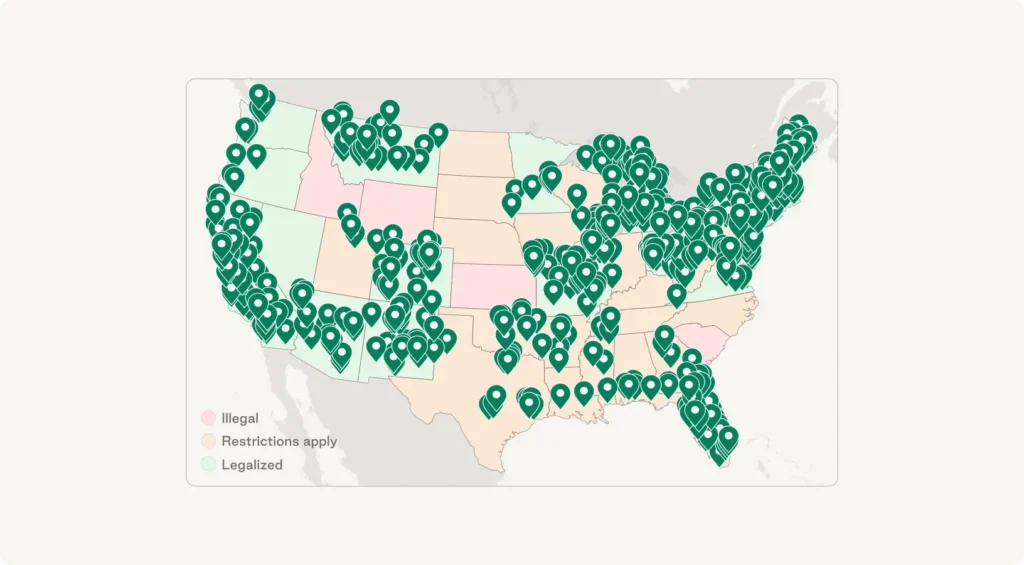
Most cannabis remains a Schedule I controlled substance at the federal level, though a partial rescheduling in April 2026 moved FDA-approved and state-licensed medical cannabis products to Schedule III. That shift hasn't extended to recreational cannabis yet, but the rules are still evolving (more on what that means for your taxes below). Until federal banking barriers ease further, cannabis and CBD businesses alike will likely need alternatives to traditional financial institutions to access capital.
With cannabis equipment loans, dispensaries, growers, and related businesses can acquire cultivation systems, lighting, security setups, and more without paying the full cost up front. If you're weighing equipment financing against other paths, it's worth comparing it to the full range of cannabis financing options available.

Grow Your Cannabis Business: Overcome These Three Finance Challenges
The cannabis industry is experiencing a once-in-a-lifetime boom. Don't let poor cash flow keep you from cashing in.
How Order.co approaches cannabis financing
Order.co gives cannabis businesses access to the purchasing power and capital to launch and grow a successful operation. Using the purchasing platform along with Buy Now, Pay Later financing and extended net terms, cultivators, processors, and dispensaries can buy the equipment and supplies they need with minimal wait and paperwork.
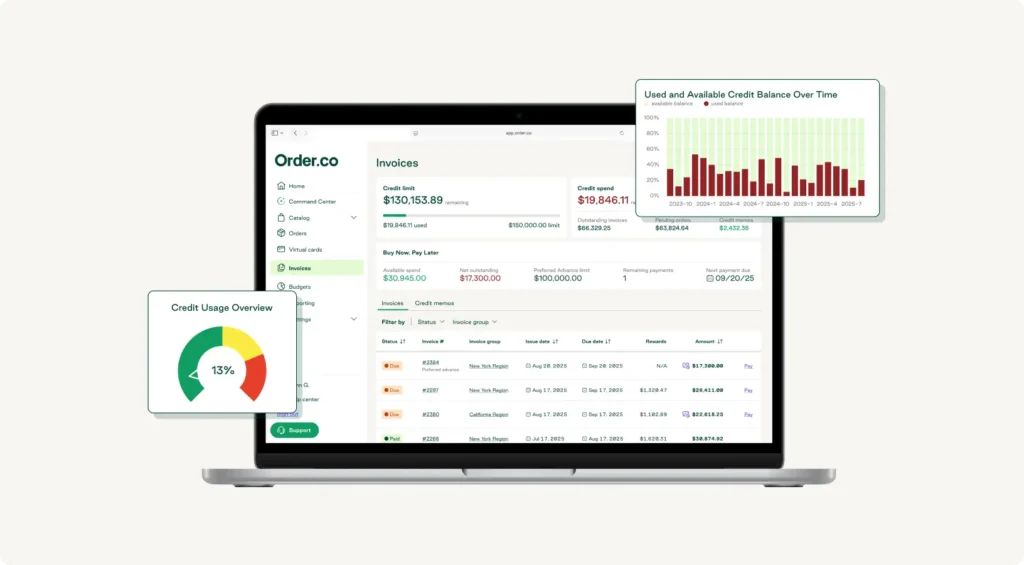
With Order.co, you can:
- Onboard your vendors. Once you sign up with Order.co, you can onboard your preferred equipment vendors. If you don't have a vendor for a specific item, Order.co's 40,000+ vendor network gives you options.
- Get flexible payment terms. Order.co provides flexible net terms of 30, 45, or 60 days through an easy verification process. Unlike a traditional bank loan or line of credit, your access doesn't depend on a bank's approval, so you can get the equipment and supplies you need sooner.
- Access working capital. Order.co offers access to up to $500,000 in financing through Buy Now, Pay Later, turning big equipment purchases into manageable monthly payments.
These offerings can help you balance your cash flow, reduce reliance on traditional financial institutions, and build your business on your own timeline.
What are the requirements for obtaining traditional cannabis financing?
Despite recent legal moves to change the federal drug schedule designation, cannabis remains a Schedule I controlled substance in many contexts. That makes financing a tricky enterprise. While it's not illegal to fund a cannabis business through loans, the risk profile makes many traditional lenders think twice.
If you're pursuing traditional cannabis business loans or equipment loans, most lenders will look at your:
- Credit score. A credit score of 600 or higher is a common minimum, and banks typically like to see 670 or higher.
- Time in business. Banks usually want one to two years in business, though some online lenders accept businesses as new as six months.
- Revenue. Lenders typically want consistent revenue, and some set minimums such as $10,000 a month, plus several months of bank statements to verify cash flow.
- A separate business account. You must keep cannabis business funds in an account tied directly to your business taxpayer identification number while maintaining all required state filings or permits.
- Collateral. Because cannabis lending is high risk, some lenders ask for collateral, whether that's the equipment itself, real estate, or other business assets.
- A business plan. A documented plan with projected revenues, a mission statement, and a SWOT analysis strengthens most financing applications.
Rates and terms vary widely by lender and credit profile, and cannabis equipment financing typically costs more than conventional equipment loans. For example, cannabis equipment financing rates generally fall between 7% and 30% APR, and lenders may require a down payment of 10% to 20%. Treat quoted rates as a starting point, as your actual rate and loan amount will depend on your financials and the lender's risk appetite.
Types of equipment cannabis businesses need
Starting and scaling a cannabis operation comes with significant equipment needs. While opening a dispensary may seem straightforward, outfitting a functional backroom and an efficient production floor takes considerable investment. Startup costs may range from around $250,000 for a small dispensary to $2 million or more for a cultivation or manufacturing facility.
A few of the tools required for growing, processing, finishing, and selling cannabis products include:
Growing equipment
- LED grow lights
- Watering and irrigation equipment
- Hydroponic systems
- Nutrient dosing systems
- HVAC and climate control systems
Processing equipment
- Trimming machines
- Drying racks and cure boxes
- Extraction equipment
- Rosin presses
- Distillation equipment and chillers
- Waste disposal systems
- Testing and analysis equipment
Finishing and retail equipment
- Packaging equipment and labeling machines
- Point of sale systems
- Delivery vehicles, for businesses that offer delivery
Challenges of obtaining cannabis equipment financing
Federal prohibition of cannabis creates a major obstacle for state-licensed businesses. While many states permit recreational and medicinal sales, banking institutions must comply with federal lending laws. This restriction makes securing debt financing much harder.
Federal anti-money-laundering rules keep most banks cautious about cannabis lending. The Bank Secrecy Act requires banks to report cash transactions over $10,000 and suspicious activity, and FinCEN guidance asks banks that serve cannabis businesses to file additional reports on those accounts. The Anti-Money Laundering Act of 2020 updated those obligations.
Because of these complexities, many traditional financial institutions refuse to participate in cannabis lending altogether. Those that do, including smaller credit unions, often charge higher rates or holding fees to offset the risk, on top of the everyday growing pains that come with scaling a cannabis business.
Cannabis equipment financing strategies: pros and cons
Deciding how to finance cannabis equipment is a pivotal decision, especially when you don't have the capital to buy essential tools outright. Equipment financing allows operators to secure the machinery and technology required for compliant, efficient operations, whether through loans, lines of credit, or direct vendor financing.
While these programs can provide flexible payment plans and better cash flow management, they may also come with interest expenses and long-term debt. Weighing the pros and cons of each option is essential for companies looking to grow in a competitive market.
Benefits of financing cannabis equipment:
- Access to the latest technology. Financing increases access to advanced equipment, keeping companies competitive and compliant.
- Flexible repayment terms. Financing provides monthly payment options tailored to cash flow.
- Improved cash flow management. Financing reduces large capital expenditures to manageable payments.
- Easier budgeting. Fixed payments make budgeting and financial planning more predictable.
Drawbacks of using financing to secure cannabis equipment:
- Interest and fees. Financing solutions often carry high interest rates and fees that add to the cost of ownership.
- Equipment obsolescence. Fast-changing technology increases the risk of being stuck with outdated equipment.
- Strict eligibility criteria. Some cannabis businesses struggle to qualify due to stringent eligibility criteria.
- Potential for repossession. In default cases, financed equipment risks repossession, disrupting operations.
- Long-term commitment. Financing locks businesses into repayment terms that can limit flexibility as regulations shift.

Q&A with Grasshopper Farms CEO on Streamlining Cannabis Operations
Discover how the CEO & Founder of a decentralized MSO overcame cannabis industry bias and secured financing.
Should you lease cannabis equipment?
Cannabis equipment leasing presents an appealing alternative for cannabis companies looking for financial flexibility and reduced upfront costs. However, equipment leasing also has its own trade-offs, including higher long-term expenses and contractual obligations.
Benefits:
- Lower initial costs. Leasing generally requires less capital upfront than purchasing.
- Flexibility. Lease agreements often make it easier to upgrade or change equipment as the industry evolves.
- Tax benefits. Lease payments can sometimes be deducted as business expenses, worth discussing with your accountant.
- Maintenance and repairs. Depending on the agreement, maintenance may be covered by the lessor.
Drawbacks:
- Higher long-term cost. Total lease expense can exceed the cost of purchasing equipment outright.
- Contractual obligations. Lease terms come with fixed obligations that might not track the state of the business.
- Lack of ownership. At the end of a lease term, the business has no equity in the equipment.
- Limited customization. Leased equipment often can't be modified to meet operational needs.
- Higher insurance costs. Some leasing companies require additional coverage.
Section 179 and 280E tax considerations
Two tax rules shape how much cannabis equipment financing actually costs your business: Section 179 and Section 280E.
Section 179 lets businesses deduct the full purchase price of qualifying equipment, up to $2,560,000 for 2026, in the year it's placed in service rather than depreciating it over several years. That applies whether you buy the equipment outright or finance it, and it can also cover certain soft costs tied to the purchase, like installation. For cannabis businesses that aren't subject to 280E, that upfront deduction can meaningfully offset the cost of financing. For those that are, the Tax Court has disallowed Section 179 and bonus depreciation for cannabis producers, so how much of the equipment cost you can deduct depends on how it's treated for tax purposes. Run the numbers with your CPA before counting on it. Real estate and facility buildouts typically follow separate depreciation rules.
Section 280E is the federal tax provision that has historically barred cannabis businesses from deducting ordinary business expenses, even though they still owe federal tax on gross income. The April 2026 rescheduling of FDA-approved and state-licensed medical cannabis to Schedule III narrowed 280E's reach for those businesses, but it still applies in full to recreational operators, since recreational cannabis remains on Schedule I. The IRS has yet to publish its promised guidance on splitting expenses for businesses with both medical and recreational activity.
Because this is a fast-moving area of tax law, confirm your specific situation with a cannabis-specialized CPA before making equipment decisions based on projected tax benefits. What applies to one dispensary or processor may not apply to another, depending on license type and state.
Case study: How Standard Wellness unlocked cash and free time
A cannabis business that cultivates, processes, and dispenses its own product requires constant operational support. That was the case for Ohio- and Utah-based Standard Wellness, which needed a way to simplify its processes, remove bottlenecks, and access financing.
Standard Wellness partnered with Order.co in Spring 2022 to align its ordering and approvals process, plus take advantage of Buy Now, Pay Later financing and net terms options it couldn't find through traditional means. The partnership let Purchasing and Procurement Coordinator Mikey Haverman recoup time previously spent chasing orders and open up better cash flow to fuel growth.
"Having one centralized place that has all of the orders in it with the vendor numbers and the tracking is extremely helpful," said Mikey. When Standard Wellness needed to purchase a flower-filling machine, traditional financing proved difficult. Order.co helped them overcome the challenge. "We were able to secure the cash in two days."
By partnering with Order.co, Standard Wellness now handles vendor payments through one automated system instead of chasing down invoices across multiple vendors, saving at least 10 hours of manual work per week while doubling its ROI in cost savings. They've even used extended net terms to gain an additional 30 days to pay vendors. These increases in time and flexibility have allowed Mikey to turn his attention to other projects and growth strategies.

Get better cannabis equipment financing options with Order.co
If you're a cannabis business intent on fast, sustainable growth with less frustration, Order.co provides access to preferred vendors, competitive pricing, and financing solutions built around how you need to operate, including faster access to working capital, flexible repayment terms, and purchasing power that doesn't depend on a traditional bank saying yes.
With Order.co, you can unlock Buy Now, Pay Later financing of up to $500,000 and extended net terms of 30, 45, or 60 days, so financing equipment doesn't mean choosing between growth and cash flow.
Curious what faster equipment funding could look like for your business? Schedule a demo to see how Order.co can get you there.
FAQs about cannabis equipment financing
Requirements vary by lender. Many alternative and cannabis-focused lenders will consider a personal or business credit score around 600, while traditional banks and credit unions that work with cannabis businesses often look for scores closer to 670 or higher. Credit score is just one factor lenders weigh alongside time in business, revenue, and collateral, so a lower score doesn't automatically disqualify you, though it will affect your rates and terms.
Yes, getting financing with bad credit is possible, though your options will be more limited and your interest rates will typically be higher. Some equipment lenders weigh revenue, bank statements, and time in business more heavily than credit score, and vendor financing or leasing arrangements can sometimes be easier to qualify for than a traditional loan. Building a stronger credit and financial history over time generally opens up better rates and terms.
It depends on your goals. Since you own it once the loan is repaid, financing usually makes sense if you want to build equity in equipment you plan to use for years. If you want lower upfront costs or expect to upgrade equipment frequently as technology changes, leasing tends to be a better fit. Compare total cost, lease terms, and monthly payment before deciding.
Generally, no. Because cannabis remains federally illegal in most circumstances, the Small Business Administration has historically not backed loans for plant-touching cannabis businesses, including equipment purchases. Some ancillary businesses that serve the cannabis industry without touching the plant directly may qualify for SBA loans, but plant-touching cultivators, processors, and dispensaries typically need cannabis-specific lenders or financing programs instead.
This depends on your loan or lease agreement, but in most cases, lenders can repossess financed or leased equipment if payments stop, regardless of what happens to your license. A revoked license can also make it harder to generate the revenue needed to keep up with payments. Review your agreement's default and repossession terms before signing, and talk to your lender proactively if your license status changes.
It can, but 280E may limit the benefit. Section 179 lets businesses deduct equipment costs in the year they're placed in service, but because 280E restricts deductions for businesses that deal in Schedule I and II substances, plant-touching recreational operators generally can't use it the way other industries do. Medical operators affected by the April 2026 rescheduling may see different treatment. Confirm the details with a cannabis-specialized CPA before assuming a specific deduction amount.
Get started
Schedule a demo to see how Order.co can simplify buying for your busines
"*" indicates required fields