Best Credit Cards for Nonprofits: Complete Guide (2026)

Best Credit Cards for Nonprofits: Complete Guide (2026)
Nonprofits need a reliable way to pay for everyday expenses, control who can spend, and keep records clean enough to satisfy board members, auditors, and grant funders. The right business credit card can cover all three while earning rewards on spending you already do. A few options go further than a card, extending credit and building purchasing controls into how your team buys.
Comparing your options across fees, annual percentage rates, personal guarantee requirements, rewards, and spend controls will help you find the best fit before you apply.
Quick answer:
- A no-annual-fee card like the Amex Blue Business Cash keeps rewards simple, while a category card like the Ink Business Cash rewards concentrated spend in office supplies and telecom.
- Brex and Ramp skip the personal guarantee, underwriting your organization's financial health instead of an individual's credit. Both are charge cards, so balances are paid in full each cycle.
- Line-item GL coding tags every individual item to the correct account, cost center, and grant at the moment of purchase. Most cards and platforms code only at the transaction level.
- Order.co goes beyond card issuance with vendor-locked virtual cards, a curated purchasing catalog, AP automation, and extended credit (true Net 30 with up to 37 days to pay, plus Pay in 4) that most procurement and spend platforms don't offer.
Download the free ebook: Choose the Right Procurement Technology With This Decision Matrix
What are the best credit cards for nonprofits?
There's no universal best credit card for nonprofit organizations. The best card options depend on your nonprofit's funding structure, reporting requirements, and spending patterns.
The five options below range from straightforward cash back cards to a spend management platform that issues B2B virtual cards as part of a broader nonprofit procurement workflow. Four are traditional business credit cards you can apply for directly. The fifth, Order.co, is a procurement and spend management platform we've included because nonprofits weighing a card often need credit, controls, and reporting a card alone can't provide. Review each option against your organization's current spending and compliance needs before deciding.
Note: Card rates and terms are accurate as of Q2 2026. Verify current offers directly with each issuer before applying.
Nonprofit credit card comparison table
The table below compares each option across the factors that matter most to nonprofit executive directors and finance teams: cost, liability, rewards, and what each option is best suited for.
| Card / Platform | Annual Fee | APR | Personal Guarantee | Rewards / Cash Back | Best For |
| Amex Blue Business Cash | $0 | 18.49%–26.4% (variable) | Yes | 2% on first $50K/year, 1% after | No annual fee with simple rewards |
| Ink Business Cash | $0 | 16.74%–24.74% (variable) | Yes | 5% on select categories; 2% on dining/gas; 1% on all else | Category-concentrated spending |
| Brex | $0 | N/A (charge card) | No | Points-based, varies by category | No personal guarantee |
| Ramp | $0 | N/A (charge card) | No | Up to 1.5% cash back (varies by customer) | Automated expense management |
| Order.co | Custom Pricing | N/A | No | Up to 2% cash back; no category restrictions | Spend control and extended credit beyond a card |
1. American Express Blue Business Cash Card: Best for no annual fee
The American Express Blue Business Cash Card earns 2% cash back on all eligible purchases up to $50,000 per year, then 1% after that with no category tracking required. For nonprofits with general, diversified spending and no need for upstream procurement controls, it keeps things simple.
Key features:
- Annual fee: $0
- Welcome bonus: $250 after $15,000 in first 12 months
- Intro APR: 0% for 12 months on eligible purchases
- Variable APR: 18.49%–26.4%
- Credit score required: Good to Excellent
Best for: Nonprofits with straightforward, general spending who want a flat cash back rate without an annual fee or complex rewards structure.
Considerations: Requires a personal guarantee and a good-to-excellent personal credit score. The 2% rate applies only to the first $50,000 in annual spend. The card has no built-in spend controls or procurement workflow.
2. Ink Business Cash Credit Card: Best for category spending
Chase's Ink Business Cash earns tiered cash back that rewards specific spending categories heavily. Nonprofits that regularly purchase office supplies or pay for internet, cable, and phone services can generate meaningful returns from those categories.
Key features:
- Annual fee: $0
- Welcome bonus: $750 after $6,000 in first 3 months
- Intro APR: 0% for 12 months on eligible purchases
- Variable APR: 16.74%–24.74%
- Cash back: 5% on the first $25,000/year in combined office supply and telecom purchases; 2% on the first $25,000/year on gas and dining; 1% on everything else
- Credit score required: Good to Excellent
Best for: Nonprofits with predictable, category-concentrated spending, particularly in office supplies and telecom services.
Considerations: This card requires a personal guarantee, and the 5% rate has a $25,000 annual cap on qualifying category spend. Organizations with more diversified purchasing may find a flat-rate card delivers better overall returns.
Choose the Right Procurement Technology With This Decision Matrix
Find 15 must-ask questions to narrow down your software search and make your research process MUCH easier.
3. Brex: Best for no personal guarantee
Customer ratings:
Brex evaluates creditworthiness based on your organization's cash flow and funding history rather than the personal credit profile of any individual. For nonprofits where leadership wants a clear separation between organizational and personal financial liability, that matters.
Key features:
- Annual fee: $0
- Welcome bonus: 10,000 points after spending $3,000 in the first three months
- APR: N/A (charge card; balance is paid in full each cycle)
- Credit score required: No personal credit check; Brex reviews the organization's financial position directly
Best for: Nonprofits that want to avoid personal liability on card balances, or whose leaders have fair credit scores.
Considerations: A charge card structure means balances can't carry month to month. Some sources indicate a minimum level of bank reserves may be required for approval. Spend controls are available but don't extend upstream into purchasing workflows or vendor management.
4. Ramp: Best for automated nonprofit expense management
Customer ratings:
Ramp pairs corporate cards with expense management tooling, such as automated receipt capture, expense coding, and real-time reporting across cardholders. For nonprofits managing purchasing across multiple staff or departments, it cuts manual reconciliation work and integrates with accounting systems, including QuickBooks and Sage Intacct.
Key features:
- Annual fee: $0
- Welcome bonus: None
- APR: N/A (charge card)
- Cash back: Up to 1.5% on all purchases
- Credit score required: No personal credit check; organizations must maintain at least $25,000 in a U.S. business bank account
Best for: Nonprofits that want automated expense tracking and accounting integrations without a personal guarantee requirement.
Considerations: Ramp is also a charge card, so balances can't carry over. GL coding happens at the transaction level, so individual line items aren't tagged the way they are with Order.co, and there's no upstream purchasing workflow or vendor catalog.
5. Order.co: Best for spend control and extended credit beyond a card
Customer ratings:
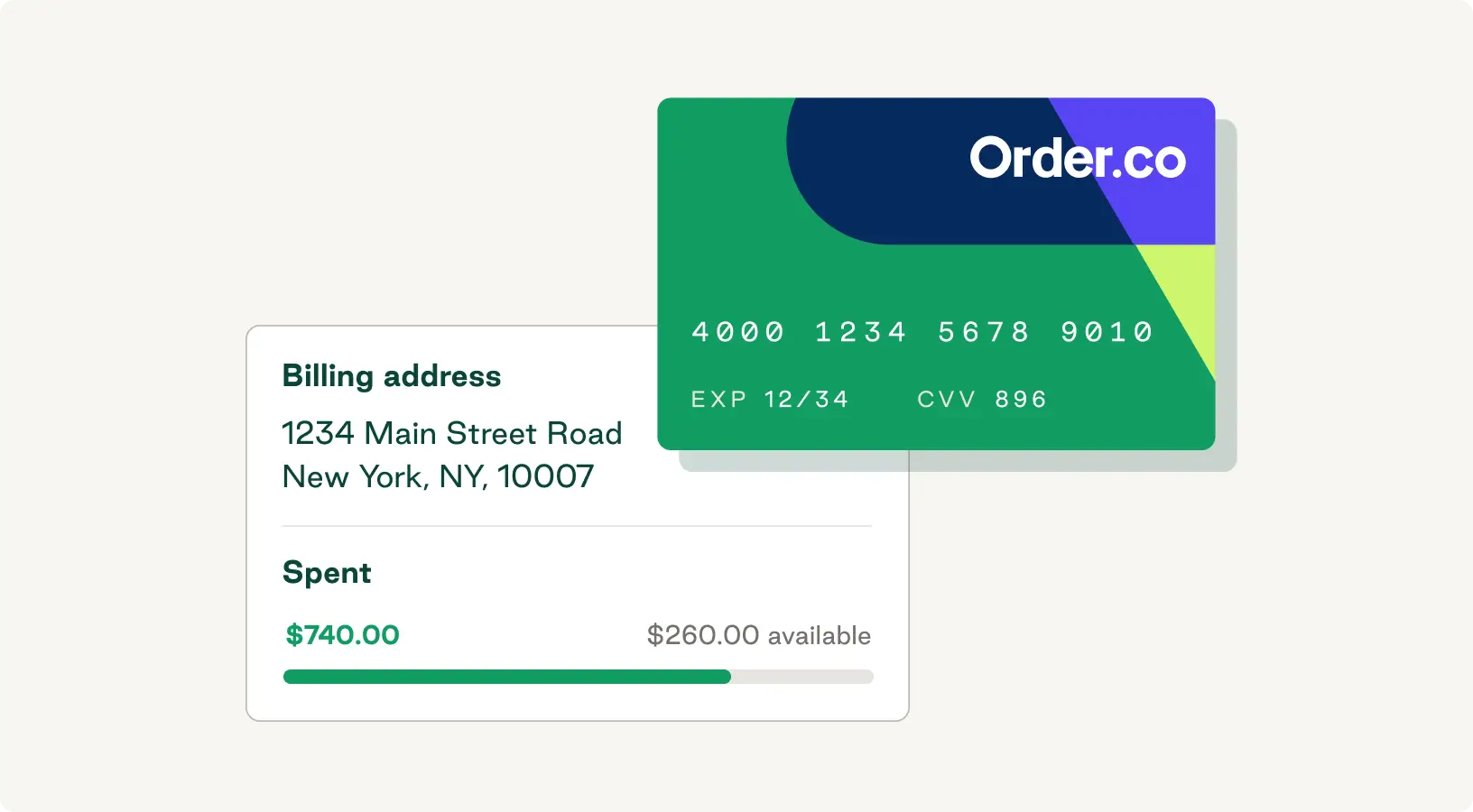
Unlike the other options here, Order.co is a procurement and spend management platform that issues vendor-locked virtual cards and extends credit, which is why it belongs on a nonprofit's shortlist alongside traditional cards. Where a card records spending after it happens, Order.co manages the full purchase-to-pay process, from sourcing and approvals through payment and reconciliation, and codes every line item to the right grant or cost center at the moment of purchase.
It also extends real working capital that most procurement and spend platforms don't. Brex and Ramp are charge cards that must be paid in full each cycle. Order.co offers true Net 30 with up to 37 days to pay on every purchase, plus Pay in 4 for larger buys and custom net terms of 30, 45, 60, or 90 days. That float helps nonprofits bridge the gap between irregular grant disbursements and the bills that come due in between.
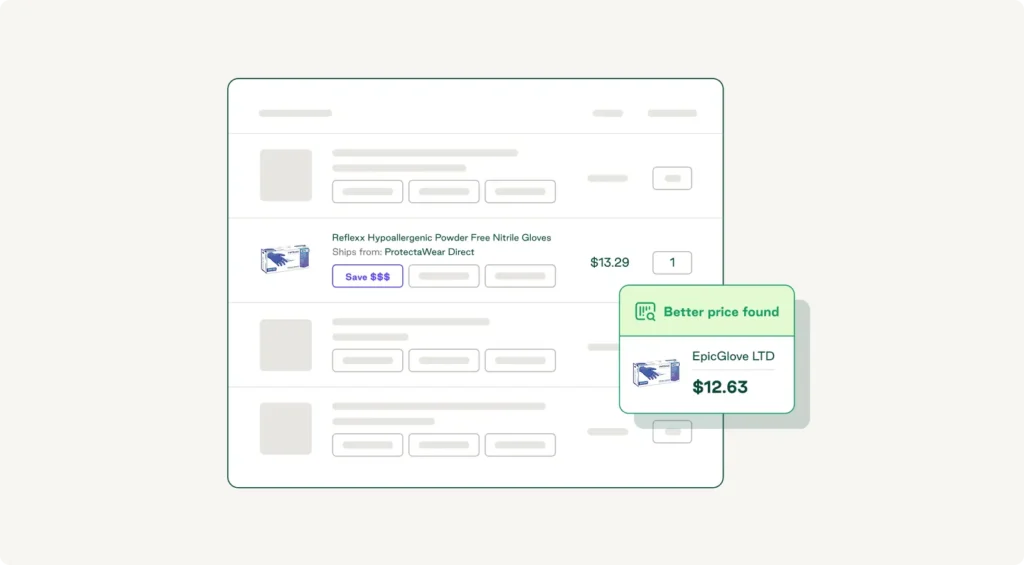
Order.co also runs a sourcing algorithm that searches across 30,000+ vendors to find the best available price, and integrates natively with QuickBooks, NetSuite, Sage Intacct, and Workday, connecting via API to other accounting and ERP systems.
Key features:
- Vendor-locked virtual cards: Get virtual cards with per-vendor spending limits, automatic line-item GL coding, and up to 2% cash back depending on spend volume.
- Curated purchasing catalog: Pre-approved vendors and products make the compliant choice the easiest one for every buyer in your organization.
- AP invoice automation: Faster approval workflows, automated expense coding, and accurate invoice processing built into purchasing from the start.
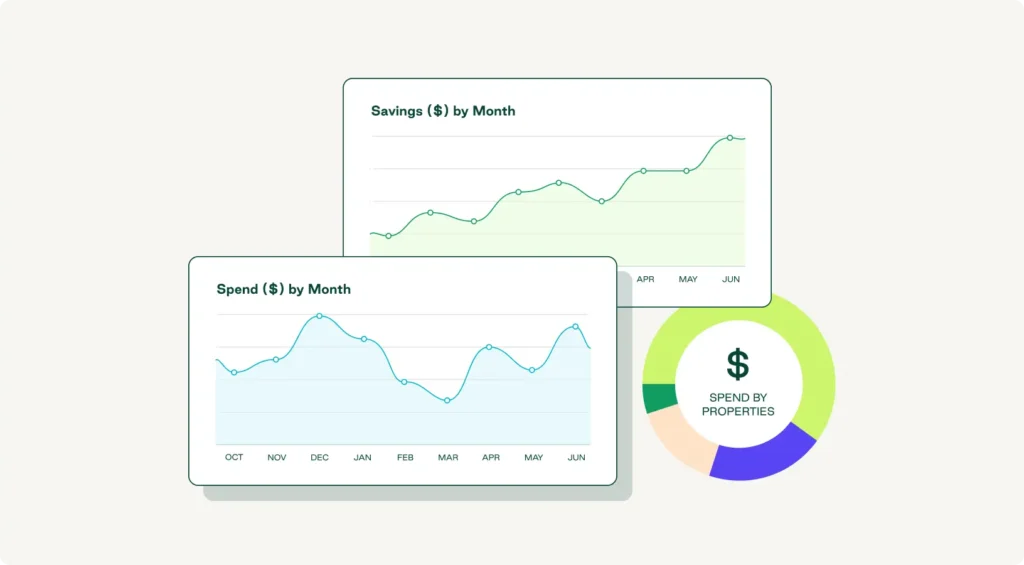
- Real-time spend visibility: Line-item reporting and analytics dashboards across every department keep you ready for audits and board reviews.
Best for: Nonprofits managing grant-restricted budgets, multi-department purchasing, or board-level reporting that need extended credit and traceable, categorized spend a card alone can't provide.
Considerations: Order.co is built for indirect procurement (operating supplies, services, and equipment) rather than direct sourcing of production materials. It also uses custom pricing tied to spend volume and number of locations, so onboarding involves more upfront conversation than a self-serve card application.
What are the benefits of having a nonprofit credit card?
Nonprofits operate under a level of financial scrutiny that most businesses don't:
- Board members expect clean, categorized records.
- Grant funders often require that spending be tracked against specific program budgets.
- Auditors need a paper trail that holds up to examination.
Standard consumer cards and informal expense practices tend to break down under those requirements. A card or spend management platform built for organizational use helps you:
- Meet board and audit requirements more easily. Dedicated cards keep organizational purchasing clearly separated from personal expenses and create the categorized transaction records that board oversight and external audits require.
- Allocate spend across grant budgets accurately. Real-time spend tracking and category-level reporting make it possible to attribute purchases to the correct funding source as they happen rather than reconstructing attribution later. That's the difference between a smooth grant closeout and a scramble.
- Extend program budgets with rewards and hard savings. Cash back reduces your total cost of operations. Platforms like Order.co deliver an average of 5% in hard-dollar savings through AI sourcing, which is money that can go back into programs rather than procurement overhead.
- Manage cash flow around grant cycles. Credit provides a buffer between when expenses are incurred and when payment is due, which helps when grant disbursements are irregular or delayed. A standard card gives you a billing cycle, and charge cards like Brex and Ramp must be paid in full each period. Platforms that extend credit, like Order.co with true Net 30 (up to 37 days to pay) and Pay in 4, give nonprofits more room to manage timing without renegotiating terms vendor by vendor.
How to choose the best credit card for your nonprofit
Finding the best credit card for your employees comes down to a few specific questions about your organization's situation and needs:
- What does your spend look like? If most purchases cluster around office supplies and telecom, a tiered card like Ink Business Cash earns substantially more. If spending is spread across many categories and vendors, a flat-rate card or platform with AI sourcing delivers better overall returns. Pull three to six months of expense data before you compare options.
- Does personal liability matter? If your leadership team needs to keep organizational and personal financial liability separate, your options narrow to Brex, Ramp, or Order.co. Brex and Ramp underwrite based on the organization's financial health. Order.co isn't a traditional card issuer, so there's no personal guarantee.
- How much payment flexibility do you need? If grant timing is unpredictable, the length of your float matters. A standard card gives you a billing cycle, and charge cards like Brex and Ramp must be cleared in full each period. Order.co extends true Net 30 with up to 37 days to pay, plus Pay in 4 and custom net terms, which most procurement and spend platforms don't offer.
- What level of spend controls do you need? A small team with predictable, low-volume purchasing may need nothing beyond a card with cash back and good integrations. If you're managing multiple departments, restricted grant budgets, or purchasing across locations, the upstream controls in a procurement platform like Order.co will provide more compliance value than any card's reward rate.
- What does your accounting system require? Look for options that integrate natively with your existing software. Order.co integrates with QuickBooks, NetSuite, Sage Intacct, and Workday. Ramp and Amex both support QuickBooks. GL coding reduces reconciliation work significantly compared to transaction-level coding, which tags only the total transaction. Order.co codes at the line-item level. Most traditional cards and expense platforms do not.
- What's your true cost of annual fees? All five options reviewed here carry no annual fee, so this isn't a differentiating factor within this group. Watch for foreign transaction fees if your organization makes international purchases, and factor in fees for additional employee cards.
How do you apply for a nonprofit credit card?
The application process is generally straightforward. Before you start, align with your board, finance team, and authorized officers to gather documentation and confirm organizational buy-in.
- Collect required information. Many applications ask for your EIN, your organization's legal name and address, and details about your directors, organizational structure, and operating history.
- Prepare financial documentation. Expect to provide documents demonstrating your organization's financial health. Common requirements include your most recent Form 990, audited financial statements, current bank statements, and credit history.
- Designate an authorized officer. Most issuers require a board member or authorized officer to be responsible for the account. For cards requiring a personal guarantee, that person will need to provide personal financial information and may be subject to a credit check.
- Complete and submit your application. Fill out the application accurately to avoid processing delays. Most applications are submitted online.
Traditional card applications typically take 5–10 business days to process, and then you may have to wait another week or so to receive a physical card in the mail. With Order.co, secure virtual cards are available immediately after onboarding. Vendor-specific limits, line-item GL coding, and real-time spend visibility are active from the first transaction.
Choose the Right Procurement Technology With This Decision Matrix
Find 15 must-ask questions to narrow down your software search and make your research process MUCH easier.
"*" indicates required fields
Find the right nonprofit credit card for your organization
Fees, rewards, personal guarantee requirements, spend controls, and nonprofit accounting integrations each point toward a different winner depending on your situation. A simple no-fee card may be all a small team with predictable, low-volume purchasing needs, a category card rewards concentrated spend, and a no-personal-guarantee charge card protects leadership from liability.
For nonprofits managing grant-restricted budgets, multi-department purchasing, or detailed audit requirements, Order.co offers what a card can't. It's a full procurement and spend management platform that extends credit, issues vendor-locked virtual cards, and embeds compliance at the moment of purchase. Every line item is tagged to the right grant or cost center, finance closes the books faster, and true Net 30 terms give you room to manage cash flow around grant cycles.
Schedule a demo to see how Order.co helps nonprofits control spend, extend working capital, and meet their financial reporting requirements without adding manual work.
FAQs
Yes, most major business credit card issuers accept 501(c)(3) organizations. You'll need your EIN, basic organizational information, and documentation of your financial position: typically your most recent Form 990, bank statements, and audited financials. Some issuers require a personal guarantee from a board member or authorized officer; others underwrite based on your organization's financial health without a personal credit check.
Not always. Brex and Ramp evaluate the organization's cash flow and financial operations directly, which means no individual takes on personal liability for the card balance. Traditional bank cards from American Express and Chase typically do require one. If keeping personal and organizational liability separate is a priority for your leadership team, focus your evaluation on Order.co, Brex, or Ramp.
A corporate card gives employees a payment method and records transactions after they happen. A spend management platform like Order.co manages the purchasing process before money leaves the organization, including purchase requests, approvals, vendor selection, and payment, and can extend credit with terms like Net 30. For nonprofits with grant restrictions or detailed audit requirements, that upstream control and added float make a real difference.
Get started
Schedule a demo to see how Order.co can simplify buying for your business
"*" indicates required fields