Top Accounts Payable Software: What to Look For in 2026

Top Accounts Payable Software: What to Look For in 2026
Manual accounts payable workflows are manageable until you begin to scale. That's when invoices pile up, duplicate or unauthorized payments slip through, and month-end close takes weeks to resolve.
According to Ardent Partners' research, best-in-class AP organizations process an invoice in 3.1 days, while organizations without modern AP automation take up to 17.4. For multi-location businesses, that gap compounds fast. Every entity, vendor, and GL account multiplies the delay.
The right accounts payable software closes that gap by connecting purchasing to AP from order to payment. The strongest tools shift control upstream, catching errors and unauthorized spend before invoices arrive. The result is faster close cycles, cleaner books, and real-time visibility into spend across every location.
Key takeaways: Accounts payable software
- As you scale, manual invoice processing creates errors, hides rogue spend until after the bill arrives, and stretches month-end close from days into weeks.
- Modern AP platforms automate invoice capture, line-item GL coding, approval routing, and payment execution, replacing the manual handoffs that introduce errors between steps.
- The strongest AP platforms start upstream. Budget checks, approvals, and GL coding happen at the point of purchase, so invoices arrive already verified against approved orders and reconciliation work disappears at close.
- AI is now table stakes for AP at scale. The best platforms use anomaly detection, duplicate-order flagging, and vendor recommendations to catch issues inside the buying workflow, not after the invoice arrives.
- Order.co connects purchasing to AP in one platform: curated catalogs guide buyers, line-item GL coding applies at the point of purchase, AI flags off-pattern spend during the order, and native integrations sync clean data into your accounting system, so finance teams close faster with cleaner books and full visibility across spend.
Evaluating AP software options? Add Order.co to your list — tour the product tour
What is accounts payable software?
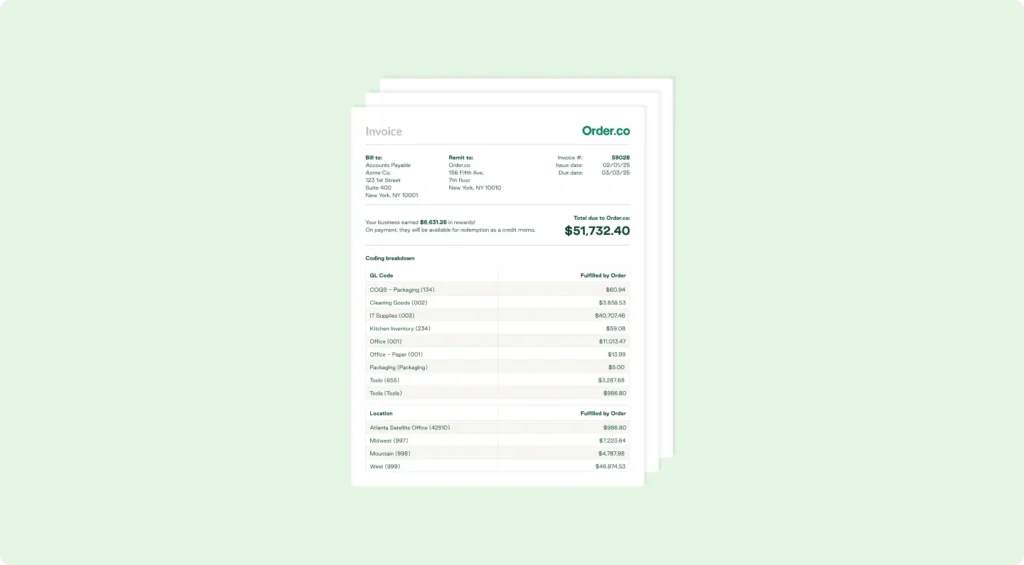
Accounts payable software automates how your team receives, codes, approves, and pays vendor invoices. It replaces disconnected manual workflows with a single system that captures invoice data, matches it to purchase orders and receipts, applies GL coding, and runs payments on schedule.
The category ranges from standalone invoice automation tools to full procure-to-pay platforms that connect purchasing directly to payment.
Why do you need AP software?
You need AP software when manual work costs more than the platform itself. Here's what the right platform delivers.
- Less manual processing time: At scale, keying invoices by hand, routing approvals through email, and reconciling vendor statements line by line consumes hours per location per week. AP software automates each handoff.
- Stronger vendor relationships: Late payments, processing delays, and frequent invoice corrections damage supplier trust and forfeit early payment discounts. Predictable, on-time payments protect your standing with vendors you depend on.
- Reduced invoice errors across locations: PYMNTS Intelligence research found that manual invoice processing carries a 2% error rate. Without automated verification against purchase orders, duplicate invoices and mispriced line items get paid before they're caught, leading to write-offs and vendor disputes.
- Real-time spend visibility: Without current data on payables and category spend, finance can't forecast cash flow accurately or prevent rogue spend across locations. AP software puts spend, accruals, and payment timing in one view.
- Built to scale without added headcount: Manual AP that works at three locations breaks down at 30. Every new entity, vendor, or GL account multiplies the workload, and most teams can't hire fast enough to keep up.
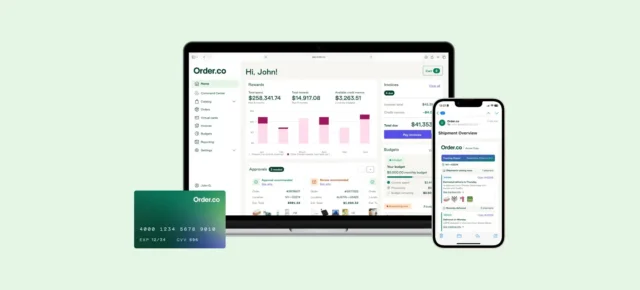
See if Order.co belongs on your shortlist
No demo request. No waiting. Just tour the product and decide.
Top accounts payable software options to consider in 2026
The AP platforms below represent the most relevant options for mid-market and enterprise finance teams in 2026. Each takes a different approach: procurement-led, card-led, payments-led, or platform-led, with different downstream effects on close speed, books accuracy, and spend visibility.
Accounts payable software at a glance
| Platform | Best for | Core strength | Ideal company size |
| Order.co | Multi-location operators with high indirect goods spend | Connects purchasing to AP with point-of-purchase approval routing, line-item GL coding, and multi-entity allocation across locations | Mid-market to enterprise |
| BILL | AP teams seeking category-default automation | End-to-end invoice capture, approval routing, and payment automation with a large mid-market install base | SMB to mid-market |
| Tipalti | Finance teams managing global supplier payments | Mass payments across 120 currencies and 196 countries with built-in tax compliance and supplier onboarding | Mid-market to enterprise (global) |
| Precoro | Procurement- focused teams needing structured AP workflows | Structured requisition-to-PO workflows with real-time budget tracking and three-way matching | SMB to mid-market |
| Ramp | Finance teams with card-heavy, T&E-heavy spend | Corporate card and expense management with bill pay layered in | SMB to enterprise |
1. Order.co
Rated 4.4/5 based on 145 user reviews
Order.co is an AI-powered procurement and finance automation platform built around point-of-purchase approvals, line-item GL coding, and connected vendor payments. It targets mid-market and enterprise multi-location operators that want AP cleanup work eliminated upstream rather than handled at month-end close.
Key features
- Line-item GL coding at the point of purchase, applied by entity, department, and location
- Curated catalogs of pre-approved products and vendors, with automated approvals by budget, category, or amount
- Automated PO generation and vendor ordering from approved purchase requests
- AI insights flagging duplicate orders and off-pattern spend during the buying workflow
- Vendor payments on your behalf via the vendor's preferred method, with Net 1 terms and customized billing
- Native integrations with NetSuite, QuickBooks Online, Sage Intacct, and Workday, plus API support for other ERPs
Best for: Multilocation operators managing a high purchase volume across many vendors who want to save time and headache at month-end close. For example, Chicago-based fashion retailer AKIRA, with 35+ stores across 12 states, reclaimed 160+ AP hours per month and saved over $10,000 in six months after implementing Order.co.
Considerations: Order.co is purpose-built for indirect spend. It handles transactional spend that borders on direct procurement, like billable project expenses, but it's not designed for complex, high-volume, manufacturing direct-material replenishment or Bill of Materials (BOM) management.
2. BILL
Rated 4.4/5 based on 1,811 user reviews
BILL is a cloud-based AP automation platform for small and mid-market businesses. It automates the full invoice-to-payment cycle, from capture and approval routing to multi-method payment execution. BILL's broad accounting system support and large vendor network make it a popular choice for teams modernizing AP for the first time.
Key features
- Invoice capture via email, scan, or vendor portal with automated data extraction
- Customizable approval workflows by amount, department, or vendor
- Multi-method payment execution via ACH, check, virtual card, or international wire
- Two-way sync with QuickBooks, Xero, NetSuite, and Sage Intacct
- 7M+ vendor member network for faster onboarding and payment delivery
Best for: Small and mid-market finance teams looking for a category-default AP automation platform with broad accounting system integration and a large vendor network.
Consideration: BILL is AP only. Teams that want procurement, purchasing, or spend management in the same platform will need to layer additional tools on top.
3. Tipalti
Rated 4.5/5 based on 419 user reviews
Tipalti is a finance automation platform focused on mass payments, global tax compliance, and supplier onboarding. It supports multi-currency payments across 196 countries, fitting finance teams with large international supplier bases and 1099-heavy payment needs.
Key features
- Mass payments across 120 currencies and 196 countries
- Supplier onboarding portal with tax-form collection (W-9, W-8, VAT)
- Two-way ERP sync with NetSuite, Sage Intacct, QuickBooks, and others
- Invoice OCR and approval workflows
- Built-in tax compliance and fraud screening
Best for: Finance teams managing global supplier payments, multi-entity tax compliance, and marketplace or affiliate payouts at scale.
Consideration: Tipalti is optimized for global payments and tax compliance rather than indirect goods purchasing. Teams whose AP volume comes primarily from physical goods vendors across distributed locations may find the purchase-to-payment workflow lives outside the platform.
4. Precoro
Rated 4.7/5 based on 215 user reviews
Precoro is a procurement and spend management platform built around structured requisitions, multi-step approvals, and budget controls. It targets procurement-led organizations that want disciplined intake-to-PO workflows and strong budget vs. actuals reporting.
Key features
- Multi-step approval workflows by department, project, or budget
- Custom request forms and vendor portals
- Real-time budget tracking with variance reporting
- Three-way matching against POs and receipts
- Integrations with QuickBooks, NetSuite, Sage Intacct, and Xero
Best for: Procurement-focused teams that need structured requisition and approval workflows with strong budget visibility.
Consideration: Precoro organizes procurement workflows, but payment to vendors still happens in a separate AP system, leaving the procurement-AP handoff as its own process.
5. Ramp
Rated 4.8/5 based on 2,499 user reviews
Ramp is a spend management platform built around corporate cards, expense management, and bill pay. It pairs physical and virtual cards with automated expense categorization, vendor payments, and accounting integrations.
Key features
- Corporate cards with category-level spend controls
- Automated receipt capture and transaction-level expense coding
- Bill pay with OCR-based invoice intake and AI-assisted PO matching
- 1.5% cashback on cardable spend
- Native integrations with NetSuite, QuickBooks, Sage Intacct, and Xero
Best for: Finance teams whose spend is primarily card-based, with strong needs for expense tracking, T&E management, and corporate card rewards.
Consideration: Ramp is a card- and expense-first platform. Teams with heavy vendor-invoice volume or physical goods purchasing may find it less suited to indirect goods AP.
What should you look for in AP software?
Use the criteria below to evaluate whether a platform scales with your AP workload or just automates pieces of it.
Centralized vendor management
AP software should consolidate vendor records, payment terms, tax documentation, and contact information into one system. Without it, AP teams chase the same vendor data across spreadsheets, email threads, and ERP records, which slows onboarding and creates the risk of duplicate payments. Strong platforms also support performance tracking, contract storage, and audit trails for approval routing.
Reporting and analytics
Look for real-time reporting on payables aging, invoice cycle time, category spend, vendor performance, and accrued liabilities, with the ability to sort by entity, department, GL account, and vendor. Strong reporting turns AP from a transaction processor into a strategic function. Finance can forecast cash flow more accurately, build budgets grounded in actual spend patterns, catch process bottlenecks before they affect close, and identify category-level savings opportunities before contracts come up for renewal.
AP automation and AI support
Look for AP automation platforms that handle invoice capture (via OCR, email, or API) without manual keying, apply GL coding the moment data arrives, route approvals automatically by amount or vendor, and execute payments without finance touching them individually. Platforms with built-in AI-driven anomaly detection catch duplicate invoices, off-pattern spend, and vendor exceptions before payment goes out, so AP only handles exceptions instead of every transaction.
ERP and accounting system integration
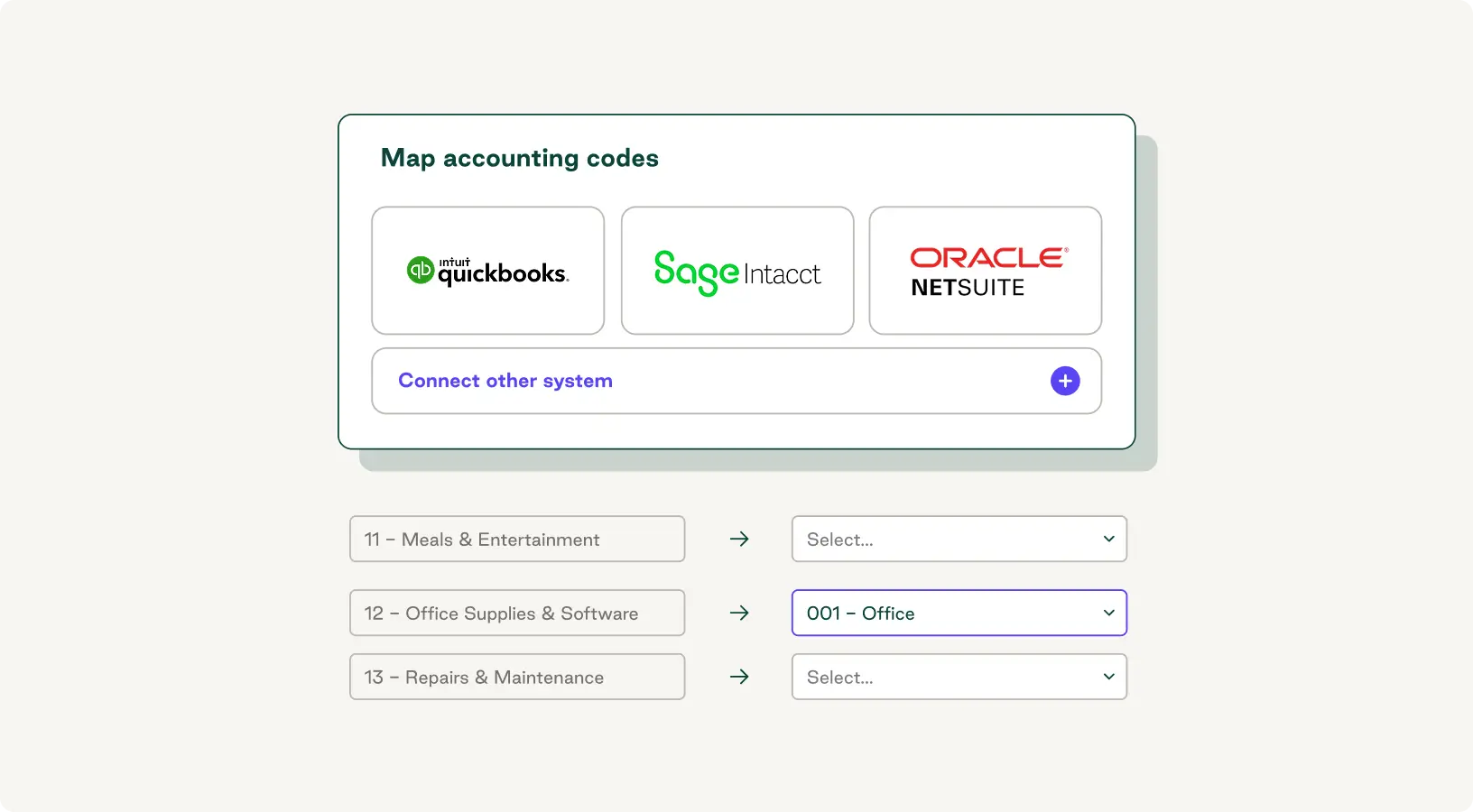
A clean sync into your ERP or accounting system means invoices, payments, and GL entries flow into the tools finance already uses. No manual data entry, end-of-month reconciliation, or validation work. When choosing a tool, evaluate the depth of the integration it offers. Native integration that passes full GL coding plus location, department, or entity tags straight into your accounting system is fundamentally different from a basic CSV export you upload manually.
Flexible payment method support
Different vendors prefer different payment methods. Look for support across ACH, check, virtual card, and wire, with payment rules by vendor, amount, or category. Platforms that pay vendors directly on your behalf can also extend float beyond what most corporate cards offer and reduce the volume of invoices AP has to process.
First Learning, an early childhood education company with 16 locations, used to reconcile hundreds of individual vendor invoices each month. After consolidating purchasing with Order.co, the team now processes 16 invoices per month—one per location—with Order.co paying each vendor directly.
See if Order.co belongs on your shortlist
No demo request. No waiting. Just tour the product and decide.
Improve accounting speed and accuracy with Order.co
Manual AP and disconnected systems break at scale. Every new location, vendor, or entity slows close, increases vendor disputes, and widens the gap between what the business spent and what finance can report on.
Order.co closes that gap by connecting purchasing to AP in one platform. Automated approvals and AI-driven anomaly detection catch exceptions upstream, shrinking the manual reconciliation work that stretches month-end close. Line-item GL coding at the point of purchase delivers cleaner books across every entity. Native integrations sync clean data into NetSuite, QuickBooks Online, Sage Intacct, or Workday, giving finance real-time visibility into spend across every location.
Schedule a demo to see how Order.co connects purchasing to AP in one platform.
FAQs about accounts payable software
Implementation timelines typically range from two weeks to three months, depending on ERP integration complexity, vendor catalog setup, approval workflow configuration, and GL mapping. Order.co's implementations typically take between two and eight weeks, with a dedicated implementation manager guiding setup, vendor onboarding, and team training through to first order.
AP software improves cash flow by giving finance teams real-time visibility into payables, accruals, and payment timing. With accurate data on outstanding invoices and due dates, finance can time payments to optimize working capital, capture early payment discounts where the math supports them, and avoid late fees that erode margin. Platforms that pay vendors on behalf of the business, such as Order.co, extend working capital runway beyond what corporate cards typically allow through Net 1 terms and customized billing.
Yes, modern AP platforms support multi-entity accounting with location-, department-, and entity-level tags applied at the point of purchase, syncing into the ERP without manual allocation at close. For multi-location operators specifically, look for native multi-entity support where tagging and chart-of-accounts mapping are configured once and apply across every entity automatically, rather than workarounds that require duplicate setups per location.
Get started
Schedule a demo to see how Order.co can simplify buying for your business.
"*" indicates required fields