9 Top Precoro Alternatives for Scaling Procurement Operations (2026)

9 Top Precoro Alternatives for Scaling Procurement Operations (2026)
Whether you're outgrowing Precoro's manual fulfillment gaps or evaluating the best fit for a scaling team, choosing a procurement platform is a high-stakes decision. Get it right, and you eliminate the manual work that's slowing you down. Get it wrong, and you inherit a new set of limitations just as your buying complexity grows.
Finding the right Precoro alternative for a scaling procurement operation comes down to four core priorities: automated fulfillment, vendor flexibility, pre-purchase controls, and accounting accuracy. The best options go beyond simple purchase request management to automate order processing, simplify supplier communication, and keep general ledgers accurate at the point of purchase. By comparing nine leading platforms, you can find the one that addresses your team's specific challenges.
Quick answer:
- The best Precoro alternatives go beyond purchase request management by automating fulfillment, handling vendor communications, and keeping books accurate from the moment of purchase.
- Prioritizing platforms that integrate with your existing finance stack prevents accounting mismatches that cause post-implementation friction.
- The right platform eliminates the trade-off between speed and control, giving your team buying freedom while ensuring finance has the visibility and accuracy it needs.
- Procurify and Kissflow are solid for approval workflows and spend controls, Coupa and SAP Ariba suit complex RFQ sourcing and raw material supply chains, and the newer entrants split further by category: Zip for orchestration-only intake and approvals, Tradogram for sourcing-heavy RFQ work, Ivalua for large-scale enterprise sourcing and supplier management, and Fraxion for standardized approval workflows with a strong audit trail.
- Order.co's vendor-agnostic purchasing, automated fulfillment, and AI-driven cost-saving recommendations make it an ideal fit for mid-market and enterprise teams buying for multiple departments or locations.
Evaluating Precoro alternatives? Start your self-guided tour of Order.co
9 Top Precoro alternatives for procurement teams to consider in 2026
To find the right tool for managing scaling spend, first identify your primary operational bottleneck: accounting accuracy, supply chain complexity, sourcing depth, or manual fulfillment. This comparison table breaks down each tool's key strengths at a glance.
| Platform | Best for | Key strengths |
| Order.co | Multi-location mid-market and enterprise teams | End-to-end fulfillment and AI-driven sourcing |
| Procurify | Mid-market, approval-heavy workflows | Audit-ready reporting and budget tracking |
| Coupa | Large enterprise spend management | Global spend visibility and compliance |
| SAP Ariba | Enterprise with complex supply chains | Deep ERP integration and sourcing |
| Kissflow | Teams wanting no-code workflow customization | Customizable with low implementation lift |
| Zip | Teams that only need intake/approval orchestration | Fast, lightweight request routing |
| Tradogram | Sourcing-heavy teams running frequent RFQs | Configurable RFQ/RFP and bid comparison tools |
| Ivalua | Large enterprises with complex, high-volume sourcing | Configurable source-to-pay workflows across the full procurement lifecycle |
| Fraxion | Teams standardizing approval workflows and spend visibility | Configurable approval rules with strong audit trail |
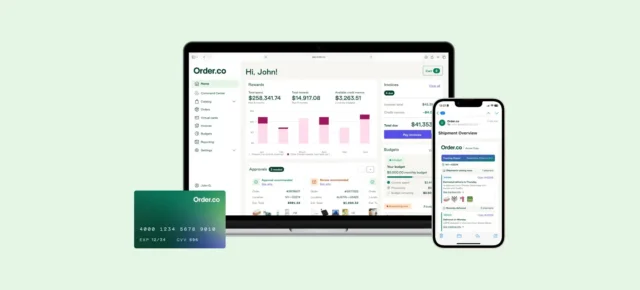
See how Order.co stacks up against Precoro
Tour the product in under 2 minutes and decide for yourself.
1. Order.co
Customer ratings:
Order.co is procurement software that combines a vendor-agnostic marketplace with automated fulfillment and a sourcing algorithm that surfaces cost-saving vendor alternatives. By centralizing vendor payment management and automating invoice processing, the platform reduces the administrative load on AP teams and accelerates the entire procure-to-pay process.
Key features include:
- AI sourcing that surfaces cost-saving alternatives based on your specific buying patterns
- Vendor-agnostic purchasing across a curated catalog of online and offline suppliers
- GL coding applied automatically at the point of purchase, so accounting is accurate before an invoice ever arrives
- Native integrations with NetSuite, QuickBooks, Sage Intacct, Workday, and more
Because it manages the entire lifecycle, from order entry through delivery, payment, and reconciliation, Order.co is ideal for teams that find procurement has grown too complex for "front-end-only" tools. Users cite its straightforward setup and the ease of having all vendor data centralized in a single view as its top strengths.
For a direct comparison, check out the Order.co vs. Precoro breakdown.
2. Procurify
Customer ratings:
Procurify is a mid-market platform known for its approachable interface and fast approval workflows. It serves teams whose primary goal is bringing structure to a purchasing process that has outgrown spreadsheets.
Key features include:
- Mobile-friendly purchase request and approval workflows
- Budget tracking and spend visibility across departments
- Integrations with QuickBooks, NetSuite, and Xero
Procurify focuses on the requisition and approval layer, so teams needing automated fulfillment and streamlined AP may still encounter significant manual steps downstream.
See the Procurify alternative comparison for a detailed side-by-side.
3. Coupa
Customer ratings:
Coupa is a business spend management platform for enterprise-scale organizations, covering procurement, invoicing, expense management, and advanced analytics.
Key features include:
- Comprehensive spend management across procurement, invoicing, and expenses
- Supplier risk management and contract lifecycle tools
- Strong compliance and audit trail capabilities
Full value from Coupa typically requires significant implementation investment and dedicated resources. Teams without enterprise-level procurement operations should consider whether the administrative overhead outweighs the benefits.
Review the guide on Coupa alternatives for the mid-market for additional context.
4. SAP Ariba
Customer ratings:
SAP Ariba is an enterprise procurement leader spanning sourcing, contract management, and procure-to-pay automation. It's designed for global organizations with complex supply chains and deep SAP ERP dependencies.
Key features include:
- End-to-end source-to-pay capabilities within the SAP ecosystem
- Supplier discovery network with millions of trading partners
- Contract management and advanced spend analytics
For teams not already embedded in the SAP environment, the implementation timeline and total cost of ownership are worth careful consideration. SAP Ariba offers significant value at scale but represents a substantial enterprise-grade commitment..
5. Kissflow Procurement Cloud
Customer ratings:
Kissflow offers a no-code approach to procurement workflow management, making it a good fit for teams wanting to digitize their process without a complex implementation.
Key features include:
- Drag-and-drop workflow builder for custom approval processes
- Vendor management with performance tracking
- Purchase order, invoice management, and spend analytics dashboards
While highly customizable, Kissflow's scope is limited. Teams needing deep fulfillment automation or multi-location purchasing management may find it better suited as an initial step toward procurement maturity.
See the Tradogram alternatives analysis for context on this market segment.
6. Zip
Customer ratings:
Zip is an intake-to-pay orchestration platform that gives every employee a single front door for submitting a purchase or vendor request, then routes it through configurable approval workflows. It's built to sit in front of an existing procurement or ERP system rather than replace it.
Key features include:
- No-code intake forms and configurable, multi-step approval routing
- AI-driven request classification and anomaly detection at the point of intake
- Vendor portal for collecting onboarding documents and compliance forms
- Integrations with major ERP and P2P systems, including NetSuite, SAP, and Coupa
Zip manages intake and approvals but leaves fulfillment, vendor communication, and payment as manual downstream work, which means teams still need a separate platform, or manual ordering, to actually place and fulfill the purchase.
7. Tradogram
Customer ratings:
Tradogram centers its platform on strategic sourcing: configurable RFQ and RFP workflows, side-by-side bid comparison, and negotiation tools for teams that run frequent supplier bids. Requisitions, POs, and budget tracking round out the platform beyond sourcing.
Key features include:
- Configurable RFQ/RFP creation and side-by-side bid comparison
- Contract repository and supplier negotiation tools
- Requisition-to-PO workflows with budget and approval controls
- Integrations with QuickBooks, NetSuite, and Sage
Tradogram's strength is negotiation and sourcing depth, but automated vendor fulfillment and payment consolidation aren't the platform's focus. Teams whose bottleneck is downstream fulfillment rather than upstream sourcing may find that gap persists after implementation.
8. Ivalua
Customer ratings:
Ivalua is an enterprise source-to-pay platform built for large organizations managing complex, high-volume supply chains. It unifies strategic sourcing, supplier management, contract lifecycle tools, and procure-to-pay within a single, highly configurable platform.
Key features include:
- Strategic sourcing tools for identifying spend consolidation and negotiation opportunities
- Supplier lifecycle management with performance tracking and compliance monitoring
- Centralized contract repository with automated renewal alerts
- Highly configurable workflows supporting complex, multi-step approval routing
Ivalua's depth comes with a tradeoff: implementation typically requires significant time and specialized expertise, and the platform's extensive configurability means a steeper learning curve than most mid-market teams need.
See the top Ivalua alternatives breakdown for a closer look.
9. Fraxion
Customer ratings:
Fraxion is a procure-to-pay platform built around configurable approval workflows and audit trail depth, aimed at finance and procurement teams that need strong policy enforcement and visibility into every step of a purchase.
Key features include:
- Multi-level, configurable approval workflows with real-time budget checks
- Detailed audit trails and compliance reporting
- Mobile app for requests, approvals, and receiving
- Integrations with more than 50 ERPs and accounting systems
Fraxion is strong on configurable approval workflows and audit trail depth, but fulfillment and vendor ordering still happen outside the platform, so teams evaluating it for its controls should plan for that gap separately.
Why do procurement teams consider Precoro alternatives?
Precoro serves as a valuable entry point into digital procurement by centralizing purchase orders and reducing paper-based processes. But as organizations grow, certain operational shortcomings tend to prompt teams to look elsewhere.
Common issues mentioned in user reviews include:
- Limited fulfillment automation: Teams often spend excessive time coordinating vendors and tracking deliveries outside the platform.
- Vendor coverage gaps: Diverse vendor bases may require more manual catalog upkeep than growing teams can sustain.
- AP workflow constraints: High invoice volumes can expose limitations, particularly for teams purchasing across multiple departments or locations.
- Scaling friction: Expanding teams may find managing location-specific budgets and buying rules increasingly rigid.
These challenges don't reflect poorly on Precoro. They're the natural friction that arises when procurement complexity outpaces the platform.
Key features to evaluate when comparing Precoro alternatives
The most critical differentiators are rarely the ones highlighted in vendor demos. To prevent downstream finance headaches, consider features that address the middle and back end of the procurement process.
Automated purchasing and fulfillment workflows
True procurement automation doesn't stop at purchase order creation. The best eprocurement solutions manage vendor communication, order tracking, exception management, and delivery confirmation automatically, drastically shortening cycle times and reducing your administrative burden.
Vendor consolidation and catalog management
A strong platform consolidates purchasing across all your suppliers. Vendor-agnostic purchasing with a curated, approved catalog eliminates maverick spend without restricting buying power.
Pre-purchase approval and budget controls
Effective spend control happens at the moment of purchase. The right procurement tools enforce approval rules and budget thresholds in real time, ensuring approvers make informed decisions before an order goes out.
Research from The Hackett Group found that top-performing accounts payable platforms achieve a 60% touchless invoice processing rate. This benchmark reflects the value of running approval workflows with minimal manual intervention.
Accounting integration and invoice automation
Line-item accounting accuracy determines whether a platform helps your finance team or creates more work for it. The most effective solutions automatically code invoices to the correct GL account and sync data directly with your accounting system, eliminating manual re-entry.
The Hackett Group's research also shows that leading platforms deliver 59% faster cycle times and 3.5X higher productivity. These outcomes hinge on the quality of accounting integration.
See how Order.co stacks up against Precoro
Tour the product in under 2 minutes and decide for yourself.
How to choose the best Precoro alternative for your organization
Deciding which procurement solution is best for your business requires a thorough understanding of your organization's needs, system requirements, and operational feasibility. Before investing in a new system, consider these critical buying factors.
Assess your current purchasing workflows and pain points
Document the friction points where your current process breaks down, whether that's approvals, vendor management, invoice coding, or delivery tracking, to guide feature requirements.
The best procurement software for your organization is the one that directly addresses your specific operational challenges.
Evaluate vendor coverage and fulfillment capabilities
Determine whether the platform handles the entire fulfillment process or only manages the request. If you're buying across multiple categories and dozens of vendors, that distinction is significant.
For instance, commercial real estate company WeWork used Order.co to consolidate 110 vendors and automate 3,000 monthly invoice payments across its complex, multi-location procurement operations. “Being able to automate our thousands of invoices was a huge time and money saver—it makes our lives so much easier,” said Kyle Ingerman, Finance Transformations Senior Manager at WeWork.
Consider integration needs with your existing finance stack
Map out exactly how purchasing data will flow into your general ledger and what will require manual intervention. The right procurement platform should make your accounting team's job easier. This matters just as much for ERP-native procurement setups, where integration depth determines whether purchasing data reconciles cleanly or creates rework.
The procurement software market is projected to reach $17.11 billion by 2031, with cloud-based platforms capturing the bulk of new investment. This growth signals that integration-first, SaaS deployment is the industry standard, meaning native integrations with your ERP or accounting system are now a baseline requirement.
Test the platform with your actual buying scenarios
Run your actual buying scenarios through the platform before committing. A system that performs well on generic demos but struggles with your specific workflows will cause frustration after go-live.
To assist in your evaluation, use a procurement technology decision guide that provides a structured framework.
Choose a procurement platform that pairs control with fulfillment and visibility
The best procurement platform doesn't force a choice between speed and control. It provides your operations team with the freedom to buy what it needs while giving finance the visibility, fulfillment automation, and accuracy it requires.
That balance is where Order.co stands out. As a vendor-agnostic platform with AI-driven sourcing recommendations built in, it manages the full purchase-to-pay process. From sourcing, ordering, and fulfillment to invoice management and accounting integration, it's all within a single environment that scales alongside your business.
If you've outgrown Precoro, Order.co offers a path to automated operations without requiring you to rebuild workflows from scratch.
Request an Order.co demo to see vendor-agnostic buying, automated fulfillment, and integrated accounting in action.
FAQs about Precoro alternatives
When replacing Precoro, prioritize platforms that address the specific limitations driving the switch, such as automated fulfillment, vendor coverage, pre-purchase budget controls, or accounting integration depth. Effective replacements solve downstream finance headaches beyond front-end approvals and integrate cleanly with your existing ERP. Map each candidate against the friction you're actually experiencing today rather than a generic feature checklist, since the gap that matters most varies by team and rarely shows up in a standard vendor demo.
Precoro alternatives differ significantly in fulfillment and purchasing scope. Platforms like Order.co manage the full lifecycle, from purchase request through fulfillment to payment. Options like Procurify and Kissflow focus primarily on the requisition and approval layer, leaving fulfillment coordination to your team. The right choice depends on how much operational lift you want the platform to absorb.
Growing teams choose Order.co over traditional procurement tools because it removes the operational friction that other platforms ignore. Instead of leaving fulfillment, vendor communication, and AP reconciliation as manual tasks, Order.co automates the end-to-end process. The sourcing algorithm adapts to buying patterns over time, surfacing better vendor options automatically, while the vendor-agnostic marketplace prevents catalog lock-in. For finance teams, automated GL coding ensures accuracy from the point of purchase, eliminating hours of manual reconciliation.
Neither platform publishes a universal price list, since both scale pricing to usage. Precoro's published starting price begins around $499 per month for a limited-user tier, with costs rising alongside users and modules. Order.co uses custom pricing based on locations, users, and purchase volume, and doesn't list a starting price publicly. Rather than comparing sticker price alone, weigh total cost of ownership. A platform that automates fulfillment and reconciliation can offset a higher subscription through fewer manual hours downstream.
Get started
Schedule a demo to see how Order.co can simplify buying for your business.
"*" indicates required fields