Retail Risk Management: A Comprehensive Guide for Finance Teams

Retail Risk Management: A Comprehensive Guide for Finance Teams
Running a retail business means managing tight margins, shifting demand, and a long list of operational exposures at the same time. Retail risk management is the proactive discipline of finding those exposures early, deciding which ones matter most, and putting controls in place before they cost you money.
Handled this way, managing risk stops being a scramble to contain damage and becomes a steady part of how you run the business. For finance teams, a clear risk process protects margins, supports compliance, and creates the freedom to focus on growth rather than cleanup.
Quick answer:
- Retail risk management works best as a proactive, scheduled process to protect your business against data breaches, theft, inventory loss, safety incidents, compliance issues, and supply chain disruptions.
- A working framework follows the same loop every time: identify risks, score them by likelihood and financial impact, assign owners, apply controls, then monitor and review.
- Insurance, vendor oversight, and spend controls turn your framework from a plan on paper into day-to-day protection.
- Order.co gives finance and procurement teams one place to enforce pre-purchase approvals, see line-item spend in real time, and keep purchasing with vetted vendors, closing the gaps where rogue spend, vendor fraud, and audit risk usually start.
Download the free tool: Vendor Risk Management Checklist
Why retail risk management matters
The retail industry runs on thin margins, so a single unmanaged risk can quickly wipe out a quarter of profits. The damage rarely stays contained: a breach, a theft pattern, or a failed audit hits revenue, brand reputation, and your ability to plan.
The numbers make the stakes clear. The global average cost of a data breach reached $4.4 million in 2025. Retail companies reported an 18% increase in shoplifting incidents in 2024 compared with the prior year. And private-industry employers logged 2.5 million workplace injuries and illnesses in 2024, each one a potential liability. Catch these risks early, and you protect both your margins and your runway.
Vendor Risk Management Checklist
Download our free vendor risk management checklist to better manage third-party risk and establish stronger vendor lifecycle management practices.
How to build a retail risk management framework
A framework keeps risk management consistent instead of reactive. Run the same six steps on a regular cycle (quarterly is a good starting point) to prevent things from slipping between reviews.
Procurement and vendor management platforms can support several of these steps by centralizing vendor oversight and spend tracking in one place, and retail management software can pull operational data into the same view.
1. Identify your risks
Start by listing every exposure across the business. Group them into categories so nothing gets overlooked: financial, operational, compliance, security, safety, and supply chain risks.
Since each team sees vulnerabilities that others miss, pull input from store operations, finance, IT, and procurement. Include the assets you depend on most, from inventory and equipment to vendor data, and treat a structured supplier risk assessment as part of this step. Tracking the value and condition of your retail assets also helps you see what you stand to lose.
2. Assess likelihood and financial impact
For each risk, estimate two things: how likely it is to happen and what it would cost if it did. Use a simple scale, such as 1 to 5, for both.
Base your estimates on historical data where available, including past incidents, industry data, and vendor performance records. The goal is a rough but honest read, not false precision.
3. Prioritize by score
Multiply likelihood by impact to get a risk score, then rank your list from highest to lowest to see where to allocate time and budget first. A risk mitigation matrix gives you a clear visual for plotting each risk and comparing scores across the business.
4. Assign ownership across teams
Every risk needs a named owner responsible for monitoring it and acting when something changes. Without clear ownership, high-priority risks fall through the cracks.
Match each risk to the team closest to it: IT owns data security, store managers own safety, and finance or procurement owns spend and vendor risk.
5. Implement controls and mitigation
Controls either reduce the likelihood of a risk or limit the damage when it occurs. For each top risk, decide on a specific action: tighter access permissions, vendor diversification, spend approvals, safety protocols, or insurance. Document what you put in place so owners and auditors can see the control behind each risk.
6. Monitor, document, and review
Risk management is never finished. Track your controls, document incidents as they happen, and revisit the full list each cycle.
New risks appear as you add vendors, locations, and systems, and old risks change shape. A standing review keeps your framework current and gives you a record to lean on during audits.
Retail risk mitigation strategies for core threats
These controls address the threats most likely to hit a retail environment directly.
Strengthen data security
Cyberthreats evolve fast, and your procurement process can't fall behind. Responsible cybersecurity comes down to adopting proven practices and addressing emerging threats before they reach you. Prioritize:
- Data encryption
- PCI DSS-compliant standards for payments
- Employee training to spot phishing and common threats
- Data access limits for employees and users
- Multi-factor authentication (MFA) for secure logins
Vendor systems are part of your attack surface, so fix vendor data management risks before they become breaches. When choosing a risk management platform, look for controlled user access, audit logs, and secure data storage for transactions, vendor information, and SSO integrations.
Tackle theft and fraud
Theft and fraud call for both physical and digital defenses. Brick-and-mortar stores can add security cameras, RFID tags, and staff training to spot shoplifting. Ecommerce teams can strengthen authentication and payment processing with firewalls, encryption, and continuous monitoring for suspicious activity.
Internal and vendor fraud need a different set of controls. Unauthorized purchases, duplicate payments, and inflated invoices are easier to catch when spend runs through one system with audit trails and built-in budget limits. Line-item visibility into every purchase lets you flag the small discrepancies that signal a larger problem.
Implement robust inventory checks
Miscounted or missing inventory leads to out-of-stock situations that cost you sales. Build a routine for ongoing inventory checks:
- Regular cycle counts
- Consistent audits and reconciliations to match records to actual stock
- Root-cause analysis to explain why discrepancies exist
Because missed deliveries and quality issues throw off your balance, vendor performance affects inventory accuracy as well. A vendor-managed inventory arrangement can shift some of that monitoring to suppliers, but you still need visibility into how they perform.
Put customer and employee safety first
Safety protects your people, your reputation, and your bottom line. Whether you run a retail store or a warehouse, put clear protocols in place to prevent accidents:
- Keep aisles clear and clean up spills immediately
- Inspect shelves, equipment, and signage regularly
- Schedule routine safety audits based on risk level
Documentation matters as much as prevention. Keep logs of inspections, incidents, and near-misses so you can spot patterns, prove due diligence during audits, and respond quickly if a claim arises. Extend the same standard to procurement by working only with vendors that meet safety regulations for the goods they supply.
Verify regulatory compliance
Give governance requirements the same attention you give cybersecurity, from accounting and reporting to customer safety standards. The right system lets you embed controls at each layer:
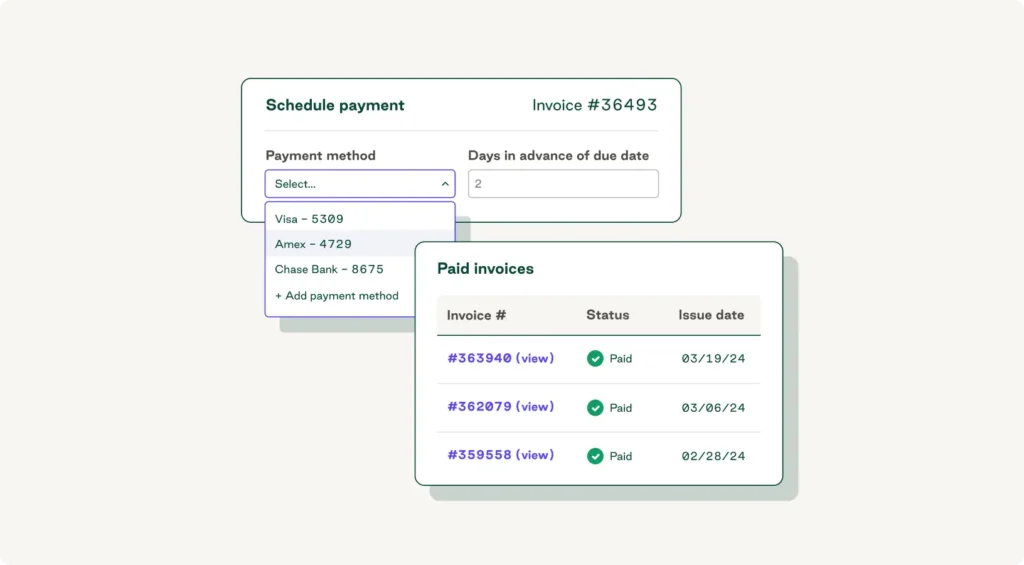
- Audit readiness: Capture every approval and payment with timestamps and detailed records so reporting and external audits go faster.
- Procurement risk controls: Restrict purchases to pre-approved vendors and keep oversight of all procurement activity.
- Accounting compliance: Track and organize purchase orders, invoices, and receipts with standardized documentation that maps to your policies and regulatory standards.
Carry the right insurance coverage
Insurance covers the losses your controls can't fully prevent. Property insurance protects your physical locations, fixtures, and inventory against fire, theft, and disaster. General liability insurance covers customer injury and third-party property claims that come with running a storefront. Cyber liability insurance helps offset the cost of a data breach, including notification, recovery, and legal expenses. Match your coverage to the types of risks you scored highest, and revisit it as your business grows.
Vendor Risk Management Checklist
Download our free vendor risk management checklist to better manage third-party risk and establish stronger vendor lifecycle management practices.
"*" indicates required fields
Retail risk management strategies for operations and supply chain
With your core threats covered, these strategies improve operational efficiency and strengthen the vendor relationships that keep your business running day to day.
Evaluate supply chain stability
Map your supply network and identify points of failure, such as overreliance on a single supplier or region. If you depend on an overseas manufacturer, you may be exposed to tariffs, global disruptions, natural disasters, and shortages. Diversifying your sources reduces that exposure.
A clear view of supply chain management in retail helps you plan around these variables, and strong retail category management keeps each product line tied to reliable suppliers. Order.co gives you a real-time view of orders in progress and spend by vendor, so you can see where your purchasing is concentrated and catch issues early.
Strengthen vendor oversight
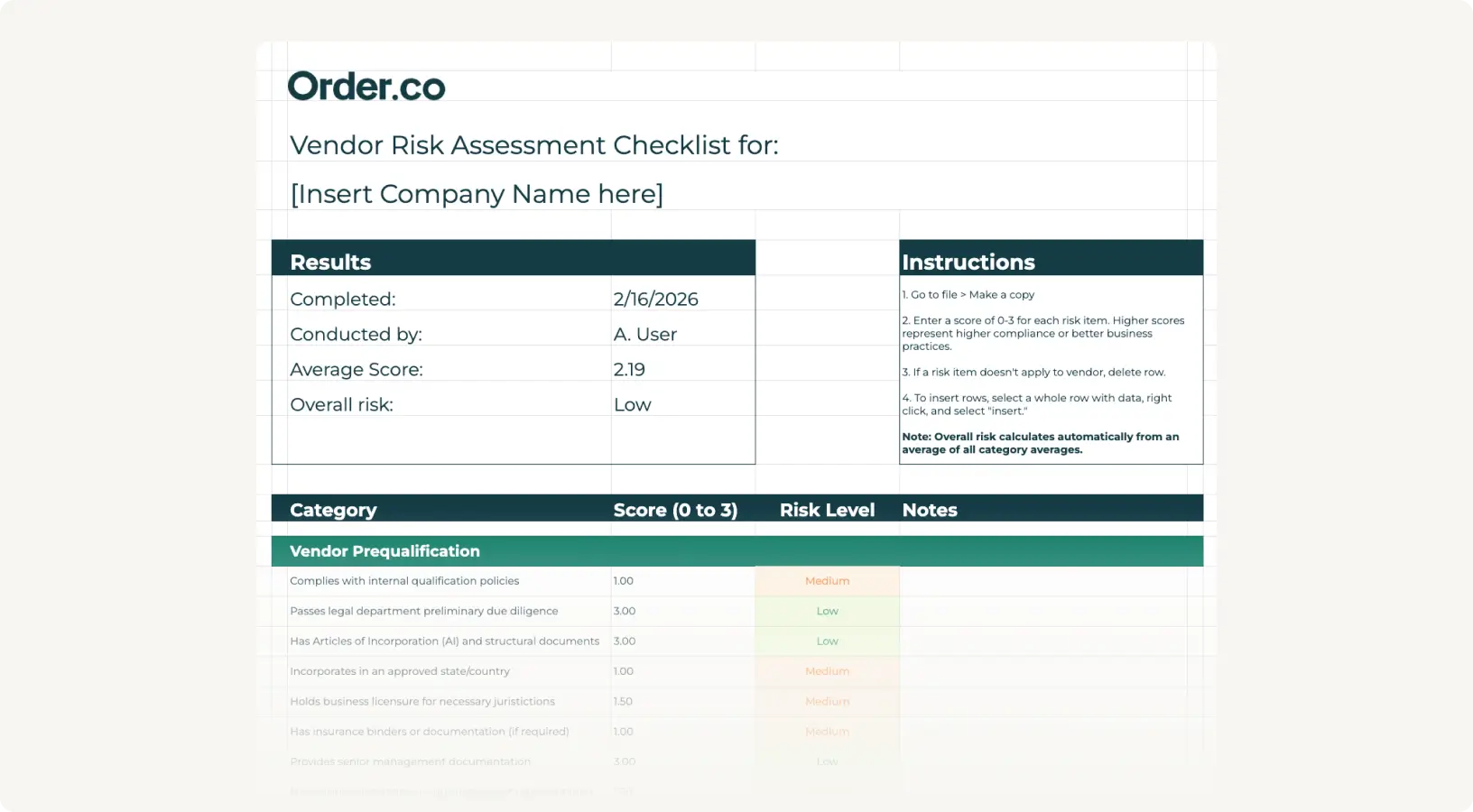
Vendor relationships can make or break your operations, so managing them means holding suppliers accountable and improving performance over time. Track vendor metrics like on-time deliveries, defect rates, and responsiveness, and watch supplier financial stability, geographic exposure, and compliance with security and regulatory standards. Build a vendor risk management checklist and schedule regular check-ins to stay ahead of disruptions.
Vendor choices also shape your brand. The products you buy and the suppliers you choose reflect on your store, so confirm that vendors align with your compliance standards, ethical sourcing expectations, and values. If responsible sourcing is part of your positioning, a supplier that violates labor standards undermines what you claim to stand for, and procurement is often where that contradiction first shows up.
Safeguard financial health
Strong retail procurement reduces unnecessary costs and waste while freeing up working capital and cash flow. Consolidating vendors gives you more leverage to negotiate volume discounts and better terms. Uncontrolled spend and rogue purchasing are financial and audit risks in their own right: Every off-policy purchase is a dollar you can't forecast and a line an auditor can question.
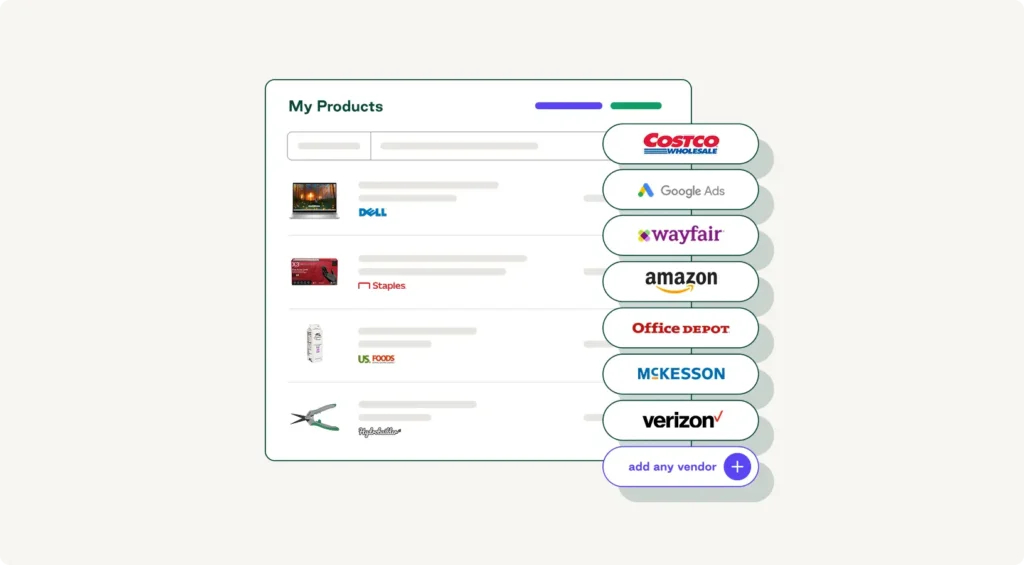
Purpose-built spend management software closes those gaps. Control starts at the catalog level, where only pre-approved products and vendors are visible to buyers, so the compliant choice is also the easiest one. Pre-purchase approvals and real-time, line-item spend visibility build on that, and anomaly detection flags spending that breaks from your usual patterns before it turns into a loss. Together, they keep every dollar aligned with your budget and easy to trace at audit time.
Start building a stronger retail risk management process with Order.co
A strong retail risk process comes down to running the framework consistently and backing it with tools that make the safe choice the easy one. Order.co is a procurement and finance automation platform that brings purchasing, approvals, and vendor oversight into one place.
Control starts at the catalog level, so only pre-approved products and vendors are visible to buyers and compliant purchasing is the default path. From there, you get real-time, line-item spend visibility, automated approvals, and a clear record of every transaction.
Schedule a demo to see where rogue spend and vendor risk are slipping through your current process.
FAQs about retail risk management
The most significant risks in the retail sector include data breaches, theft and fraud from both customers and vendors, inventory loss, workplace safety incidents, regulatory and compliance failures, and supply chain disruption. Rogue purchasing and uncontrolled spend also create audit and financial risk. Most retailers face several of these at once, which is why a single repeatable risk management process tends to work better than handling each threat in isolation.
A retail risk management framework is a repeatable loop you run on a set schedule. It starts by identifying potential risks across the business, then scoring each one by how likely it is and how much it would cost. From there, prioritize by score, assign an owner to each risk, put controls in place to reduce it, and monitor and document results so you can adjust your approach over time.
Insurance covers the losses your controls cannot fully prevent. Property insurance protects your physical locations and inventory from damage or disaster. General liability insurance covers customer injury and property claims. Cyber liability insurance helps offset the cost of a data breach. Insurance doesn't replace strong internal controls, but it gives you a financial backstop when a risk gets through despite your best efforts.
Get started
Schedule a demo to see how Order.co can simplify buying for your business.
"*" indicates required fields