Purchase Requisitions vs. Purchase Orders: Key Differences

Purchase Requisitions vs. Purchase Orders: Key Differences
As your team grows, purchase requisitions and purchase orders may start to blur together. When someone needs something fast, they might skip the requisition and just place the order. Others may fill out a requisition and never receive a follow up. Finance teams end up with a pile of invoices and no record of what was approved versus what was simply bought.
But purchase requisitions and POs symbolize two different steps in your purchasing process. Understanding the differences between each document (and automating the handoff between them) protects spend visibility, upholds your approval process, and improves financial control as you add people and locations.
The first step is learning:
- What a purchase requisition is
- What details belong on one
- How a purchase order differs
- The steps each document follows
- Why skipping the requisition step costs you visibility and control down the line
Quick answer:
- A purchase requisition is an internal request to purchase goods or services, while a purchase order is what goes to the vendor once that request is approved.
- The requisition step is where spending gets approved before the money moves, which is what makes it worth protecting even when it feels like a bottleneck.
- Skipping or watering down purchase requisitions is how unauthorized spending occurs, as purchases happen outside your approved vendor list and budget.
- Manual requisition review works fine at a small scale but tends to break down once you add more locations, departments, or approvers.
- Order.co automates both steps: requisitions route through approval workflows automatically, approved requests convert into purchase orders, and every purchase stays visible in real time across all locations.
Download the free guide: 5 Ways Your Purchasing Process Is Leaking Cash, (and How to Fix It)
What is a purchase requisition form?
A purchase requisition form is the internal document a stakeholder fills out to start a purchase. It's sometimes called an intake or request form, and it exists so the person approving the purchase has everything they need to make a decision without chasing down details.
Every organization's form looks a little different, but its purpose is the same. It records what someone wants to buy, why they need it, and what it should cost, then routes that information into your procurement process for review.
Contents of a purchase requisition form
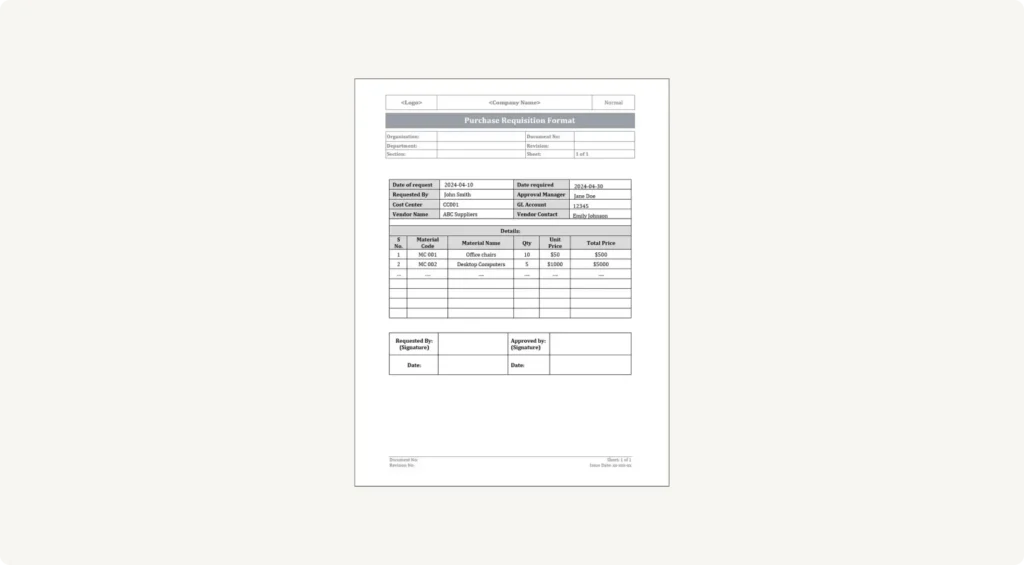
Every company has unique requirements for submitting purchase requisitions for approval. At a minimum, a completed purchase rEvery company sets its own requirements, but a complete purchase requisition form should include:
- The date of the request
- The name and department of the requestor
- The vendor’s name and contact information, if known
- The delivery location
- A requisition number for tracking
- The business case for the purchase
- Item details and quantity
- A delivery and use timeline
- An estimated cost or budget line
- Any information accounts payable needs to process the eventual invoice
Depending on your purchase requisition process, you might also ask for a couple of vendor options up front, especially for larger purchases where price and terms are still open for negotiation.
What is a purchase order?
A purchase order is the external document you send to a vendor once a purchase is approved. It tells the vendor exactly what you're buying, at what price, and on what terms.
A purchase order carries legal weight that a requisition doesn't. Once a vendor accepts it, it’s a legally binding contract, and both sides are bound to the listed quantities, pricing, delivery dates, and payment terms. That's why the approval that happens before it matters so much. Whatever gets signed off at the requisition stage is what turns into a legal commitment at this one.
5 Ways Your Purchasing Process Is Leaking Cash, (and How to Fix It)
Turn your purchasing process into a competitive advantage with this guide. Identify key areas to watch for improved efficiency and savings.
Purchase requisition vs. purchase order: what's the difference?
Purchase requisitions and purchase orders differ in the following ways:
| Purchase requisition | Purchase order | |
| Purpose | Requests approval to buy something | Confirms the purchase with the vendor |
| Internal or external | Internal, stays inside your organization | External, goes to the vendor |
| Created by | The employee or department requesting the purchase | The finance or purchasing department, once the requisition is approved |
| Legal weight | None. It's a request that can still be changed or rejected. | Legally binding once the vendor accepts it |
5 steps in the purchase requisition workflow
A typical purchase requisition workflow follows five steps:
- Requisition form. The requester completes the purchase requisition form and submits it for approval.
- Approval routing. The request routes to the relevant approvers, which may include department managers, finance, and legal or security if the purchase calls for it.
- Sign-off. Finance gives final sign-off. If the requisition is rejected, it goes back to the requester with notes on what needs to change.
- Strategic sourcing. The purchasing team collects quotes from vendors to finalize pricing and terms.
- PO creation. The approved details convert into a purchase order, which is then sent to the selected vendor to accept and begin order fulfillment.
Each handoff between these steps is a place where manual processes lose time and where a requisition can go missing. According to a survey of procurement teams at global organizations, more than 40% admitted manual processes are preventing them from fully addressing their leadership team’s critical business priorities.
Purchase order automation moves an approved requisition into a purchase order without anyone re-entering the same information, significantly speeding the process so teams can focus on higher-value work.
How do purchase orders work?
Once a purchase order is created, it moves through its own sequence:
- Finance or purchasing drafts the purchase order based on the approved requisition.
- The team checks the order for accuracy and completeness before sending it.
- The purchase order goes to the vendor to start fulfillment.
- The vendor confirms availability of every item and begins fulfilling the order.
- The vendor delivers the materials as outlined in the purchase order.
- The requesting department confirms the delivery matches what was ordered and approves the invoice.
- Accounts payable pays the vendor according to the terms in the purchase order.
The format of that purchase order varies by vendor and by company. If you don’t have a purchase order template yet, that's usually the fastest gap to close.
5 Ways Your Purchasing Process Is Leaking Cash, (and How to Fix It)
Turn your purchasing process into a competitive advantage with this guide. Identify key areas to watch for improved efficiency and savings.
"*" indicates required fields
Why you should enforce purchase requisitions in your procurement process
Purchase requisitions play a critical role in spend management and budget control. They help you:
- Catch overspending early. A requisition gate gives you visibility into spend while it's still a request, when you still have time to catch an out-of-policy purchase before it becomes an invoice. When you skip that gate, the first time you see a purchase is often after the money is already gone.
- Ease approvals. A complete requisition form gives approvers what they need the first time, so purchases don't stall on back-and-forth questions.
- Establish clear purchase records. Consistent, upfront documentation means you know what was ordered, from where, and when payment is due without digging through email threads later.
- Create an audit trail. When every purchase has a documented request and approval behind it, procurement policy compliance is something you can show, not something you have to reconstruct after the fact.
- Improve supply management. A well-documented purchasing process ensures all relevant procurement data is readily available. With increased visibility into what you’re buying and where it’s heading, you can reduce stockouts, avoid overpaying for last-minute materials purchases, and improve future capacity planning.
- Reduce spending leaks. Because a requisition step creates a paper trail for every purchase, it's harder for spend to slip through unapproved vendors or unbudgeted categories unnoticed.
Automated purchase requisitions in particular can also enable scalability as your headcount and geographical footprint grow. The Hackett Group found that top-performing procurement teams run requisition-to-purchase-order cycle times 58% shorter than average, largely by building consistent, automated review into the process instead of relying on people to catch what a manual process misses.
Spotting a pattern across dozens of locations isn't something anyone can do by scanning a spreadsheet. This is usually where intelligent procurement starts to matter, catching what manual reviews miss.
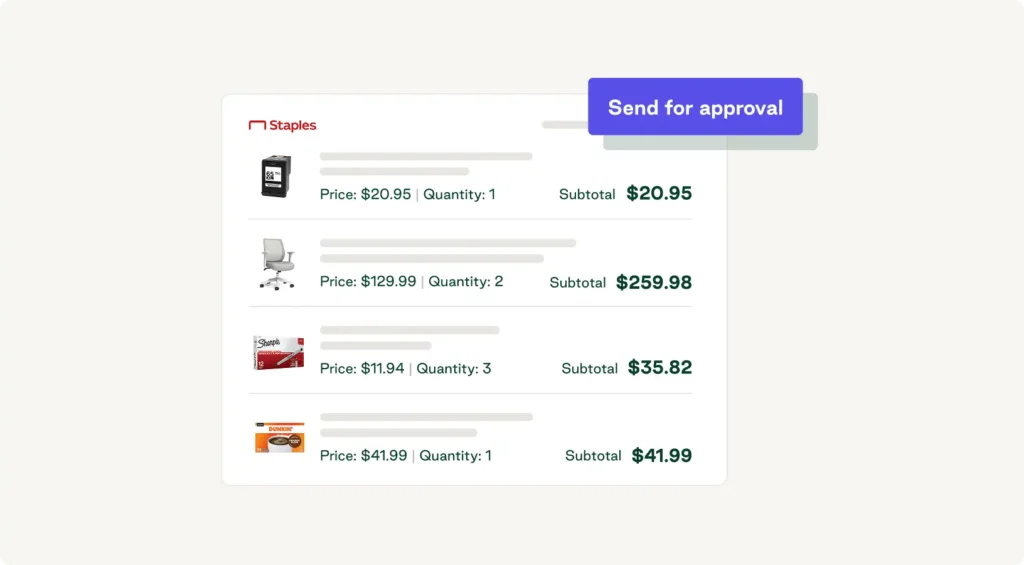
Order.co builds purchase requisitions directly into the procure-to-pay process instead of leaving it as a policy that employees can bypass. Requests route through pre-purchase approval workflows configured by user, location, cost center, vendor, or order subtotal, so the right person signs off before a dollar is spent.
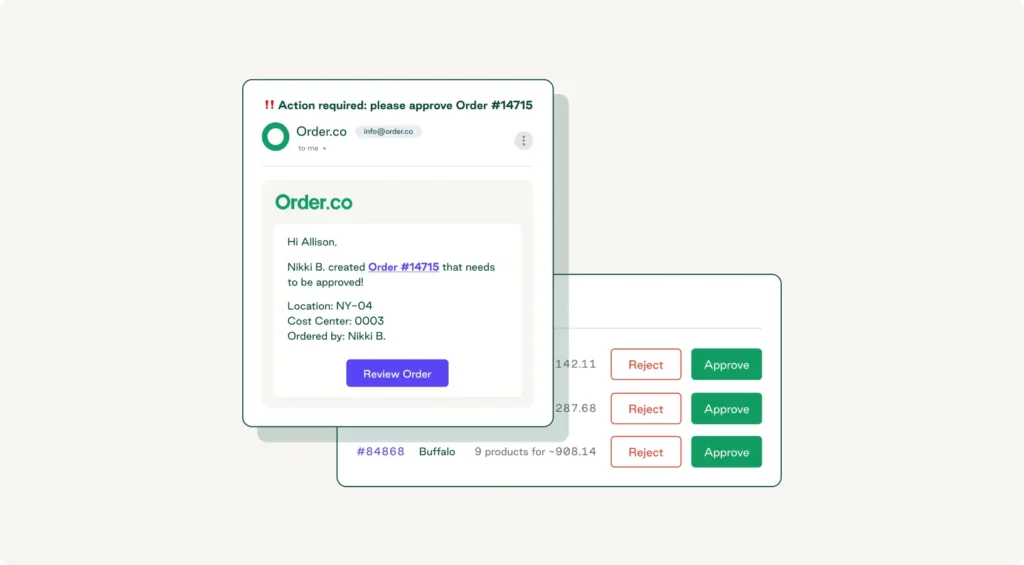
Every approved purchase converts into a purchase order with GL coding applied at the line-item level automatically. Additionally, anomaly detection features flag spend that breaks from your normal patterns so a change doesn't sit unnoticed until close.
Get started
Once approval routing and purchase order generation happen automatically instead of by hand, the gap between "someone requested this" and "the vendor has an approved PO" stops depending on whoever happens to check their inbox first.
CorePower Yoga saw what that gap costs firsthand. Unapproved purchases across its 200-plus studio locations had climbed to nearly $50,000 a month before the company centralized approvals with Order.co. "By implementing controls and approval processes, Order.co has allowed us to essentially eliminate all unapproved spending, which had gotten as high as $50k per month," said Stefanie Teintze, Facilities & Property Management Specialist at CorePower Yoga.
Schedule a demo to see how automated approval workflows could close that same gap for your team.
FAQs about purchase requisitions
Most organizations set a dollar threshold below which small, low-risk purchases skip the formal requisition step, since routing every office supply order through full approvals slows the team down without adding much oversight. Above that threshold, a requisition should come first. It documents the business case for the purchase and gets sign-off before a vendor is contacted, which is what keeps spend visible and purchases inside your approved process.
Approval typically follows a chain that matches the request's size and risk. A department manager confirms the need, and finance or a purchasing lead confirms the budget and vendor terms before it moves forward. Larger or cross-department purchases may add legal or security review. The right approvers depend on how your organization is structured, but a requisition should always clear finance before it becomes a purchase order.
Yes. A requisition is a request that can be changed or rejected at any point before a purchase order goes out. Common reasons for rejection include missing budget information, an unapproved vendor, or an incomplete form. A rejected requisition typically goes back to the requester with notes on what to fix rather than disappearing from the process entirely.
Top-performing procurement teams get from requisition to purchase order in as little as 5 hours, while manual, less mature processes can stretch that closer to 48 hours. The real goal is keeping the process fast enough that people don't feel the need to route around it. If requisitions are consistently sitting for days, that's a sign to look at where the bottleneck actually is.
Get started
Schedule a demo to see how Order.co can simplify buying for your business.
"*" indicates required fields