Decentralized Purchasing: How to Give Teams Autonomy Without Losing Control

Decentralized Purchasing: How to Give Teams Autonomy Without Losing Control
Decentralized purchasing has a reputation problem: vendor sprawl, rogue spend, and blind cost overruns. Most of the case against it lies in the cleanup work it creates downstream.
What those problems actually expose is a lack of purchasing infrastructure. When local teams buy from curated catalogs of approved vendors and products, procurement can guide purchasing decisions before a request ever reaches an approval workflow. That gives teams room to move quickly without losing visibility into where money is going.
Key takeaways
- Decentralized purchasing moves buying decisions to the department or location level, giving teams the speed and flexibility to respond to local needs without waiting for central approval.
- A hybrid model is where most scaling organizations land: central teams set policy and visibility infrastructure while local teams handle execution.
- Effective decentralized purchasing starts with a guided buying environment, including curated catalogs that shape what buyers can purchase before any approval workflow is triggered.
- Order.co makes decentralized purchasing practical with curated catalogs, vendor consolidation, automated approvals, budget visibility, GL coding, and purchasing data that helps teams make better decisions without disrupting how locations operate.
Download the free ebook: The Procurement Strategy Playbook for Modern Businesses
What is decentralized purchasing?
Decentralized purchasing is a procurement model where buying decisions happen at the department or location level rather than through a central procurement team. Instead of routing every request through headquarters, local teams can identify needs, select vendors, and complete purchases within defined policies, such as spend limits, vendor guidelines, or documentation requirements.
This model works best when the people closest to the work need speed and flexibility. A restaurant manager can reorder kitchen supplies without waiting for corporate approval, and a regional operations lead can work with suppliers who understand the site’s needs.
Decentralized purchasing vs. centralized purchasing vs. hybrid model
When comparing these three purchasing models, it's important to understand the trade-offs between control and speed. Here's how they compare:
- Centralized purchasing: All buying decisions flow through a single purchasing department. This builds consistency and strong vendor leverage, but it creates bottlenecks. Every request competes for the same people's attention, and local teams lose the flexibility to respond quickly.
- Decentralized purchasing: Authority shifts to operational teams. They act faster on day-to-day purchases and work directly with vendors that already know their sites. The trade-off is visibility; when purchasing happens across multiple locations and departments, procurement and finance lose track of what's being bought, from whom, and at what price.
- Hybrid model: A central team sets policy, negotiates contracts, curates catalogs, and maintains visibility infrastructure. Local teams handle execution.
Most scaling organizations choose a hybrid approach. Pure centralization breaks down when you manage multiple locations with different needs, and pure decentralization erodes control when no one can see where money is going. A hybrid model lets local teams move fast while central teams maintain oversight without becoming bottlenecks.

The Procurement Strategy Playbook for Modern Businesses
Want to know more about strategic buying? Read our Procurement Strategy Playbook for even more valuable insights.
How functional decentralized purchasing works in practice
Decentralized purchasing works best when local autonomy operates inside a clear purchasing framework. Without it, distributed buying can quickly turn into vendor sprawl, rogue spend, and cleanup work for finance after invoices arrive.
In practice, functional decentralized purchasing depends on four operational layers: what buyers can choose from, who has purchasing authority, how exceptions are approved, and how budgets are tracked in real time. The goal is not to slow local teams down, but to make the right purchasing path easier to follow from the start.
Curate what's available to buy
The first layer is defining what local buyers can purchase. When buyers start from pre-approved vendors and products, compliance becomes the default path. Teams still move quickly, but they’re choosing from options the organization has already vetted.
This is where catalog control can change the buyer experience. Instead of asking local teams to remember policy, check vendor lists, or compare approved alternatives on their own, the purchasing environment guides them toward compliant choices from the beginning.
Approvals and budget checks still matter, but they should not carry the full burden of purchasing control. In a functional decentralized model, they act as additional safeguards for edge cases like high-value purchases, off-catalog requests, and category exceptions.
Distribute purchasing authority across locations and departments
Once the buying environment is defined, the next step is deciding who can buy, for which categories, and up to what thresholds. In practice, this means mapping purchasing authority by role, location, department, spend amount, and category risk.
A regional manager might have authority to purchase office supplies and local services up to a certain threshold, while capital equipment requests require finance sign-off regardless of location. Department heads may have autonomy within approved vendor guidelines, but need procurement review before adding new suppliers.
The key is making those boundaries clear and consistently enforceable. When purchasing authority lives only in policy documents, off-policy purchases slip through—not always because someone is cutting corners, but because the process does not guide the buyer in the moment.
Design approval workflows and documentation standards
Approval workflows in a decentralized model should support local speed without sacrificing consistency. Low-risk purchases may proceed automatically, while higher-value or higher-risk requests are routed to the appropriate approvers based on category, location, role, or spend threshold.
Your workflow should answer:
- Who approves what and in what order
- Which purchases can move forward automatically
- Which requests require additional documentation or review
- What information needs to be captured before approval
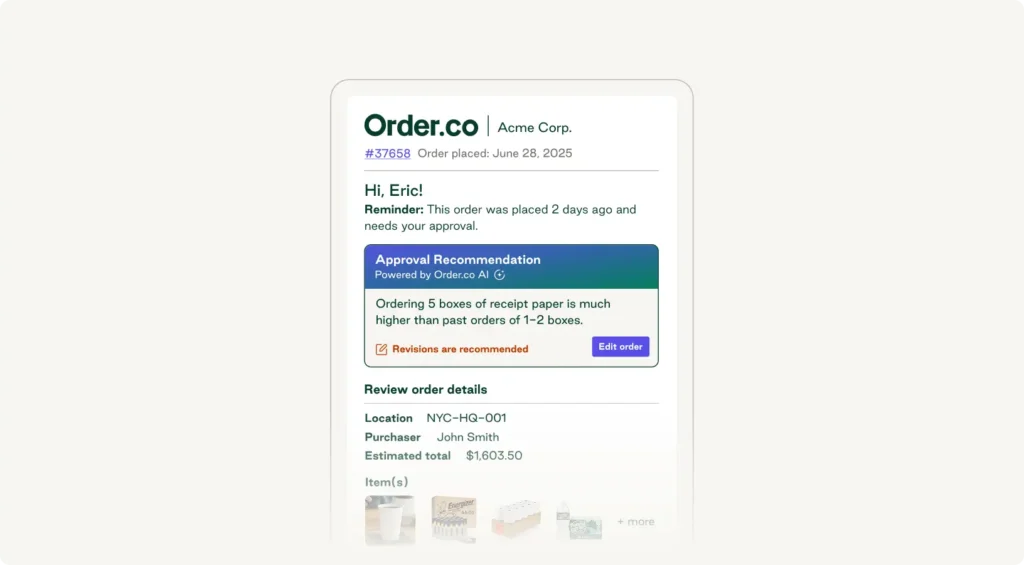
Automation ensures approvals don’t create more manual follow-up for procurement, finance, or AP. A functional workflow captures the information teams need later—vendor details, cost justification, budget codes, and category-specific documentation—before the purchase moves forward.
Without that standardization, AP teams end up chasing missing information weeks after the purchase. With it, decentralized teams can move quickly while finance gets cleaner data for coding, reconciliation, reporting, and month-end close.
Manage budgets across departments in real time
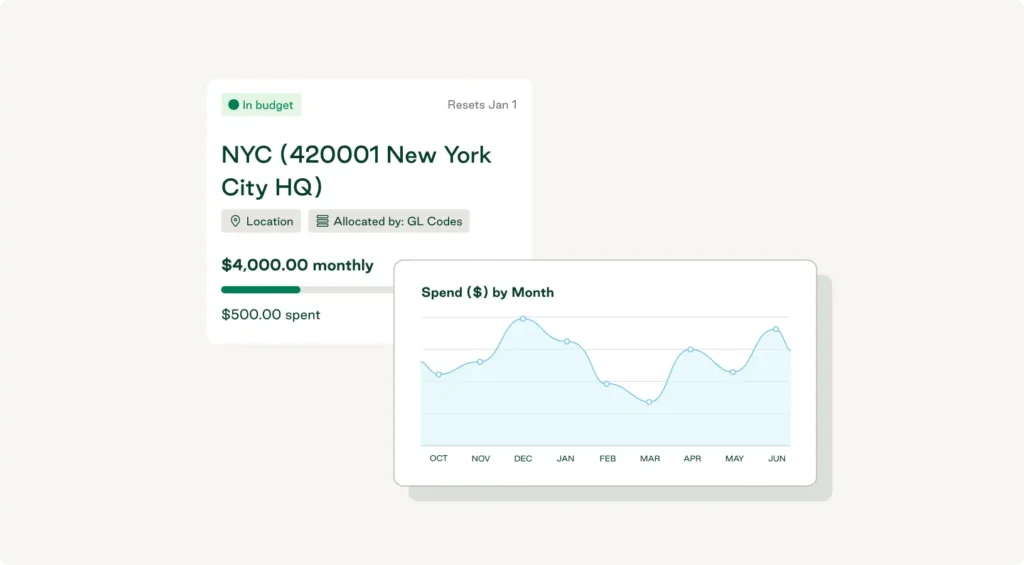
Budget control in decentralized purchasing means looking beyond what has already been invoiced to what has been committed. If a department has $50,000 left in its quarterly budget but $30,000 in pending approvals, it only has $20,000 available to spend.
Without real-time visibility into committed spend, budget holders make decisions based on incomplete data. That creates problems for finance after the fact: unexpected overruns, delayed reporting, and extra manual work during close.
A functional decentralized model gives teams budget context before they buy, helping local teams make faster decisions while giving finance a more accurate view of spend in motion.
Benefits and challenges of decentralized purchasing
Decentralized purchasing delivers real advantages for teams that need to move quickly and work closely with local vendors. It also introduces control, compliance, and visibility challenges. The question businesses need to answer is whether they can get the speed they need without sacrificing oversight.
Key benefits of decentralized purchasing
When implemented effectively, decentralized purchasing delivers tangible operational advantages:
- Faster decision-making: Location managers and department heads can act immediately on operational needs without waiting for central approval. MIT CISR research found that large, decentralized organizations needed less than half the time of their centralized peers to sense and seize new opportunities, showing how distributed decision rights can improve organizational agility when teams have the right guardrails.
- Stronger local vendor relationships: Teams closest to the work build direct relationships with suppliers that understand their specific requirements. They know which vendors deliver on time, offer better pricing for recurring orders, and respond quickly when issues arise—knowledge that doesn't translate well through a central procurement function managing dozens of locations.
- Reduced approval bottlenecks: Day-to-day purchasing moves forward without competing for the central team's attention, freeing them to focus on procurement strategy rather than transaction processing.
- Better purchasing context: Local teams often know which vendors, products, and ordering patterns work best for their locations. When decentralized purchasing is well structured, local knowledge becomes usable spend data that procurement can use to identify preferred products, recurring needs, and savings opportunities.
Common challenges of decentralized purchasing
The trade-off is control. When purchasing authority is spread across teams, visibility and oversight become harder to maintain, and operational costs compound quickly.
The most common challenges include:
- Loss of real-time spend visibility: Procurement and finance can’t see what was purchased, which vendors were used, or whether budgets were followed until invoices arrive. McKinsey analysis shows fragmented procurement creates major visibility gaps, with many organizations unable to track spend beyond immediate suppliers.
- Increased rogue spend: Siloed teams don’t always know which vendors, products, or price points are approved, especially when that guidance lives outside the buying experience.
- Budget overruns: Without committed-spend visibility, departments can exceed budget allocations before anyone notices.
- Inconsistent purchasing data: When teams document purchases differently, finance and procurement lose the clean data they need to compare vendors, analyze spend, and identify savings opportunities.
The Procurement Strategy Playbook for Modern Businesses
Learn the key pillars of a strong strategy, valuable procurement metrics to track, and initiatives you can start implementing today.
"*" indicates required fields
Choosing the right purchasing model
Deciding which purchasing model to choose depends on your size, operational complexity, and the level of local variation you're trying to support. Most organizations move through all three models as they grow.
- Centralized purchasing works best for early-stage organizations, standardized operations, or teams with limited vendor complexity. It simplifies risk management and consistency, but can slow local teams down as the business scales.
- Decentralized purchasing fits fast-moving, multi-location teams with high local variation. It reduces approval delays, but without the right systems, procurement and finance lose visibility into what’s being purchased, by whom, and at what cost.
- Hybrid models are often the next step for scaling organizations. Central teams define the framework, while local teams handle execution—preserving autonomy without sacrificing visibility or control.
The right choice should reflect not only who needs authority to buy, but also the level of visibility finance and procurement need before, during, and after each purchase. Once you know which model fits your organization, the next step is to ensure your systems can support it without creating additional manual work for procurement, finance, or local teams.
Make decentralized purchasing work at scale with Order.co
Decentralized purchasing works best when local teams have the autonomy to buy what they need and finance has the visibility to manage spend across locations. Order.co helps teams create that balance by shaping the buying environment before a purchase request is ever created.
With Order.co, procurement and finance can:
- Curate catalogs by location, role, department, or category so buyers only see the products and vendors they’re approved to use.
- Preserve local autonomy with a simple purchasing experience that lets teams get what they need without having to route every request through HQ.
- Automate purchasing workflows with approvals, budget checks, line-item GL coding, order tracking, and invoice management.
- Improve spend visibility with cleaner purchasing data across locations, vendors, departments, and categories.
- Support smarter purchasing decisions with AI-assisted insights that help teams identify vendor issues, recurring needs, pricing changes, and savings opportunities.
That gives local teams the speed and flexibility of decentralized purchasing while giving finance and procurement the control, clean data, and automated workflows they need to manage spend at scale.
Book a demo to see how Order.co helps decentralized teams move quickly without losing control of purchasing, vendors, or spend data.
FAQs about decentralized purchasing
Decentralized purchasing formally delegates buying authority to departments, locations, or teams, usually within defined budgets, vendor guidelines, and approval processes. Distributed purchasing is broader: it describes any situation in which buying occurs across multiple people or locations, whether or not a deliberate structure exists. Decentralized purchasing implies an intentional model; distributed purchasing may simply reflect how teams operate by default.
Yes, decentralized purchasing can work for regulated industries when the purchasing environment enforces compliance before a transaction happens. In healthcare, pharmaceuticals, and other regulated sectors, risks include audit gaps, regulatory non-compliance, unvetted vendors, and incomplete documentation. Platforms like Order.co support this by guiding buyers to approved vendor and product catalogs, routing high-risk purchases through the appropriate workflows, and capturing documentation to create a clearer audit trail.
The clearest sign your purchasing process has become too decentralized is that finance can’t answer basic questions about where money is going until weeks after purchases happen. Other red flags include invoices from unknown vendors, delayed month-end close due to missing documentation, duplicate supplier relationships, inconsistent pricing, and rising costs across locations. These issues suggest the organization needs stronger systems to support local buying authority with better visibility, consistency, and control.
Get started
Schedule a demo to see how Order.co can simplify buying for your business.
"*" indicates required fields