Procurement Best Practices to Optimize Spend & Efficiency

Procurement Best Practices to Optimize Spend & Efficiency
Modern procurement teams are facing mounting pressure from every direction: supply chain disruptions threaten continuity, stakeholders expect faster approval cycles, and CFOs scrutinize every dollar. At the same time, manual processes create bottlenecks that slow decision-making when speed matters most. As a result, many teams find themselves reacting rather than leading.
Procurement best practices offer a path forward. When applied consistently, they can help you regain control, reduce friction, and get more value from every purchase.
To optimize your procurement process for spend and efficiency, follow the practices outlined in this guide.
Download the free ebook: The Procurement Strategy Playbook for Modern Businesses
What do procurement best practices look like today?
Modern procurement best practices are centralized, data-driven, and designed for scale. They transform purchasing from a routine task into a strategic function that directly supports business goals.
Businesses that get it right—those with mature procure-to-pay processes and strong catalog coverage—can reach up to 90–95% purchase order compliance. That level of discipline helps control spend, capture volume discounts, and drive measurable procurement savings.
Yet even with strong frameworks in place, many companies struggle to realize the full benefits. Different departments follow different processes, purchasing data stays stuck in spreadsheets and email threads, and compliance often depends on slow manual checks that can't keep pace with the business.
To pay off, procurement best practices must become part of everyday purchasing behavior. That means moving beyond documentation and putting procurement systems and processes in place that make the right choice easy—where compliance is simple, information is accessible, and efficiency is built into every workflow.
The Procurement Strategy Playbook for Modern Businesses
Want to know more about strategic buying? Read our Procurement Strategy Playbook for even more valuable insights.
5 procurement best practices that drive control, efficiency, and value
These five best practices work together as a system, not as separate improvements. Each one reinforces the others: strategic alignment guides what to buy, data reveals where value exists, strong supplier relationships help execute strategy, compliance keeps spending in check, and cost optimization captures the results.
Yet even with these practices in place, implementation—not intention—is where most procurement leaders struggle. Instead of allowing policies to sit in documents while teams default to familiar workflows, you need a way to bring all five practices to life. With a unified purchasing platform, compliance, visibility, and efficiency become natural outcomes of everyday actions.
1. Align procurement strategy to business goals
Strategic alignment turns procurement planning from a tactical task into a value driver. When your procurement strategy connects directly to your organizational objectives, every sourcing decision supports broader outcomes—like controlling costs, protecting margins, and improving operational efficiency.
How to implement
Consolidate purchasing data so spend, budgets, and approvals map to business priorities. Use a procurement automation solution to standardize buying across teams while maintaining department-level visibility.
Track these key KPIs to measure impact:
- Cost efficiency: Savings rate, spend under management, contract compliance
- Cycle time: Requisition-to-order time, approval speed
- Procurement quality: Accuracy of purchase orders, adherence to approved vendors
By combining centralized data with repeatable workflows, Order.co gives you the visibility and control needed to identify bottlenecks, enforce approval rules, and continuously improve your processes.
2. Use data and technology to drive smarter purchasing
Visibility and automation are foundational, not optional. Manual reporting slows decisions, and scattered data hides savings opportunities and compliance risks.
Modern procurement software brings requisitions, approvals, and purchase orders together, improving spend visibility, simplifying routine workflows, and helping you make smarter decisions faster.
How to implement
Replace disconnected procurement tools with an automation system like Order.co that captures all purchasing activity in one place. Centralizing procurement reduces blind spots, making it easier to track spending patterns and ensure compliance. Automated approval workflows enforce policies, reduce bottlenecks, and speed up cycle times.
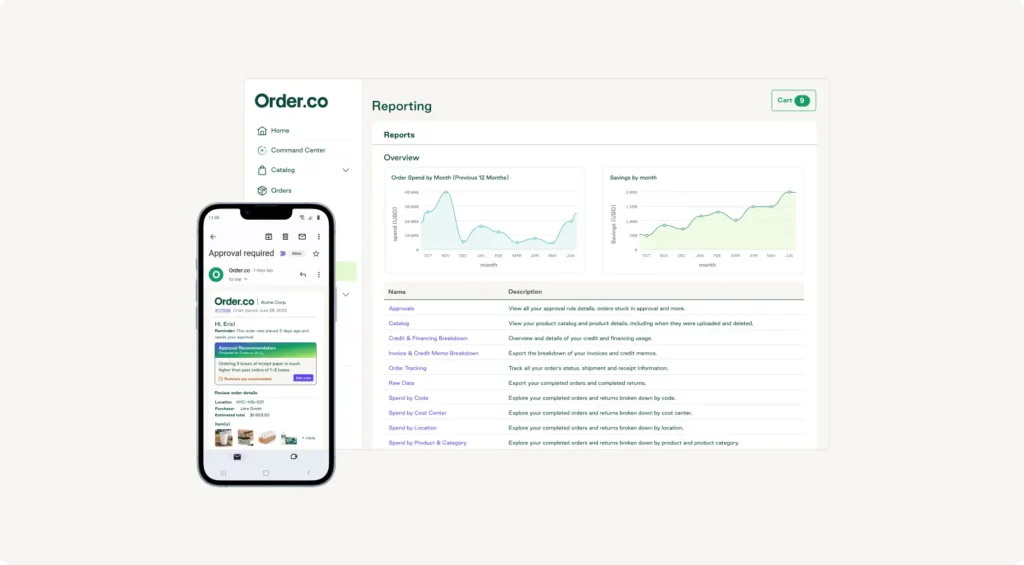
Leverage real-time data to identify trends, flag unusual procurement activity, and guide purchasing decisions before issues escalate. Rely on centralized spend analysis and reporting to help categorize transactions, highlight potential savings opportunities, and keep compliance on track.
3. Build strong, strategic supplier relationships
Focusing only on transactional buying limits the value procurement can deliver. When vendor relationships are unmanaged or contracts are poorly maintained, consistency, leverage, and accountability suffer. Poor agreement management alone costs the global economy an estimated $2 trillion per year.
Optimized supplier relationships can help you capture value through better pricing, improved service, and increased opportunities for collaboration.
How to implement
Where possible, consolidate vendors and define preferred suppliers by category, considering total cost of ownership, quality, reliability, and risk—not just price.
Use a centralized tool like Order.co to automatically route spend toward approved suppliers, ensuring compliance and consistency across teams. With all supplier data in one location, you can analyze purchasing patterns to inform reviews, contract renewals, and negotiations, so your supplier partnerships deliver more value over time.
4. Control risk, compliance, and maverick spend
As your organization scales, decentralized purchasing can lead to policy violations and compliance risk. Maverick spend—purchases outside approved channels—prevents you from capturing negotiated discounts and reduces visibility into overall spend.
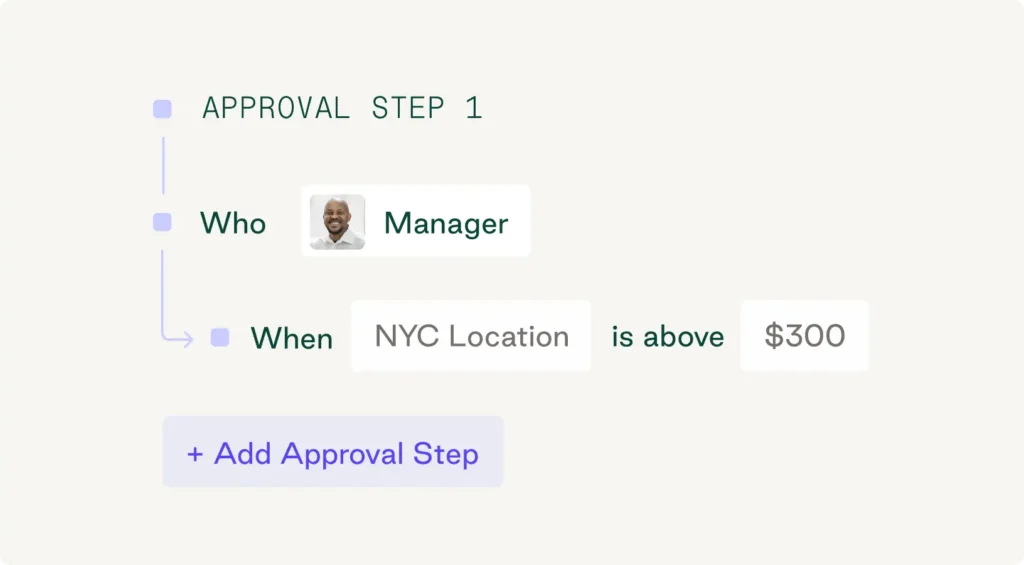
Compliance should be part of everyday workflows, not enforced through manual oversight. Standardized approval workflows guide each requisition along the proper path based on purchase amount or category, bringing purchasing consistency and control to your entire organization.
How to implement
Define purchasing rules for approvals, budgets, and vendor restrictions, and enforce them at the point of purchase using a procurement software platform. Order.co lets you apply configurable approval rules that reflect your spending controls—automating notifications, capturing decisions, and maintaining a clear audit trail.
Centralizing your purchasing data allows you to see who bought what, from whom, and why. Linking every purchase order to an approved requisition and budget ensures spending remains authorized while providing full visibility for audits and reporting.
5. Optimize costs while maximizing total value
Cost optimization is an ongoing effort, not a one-time project. Focusing only on unit price can overlook hidden costs like inefficient processes, duplicate vendors, or low-value purchases. Thinking in terms of total cost of ownership helps you make more informed decisions about company spend.
With procurement automation, you can reduce your teams' manual workload by up to 40%, freeing resources to focus on strategic cost reduction rather than transaction processing.
How to implement
Aggregate spend across vendors and categories to identify consolidation opportunities and prevent cost leakage. Purchasing through negotiated contracts can help you capture volume discounts and ensure each dollar works harder.
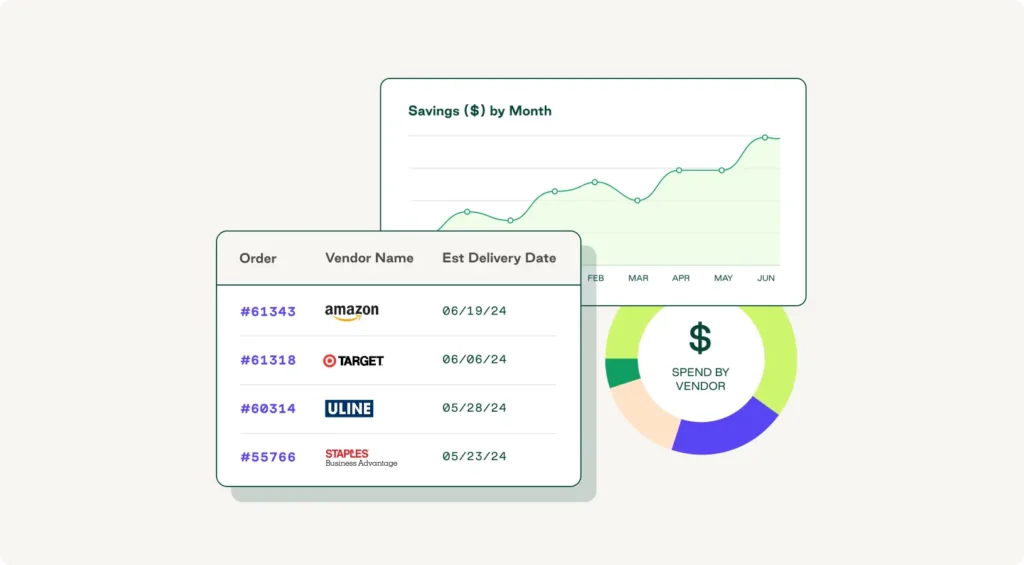
To uncover hidden costs and low-value purchases, centralize all spend data in Order.co. Real-time dashboards let you track spend by category, supplier, and department, revealing patterns that inform smarter purchasing decisions.
Finally, use these insights to continuously refine your supplier mix and buying behavior. Send standardized purchase orders through Order.co's automated purchase order portal to reduce manual entry, lower the risk of errors, and ensure every transaction supports your cost savings initiatives.
What should you prioritize in a procurement solution?
Choosing the right procurement technology means focusing on the capabilities that will deliver the greatest impact. When evaluating a solution, keep the following priorities in mind.
End-to-end procurement visibility
Modern e-procurement platforms should support the entire procurement lifecycle, from requisition through payment. Core capabilities include:
- Requisition management
- Automated approval workflows
- Purchase order generation
- Invoice matching
Catalog management helps maintain compliant purchasing by allowing employees to select from pre-approved items and suppliers, while intuitive interfaces encourage adoption and make daily tasks easier.
Real-time spend visibility
Platforms should provide clear, up-to-date insights into spending across departments, suppliers, and categories. Real-time visibility helps teams identify trends, uncover potential savings, and maintain compliance without relying on manual reporting.
Data-driven insights
Procurement decisions are most effective when informed by data. A centralized platform like Order.co collects spend data in one place, making it easier to analyze patterns, flag unusual activity, and make informed sourcing and budget decisions.
System integration
Your procurement solution should connect with enterprise resource planning (ERP) systems to eliminate duplicate entry and ensure budgets, purchase orders, and invoices stay aligned. Integration supports accurate record-keeping and smooth financial workflows without adding manual steps.
Centralized analytics and reporting
Order.co dashboards provide visibility into purchasing performance, budgets, and trends. Drill-down functionality lets you examine individual transactions, while automated alerts flag deviations so you can act quickly.
The Procurement Strategy Playbook for Modern Businesses
Learn the key pillars of a strong strategy, valuable procurement metrics to track, and initiatives you can start implementing today.
"*" indicates required fields
Bring procurement best practices together with Order.co
The value of procurement best practices depends on adoption and ease of execution—not just strategy. Order.co helps make these practices part of everyday procurement by centralizing purchases, enforcing policies, and providing clear visibility without adding friction.
With Order.co, you can digitize requisitions and approvals, store supplier information and contracts, analyze spend patterns, and integrate with ERP systems. The platform also tracks spend by category and supplier, delivers real-time reporting to highlight trends and potential savings, and maintains audit trails to support governance.
How AKIRA reduced purchasing costs by $10K after implementing Order.co procurement software
AKIRA, a retail company with 80+ employees across multiple store locations, partnered with Order.co to address fragmented purchasing processes that limited spend visibility and required excessive manual price research.
Within six months, AKIRA unlocked over $10,000 in cash back savings through:
- AI-powered strategic sourcing: The Order.co AI Command Center automated price comparisons that previously took days, using AKIRA's purchasing history to deliver cost-effective recommendations.
- AI insights for approvals: AI-powered insights helped identify potential duplicate purchases and budget deviations, preventing overspending and unnecessary purchases.
- Consolidated procurement management: Centralizing suppliers in one platform reduced the need to compare pricing across multiple websites, freeing "countless hours" for core distribution responsibilities.
To see how Order.co can help you optimize your procurement workflows, uncover hidden savings, and strengthen supplier relationships, schedule a demo today.
FAQs
Get started
Schedule a demo to see how Order.co can simplify buying for your business.
"*" indicates required fields