The Education Procurement Guide for Schools

The Education Procurement Guide for Schools
Educational institutions face unique procurement challenges that can strain budgets, slow operations, and create compliance headaches. From managing unpredictable enrollment numbers to navigating complex public sector regulations, procurement professionals in schools must balance cost control with quality standards while ensuring every purchase supports student success.
The right procurement technology and processes can transform these challenges into opportunities. Modern procurement solutions help educational institutions automate workflows, maintain compliance, and gain visibility into spending patterns across departments and campuses—increasing both efficiency and savings.
This guide covers everything you need to know about education procurement, including who's involved, how the process works, common challenges and solutions, and the metrics that matter most for measuring success.
Download the free guide: The Procurement Strategy Playbook for Modern Businesses
What is education procurement?
Education procurement is how educational institutions acquire the necessary goods and services that keep their operations, campuses, and student support programs running. It covers everything from classroom supplies and technology to food service providers, facilities maintenance, and construction firms.
Unlike private sector procurement, education procurement typically involves tighter budgets, stricter compliance standards, and higher expectations for transparency. Schools must follow government purchasing guidelines and competitive bidding processes while meeting the diverse needs of students, staff, and faculty.
Examples of education procurement
Procurement in education spans a wide range of categories, each critical to keeping schools running smoothly. Institutions purchase instructional materials like textbooks, digital learning platforms, lab equipment, and art supplies. They invest in educational technology—computers, tablets, interactive whiteboards, software licenses, and network infrastructure—to support teaching and learning.
Beyond the classroom, schools also spend on facilities, from furniture and maintenance supplies to cleaning products and energy services, as well as food services, such as cafeteria supplies, catering services, and vending machine contracts. Transportation, professional services, and construction are also key, covering school buses, IT support, and renovations and upgrades.
Because each school district has specific needs, procurement structures and involved stakeholders often vary widely.
The Procurement Strategy Playbook for Modern Businesses
Want to know more about strategic buying? Read our Procurement Strategy Playbook for even more valuable insights.
Who is involved in education procurement?
Successful education procurement depends on collaboration across multiple stakeholders, each playing a distinct role in the purchasing process.
Primary decision-makers typically include:
- Procurement directors or purchasing managers: Oversee the entire procurement function, develop policies, and manage vendor relationships
- Department heads: Request and approve purchases for their teams (academic departments, facilities, IT)
- Budget officers or controllers: Ensure spending aligns with allocated budgets and financial policies
- School administrators: Approve high-value purchases and strategic contracts
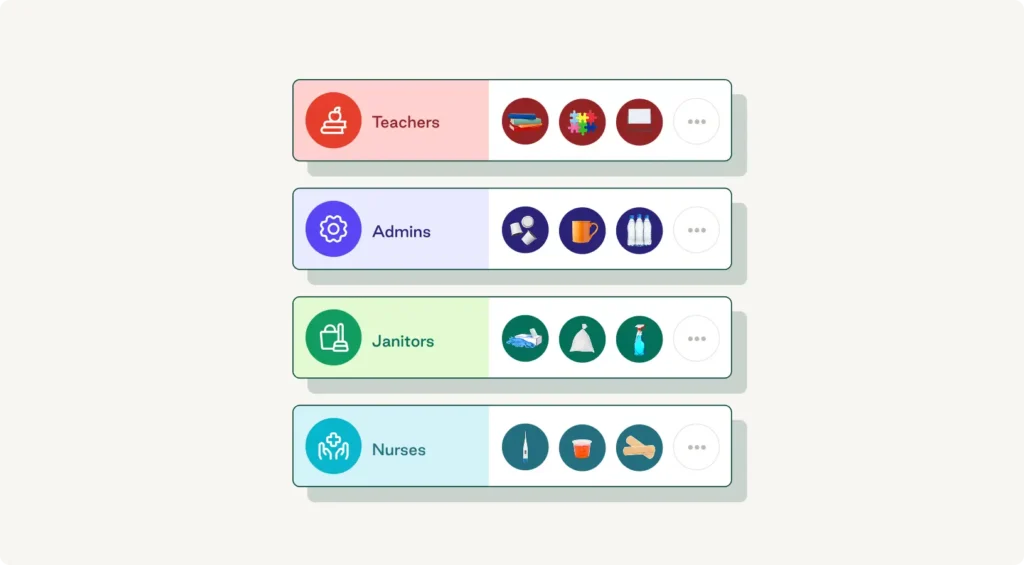
The actions of primary stakeholders in the education sector affect a large number of secondary stakeholders, including:
- End users: Teachers, faculty, researchers, and staff who identify needs and specify requirements
- Legal counsel: Attorneys who review contracts, ensure compliance with regulations, and mitigate legal risks
- IT directors: Leaders who evaluate technology purchases for compatibility, security, and support requirements
- Facilities managers: Professionals who assess maintenance, construction, and operational purchases
- Finance committees or boards: Groups that approve major expenditures and capital projects
- Compliance officers: Specialists who ensure adherence to federal, state, and institutional purchasing policies
In K–12 settings, purchasing authority often flows from district-level procurement offices to individual school administrators. Higher education institutions, in contrast, typically operate with more decentralized structures where individual departments can make purchasing decisions within established guidelines.
How does education procurement work?
The education procurement process follows a structured workflow designed to ensure transparency, compliance, and cost control.
While specific steps may vary by institution type and purchase size, the typical process includes:
- Needs identification: Departments outline what they need and submit purchase requests with details like quantity, specifications, and justification. Stakeholders review these requests to make sure they fit budget limits and align with educational goals.
- Supplier sourcing: Procurement teams research potential vendors, comparing pricing and quality while also evaluating them based on reliability, compliance, and past performance. Many institutions use vendor sourcing strategies to find the most qualified partners.
- Solicitation: Institutions issue a formal request for larger purchases, such as a Request for Proposal (RFP), Request for Quote (RFQ), or Invitation to Bid (ITB) to collect competitive offers.
- Evaluation: Cross-functional teams review submissions using weighted criteria like cost, quality, technical capabilities, delivery timelines, and reputation. The highest-scoring supplier wins the contract.
- Contract execution: Teams finalize terms, including pricing, delivery schedules, payment conditions, service level agreements, and termination clauses. Legal counsel reviews contracts to ensure compliance with institutional policies and regulations.
- Purchase orders: Authorized personnel create purchase orders that move through approval workflows, often using centralized purchasing systems.
- Delivery and monitoring: Institutions verify receipt of goods or services, process invoices for payment, and monitor supplier performance against contractual obligations. Ongoing evaluation ensures vendors meet quality and service standards.
A consistent procurement process helps institutions stay compliant, make smarter purchasing decisions, and maximize the value of every dollar.
What are the most common procurement education challenges?
Education procurement teams face several recurring challenges that impact efficiency, costs, and day-to-day operations. Understanding these challenges and implementing strategic solutions is essential for procurement success.
Managing budget constraints
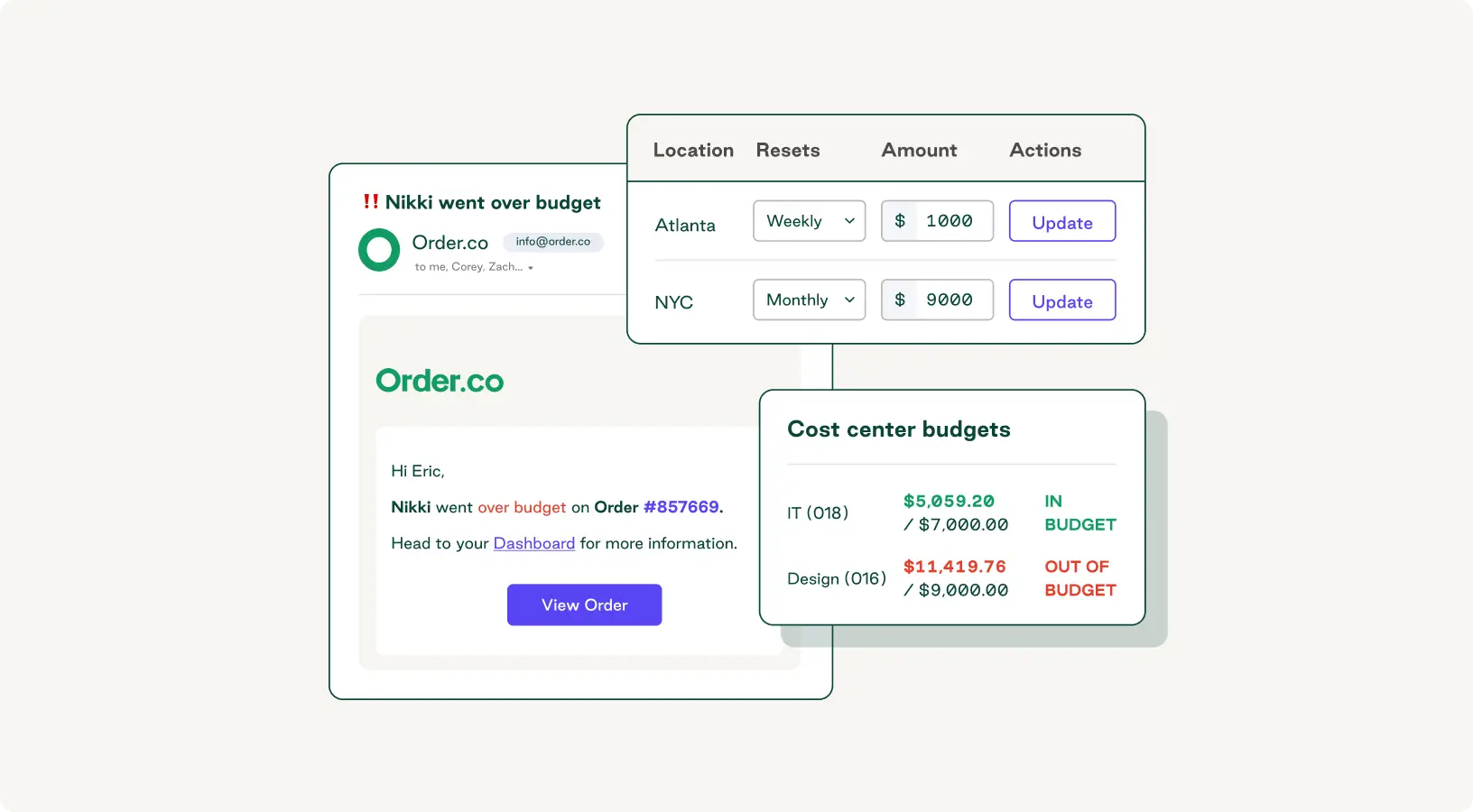
K–12 schools nationwide spend $17,277 per pupil annually, with total public K–12 expenditures reaching $857.2 billion per year. At the same time, rising operational costs and inflation mean funding may not go as far, and procurement budgets often feel the squeeze.
Limited funding often means making tough decisions—choosing between essential classroom materials, delaying infrastructure upgrades, or scaling back technology investments. In some cases, staff adapt by covering costs out of pocket, which can create morale issues and lead to inequitable resource distribution.
To combat budget constraints, schools can:
- Use group purchasing organizations to unlock volume discounts
- Apply zero-based budgeting to justify each expense annually
- Prioritize purchases based on educational impact
- Evaluate spending using a total cost of ownership analysis
- Pursue grant funding for major purchases and upgrades
Navigating regulatory compliance
Educational institutions must follow a complex mix of federal, state, and local purchasing rules that can slow procurement cycles and increase administrative burden. Because regulations can change—whether related to federal grant-funded purchases, sustainability mandates, or supplier diversity policies—institutions need to stay flexible.
For example, the Federal Uniform Guidance, updated October 1, 2024, sets procurement standards for spending federal grant and loan funds. Non-compliance can result in canceled contracts, financial penalties, audit findings, and reputational damage.
To stay on track, higher ed and K–12 schools can:
- Create clear procurement policies aligned with current regulations
- Provide regular compliance training for staff
- Use automated checks to catch potential issues early
- Keep detailed documentation for every purchase
- Work closely with legal counsel for complex contracts
Ensuring vendor reliability
Selecting unreliable vendors can disrupt operations, compromise quality, and waste limited resources. Delayed projects, emergency purchases at premium prices, and poor-quality goods can quickly increase expenses and affect teaching and learning.
To ensure vendor reliability, educational institutions should:
- Use structured vendor sourcing practices to find the best partners
- Establish comprehensive vendor evaluation criteria beyond price
- Check references before committing to suppliers
- Implement formal vendor performance monitoring
- Build relationships with multiple qualified suppliers
Accelerating approval processes
Manual approval workflows can tie up staff and delay essential purchases. When approvals take too long, teachers may not get materials on time, resulting in emergency orders that come at higher costs. Frustrated staff might even bypass procedures, creating compliance risks.
To speed things up, schools can:
- Set clear approval thresholds with delegated authority
- Automate purchase request routing
- Create pre-approved vendor lists for routine purchases
- Enable self-service purchasing for cost-effective items
- Offer mobile-friendly approval options
Controlling decentralized spending
Independent purchasing by faculty, research departments, and administrative teams can lead to inefficiencies and obscure total spending. Only 9% of higher education leaders say finance and IT functions are aligned regarding procurement. Without visibility, institutions risk off-contract or maverick spend, missed volume discounts, contract duplication, and compliance issues.
To gain control while staying flexible, schools can:
- Centralize purchasing strategies without limiting departmental authority
- Use procurement platforms that provide real-time spend visibility
- Establish institution-wide contracts where possible
- Leverage spend analytics to identify consolidation opportunities
- Create procurement teams that act as consultants to guide departments
The Procurement Strategy Playbook for Modern Businesses
Learn the key pillars of a strong strategy, valuable procurement metrics to track, and initiatives you can start implementing today.
"*" indicates required fields
How can technology improve education procurement?
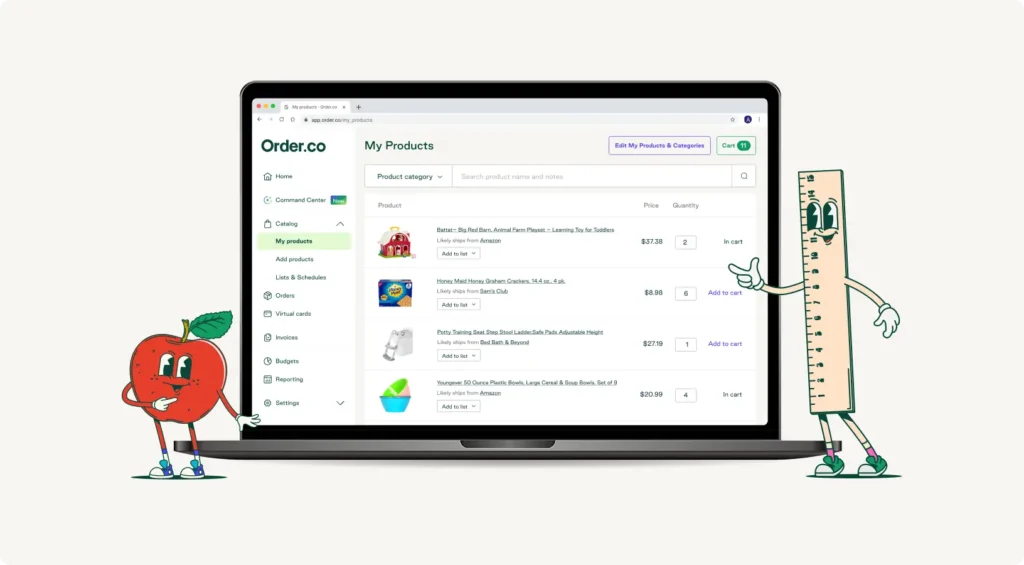
Modern procurement technology can turn slow, manual processes into faster, smarter workflows. The rightprocurement automation strategy enables staff to focus on strategic work, allowing them to enhance compliance and analyze spending across all functions.
Key technology benefits of procurement software include:
- Workflow automation: Reduces manual intervention, accelerates processes, and redirects staff toward strategic activities like supplier relationship management and cost-reduction initiatives
- Spending visibility: Provides real-time tracking across departments, identifies maverick spend, and reveals consolidation opportunities
- Compliance management: Automates checks to ensure regulatory compliance, maintain audit trails, and prevent unauthorized purchasing
- Faster approvals: Creates digital workflows that route requisitions automatically, mobile interfaces that enable anywhere approval, and self-service portals that empower end users
- Supplier performance: Enables systematic vendor tracking against delivery, quality, and pricing standards
- Cost reduction: Drives savings by facilitating competitive bidding, spend analytics, contract management, and invoice matching
Automating procurement activities helps reduce errors and administrative burden. The right software can classify requests, issue approvals, generate purchase orders, match invoices, and identify discrepancies for remediation—helping teams work smarter, not harder.
Which metrics matter in education procurement?
Procurement KPIs make it easier to assess the effectiveness of your processes and identify bottlenecks that require attention. Tracking the right metrics helps you measure performance and demonstrate value.
Some essential education procurement metrics to watch include:
- Cost management KPIs: Cost savings achieved, cost avoidance, purchase price variance, and cost per transaction
- Vendor performance KPIs: On-time delivery, quality ratings, defect rates, and responsiveness
- Process efficiency KPIs: PO cycle time, overall procurement cycle time, approval bottlenecks, and emergency purchase rate
- Compliance and risk KPIs: Contract compliance rate, maverick spend, vendor concentration risk, and audit findings
With Order.co, you can monitor different types of procurement KPIs in real time. The platform lets you see budget consumption, track approvals, analyze spending by vendor and category, measure contract utilization, and spot savings opportunities. Automated procurement features simplify purchasing, strengthen compliance, and accelerate your accounts payable processes—helping you make data-driven procurement decisions that optimize spending, ensure accountability, and enhance supplier relationships.
Schedule a demo to learn how Order.co supports educational institutions with smarter sourcing, budgeting, and compliance controls.
FAQs
Get started
Schedule a demo to see how Order.co can simplify buying for your business.
"*" indicates required fields