Purchasing Cards Pros and Cons: A Guide for Finance Teams

Purchasing Cards Pros and Cons: A Guide for Finance Teams
Finance teams know the frustration: expense reports get submitted weeks after purchases, approval bottlenecks delay critical supplies, and mountains of receipts require manual reconciliation. These pain points drain productivity and create compliance headaches.
Purchasing cards—or P-cards—promise a solution. They speed up the procurement process, reduce paperwork, and give finance teams better visibility into company spending. By empowering employees to make approved business purchases themselves, P-cards remove many of the roadblocks baked into traditional purchasing processes.
But purchasing cards aren't perfect. Without proper spending controls, they can open the door to overspending, policy violations, and reconciliation nightmares. This guide details the pros and cons of purchasing cards so you can decide whether they're right for your business needs.
Download the free ebook: The Procurement Strategy Playbook for Modern Businesses
What is a purchasing card, and how does it work?
A purchasing card is a company-issued payment card that authorized employees use to make business purchases outside traditional procurement processes. Organizations often deploy P-cards for low-dollar, high-volume buys like office supplies, software subscriptions, or travel expenses.
Using P-cards is relatively simple. First, your finance team issues cards to cardholders with preset spending limits and merchant category restrictions. Then, when an employee makes a purchase, the transaction appears in real time on your company dashboard. At month-end, your finance team reconciles your card statements against receipts and coding before paying the balance to the card issuer as part of the billing cycle.
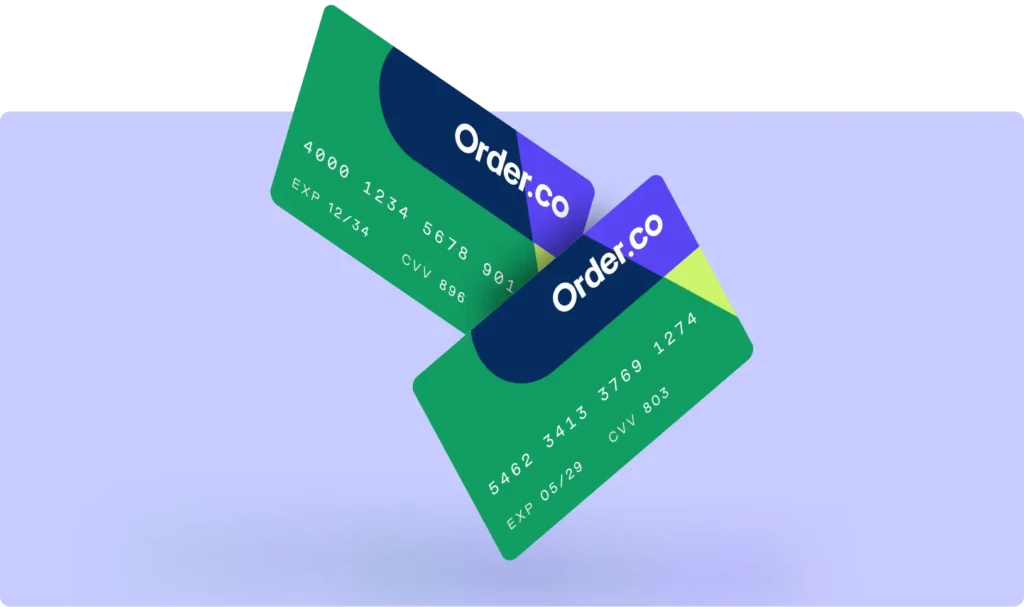
Modern platforms like Order.co support the use of both physical and virtual cards. This hybrid approach gives you the flexibility to continue using P-cards for in-person purchases and Order.co virtual cards for online transactions or one-time vendor payments.
The Procurement Strategy Playbook for Modern Businesses
Want to know more about strategic buying? Read our Procurement Strategy Playbook for even more valuable insights.
What are the pros of purchasing cards?
When implemented correctly, purchasing cards deliver real operational and financial benefits. The right P-card program can transform your procurement function from a bottleneck into a strategic advantage.
Optimized spend processes and reduced PO volume
Procurement cards eliminate the need for purchase orders on low-value transactions. Instead of routing a $50 office supply order through multi-step approvals, employees can simply swipe their P-card and get back to work—a much more efficient way to handle routine business expenses.
According to theInstitute of Commercial Payments, P-cards can reduce procurement processing costs by up to 80% for low-value purchases. That's because P-cards bypass invoice matching, three-way reconciliation, and check cutting—tasks that can cost $50 to $200 per transaction in traditional accounts payable workflows.
Order.co amplifies this benefit with instant card issuance. Your finance team can create new virtual cards in seconds when purchases can't wait, eliminating approval lag while maintaining policy compliance through automated controls.
Improved expense visibility and faster reconciliation
Traditional expense processes create visibility gaps that last for weeks. P-cards change that: Every transaction appears in your financial system immediately, giving you real-time insight into employee spending. This visibility transforms credit card reconciliation from a monthly scramble into an ongoing process.
Order.co syncs transaction data directly with your ERP system, reducing manual data entry and reconciliation time. With accurate, up-to-date spending information, it's much easier to manage cash flow across your organization.
Built-in compliance controls and audit trails
Purchasing cards create a clear digital record that makes audits simpler and fraud easier to detect. Every transaction includes timestamps, merchant information, and cardholder details, creating a built-in audit trail for your corporate purchasing card program.
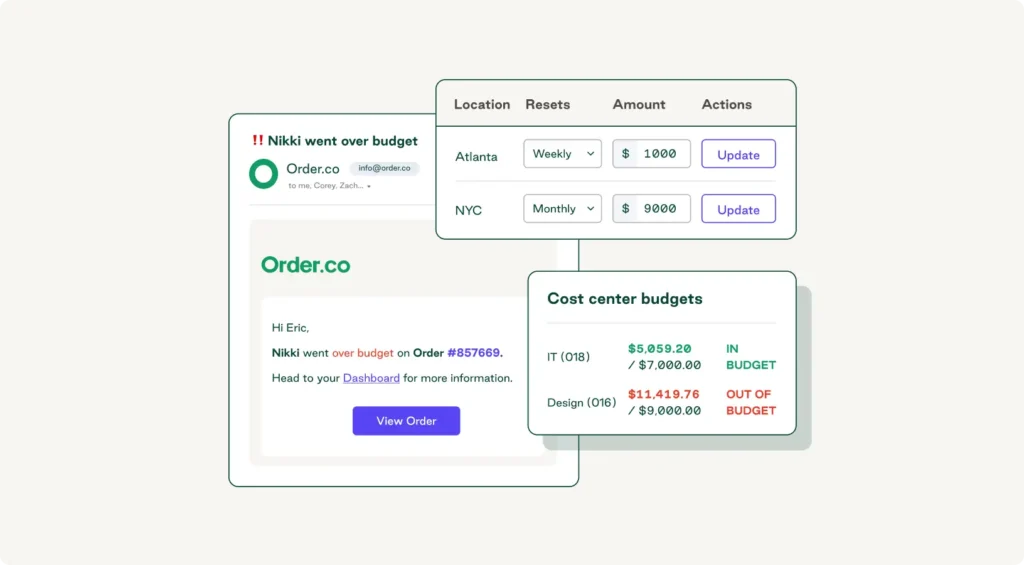
Modern P-card platforms also support guardrails that automatically enforce policy. You can set credit limits, restrict merchant categories, and require approvals where needed. Order.co's programmable spend rules apply those controls at the transaction level—whether that means limiting cards to approved vendors, blocking certain merchant categories, or requiring manager approval above set thresholds. This results in total spend control without slowing you down.
What are the cons of purchasing cards?
Despite their benefits, purchasing cards introduce risks that finance teams must manage closely. Without clear rules and oversight, P-card programs can create more problems than they solve.
Risk of misuse and policy exceptions
Giving employees direct purchasing power creates room for misuse. Common scenarios include:
- Personal purchases charged to company cards
- Splitting transactions to stay under approval thresholds
- Buying from unapproved vendors
The Association of Certified Fraud Examiners' 2024 Report to the Nations found that billing schemes—including corporate card abuse—account for over 20% of occupational fraud cases, with a median loss of $100,000 per incident. Proper card usage policies and monitoring are essential to mitigate these risks.
Potential for overspend without strict limits
Purchasing cards can encourage spending simply by making it easier. Small, frequent purchases add up quickly, especially when multiple cardholders draw from the same departmental budget.
The issue intensifies with indirect spend—purchases that don't directly contribute to products or services sold. These expenses often receive less scrutiny than direct materials, making them more likely to push expense management off course.
Reconciliation challenges with complex expense data
While P-cards reduce some reconciliation burdens, they create others. Statement data often lacks the detail finance teams need—merchant names are truncated, transaction descriptions are vague, and GL coding must be manually added to spend management systems.
Order.co addresses these gaps through real-time alerts that prompt employees to add receipts and coding immediately after purchases. The platform's analytics dashboard highlights unusual spending patterns and flags transactions that need additional documentation.
How do purchasing cards compare to virtual cards?
Understanding the key differences between traditional purchasing cards and virtual cards can help you choose the right type of card for each of your organization's spending scenarios.
Security controls: Physical card limits vs. single-use virtual numbers
With physical P-cards, the card number remains static, making it more vulnerable to data breaches or employee theft. Virtual cards reduce that exposure by using dynamic card numbers configured for a single transaction, specific vendor, or set time period.
Order.co's virtual cards include vendor-level locks that ensure they work only with designated suppliers. For online purchases and recurring subscriptions, using virtual cards as a payment method offers substantially stronger fraud protection.

Flexibility: Set and adjust limits on the fly
Traditional P-card programs often come with pre-configured spending limits that stay in place unless adjusted through a formal approval process. Virtual cards offer more flexibility.
With Order.co, you can instantly issue virtual cards, adjust per-transaction limits, apply merchant restrictions, and set expiration dates tied to a specific purchase or project. This level of control makes managing spend faster, easier, and more precise.
Reconciliation: Manual coding vs. automated sync
Physical P-cards typically require manual reconciliation—matching statement line items to receipts, adding GL codes, and verifying approvals. Virtual cards accelerate the reconciliation process with automated data enrichment, including pre-populated GL codes and cost centers that connect directly to your expense tracking tools.
Order.co provides reliable ERP integrations for both physical and virtual cards, automatically syncing transaction data with pre-configured accounting codes.
Best practices for using purchasing cards
A successful P-card program requires more than handing out cards. The following best practices can help you capture the benefits of P-cards while keeping their risks in check.
Define clear card policies and approval workflows
Your P-card policy should explicitly define:
- What employees can purchase
- Spending limits by role
- Prohibited merchants and categories
- Receipt requirements
- Consequences for violations
Policies alone don't prevent violations—you also need to embed automated controls in your workflows. Order.co's customizable approval chains let you automatically require manager approval above thresholds, restrict cards to specific vendors, or route purchases based on category—keeping proper controls in place for business travel, subscriptions, and recurring expenses.
Leverage real-time monitoring and alerts
Monthly statement reviews catch problems too late. Real-time monitoring helps you spot issues while there's still time to act.
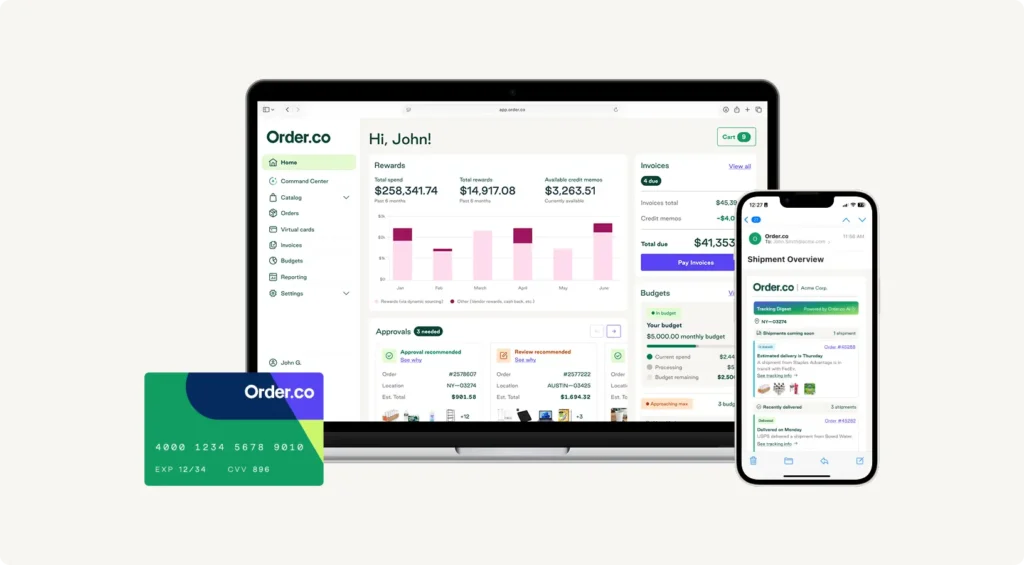
With Order.co, you get instant visibility into all card activity through a single dashboard. You can set up alerts for unusual transactions—such as purchases from new vendors, charges above normal patterns, or spending approaching budget limits—to ensure issues get flagged immediately. This improves expense tracking and prevents unauthorized purchasing.
Automate reconciliation and data enrichment
Manual reconciliation is slow, expensive, and error-prone. Automation transforms reconciliation from a monthly burden into a background process, reducing the need for manual expense reporting and time-consuming reimbursement procedures.
Order.co provides native accounting exports that eliminate the need for manual data entry. Transaction data syncs automatically with your ERP or accounting software, including GL codes, cost centers, and supporting documentation—no spreadsheet manipulation required.
The Procurement Strategy Playbook for Modern Businesses
Learn the key pillars of a strong strategy, valuable procurement metrics to track, and initiatives you can start implementing today.
"*" indicates required fields
How Order.co enhances purchasing card programs
With automated controls, real-time visibility, and seamless integrations, Order.co tackles the main challenges of traditional P-card programs while amplifying their benefits. The platform combines physical and virtual card capabilities in a single solution for comprehensive spend management.
With Order.co, you gain access to powerful features like:
- Instant virtual card issuance with custom limits and vendor locks
- Real-time transaction visibility across all payment methods
- Automated ERP syncing that eliminates manual reconciliation
- Programmable spending controls that enforce policy at purchase
- Customizable approval workflows based on amount, vendor, or category
- Advanced analytics dashboards that surface spending patterns
- Mobile receipt capture that prompts immediate documentation
Empower your finance team with secure, automated purchasing card controls—schedule a free demo to see how Order.co can help.
FAQs
Get started
Schedule a demo to see how Order.co can simplify buying for your business.
"*" indicates required fields