Stampli Alternatives: When Your AP Automation Needs Grow Beyond Invoice Processing

Stampli Alternatives: When Your AP Automation Needs Grow Beyond Invoice Processing
Accounts payable teams adopt Stampli to escape the chaos of manual invoice processing, and the platform delivers. But as organizations scale, the search for Stampli alternatives often starts with a realization: automating the tail end of purchasing doesn't prevent rogue spend, control vendor selection, or give finance leadership the upstream visibility they need.
Invoices aren't where spend problems start. They're where spend problems surface.
AP managers and controllers who hit this ceiling aren't dissatisfied with Stampli's core capability. They've outgrown its scope. This guide breaks down where Stampli excels, where teams hit limits, and which alternatives fit different migration paths. It also includes a framework for calculating whether the broader capabilities justify switching costs.
Evaluating Stampli alternatives? See how Order.co stacks up — view the product tour
What Stampli does well, and where AP teams hit limits
Stampli's strengths
Stampli built its reputation on making invoice processing collaborative and fast. Its core capabilities are strong:
- Billy the Bot, Stampli's AI assistant, automates data extraction, GL coding suggestions, and duplicate invoice detection.
- Invoice-centered communication lets approvers, accountants, and vendors discuss discrepancies without leaving the platform.
- Pre-built integrations with over 70 ERPs, including NetSuite, Sage Intacct, and QuickBooks, allow teams to go live in weeks rather than months.
For organizations whose primary pain is slow, manual invoice approvals, Stampli solves the problem well. The challenge shows up when the scope of the problem expands.
Where teams outgrow Stampli
Stampli works well inside its lane. But the moment your team starts asking questions the platform can't answer, like "who approved that purchase?" or "how much have we already committed this quarter?", the cracks become hard to ignore. Here's where the gaps tend to show up:
- No native purchasing module. Stampli automates what happens after a purchase is made. It doesn't manage purchase requests, enforce pre-purchase approvals, or control which vendors employees can buy from. If your team needs to prevent unauthorized spend, Stampli requires a separate procurement tool.
- Limited spend visibility beyond AP. Because Stampli enters the picture at invoice intake, it can't provide a complete view of committed spend, open orders, or budget consumption in real time. Controllers who need to answer "how much have we actually committed this quarter?" must piece together data from multiple systems.
- Payment execution gaps. Stampli's strength is in invoice processing, not payment execution. The platform automates approvals but typically relies on integration with a separate tool for payment disbursement, adding another layer to the tech stack.
These aren't flaws in Stampli's design. They're boundaries of its scope. The question is whether your organization's needs have grown beyond that scope.
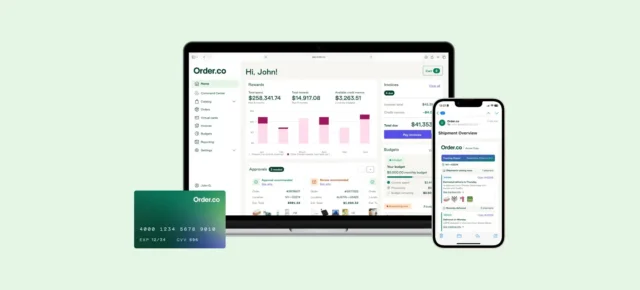
See where Order.co fits on your shortlist
Tour the product yourself now — no demo request, no waiting.
Stampli alternatives by migration path
Not every team switching from Stampli needs the same thing. The right alternative depends on what gap you're filling. Here's how to think about the options, organized by migration path.
AP-focused upgrades
These platforms stay within the AP automation lane but offer broader payment and compliance capabilities than Stampli.
Tipalti is built for organizations managing high-volume global payments. It handles mass payment processing across multiple currencies, tax compliance (W-9/W-8 collection), and vendor onboarding through a self-service portal. If your primary concern with Stampli is payment execution, especially across international vendors, Tipalti solves that issue. However, user reviews note a steep learning curve and limited reporting customization.
BILL (formerly Bill.com) targets small to mid-sized businesses with straightforward AP and AR automation. It offers ACH, check, and international payment processing with integrations for QuickBooks and NetSuite. BILL's pricing starts at $45 per user per month, plus per-transaction fees (ACH at $0.59, checks at $1.99). For teams that need a simpler, lower-cost AP tool with payment capabilities, BILL works. But it lacks procurement integration, spend management, and corporate card functionality, which means the same upstream gaps remain.
Full-platform migrations
These platforms extend beyond AP to cover the full purchase-to-pay cycle, from requisition through reconciliation.
Paylocity (formerly Airbase) combines AP automation with expense management and corporate cards in a unified spend management platform. It's a solid option for teams looking to consolidate cards, expenses, and bill pay under one roof. The trade-off is that it sits within Paylocity's broader HR and finance suite, which may add complexity for teams that don't need the full bundle.
Order.co takes an entirely different approach by addressing spend at the point of purchase. Rather than automating invoice processing after the fact, Order.co ensures every purchase is pre-approved, GL-coded, and routed through approval workflows before a dollar is spent. The platform then pays vendors on behalf of the business and consolidates all transactions into a weekly or monthly invoices. For organizations buying physical goods and supplies across multiple locations, this end-to-end process closes gaps that invoice-centric tools leave open.
Enterprise paths
For larger organizations with complex supply chains and global operations, enterprise suites offer the broadest functionality but require the most resources to implement.
Coupa covers the source-to-pay lifecycle, including procurement, invoicing, expenses, and supplier management with deep analytics. It's designed for enterprise-scale organizations and typically requires six-figure annual contracts with months-long implementation timelines.
SAP Ariba provides procurement and supply chain collaboration tools integrated with the SAP Business Network. It's the natural choice for organizations already running SAP ERPs, but it carries similar complexity and cost considerations as Coupa.
Stampli alternatives comparison matrix
| Capability | Stampli | Tipalti | BILL | Order.co | Coupa | SAP Ariba |
| AI invoice processing | ✔ | ✔ | ✔ | ✔ | ✔ | ✔ |
| Pre-purchase approval workflows | ✘ | ✘ | ✘ | ✔ | ✔ | ✔ |
| Vendor/catalog management | ✘ | Limited | ✘ | ✔ | ✔ | ✔ |
| Automated purchasing and fulfillment | ✘ | ✘ | ✘ | ✔ | Limited | Limited |
| Consolidated billing | ✘ | ✘ | ✘ | ✔ | ✘ | ✘ |
| Global mass payments | ✘ | ✔ | ✔ | ✔ | ✔ | ✔ |
| Spend analytics | Limited | Limited | Limited | ✔ | ✔ | ✔ |
| ERP integration | 70+ ERPs | Major ERPs | QuickBooks, NetSuite | NetSuite, Sage Intacct, QuickBooks | Major ERPs | SAP ecosystem |
| Implementation timeline | Weeks | Weeks to months | Days to weeks | Weeks | Months | Months |
| Best for | AP-only teams | Global payments | SMB AP | Mid-market P2P | Enterprise S2P | SAP-native orgs |
Calculating the migration ROI
Switching platforms isn't free. The cost includes implementation, training, potential productivity dips during transition, and the license itself. Here's a framework for determining whether the broader capabilities justify the switch.
Step 1: Quantify current costs
Start with your actual cost per invoice. Manual invoice processing costs approximately $9.40 per invoice, and the average AP department takes 9.2 days to process a single invoice. Even with Stampli automating parts of this process, the manual work that sits outside Stampli (procurement, vendor coordination, reconciliation) still carries a cost.
Map out the full picture:
- Hours spent on manual purchasing, vendor communication, and order tracking outside Stampli
- Late payment penalties or missed early payment discounts
- Duplicate payments or invoice errors caught after the fact
- Time spent reconciling data between disconnected systems during month-end close
Once you total these costs, you'll have a realistic baseline for what your current workflow actually costs, not just the Stampli license fee. That number is your benchmark for evaluating whether a broader platform pays for itself.
Step 2: Estimate the value of closing upstream gaps
The biggest ROI from a full procure-to-pay platform doesn't come from processing invoices faster. It comes from preventing problems before they reach AP.
According to research by The Hackett Group, leading P2P solutions deliver a 29% reduction in requisition-to-PO transaction costs alongside 92% PO adoption. When approvals happen before the purchase rather than after the invoice arrives, rogue spend drops, invoice exceptions decrease, and your AP team spends less time on cleanup.
For platforms like Order.co, the additional value includes direct product savings through AI-powered sourcing and consolidated vendor pricing. Because Order.co manages vendor relationships and fulfillment, businesses also reclaim the time their teams currently spend on order tracking, vendor issue resolution, and multi-vendor coordination.
Step 3: Apply time-to-value benchmarks
Implementation speed determines how quickly the ROI materializes. Here's what to expect by migration path:
| Platform type | Typical time to go live | Time to measurable ROI |
| AP-focused (Tipalti, BILL) | 2 to 8 weeks | 2 to 4 months |
| Full-platform (Order.co) | 3 to 6 weeks | 1 to 3 months |
| Enterprise (Coupa, SAP Ariba) | 3 to 9 months | 6 to 12 months |
Enterprise platforms require the longest runway because they involve more configuration and change management. Full-platform solutions like Order.co tend to deliver faster ROI because they replace multiple disconnected tools with a single system, reducing the integration and reconciliation overhead immediately.
The switching cost formula
You don't need a complex model to pressure-test the decision to switch. One equation covers it:
Annual value of closing gaps (labor savings + spend savings + error reduction + early payment capture) minus Total first-year cost (implementation + license + training + productivity dip) = Net Year 1 ROI
If that number is positive, the migration pays for itself in the first year. If it's close to breakeven, factor in the compounding value: the operational improvements and spend savings tend to grow as adoption matures, while the switching cost is a one-time event.
See where Order.co fits on your shortlist
Tour the product yourself now — no demo request, no waiting.
How Order.co fills the gaps Stampli leaves
Stampli answers the question: "How do we process invoices faster?" Order.co answers a different question: "How do we control every dollar from the moment someone needs to buy something?"
Here's the difference in practice:
- Spend control starts at the point of purchase. Order.co's guided marketplace ensures every order runs through pre-approved catalogs, budgets, and approval workflows before it's placed. No rogue spend. No after-the-fact POs.
- No manual 3-way matching needed. Because line items are pre-coded and verified at the time of purchase, and Order.co pays vendors on behalf of your business, what you ordered is exactly what you're invoiced for. The reconciliation work that eats your AP team's time simply goes away.
- Vendor issues aren't your problem. Order.co helps manage vendor communications and resolves order mistakes, returns, and refunds on behalf of the business. Your team doesn't have to sit on hold with vendors to figure out missing shipments or incorrect orders.
- One invoice, not hundreds. Instead of processing invoices from every supplier individually, Order.co consolidates billing into a single, customized bill that matches your accounting structure.
For AP managers and controllers who adopted Stampli to escape manual invoice chaos, Order.co takes the logical next step: eliminating the upstream mess that creates invoice overload in the first place.
Ready to see how Order.co compares to your current stack? Schedule a demo and walk through a side-by-side evaluation with your actual workflows.
FAQs
Yes. Order.co provides pre-built integrations with NetSuite, Sage Intacct, and QuickBooks. The platform automatically pushes fully coded invoice data to your accounting system, eliminating manual data entry during migration and ongoing operations.
For most mid-market organizations, full-platform solutions like Order.co go live within three to six weeks. AP-focused alternatives like Tipalti or BILL can be faster (two to eight weeks), while enterprise platforms like Coupa typically take three to nine months.
The largest returns come from preventing problems upstream rather than processing them faster downstream. Pre-purchase approvals, automated vendor management, and consolidated billing reduce invoice exceptions, eliminate rogue spend, and cut reconciliation time, all of which compound over time.
Stampli has recently introduced procurement features, including purchase request management and a purchasing module. However, its core strength remains invoice processing and AP collaboration, and its procurement capabilities are newer compared to platforms purpose-built for the full purchase-to-pay cycle.
Get started
Schedule a demo to see how Order.co can simplify buying for your business.
"*" indicates required fields